- Cooking is a functional training ground for executive-function skills, specifically working memory, cognitive flexibility, and inhibitory control.
- Success in these classes depends on the “Mise en Place” method, which forces pre-teens to organize their environment before starting a task.
- These programs are not just about food; they are structured pedagogical tools designed to improve task initiation and frustration tolerance in children aged 10–13.
If you have ever watched your pre-teen try to navigate a simple household chore, you know the specific brand of frustration that comes with “task paralysis.” They might start cleaning their room, get distracted by a book they found, and end up with a bigger mess than when they started. It isn’t laziness—it is often a developmental gap in executive function.
Executive function is the brain’s “air traffic control system.” It manages the skills we need to set goals, plan, prioritize, and regulate our emotions. For pre-teens, this system is under heavy construction. Cooking classes designed specifically around these neural processes offer a unique, high-stakes, yet safe environment to practice these skills. Unlike a classroom setting where the consequences of a missed deadline are abstract, the consequence of forgetting to turn the oven on is immediate and tangible.
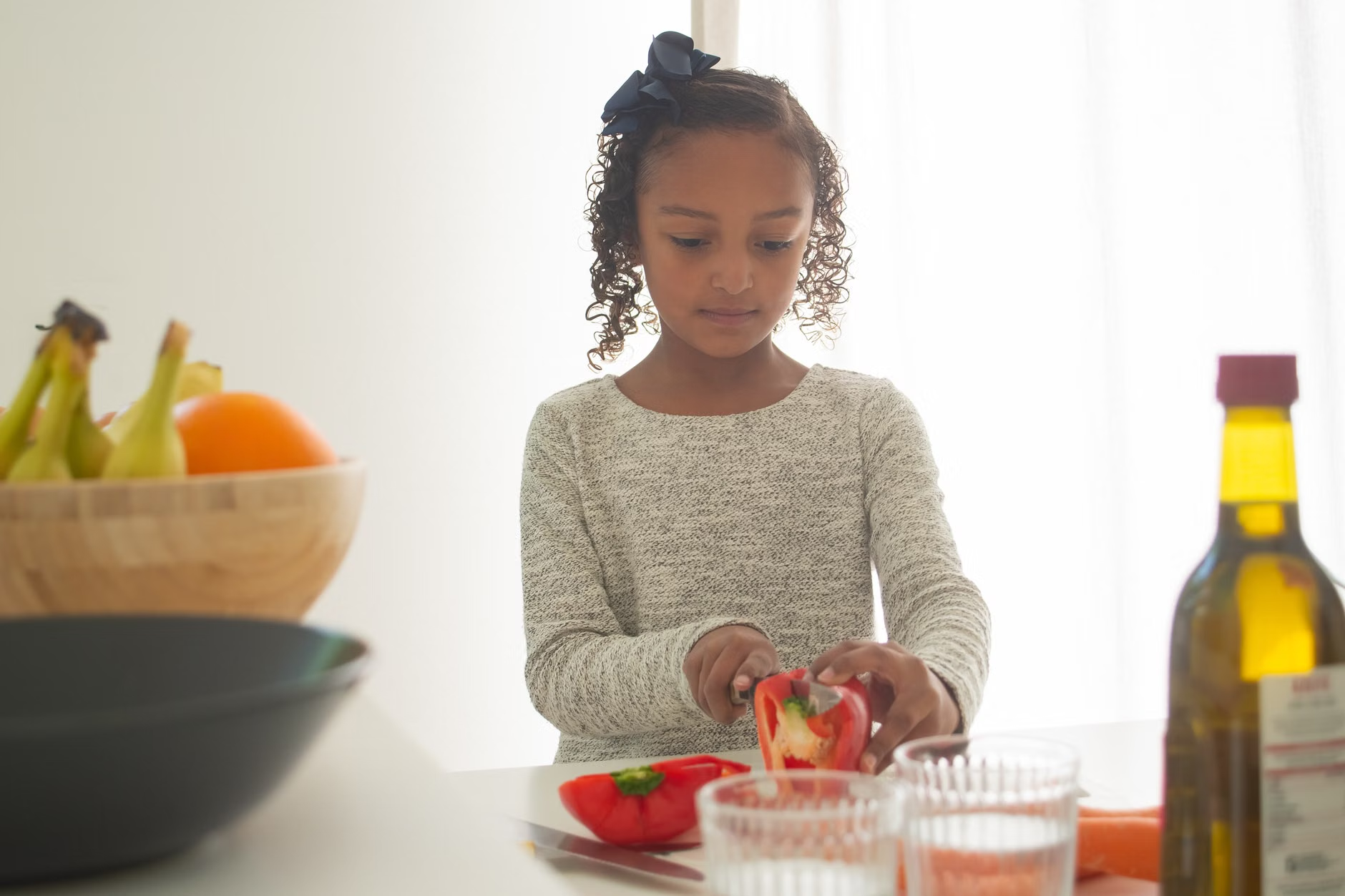
Why Cooking is the Ultimate Executive Function Sandbox
When we talk about executive function, we are usually referring to three core cognitive processes: working memory (holding information in mind), cognitive flexibility (adapting to change), and inhibitory control (resisting impulses). Cooking requires all three simultaneously.
Consider the act of making a simple pasta sauce. A child must keep the instructions in their head while physically measuring ingredients (working memory). If the sauce starts to bubble too aggressively, they must decide to lower the heat immediately (cognitive flexibility). Finally, they have to resist the urge to eat the ingredients before the dish is finished (inhibitory control). For a pre-teen, this is a complex workout for the prefrontal cortex.
What makes these specialized classes different from a standard “kids’ baking workshop” is the methodology. In an executive-function-focused class, the instructor isn’t just teaching a recipe; they are teaching a workflow. They use visual timers, color-coded workstations, and structured checklists to externalize the cognitive load. By moving these internal processes into the physical environment, the pre-teen learns how to “think about their thinking.”
The “Mise en Place” Framework for Life
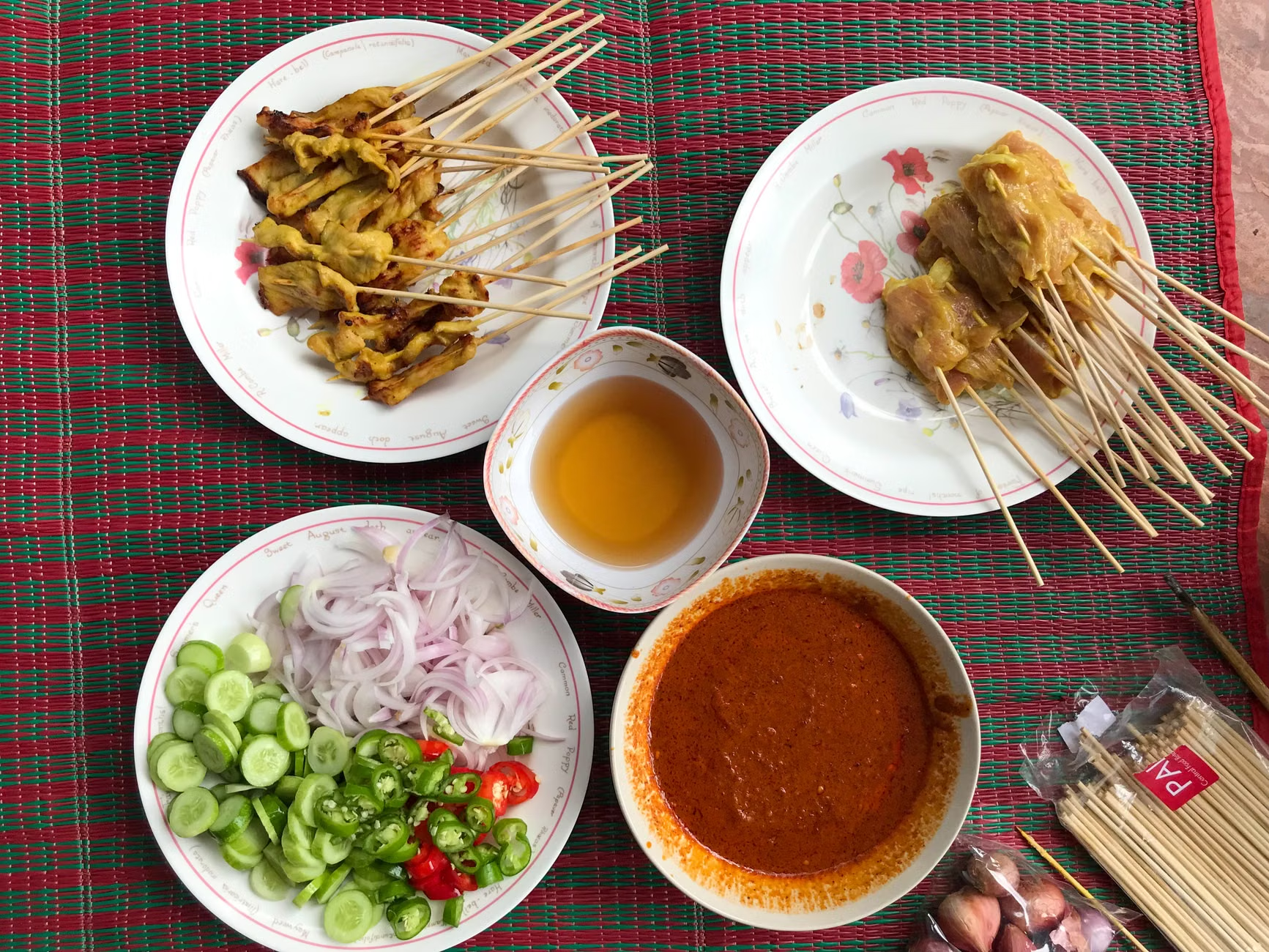
The most important concept taught in these classes is Mise en Place—a French culinary term meaning “everything in its place.” In a therapeutic or developmental cooking context, this becomes a life-management strategy. Before a student even touches a flame, they must organize their ingredients, tools, and workspace.
For a child who struggles with task initiation, the “Mise en Place” method is revolutionary. It breaks down the overwhelming task of “cooking dinner” into smaller, manageable micro-tasks. By teaching a child to prep their ingredients in small bowls before they start cooking, they aren’t just making a meal; they are learning how to break down a homework assignment or a project into actionable steps.
Mapping Executive Function to Kitchen Tasks
To understand why this is effective, we have to look at how specific culinary tasks map to cognitive growth. We can categorize these into a framework that parents can actually observe at home or look for in a professional class curriculum.
| Executive Function Skill | Kitchen Application | Developmental Outcome |
|---|---|---|
| Task Initiation | Gathering ingredients and setting up tools. | Reducing the “starting friction” of projects. |
| Working Memory | Following multi-step, sequential recipes. | Improving the ability to hold instructions. |
| Inhibitory Control | Waiting for water to boil or meat to sear. | Practicing patience and delayed gratification. |
| Cognitive Flexibility | Adjusting when an ingredient is missing. | Learning to pivot rather than shut down. |
When a student encounters a problem—like realizing they forgot to buy butter—the instructor doesn’t just provide the solution. They ask, “What is our backup plan?” This encourages the student to use their cognitive flexibility. Instead of an emotional meltdown, which is common in children with developing executive functions, they are trained to treat the missing ingredient as a data point rather than a catastrophe.
What to Look for in a Program
If you are considering enrolling your pre-teen in a program, avoid classes that focus solely on the “finished product.” A class that emphasizes making the perfect cupcake is fun, but a class that emphasizes the process of making a meal is developmental. Look for instructors who use “scaffolding” techniques.
Scaffolding is a pedagogical term for providing temporary support that is gradually removed as the student gains competence. In a high-quality cooking class, this looks like:
- Visual Checklists: Laminated cards that track steps (e.g., “Wash hands,” “Get bowl,” “Measure flour”).
- Time-Blocking: Using egg timers to help the child visualize the passage of time, which helps with time blindness.
- Reflective Debriefs: At the end of the class, the instructor asks, “What was the hardest part of the process, and how did you handle it?”
These debriefs are crucial. They force the child to metacognize—to step back and analyze their own performance. This is the bridge between cooking a meal and applying these skills to math homework or organizing a bedroom.
Addressing the Challenges: Why It Isn’t Always Smooth
It is important to manage expectations. A pre-teen will not suddenly become a model of efficiency after one class. In fact, the first few sessions are often messy. The kitchen is a high-sensory environment—it is loud, hot, and full of smells. For children who are sensitive to sensory input, this can be an additional challenge to their executive function.
Common mistakes parents make include rushing the process or taking over when the child becomes frustrated. If you are doing this at home or evaluating a class, the “helper” must act as a coach, not a manager. If the child is struggling to measure flour, the coach should ask, “How do you think we can make sure this is accurate?” rather than grabbing the measuring cup and doing it for them.
Another overlooked variable is frustration tolerance. Cooking is one of the few places where a child can fail in a way that is easily fixable. If they burn the toast, they can just make more. This low-stakes failure is essential for building the resilience necessary to handle larger, more stressful challenges later in life.
Practical Next Steps for Parents
You don’t necessarily need a fancy, specialized cooking academy to start this process. You can implement these principles in your own kitchen this weekend. Start by choosing a recipe that requires at least five distinct steps. Print out the recipe and have your pre-teen rewrite it into a checklist.
Ask them to perform a “Mise en Place” check. If they are missing an ingredient, don’t rush to the store immediately. Ask them to search for a substitute or think about how the recipe would change without it. This simple exercise builds the very neural pathways that executive-function classes aim to strengthen.
Finally, focus on the post-cooking reflection. Ask specific questions that require them to evaluate their own process: “What part of the prep took the longest?” or “Did you feel like you had enough space to work?” These conversations are where the actual learning happens. By externalizing the process, you are helping them build an internal system they can eventually use on their own.
Commonly Asked Questions
1. At what age should a child start these types of cooking classes?
While children as young as 6 or 7 can participate in basic cooking, the focus on executive function is most effective for the “pre-teen” bracket, typically ages 10 to 13. At this age, their brains are undergoing a significant pruning process, making them more receptive to learning self-regulation and organizational strategies.
2. Can these classes help children with ADHD or other executive function challenges?
Yes, these classes are frequently recommended for children with ADHD. The structured, step-by-step nature of cooking provides the external scaffolding that children with ADHD often lack internally. However, ensure the program instructor has experience in adaptive teaching methods, as a rigid, high-pressure environment can backfire.
3. How long does it take to see improvements in general behavior?
Executive function is not built overnight. Most research on cognitive training suggests that consistent, low-dose practice over 8 to 12 weeks yields the best results. Don’t look for a “cure” for disorganization; look for small, incremental gains in how your child approaches a new, complex task.
For further reading on child development and the role of structured activities, you may consult the resources provided by the Center on the Developing Child at Harvard University, which offers extensive insights into how executive function skills are developed in early and middle childhood.
Cooking is a journey, not a destination. By focusing on the process rather than the plate, you are giving your pre-teen a set of tools that will serve them long after they’ve moved out of your kitchen. Start small, stay patient, and remember that even a burnt batch of cookies is a lesson in cognitive flexibility.