Starting in 2026, the European Union’s Carbon Border Adjustment Mechanism (CBAM) will move from its reporting phase into full financial enforcement, creating a ripple effect that will inevitably increase the price of imported electronics—from the smartphone in your pocket to the appliances in your kitchen.
- Pricing Shift: Products manufactured in regions with weaker carbon regulations will face a “carbon levy” at the border, directly impacting the final retail price for consumers.
- The “Green Premium”: Expect a two-tier market where electronics produced with renewable energy become the standard, while older, high-carbon manufacturing methods face price hikes.
- Strategic Purchasing: For families, the best defense is prioritizing high-efficiency, long-lifespan devices now, rather than waiting for the 2026 price surge.
If you are in your 30s or 40s, you likely remember a time when tech upgrades were driven purely by speed, camera quality, or screen resolution. By 2026, the primary driver of electronics pricing will be something much less visible: the carbon footprint embedded in the manufacturing process. This isn’t just a corporate tax; it is a fundamental shift in how global trade works, and it’s coming to your household budget.

Understanding the Carbon Border Adjustment Mechanism (CBAM)
At its core, the CBAM is designed to prevent “carbon leakage.” This happens when companies move their manufacturing to countries with lax environmental laws to avoid the costs of decarbonizing their production. By imposing a price on the carbon emitted during the production of goods imported into the EU, the policy ensures that imported products carry a similar carbon cost to those produced within the bloc.
While the regulation is an EU initiative, its impact is truly global. Because the EU is one of the world’s largest consumer markets, manufacturers in Asia, the Americas, and beyond are already scrambling to adjust their supply chains to meet these new standards. If they don’t, their products become significantly more expensive to sell in Europe. This global realignment means that even if you don’t live in the EU, the global supply chain for consumer electronics is being re-engineered to accommodate these rules.
Why Electronics Are in the Crosshairs
Electronics are energy-intensive to manufacture. From the smelting of aluminum for laptop chassis to the high-heat processes required to manufacture silicon chips, every step of the lifecycle releases carbon. The CBAM focuses on the “embedded emissions” of these materials. For a parent looking to buy a new tablet for a child’s schoolwork or a new refrigerator for the kitchen, this means the “hidden” cost of electricity used in a factory in a developing nation will now be accounted for at the border.
Historically, companies have ignored these costs. By 2026, they will be forced to report and pay for them. If a manufacturer hasn’t transitioned to green energy, that cost is passed down to you. This is not a tax on the product’s performance; it is a tax on the method of its creation.
The Impact on Your Household Budget
For most households, the 2026 transition won’t manifest as a single, dramatic price spike. Instead, it will look like a gradual “inflationary creep.” Electronics that rely on carbon-intensive energy grids—such as those produced in regions still heavily reliant on coal—will see their prices rise as the cost of the carbon certificates is integrated into the wholesale price.
| Product Category | Carbon Sensitivity | Why? |
|---|---|---|
| Large Appliances (Fridges, Washers) | High | High material volume (steel/aluminum) and energy-intensive manufacturing. |
| Smartphones & Tablets | Moderate | Complex global supply chain; focus on rare earth mineral processing. |
| Small Accessories (Cables, Chargers) | Low | Lower manufacturing footprint; high volume offsets per-unit costs. |
This table illustrates why your next major home appliance purchase might see a more significant price jump than a new set of charging cables. The more raw material and heavy industrial processing a product requires, the more susceptible it is to these carbon-border levies.

The Rise of the “Green Premium” vs. Long-Term Efficiency
There is a common misconception that “green” tech is always more expensive. While the initial purchase price of a device manufactured with renewable energy might be higher, we need to shift our thinking to the Total Cost of Ownership (TCO). A device that is built sustainably often implies a more modern, efficient factory, which often results in higher-quality, more durable components.
If you are in your 30s or 40s, you are likely at a stage where you value reliability over the “latest and greatest” features. The 2026 shift actually incentivizes a change in behavior: moving away from the “disposable tech” culture. When manufacturers are taxed on the carbon footprint of their production, they become more motivated to design products that are easier to repair and last longer, because they want to avoid the “carbon penalty” associated with the constant need for new manufacturing runs.
How to Prepare Your Finances
Instead of waiting for the market to adjust in 2026, consider these three strategies for your family’s tech planning:
- Audit Your “End-of-Life” Appliances: If your dishwasher, dryer, or refrigerator is nearing the end of its typical 8–10 year lifespan, it is likely more cost-effective to replace it now rather than in 2026, when prices may reflect the full integration of carbon tariffs.
- Prioritize Repairability: When choosing new laptops or phones, look for brands that offer modular designs or high “repairability scores.” A device that can be repaired for $50 is a much better hedge against rising hardware costs than a sealed, “disposable” device.
- Look for Circular Economy Labels: Some manufacturers are beginning to market “remanufactured” or “refurbished” products as a way to circumvent new production carbon taxes. These are often excellent value and carry a significantly lower carbon footprint than brand-new units.
The Hidden Variables: What Most People Miss
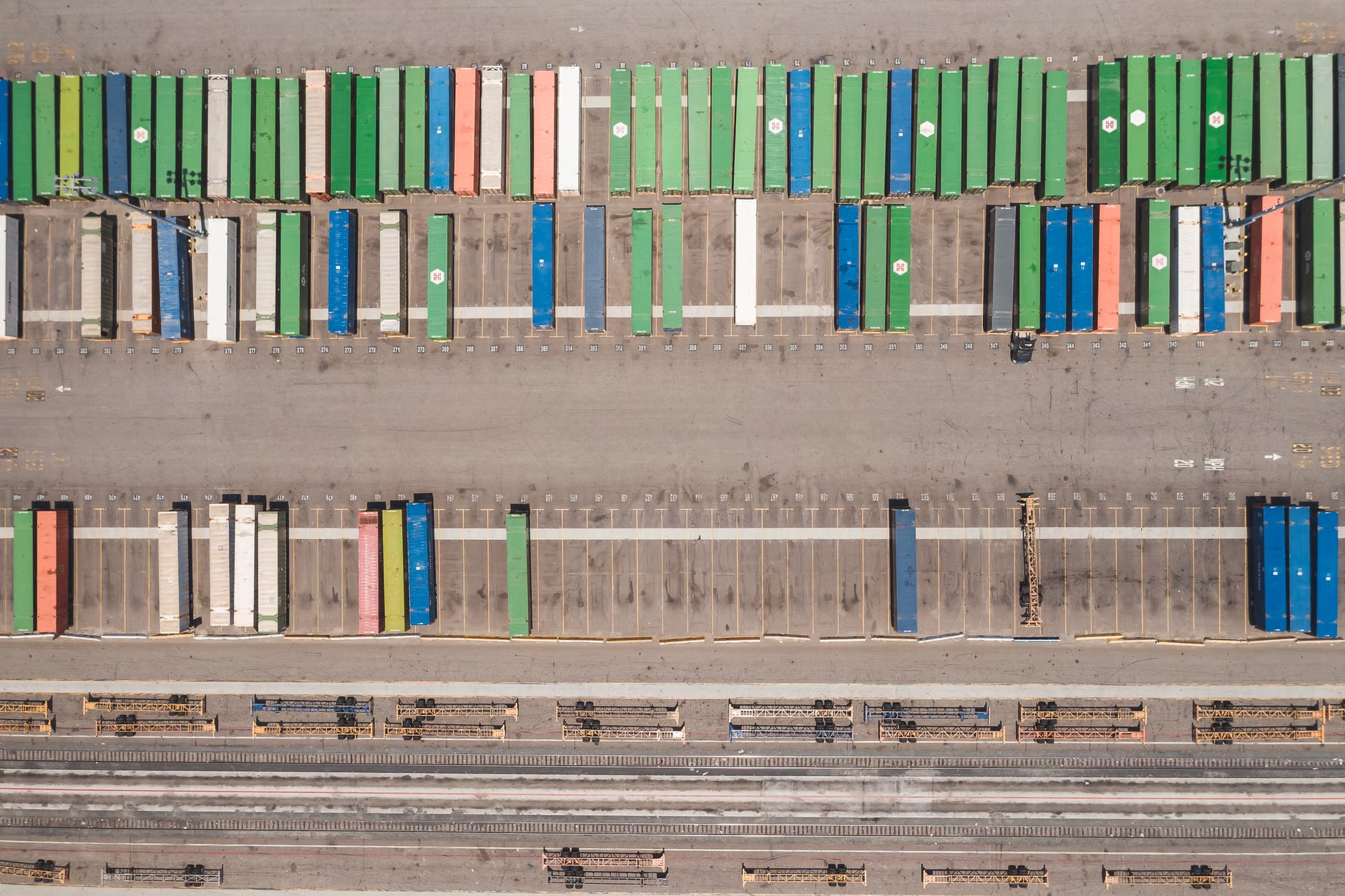
One of the most overlooked factors in the 2026 transition is the role of logistics. The CBAM does not just cover the manufacturing—it covers the journey. If you are buying a product that is shipped via high-emission methods, the total carbon cost increases. While this is primarily a burden on the importer, companies are already looking at “near-shoring” (moving production closer to the consumer) to avoid these costs.
This means that by 2026, we may see a resurgence of regional manufacturing. You might find that products made in regions closer to your home country become more competitively priced compared to those being shipped halfway across the world. Keep an eye on where your electronics are assembled; the geography of your supply chain is about to become as important as the brand name on the box.
When you are staring at a price tag in 2026, how do you know if you are paying a “fair” price or a “carbon-inflated” price? Use this simple decision framework:
- The Longevity Test: Will this device last me at least four years? If yes, the upfront cost is easier to justify, even with potential carbon premiums.
- The Energy Star Rating: Does the product have a high energy efficiency rating? Products that use less electricity are not only better for the environment but also help offset the initial purchase cost over time.
- The Repairability Index: Can I replace the battery or the screen myself? If a company makes their product easy to fix, they are likely investing in long-term value, which is a good indicator of a company that is successfully navigating the new carbon-tax landscape.
Do not be afraid of the 2026 transition. While it will change the pricing structure, it is also pushing the industry toward more responsible manufacturing. As consumers, our power lies in our purchasing decisions. By favoring companies that are transparent about their carbon footprint and that design products for longevity, we are not just protecting our own wallets—we are signaling to the market that sustainability is a requirement, not a luxury.
Frequently Asked Questions
Does the CBAM mean all electronics will become unaffordable?
No. While there will be price adjustments, the market is highly competitive. Manufacturers are already innovating to reduce their carbon footprints to remain price-competitive. You will likely see a shift in which products are most affordable, favoring those that are produced using renewable energy or those that use recycled materials.
Will my local government offer subsidies to offset these costs?
This varies by region. Many governments provide tax credits or rebates for high-efficiency household appliances (like Energy Star rated items). It is worth checking your local energy provider or government environmental portal to see if they offer “green” incentives that can help bridge the gap for essential home upgrades.
Is it better to buy second-hand electronics now?
Buying second-hand is the most effective way to avoid the carbon-border tax entirely, as these products have already “paid” their carbon debt during their initial manufacture. If you are looking for a secondary laptop for a child or a spare tablet, the refurbished market is likely to remain the most cost-effective and environmentally friendly option for the foreseeable future.
For more detailed information on how the Carbon Border Adjustment Mechanism is being implemented, you can visit the official European Commission CBAM portal, which provides regular updates on the transition phases and the scope of the goods covered.
Final Note: The transition to a carbon-conscious economy is a marathon, not a sprint. Focus on long-term value, prioritize durability, and keep an eye on the origin of your products. Your wallet—and the planet—will thank you.