Starting in 2026, the shift toward dynamic “Global-Energy-Tariffs” means the price you pay for electricity will fluctuate hour-by-hour based on grid demand, making automated smart home management the single most effective way to protect your monthly household budget.
Key Takeaways for 2026 Energy Shifts
- Automate, don’t manualize: Relying on manual timing for appliances will fail; you must transition to smart-grid-ready appliances that sync with tariff APIs.
- The “Peak-Shaving” mandatory shift: Energy providers are moving away from flat-rate billing to time-of-use (ToU) models, meaning running heavy appliances at 7 PM could cost 3x more than at 2 PM.
- Infrastructure check: Ensure your home router and smart home hub support “Matter” or “Thread” protocols to handle the increased data traffic from real-time energy monitoring devices.
If you are in your 30s or 40s, you probably remember a time when your utility bill was just a number that arrived once a month. You paid it, you moved on, and you didn’t think twice about whether your dishwasher was running at 3:00 PM or 9:00 PM. That era is officially ending. By 2026, energy markets across North America, Europe, and parts of Asia are aggressively rolling out “Dynamic Pricing” or “Real-Time Pricing” (RTP) models.
This isn’t just a minor tweak to your billing cycle; it is a fundamental shift in how we power our lives. If you have kids, you know the struggle of keeping the house running smoothly while juggling work and school schedules. Now, you’re being asked to add “Energy Arbitrageur” to your list of daily responsibilities. But before you panic about constantly checking an app, let’s look at what this actually looks like in practice and how you can automate your way out of the headache.
Understanding the Shift: Why Your Electricity Price is Becoming a Stock Market
In the past, energy companies bought electricity in bulk and sold it to you at a fixed, predictable rate. However, as the world transitions to renewable sources like wind and solar—which are inherently intermittent—grid operators need a way to balance supply and demand instantly. Enter dynamic tariffs.
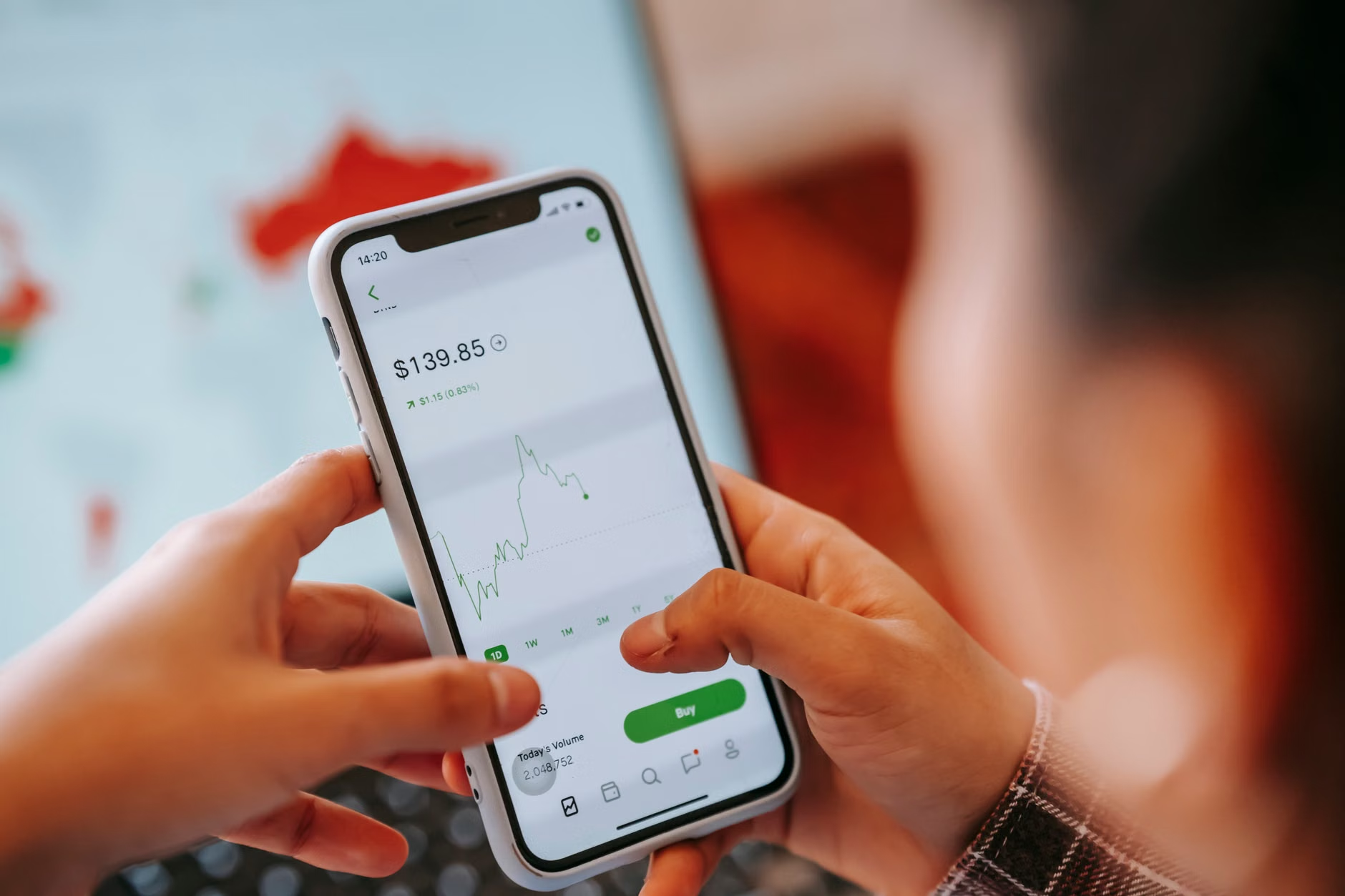
Dynamic tariffs mean the price of electricity is no longer static. It fluctuates based on the wholesale cost of energy on the grid. When the sun is shining and solar farms are pumping out excess energy, your electricity might become incredibly cheap, or even negative (yes, some providers will pay you to use energy). When everyone gets home from work, turns on the AC, and starts dinner, the price spikes. This is “Peak Demand.”
Why does this matter for you? Because the difference between the “low” and “high” price points in a 24-hour cycle can be as much as 400% to 600%. If you continue to run your home on a “set it and forget it” schedule, you are essentially leaving money on the table every single month. For a family of four, this could represent an annual cost increase of hundreds, if not thousands, of dollars if you aren’t optimizing your usage.
The Anatomy of a Smart Home Under Dynamic Pricing
To survive and thrive under these new tariffs, your home needs to be “grid-aware.” This means your major energy-consuming appliances—your HVAC system, your EV charger, your water heater, and your laundry machines—need to communicate with your utility provider’s price signals.
Think of it like this: your home is now a miniature factory. Instead of just consuming power, it’s managing inventory. The “inventory” is the heat in your water tank, the charge in your car, and the temperature of your living room. A smart home will “buy” energy when it’s cheap (storing it as heat or battery charge) and “consume” it when grid prices are expensive.
The Four Pillars of Smart Home Energy Management
If you want to stay ahead of these 2026 changes, you need to focus on these four areas:
- Connectivity: Your home needs a robust Wi-Fi network that doesn’t drop. If your smart dishwasher loses its connection to the utility API, it won’t receive the signal to pause during a price spike.
- Automation Logic: You need a central hub—like Home Assistant, Apple Home, or Samsung SmartThings—that can read your local utility’s pricing API.
- Thermal Storage: Your water heater is essentially a thermal battery. By heating water to a higher temperature during low-cost hours, you can “coast” through peak hours without needing to draw expensive electricity.
- Load Shifting: This is the golden rule. If it doesn’t need to happen right now, it shouldn’t happen during peak hours.
Real-Life Scenarios: What Changes for Your Family?
Let’s look at a hypothetical scenario to see how this plays out for a typical family. Meet the Miller family: two parents working from home, two kids in school. Before 2026, they did laundry whenever the basket was full. Usually, this was around 6:00 PM, right after the kids got home.
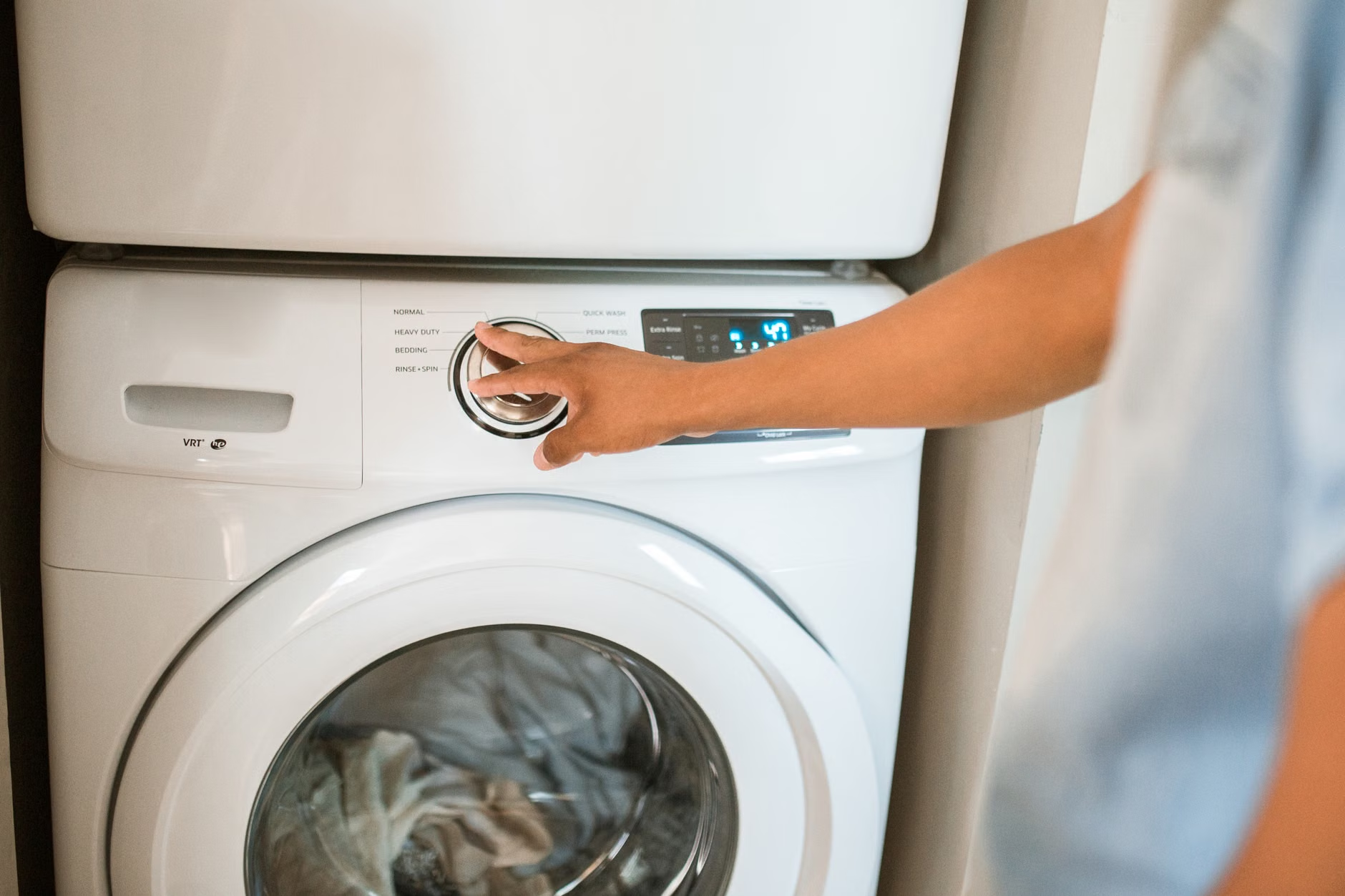
Under the new 2026 dynamic tariff, running the dryer at 6:00 PM is the most expensive time of day. It’s peak demand. By simply shifting their laundry habits to start at 1:00 PM—when the home is empty and solar production is at its peak—they could reduce their laundry-related energy costs by roughly 60%.
Common Mistakes to Avoid
The most common mistake is trying to manage this manually. Do not set alarms to turn off your appliances. You will burn out, and you will eventually stop doing it. The goal is automation. Look for appliances that explicitly state “Smart Grid Ready” or “Demand Response” capability. These machines have built-in logic to wait for the cheapest price window. If you don’t have these, use smart plugs with scheduling capabilities that you can set once and update monthly as seasonal price trends shift.
The Hidden Costs and Unexpected Trade-offs
It’s important to talk about the “hidden” side of this. While the promise of lower bills is real, there are trade-offs. The most significant one is comfort-versus-cost. For instance, if you automate your HVAC system to turn off during peak price windows, your house might get slightly warmer or cooler than you prefer for an hour or two. You have to decide if saving $2 is worth being slightly uncomfortable.
Another overlooked variable is data security. When you connect your home appliances to your utility provider’s cloud, you are sharing granular data about your family’s habits. You know when you wake up, when you go to sleep, and when you are away. Ensure you are using reputable, encrypted platforms and that you have reviewed the privacy settings for your smart devices.
Also, beware of “vendor lock-in.” Some utilities offer a “free” smart thermostat if you sign up for their demand-response program. While this sounds great, it often means they have the authority to override your temperature settings during peak events. Read the fine print carefully. You want a system where you maintain the override authority at all times.
Step-by-Step: Preparing Your Home for 2026
Don’t try to change everything in one weekend. Start with the “low-hanging fruit.”
Step 1: Audit Your Current Energy Profile
Check your utility provider’s website. Do they have a “Green Button” data download? This allows you to export your energy usage data into a spreadsheet. Look for your peak usage hours. Are you using the most power when electricity is most expensive?
Step 2: Invest in Monitoring Hardware
You cannot manage what you do not measure. Install a whole-home energy monitor (like Emporia or Sense). These devices clip onto your main electrical panel and give you real-time visibility into which appliances are consuming the most power. This is the only way to know if your “smart” automation is actually saving you money.
Step 3: Gradually Transition to Smart Appliances
You don’t need to replace your fridge tomorrow. But when an appliance breaks, prioritize buying a replacement that supports open standards like Matter. This ensures that your new appliance will work with your smart home hub regardless of the brand.

Comparison Table: Manual vs. Automated Energy Management
| Feature | Manual Management | Automated Smart Home |
|---|---|---|
| Effort Level | High (Requires constant monitoring) | Low (Set and forget) |
| Cost Efficiency | Low (Misses price dips) | High (Optimizes for lowest price) |
| Reliability | Unreliable (Human error) | High (Consistent logic) |
| Initial Setup | None | Requires hardware/app configuration |
As you can see, while manual management requires zero upfront cost, the “cost” is your time and the inevitable loss of efficiency. Automation requires an initial investment in hardware, but the long-term compounding savings on your utility bills make it a clear winner for the 2026 energy landscape.
Advanced Insights: The Future of Energy Arbitrage
If you really want to go down the rabbit hole, look into home battery storage. While still expensive, prices are dropping. If you have a home battery, you can charge it during the middle of the night when electricity is cheapest, and then use that stored energy during the peak evening hours. This essentially creates a “buffer” between you and the grid. You become entirely immune to price spikes.
Another insight: Keep an eye on “Vehicle-to-Home” (V2H) technology. As EVs become more common, some manufacturers are rolling out features that allow your car to act as a home battery. This is the ultimate peak-shaving tool. If you are in the market for a new car, check if it supports bidirectional charging. It’s a feature that will be incredibly valuable by 2027 or 2028.
Final Thoughts: Your Action Plan
The 2026 energy shift isn’t something to fear; it’s a structural change that rewards those who prepare. If you start now by installing an energy monitor and learning your peak usage hours, you will be miles ahead of the average consumer who will be caught off guard by their first “dynamic” bill. Focus on small, incremental steps: start with your water heater, then your HVAC, and finally your heavy-duty appliances like washers and dryers.
Take control of your home’s energy footprint. It’s not just about saving a few dollars; it’s about participating in a more efficient, sustainable, and reliable energy future. You’ve got this.
Frequently Asked Questions
1. Will my electricity be cut off if I don’t use a smart home system?
No, your electricity will not be cut off. You will still receive power 24/7. However, if you do not manage your usage during high-demand periods, you will simply be charged the higher, “peak” rates, which will significantly increase your monthly costs compared to households that manage their usage automatically.
2. Is it really worth the investment in smart home devices?
For most households, yes. If you calculate the ROI (Return on Investment) based on a 15-20% reduction in your energy bill, the hardware often pays for itself within 18 to 24 months. Furthermore, the added convenience of having a connected, responsive home environment provides value beyond just the dollar savings.
3. What if I am renting and cannot install smart devices?
You have fewer options, but you aren’t stuck. Focus on “plug-in” solutions. Smart plugs are non-invasive and can be used on portable heaters, dehumidifiers, or fans. You can also manually adjust your usage habits based on the price alerts provided by your local utility’s app. Even without advanced hardware, simply shifting your heavy-load tasks away from peak hours will make a noticeable difference.
For more information on energy pricing trends and utility regulations in your specific region, please check your local energy regulator’s official website or the International Energy Agency (IEA) for global updates on grid modernization and tariff structures.
Disclaimer: This article provides general information and does not constitute financial or professional technical advice. Always consult with a licensed electrician or your energy provider before installing hardware on your electrical panel.