Key Takeaways
- Cognitive-Rest architecture is not about aesthetics; it is about creating physical boundaries that force your brain to switch between ‘work mode’ and ‘home mode’ to prevent burnout.
- The 90-minute cycle rule: Your brain naturally fatigues after 90 minutes of intense focus; your office must include a ‘non-digital’ zone to allow for genuine mental recovery.
- The ‘Shutdown Ritual’ is the most critical component of the architecture; without a physical closing sequence—like packing away a laptop or changing lighting—your brain remains in a state of ‘work-in-progress’ anxiety.
If you are working from home, you likely know the feeling of the “invisible commute”—that moment when you stand up from your desk, walk three steps to the kitchen to help with homework, and realize your brain is still stuck on the email you were drafting five minutes ago. You aren’t lazy, and you aren’t failing at work-life balance. You are suffering from a lack of Cognitive-Rest architecture.
Most home offices are designed for efficiency. We buy ergonomic chairs, high-speed monitors, and noise-canceling headphones. We optimize for output. But we rarely optimize for recovery. Cognitive-Rest architecture is a design philosophy that treats your workspace not as a place to produce, but as a system that manages your mental energy levels throughout the day and helps you ‘switch off’ when the workday ends.
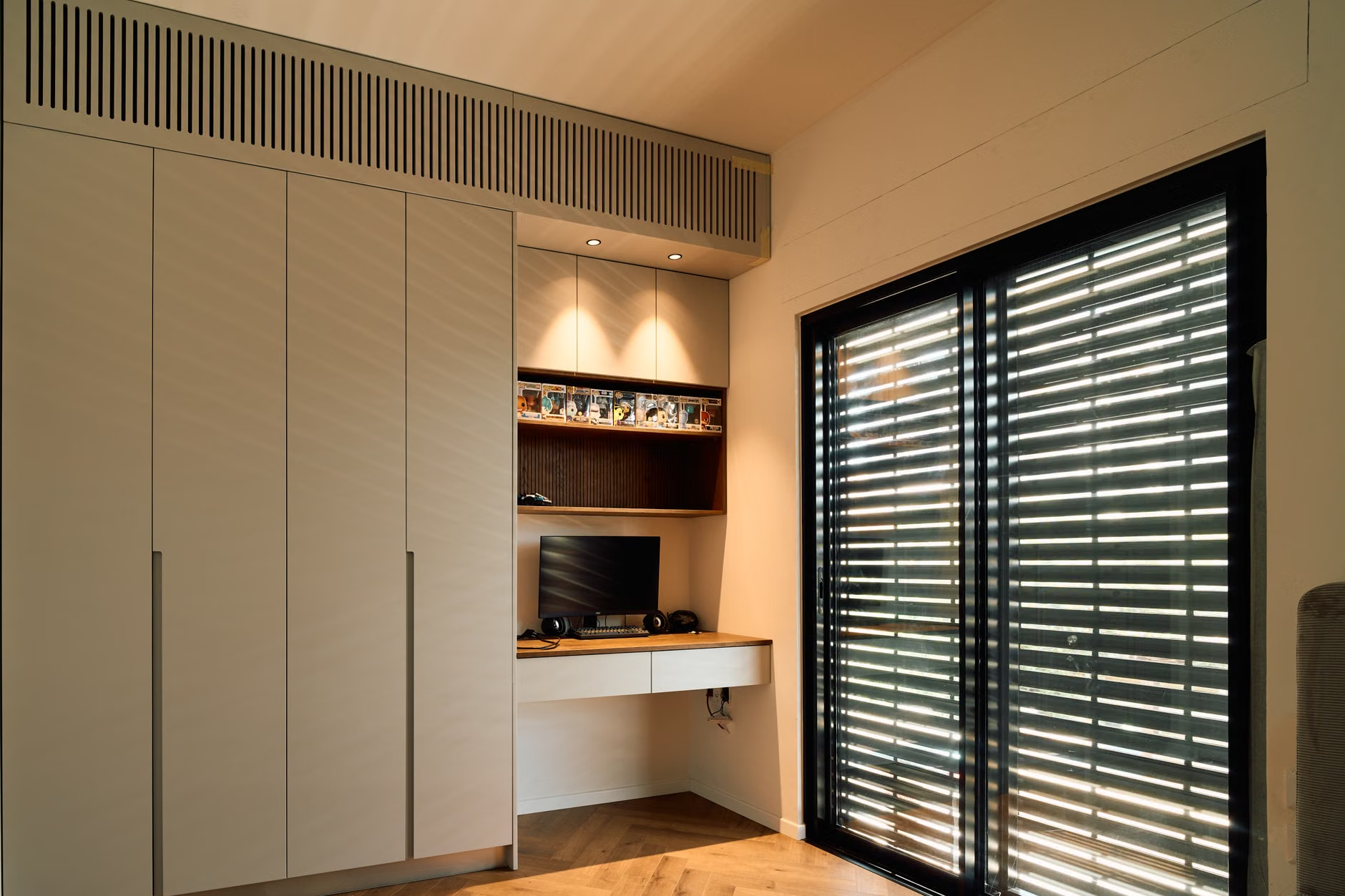
The Neuroscience of the ‘Work-Home’ Blur
Why is it so hard to leave work behind when your office is literally in your living room? It comes down to something called context-dependent memory and attention residue. When you perform a specific task in a specific environment, your brain associates that space with that task. When those spaces overlap, the mental boundaries dissolve.
When you work, your brain enters a state of ‘directed attention.’ This is a high-energy, resource-draining state. If you don’t provide your brain with a clear signal that the work period is over, it continues to ‘loop’ on unfinished tasks. This is where the 30-something parent often gets stuck—you are physically present for your children, but mentally, you are still in a Zoom meeting. To fix this, we need to build environmental triggers that force the brain to disengage.
The 90-Minute Focus and Recovery Cycle
Research into ultradian rhythms suggests that our bodies and brains function in cycles of roughly 90 to 120 minutes. After 90 minutes of high-intensity cognitive work, the brain requires a period of ‘low-arousal’ activity to replenish its focus. Many of us try to push through these cycles with more coffee or sheer willpower. That is the quickest path to burnout.
In a Cognitive-Rest office, your layout must accommodate this cycle. If your workspace is purely a ‘productivity machine’ with no room for a 5-minute ‘reset,’ you are fighting your own biology. Your office needs a ‘Transition Zone’—a physical space within your workspace that is strictly for non-digital recovery.
| Phase | Goal | Action |
|---|---|---|
| Deep Work | Cognitive Output | Screen-focused, high intensity (90 mins) |
| Micro-Rest | Brain Recovery | Non-digital, physical movement (5-10 mins) |
| Shutdown | Mental Closure | Environmental reset, ritual (5 mins) |
Designing the Physical Boundaries of Your Office
One of the most common mistakes is the ‘Multi-Purpose Table.’ If your dining room table is your office, your brain never feels truly off-duty because the dining table is a constant reminder of work. If you have a dedicated room, don’t just put a desk in it. You need to create a visual barrier.
A visual barrier doesn’t have to be a wall. It can be a simple folding screen, a change in lighting, or even a specific rug. The goal is to provide a ‘cued exit.’ When you step out of that space, you are stepping out of your work role. This is critical for parents. When your children see you in your ‘work zone,’ they learn that you are unavailable. When you cross the threshold out, you are fully present.
The Lighting Switch: Why Color Temperature Matters
Light is the most powerful tool for regulating our circadian rhythm. During the day, you want cool, blue-toned light to promote alertness. However, if you are working into the late afternoon, that same light can keep your cortisol levels high, making it nearly impossible to transition into ‘parenting mode’ or ‘relaxation mode’ once you finish.
Decision Rule: Use smart bulbs that allow you to change color temperature. At 4:00 PM, switch your office lighting from ‘Cool White’ (5000K+) to ‘Warm White’ (2700K). This subtle shift acts as a subconscious signal to your brain that the ‘high-intensity’ part of your day is ending.

The Shutdown Ritual: The Final Piece of the Puzzle
The biggest failure of the modern home office is the lack of a formal ‘closing time.’ In a traditional office, you pack your bag, walk to your car, and commute home. That commute is a buffer. At home, you just close the laptop and walk into the kitchen. Your brain doesn’t have time to process the transition.
You must implement a 5-minute Shutdown Ritual. This is not optional. It is the architectural ‘door’ that locks your work day away. Your ritual should be consistent and physical.
- Digital Cleanse: Close all browser tabs. If you leave them open, your brain keeps them open too.
- The ‘Tomorrow List’: Write down the top three priorities for tomorrow on a physical piece of paper. This ‘offloads’ the anxiety of remembering tasks to a physical object.
- Physical Reset: Clear your desk surface. Put your laptop in a drawer or cover it with a cloth. If it’s out of sight, it’s out of mind.
- The Exit Signal: Turn off your desk lamp. This specific action is the final ‘switch’ for your brain.
Hidden Costs and Common Misconceptions
A common misconception is that ‘more equipment’ equals ‘more productivity.’ Many people spend thousands on high-end chairs and mechanical keyboards but ignore the acoustics and airflow of their space. If your office is stuffy or echoes, your brain is working harder than it needs to. High CO2 levels in small, unventilated home offices are proven to reduce cognitive performance.
Unexpected Trade-off: The ‘ergonomic’ trap. You might have the perfect chair, but if you sit in it for six hours without moving, you are causing muscle tension that limits your ability to relax in the evening. The best ‘ergonomic’ feature is not a chair; it’s a movement trigger. Set a timer to stand up and walk away from your desk every 90 minutes. If you don’t have a view of a window, place a plant in your line of sight. Research from the University of Exeter found that office plants can increase productivity and well-being by up to 15%.

Actionable Steps for Your Home Office
If you want to start implementing Cognitive-Rest architecture today, don’t overhaul your entire room. Start with these three steps:
- Audit your environment: Identify one ‘work-trigger’ (like a stack of files or a monitor) that is visible from your living space. Can you hide it with a curtain, a screen, or a simple storage box?
- Define your ‘Focus Zone’: If you have limited space, use a specific desk mat or a specific lamp that is only turned on when you are working. When it is off, that space is no longer an ‘office.’
- Implement the ‘Shutdown Ritual’: Start tonight. Even if you feel silly, go through the motions of closing your digital workspace, writing your list, and turning off the light.
The goal of Cognitive-Rest architecture is not to make you a more efficient worker; it is to make you a more present human being. By creating these boundaries, you are giving your brain permission to stop working, which is the most important step in preventing long-term burnout. You don’t need a massive budget or a dedicated wing of your house to do this. You just need to be intentional about the signals you send to your brain.
Remember, your workspace is a reflection of how you treat your own mental health. If you treat it like a temporary, chaotic corner of your home, your brain will feel temporary and chaotic, too. Give it a structure, respect the boundaries, and watch how quickly your ‘off-duty’ time becomes actually restful again.
Frequently Asked Questions
1. I live in a tiny apartment and cannot have a separate room for an office. How do I apply these principles?
The physical size of your home is less important than the sensory boundaries. If you are using a dining table, store your laptop, mouse, and keyboard in a designated box or drawer at the end of the day. A desk mat that you roll up and put away is a powerful psychological signal. If you can, use a specific ‘work’ playlist that you never listen to during your personal time. When the music stops, the work stops.
2. Does the 90-minute cycle really apply to everyone, or is it just a trend?
The 90-minute ultradian rhythm is a biological reality, not a productivity trend. While the exact duration can vary slightly from person to person based on age, sleep quality, and health, the underlying principle—that the brain cannot maintain high-intensity focus indefinitely—is scientifically sound. If you find yourself ‘zoning out’ or checking your phone mindlessly after an hour, your brain is telling you it has reached the end of its current energy cycle. Respecting this is not a sign of weakness; it’s a sign of professional maturity.
The biggest hidden cost is ‘Attention Residue.’ This occurs when you don’t properly close out a task, and your brain continues to process it in the background. This leads to decision fatigue and emotional irritability, which often manifests as being ‘short’ with family members or feeling unable to enjoy downtime. The financial cost of a few smart bulbs or a room divider is negligible compared to the mental health cost of being perpetually ‘half-at-work’ for years on end.
For further reading on the science of workspace ergonomics and cognitive load, you can refer to the American Psychological Association’s resources on workplace well-being. While their focus is often on corporate environments, the principles of environmental control and cognitive boundaries are directly applicable to the home office.
Start small, be consistent with your ritual, and you will find that the boundary between ‘work’ and ‘life’ becomes much easier to maintain.