The most effective way to raise a bilingual toddler is not through rigid flashcards or screen-based apps, but through “play-based acquisition”—a method where the second language becomes a natural tool for connection rather than a school-like subject.
- Context is King: Toddlers learn language best when it is tied to an immediate physical action or object, not abstract memorization.
- Consistency Beats Intensity: 15 minutes of immersive, playful interaction daily is far superior to a single, high-pressure weekly lesson.
- The “One Person, One Language” (OPOL) Fallacy: While useful, it is not mandatory; focus instead on creating “language zones” where the target language is consistently used for specific fun activities.
If you are a parent in your 30s or 40s, you likely remember the “language lab” days—sitting in a sterile room, repeating phrases into a headset. It was efficient for grammar, but it did almost nothing for actual fluency. Now, as you look at your own toddler, you want something different. You want them to be comfortable in two languages, but you also don’t want to turn your living room into a classroom. The good news? You don’t have to.
The Neuroscience of Play and Language
To understand why play works, we have to look at how a toddler’s brain processes information. Adults learn through logic and rule-following; toddlers learn through sensory exploration. When a child is playing, their brain is in a state of high engagement. They are physically manipulating their environment, which creates a “memory hook” for the words they hear.
When you say the word “apple” while your toddler is holding a plastic toy apple, you aren’t just teaching a vocabulary word; you are creating a synaptic connection between a physical sensation, a visual object, and a linguistic sound. This is the bedrock of “dual-coding theory.” By associating a word with an action or a physical object, you bypass the need for translation. The child doesn’t think, “What is the translation for this?” They simply think of the object directly in the target language.
The Trap of Passive Exposure
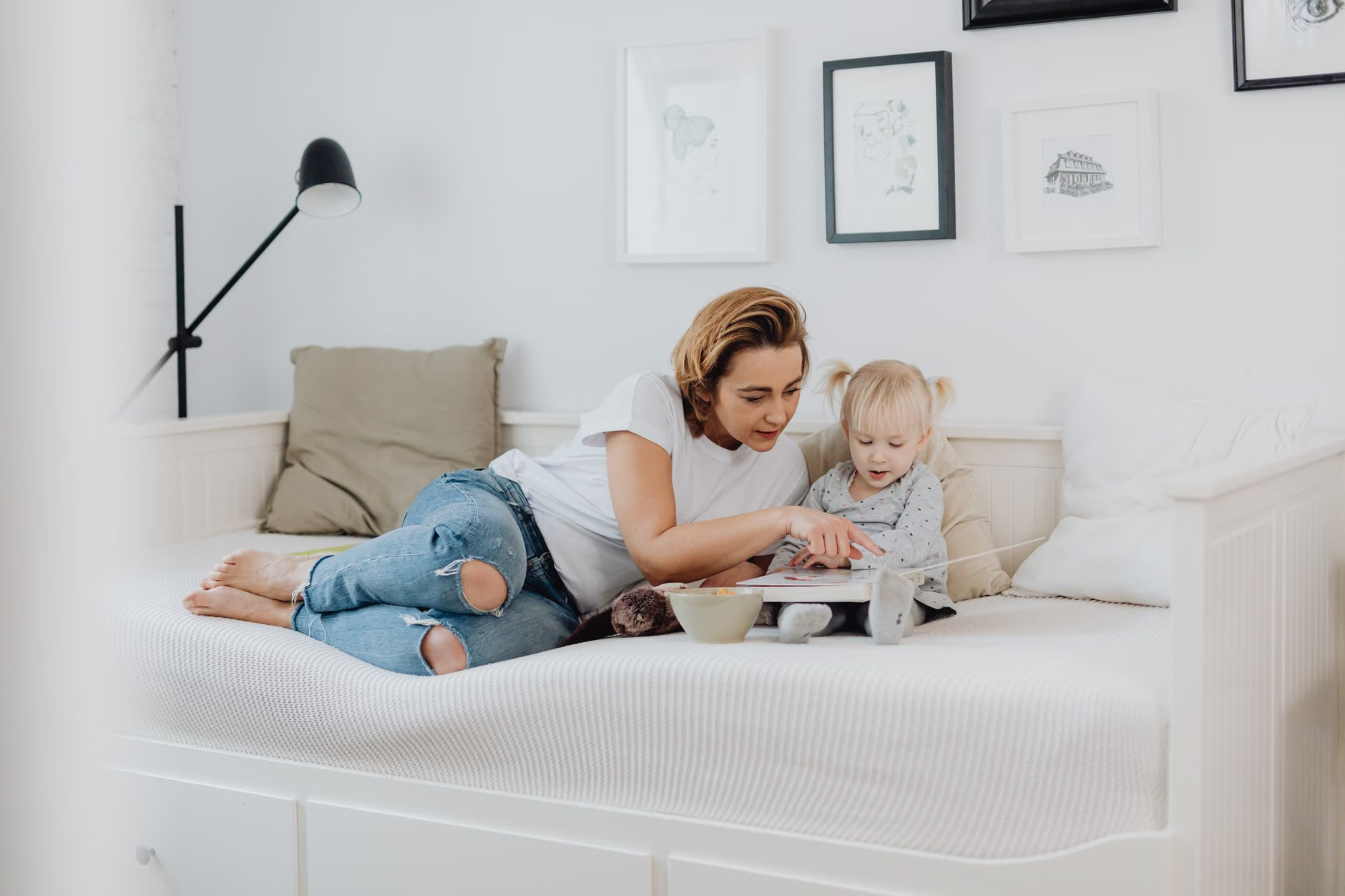
Many parents assume that putting on cartoons in a second language counts as “exposure.” While it provides audio input, it lacks the most critical component of language acquisition: interactional feedback.
Language is a social tool. If your toddler watches a video, they are a spectator. If they play a game with you, they are a participant. When they point to a ball and you say, “Yes, the red ball,” you are confirming their intent. This feedback loop is what triggers the brain to store that word in long-term memory. If the child doesn’t get a reaction to their communication, the brain deems the information “low priority” and discards it.
Designing Your Play-Based Environment
You don’t need a curriculum. You need a strategy for your daily routines. The goal is to make the second language the “language of fun.” If the language is only used for commands—”put your shoes on,” “eat your dinner”—it will eventually be associated with authority and chores. If it is used for play, it is associated with joy.
The “Language Zone” Strategy
Instead of trying to speak the target language 24/7 (which can be exhausting and lead to burnout), designate specific “Language Zones.” These can be physical spaces or time slots.
| Zone/Context | Strategy | Why it Works |
|---|---|---|
| Bath Time | Use only the target language for water toys and bubbles. | High-engagement, repetitive environment. |
| Park Time | Narrate physical movements (climbing, sliding, running). | Action-based learning (Total Physical Response). |
| Building Blocks | Focus on shapes, colors, and counting. | Structural/Mathematical language usage. |
By compartmentalizing the language, you reduce the cognitive load on yourself. You don’t have to be fluent in every aspect of life; you only need to master the vocabulary for the “zones” you have chosen.
The “Total Physical Response” (TPR) Method
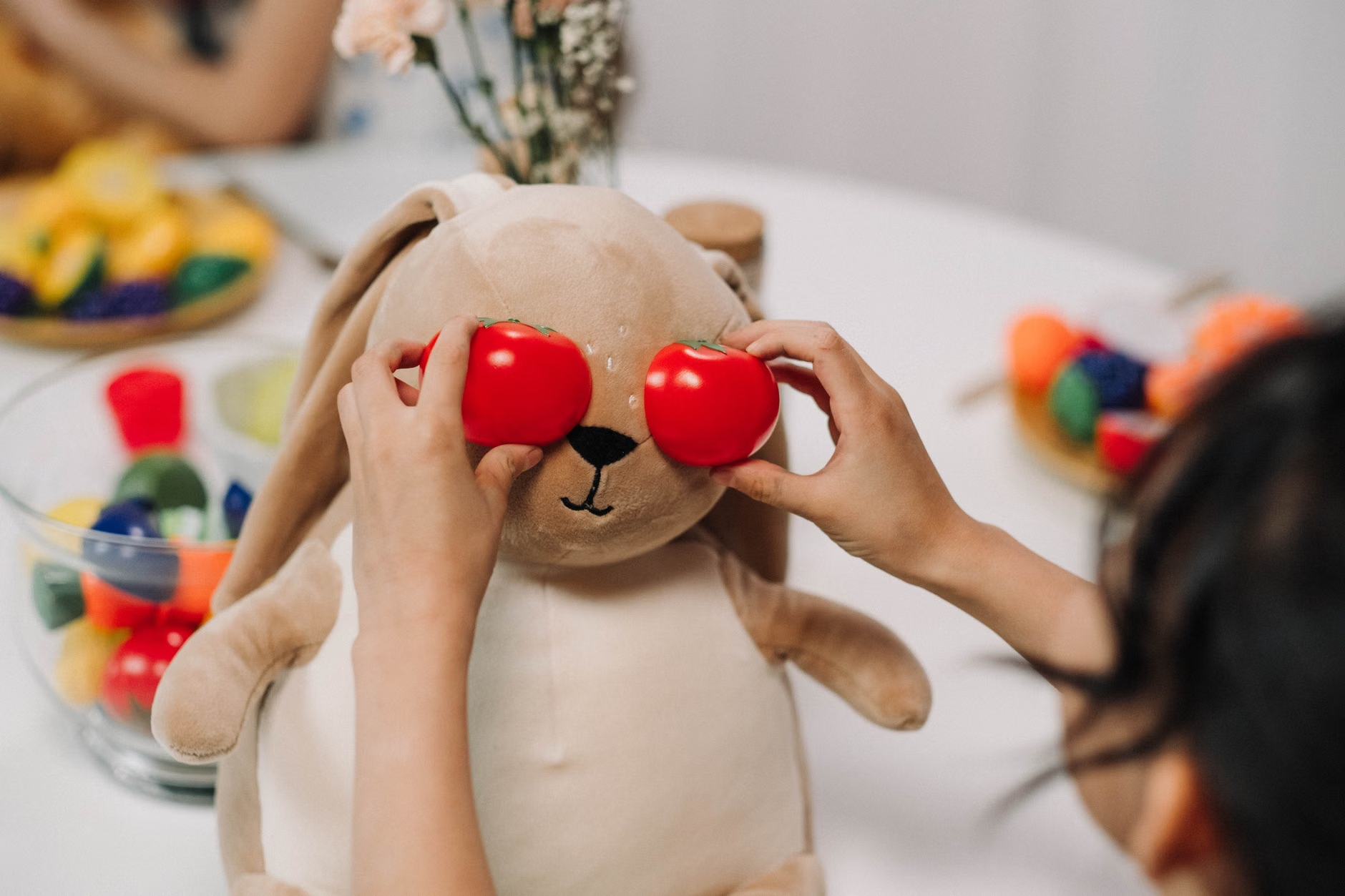
The TPR method, developed by Dr. James Asher, is essentially teaching language through physical movement. For a toddler, this is natural. If you are teaching the word “jump,” don’t show a flashcard. Say “jump” and then jump yourself. Then, help them jump.
Common Mistake: Over-explaining. Parents often try to explain the grammar of why a word changes or how a sentence is structured. Toddlers cannot process abstract grammar rules. They process patterns. If you say, “I am jumping,” “You are jumping,” and “He is jumping,” the toddler will eventually intuit the pattern of the verb conjugation without ever hearing a single lecture on grammar.
Step-by-Step Implementation
- Select a theme: Choose a simple concept like “The Park” or “The Kitchen.”
- Identify core verbs and nouns: Keep it to 5-10 words maximum.
- Model the action: Perform the action while saying the word.
- Wait for the child: Don’t force them to speak. Let them absorb.
- Provide positive reinforcement: When they attempt the word or perform the action correctly, smile and confirm.
The “waiting” phase is the most difficult for parents. It is common for children to go through a “silent period” where they understand everything but refuse to speak the target language. This is normal. Do not panic and switch back to your dominant language. Keep the input coming. They are building their internal dictionary.
Overcoming the “I’m Not Fluent Enough” Hurdle
A frequent concern for parents in their 30s and 40s is their own proficiency. What if you aren’t a native speaker? What if your accent isn’t perfect? First, remember that language acquisition is about communication, not perfection. If you are aiming for your child to be bilingual, your goal is to provide a foundation.
If you are not a native speaker, use high-quality audio resources to supplement your play. Play songs in the target language while you build towers or play with cars. The child will pick up the correct phonetics from the audio, and they will learn the “social” aspect of the language from you.
Insight: The “Hidden Cost” of perfectionism. Parents who obsess over perfect grammar often stop speaking the target language because they are afraid of making mistakes. This silence is far more damaging to the child’s acquisition than a slight grammatical error. Your child needs a partner to play with, not a linguist.
Managing Expectations and Real-Life Constraints
Life as a parent is busy. Between work, household chores, and the general chaos of raising a toddler, you will have days where you simply don’t have the energy to switch languages. That is okay. The “all or nothing” mentality is the fastest way to fail at bilingualism. If you miss a day, or even a week, the world will not end.
Instead, focus on “Sustainable Immersion.” What can you realistically maintain for the next five years? If the answer is “15 minutes a day during bath time,” then commit to that. Consistency over a long period is significantly more effective than intense, sporadic bursts of language learning that lead to burnout.
The Role of Media and Technology
While we established that screen time shouldn’t be the primary teacher, it can be a useful tool if used actively. Instead of leaving the TV on in the background, sit with your child and watch a 10-minute clip in the target language. Pause it. Ask questions. “Look at that dog! What color is the dog?” This turns passive consumption into active, social play.
The Long-Term View
Raising a bilingual child is a marathon, not a sprint. By the time your child reaches school age, they might prefer the dominant language of their environment. This is a natural reaction to social pressure. Your role as a parent is to keep the “bilingual identity” alive by making the target language relevant and fun.
As they grow, transition from “play” to “shared interests.” If they love LEGOs, find manuals or videos in the target language. If they love cooking, find recipes. The language should always be a bridge to something they already enjoy.
Final Recommendation: Start today by picking one activity—just one—where you will commit to using the target language. Whether it is reading a bedtime story, playing with blocks, or singing songs in the car, make it a non-negotiable part of your daily routine. The goal is to build a habit that feels less like “learning” and more like “living.”
Frequently Asked Questions
Q: My child only answers in my dominant language even when I speak the target language. Should I stop?
A: Absolutely not. This is a classic sign of “receptive bilingualism.” Your child understands you perfectly, but their brain is choosing the path of least resistance (the dominant language) for output. Continue speaking the target language to them. As their confidence grows, they will eventually switch to the target language, especially if you create environments where that language is required for play.
Q: Is it confusing for a toddler to learn two languages at once?
A: Research consistently shows that children have an incredible capacity for language and do not get “confused.” They may mix words occasionally (code-switching), which is a sign of a sophisticated brain navigating two systems, not a sign of confusion. This usually resolves itself as they gain more vocabulary in each language.
Q: How many languages is too many?
A: There is no magic number, but for most families, focusing on two is a significant undertaking. Adding a third language requires much more intentional planning and exposure. Start with one, ensure it is firmly established through consistent play, and then evaluate your capacity for a second or third.
For further reading on language development and bilingual strategies, you can consult the resources provided by the American Speech-Language-Hearing Association (ASHA), which offers evidence-based insights into how children navigate multiple languages.