By 2026, the way you pay for electricity will fundamentally change as global utility providers shift toward mandatory “time-of-use” (TOU) dynamic pricing, meaning your electricity bill will be determined not just by how much you use, but by exactly when you use it.
- Automate or Pay More: Manual energy management is no longer cost-effective; smart appliances must be programmed to run during off-peak hours to avoid premium 2026 tariff rates.
- Infrastructure Readiness: Check if your current smart home hub supports “Demand Response” protocols; if it doesn’t, you will miss out on utility-led incentive programs.
- The “Midnight” Shift: High-energy chores like laundry and dishwashing will need to shift to off-peak windows (often 10 PM – 6 AM) to capitalize on the lowest tier of the new global pricing models.
If you are in your 30s or 40s, you likely remember a time when electricity pricing was relatively flat. You turned on the dishwasher when you needed clean plates, and the cost per kilowatt-hour (kWh) remained largely the same throughout the day. That era is coming to a definitive end by 2026.
As global grids integrate more renewable energy—which is notoriously intermittent—utilities are moving toward real-time pricing models. This isn’t just a minor tweak to your billing; it is a structural change that turns your home into a mini-power plant that needs to be managed with the precision of a small business.
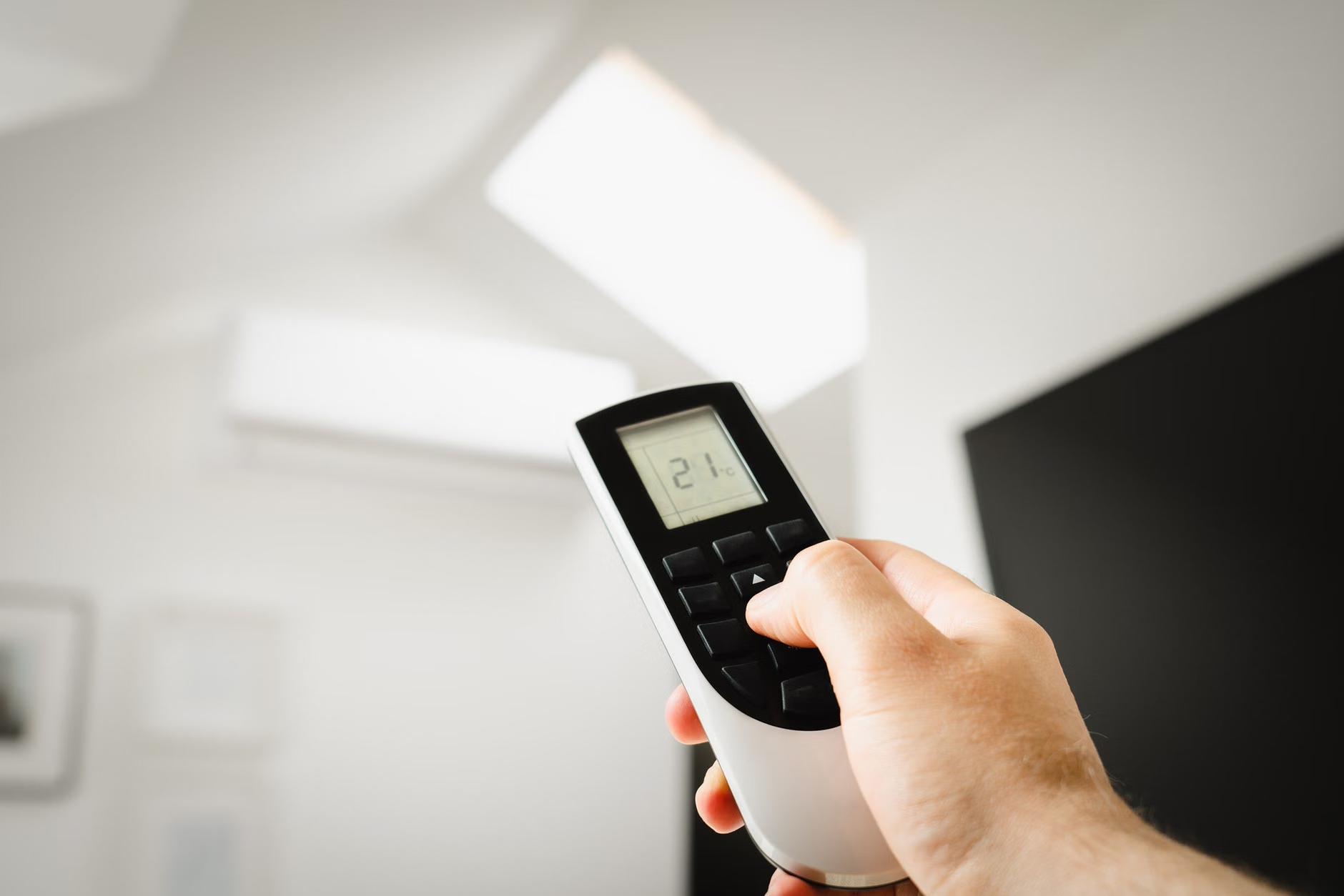
Understanding the 2026 Dynamic Tariff Model
The “Global-Energy-Tariff” shift refers to the widespread adoption of Dynamic Time-of-Use (DTOU) pricing. Previously, many regions utilized a “flat rate” or a simple “peak/off-peak” split. By 2026, most developed nations are moving toward granular pricing that fluctuates every 15 to 30 minutes based on grid demand and supply.
Why is this happening? Renewable energy sources like wind and solar don’t provide a steady “base load” like coal or nuclear power. When the sun is high and the wind is blowing, electricity is abundant and cheap—sometimes even having a negative cost. When everyone gets home from work at 6 PM, turns on the AC, and starts cooking, the grid is strained, and prices skyrocket.
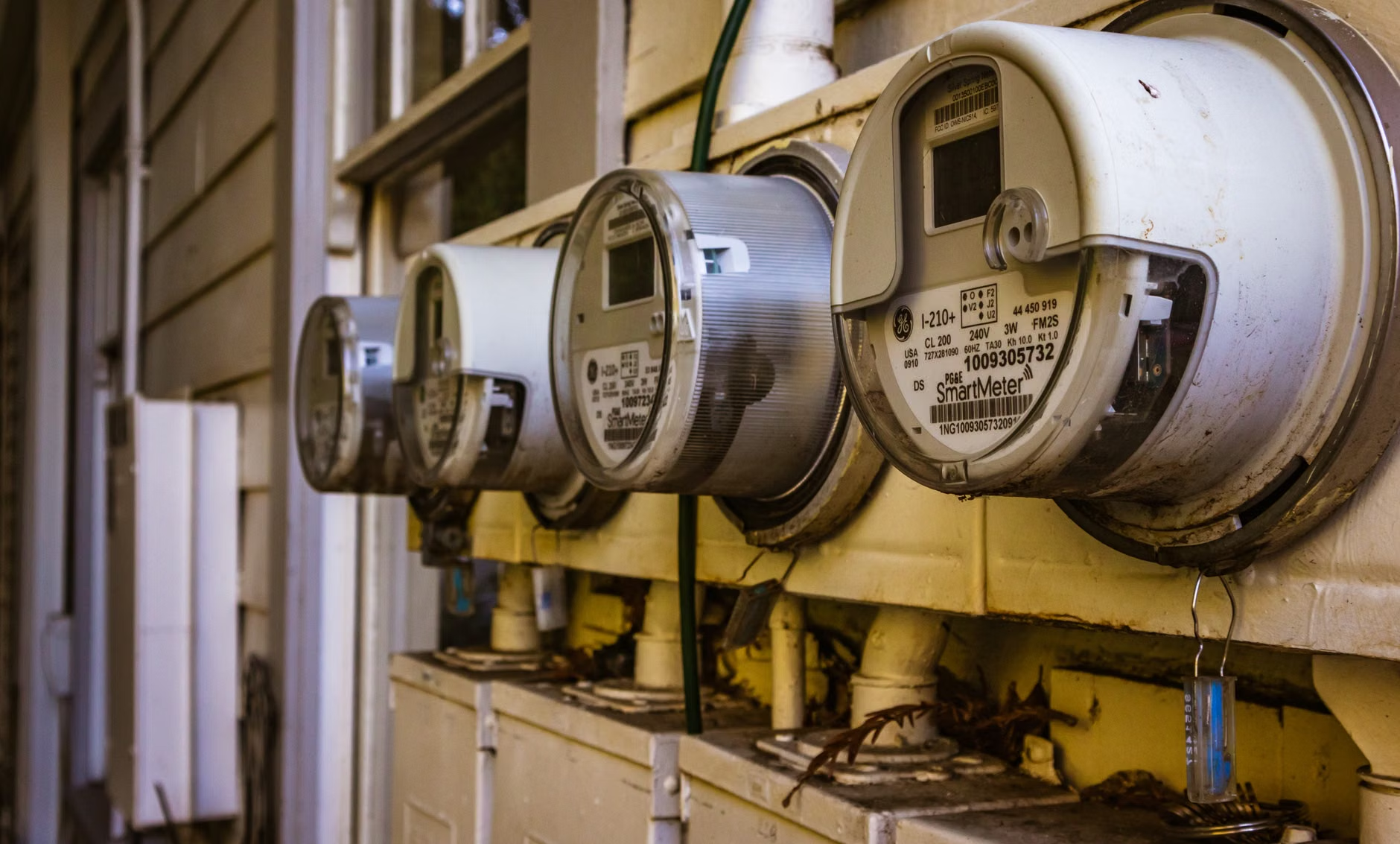
For a parent managing a busy household, this is a logistical headache. You cannot realistically hover over your smart meter to check if it’s the “right time” to run the dryer. However, the technology to manage this for you has reached a point of maturity where it can handle the heavy lifting—if you set it up correctly.
The Financial Impact: A Real-World Comparison
To understand why this matters, let’s look at a hypothetical scenario. Consider a family of four using an average of 30 kWh per day. Under a flat-rate model, you pay a flat $0.15/kWh regardless of when you consume it, totaling $4.50 per day.
Under the new 2026 dynamic model, your usage might look like this:
| Time Window | Dynamic Rate (est.) | Behavioral Impact |
|---|---|---|
| Peak (4 PM – 9 PM) | $0.45/kWh | Expensive: Use only essentials. |
| Mid-Peak (9 AM – 4 PM) | $0.20/kWh | Moderate: Good for remote work. |
| Off-Peak (10 PM – 6 AM) | $0.08/kWh | Cheap: Run heavy appliances. |
If you continue your current habits (running the dryer at 7 PM), you would pay roughly $8.00 per day. If you shift those heavy loads to the off-peak window, you could drop your daily cost to roughly $3.50. That is a 56% difference in daily energy expenditure.
Equipping Your Smart Home for the Shift
You don’t need a PhD in electrical engineering to survive these changes, but you do need to audit your current “smart” devices. Not all smart plugs or appliances are created equal. The key feature you should look for in 2026 is API-driven load balancing.
Many older smart plugs simply turn on and off based on a schedule. This is insufficient for dynamic pricing because the “peak” hours can shift based on weather patterns (e.g., a cloudy day reducing solar output). You need devices that can pull live data from your utility provider’s API to make decisions in real-time.
Step-by-Step: The “Automated Off-Peak” Workflow
If you want to minimize your bills without thinking about them, follow this implementation framework:
- Utility Portal Integration: Log into your utility provider’s website. Look for a section called “Smart Meter Data” or “API Access.” If they offer it, connect it to a centralized hub like Home Assistant or a proprietary smart home ecosystem that supports energy management (such as Samsung SmartThings or Apple HomeKit with Matter-enabled devices).
- Identify “Heavy” Loads: Your biggest energy drains are likely the HVAC system, the electric water heater, the clothes dryer, and the dishwasher. These are your targets.
- Set Logic-Based Triggers: Instead of a fixed timer, set a rule: “If the price of electricity is above $0.25/kWh, delay the dishwasher start.”
- Monitor and Optimize: For the first month, keep an eye on your usage dashboard. You will likely find that you can “shift” more loads than you expected.
Common Pitfalls and How to Avoid Them
One of the biggest mistakes people make when preparing for 2026 is “over-automating” without a manual override. If you set your water heater to only run during off-peak hours, you might find yourself taking a cold shower at 5 PM because the tank didn’t recover from the morning rush. Always have a “Manual Boost” button or a physical override switch for critical life-comfort systems.
Another common misconception is that “energy-efficient” appliances are all you need. An energy-efficient dryer is great, but if it runs during the peak-price window, it is still costing you a fortune. The goal isn’t just to use less electricity; it is to use electricity when the grid is begging for consumption.
The Hidden Opportunity: Demand Response Programs
There is a flip side to these tariffs that many people overlook: Demand Response (DR) incentives. Because the grid operator needs to balance the load, they are often willing to pay you to reduce your usage during critical peak events. By allowing your smart home hub to communicate with your utility, you might be eligible for bill credits or cash rebates when you automatically reduce your usage during a heatwave or grid emergency.
This is the “pro-level” of smart home management. While your neighbor is paying a premium, your house is automatically dimming the lights, adjusting the thermostat by two degrees, and pausing the smart charger, all while earning you a small rebate from the utility company.
Selecting the Right Smart Infrastructure
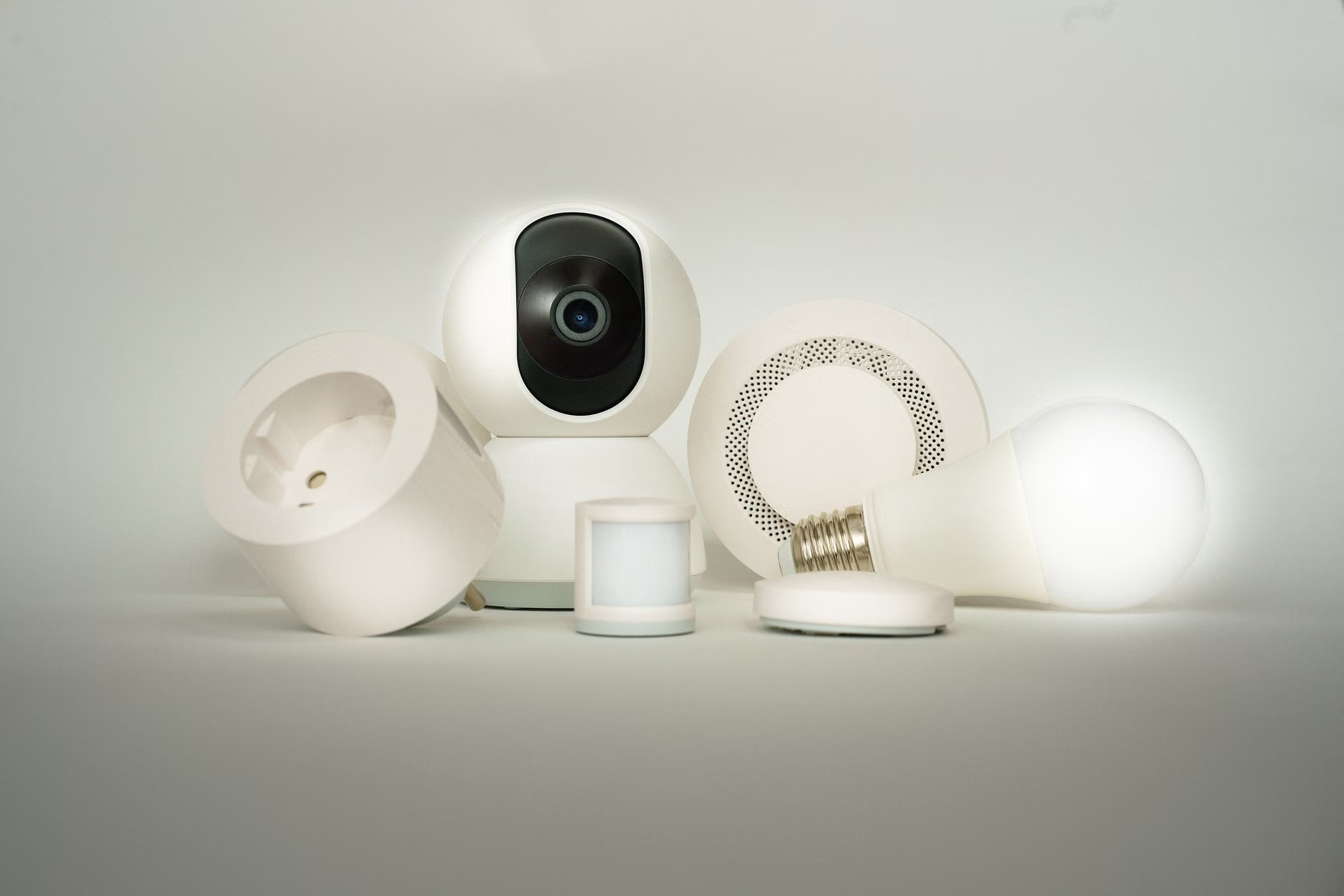
If you are in the market for new appliances or smart home gear, prioritize devices that support the Matter standard and have built-in energy reporting. Matter is a cross-industry smart home standard that ensures your devices can talk to each other regardless of the brand. This is vital for 2026 because your solar inverter, your smart thermostat, and your smart EV charger all need to coordinate to optimize your consumption.
Avoid proprietary ecosystems that lock you into a single brand’s limited feature set. You want an open system that can ingest data from your utility provider and output commands to your appliances. If a device cannot export its energy usage data to a third-party dashboard, it will be a “dumb” device in the 2026 landscape.
The 2026 Strategy: A Summary for Busy Parents
The transition to dynamic energy pricing is inevitable, but it is also an opportunity to take control of a significant portion of your household budget. By moving from a “reactive” energy consumer to a “proactive” smart home manager, you are insulating your family from the volatility of global energy markets.
Start by identifying your top three energy consumers. If you can move just those three to off-peak hours, you will see a measurable impact on your monthly bill. Use the next few months to audit your smart home hub’s capabilities. If it can’t handle dynamic pricing logic, start planning for a platform migration before the 2026 tariffs become the universal standard.
Remember, the goal isn’t to live in the dark or freeze in the winter—it is to use technology to align your consumption with the reality of the modern grid. A small investment in automation now will pay dividends for years to come.
Frequently Asked Questions
Q: Will my existing smart home devices become obsolete by 2026?
A: Not necessarily, but they may become “less smart.” If your current devices cannot receive real-time price signals from your utility, they won’t be able to automate your savings. You may need to add a smart hub or gateway that can bridge the gap between your utility’s API and your existing devices.
Q: Is there a “safe” way to automate heavy appliances like the water heater?
A: Yes. Use a smart relay or a smart breaker that is rated for high-amperage appliances. Always ensure that the system has a physical “emergency” override so that you aren’t left without hot water during unexpected situations. Most modern smart relays have a hardware button for this exact purpose.
Q: How do I know if my local utility provides dynamic pricing data?
A: Check your utility provider’s website for “Time-of-Use” or “Real-Time Pricing” programs. Most major utilities are now required to provide a digital feed or a customer dashboard with this information. If they don’t offer an API, you can often use a third-party sensor, such as an “Emporia Vue” or “Sense” home energy monitor, to get real-time data directly from your electrical panel.
For further reading on global energy standards and smart home integration, you can explore the official documentation from the Connectivity Standards Alliance (Matter) or your local government’s energy department website.