The most effective way to reclaim your family vacation in 2027 isn’t by rushing to a crowded airport gate, but by reclaiming the journey itself through the deliberate, rhythmic pace of heritage rail travel.
- Predictability over Speed: Heritage rail eliminates the “airport stress” variable by providing fixed, scenic routes where the journey is the primary activity, not just a means to an end.
- Budgeting for Experience: While heritage rail often carries a premium, it consolidates entertainment, dining, and lodging costs, making it a surprisingly efficient choice for multi-day family trips.
- Strategic Planning: Booking for 2027 requires looking at “shoulder season” windows (late spring or early autumn) to avoid peak tourist crowds and secure better pricing on historic sleeper carriages.
If you are in your 30s or 40s, you likely know the specific brand of exhaustion that comes with “efficient” travel. You spend hours researching the cheapest flights, only to find yourself herding children through security lines, paying for liquid-limit compliance, and arriving at your destination feeling like you’ve just run a marathon. By 2027, the trend toward “Slow-Transit” is no longer just a niche aesthetic for retirees; it is becoming a survival strategy for parents who need a vacation that actually feels like a break.
Why the “Slow-Transit” Shift Matters for Modern Families
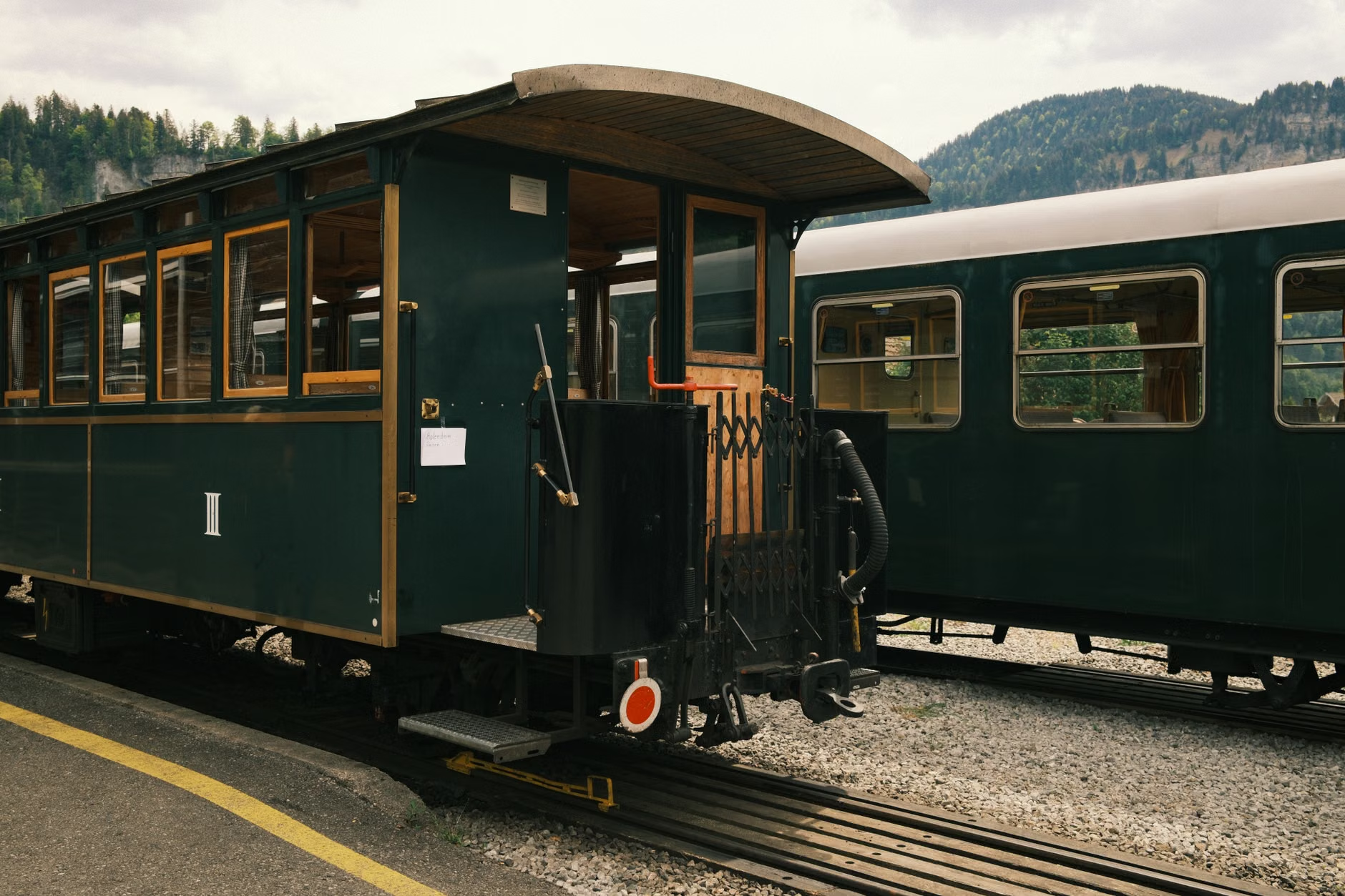
The core appeal of heritage rail in 2027 lies in the removal of decision fatigue. When you fly, you are constantly managing variables: gate changes, luggage dimensions, ride-share surges, and the unpredictable temperaments of toddlers in pressurized cabins. When you board a heritage rail line—whether it’s a restored steam route through the Scottish Highlands or a historic narrow-gauge track in the American Rockies—you are choosing a fixed, curated environment.
For parents, this matters because it creates a “contained” experience. Your children have room to move, you have a table for snacks or coloring, and the scenery outside the window provides a shared, low-stimulation activity that doesn’t require a screen. It is the antithesis of the “hurry up and wait” culture of modern aviation.
Furthermore, heritage rail routes often bypass the typical tourist traps. Because these lines are often preserved by non-profits or dedicated regional authorities, they take you through “backyard” landscapes that are inaccessible by highway. You aren’t just getting from Point A to Point B; you are seeing the terrain from the perspective of a traveler from a century ago, which is a rare, grounded experience in our hyper-digital world.
The Economics of Rail Travel: Is It Actually More Expensive?
A common misconception is that heritage rail is a luxury item reserved for the wealthy. When you compare a single heritage ticket against a budget flight, the rail ticket looks expensive. However, this is a flawed comparison. You must look at the “total cost of arrival.”
Consider this breakdown for a family of four traveling over a three-day weekend:
| Expense Category | Modern Air Travel | Heritage Rail Journey |
|---|---|---|
| Transport to/from hub | High (Parking/Taxis) | Low (Public Transit) |
| Entertainment | High (Streaming/Snacks) | Included (The Scenery) |
| Food/Drink | High (Airport Prices) | Moderate (On-board) |
The “hidden cost” of flying isn’t just the ticket; it’s the 4:00 AM wake-up call, the airport food, and the inevitable “I’m bored” meltdown that leads to buying overpriced toys in the terminal. Heritage rail consolidates these costs. You are paying for the activity itself. When you factor in that many heritage lines offer family passes or off-peak discounts, the “cost per hour of engagement” often swings in favor of the train.
How to Plan Your 2027 Heritage Rail Itinerary
If you want to make this happen in 2027, you cannot treat it like a last-minute booking. Heritage lines often operate on limited schedules, sometimes only running on weekends or specific seasonal windows. Here is your step-by-step framework for success:
1. Identify the “Rail-First” Destination
Do not try to force a heritage rail trip into a standard city-hopping vacation. Instead, choose a region where the rail line is the primary attraction. Look for areas with “preserved lines,” such as the Peak District in the UK, the Blue Mountains in Australia, or the historic lines in the Pacific Northwest of the USA. These regions are built for this type of tourism.
2. The “Shoulder Season” Rule
If you are traveling with children, you are likely tied to school holidays. This is the biggest mistake parents make. If you can move your travel dates by even 48 hours—perhaps leaving on a Thursday instead of a Friday—you will often find the “shoulder” of the peak season. In 2027, demand for sustainable, slow-travel experiences is expected to be high, so booking at least six months out is no longer optional; it’s a requirement.
3. Managing Expectations for “Slow”
Explain the concept of “slow” to your children before you go. This sounds like an obvious tip, but it is the most overlooked. If they are expecting a high-speed bullet train, they will be disappointed by the 20 mph chug of a steam engine. Frame it as an adventure: “We are going to ride a time machine.” Use the time on the train to play analog games—cards, travel journals, or simply “I Spy” with the landscape.

Common Pitfalls and How to Avoid Them
One of the most frequent mistakes is assuming that all heritage lines offer full dining services. Some are “bring your own” (BYO) affairs, while others have dining cars that require separate reservations. Always check the official website of the specific railway operator. Do not rely on third-party travel blogs, as policies regarding food and pets change annually.
Another issue is “station connectivity.” Heritage lines often terminate at stations that are not well-connected to modern public transit. Before you book, check how you will get to the station. Is there a parking lot? Is there a local bus? If you are relying on a rental car, make sure there is a secure place to leave it. Nothing ruins a relaxing trip faster than realizing your car is parked 50 miles away from your final destination.
Finally, consider the climate control. Older carriages often lack the climate control of modern trains. If you are traveling in the summer, check if the windows open. If you are traveling in the winter, layer your clothing. Heritage rail is a sensory experience—you will feel the vibrations of the track and the temperature of the air. Prepare for this by dressing for the environment, not for a climate-controlled airplane cabin.
The Psychological Benefit of Rhythmic Travel
There is a documented phenomenon called the “rhythmic effect” of rail travel. The constant, predictable swaying and the repetitive sound of the tracks have a calming effect on the human nervous system. For parents in their 30s and 40s who are constantly juggling digital notifications and household responsibilities, this is a physical reset.
In 2027, we are seeing a massive shift in travel research toward “mental health tourism.” Rail travel fits perfectly into this. Because you cannot control the speed of the train, you are forced to relinquish control. For many, this is the hardest part of the trip. But once you let go—once you stop checking your watch—you will find that your children are also calmer. They pick up on your energy. If you are stressed about the connection, they will be too. If you are enjoying the view and the slow pace, they will mirror that engagement.
Strategic Decisions for the 2027 Season
When choosing between different routes, use the following decision matrix. This is not about which train is “better,” but which one fits your family’s current developmental stage.
| Family Need | Recommended Rail Type | Why |
|---|---|---|
| Toddlers/Preschoolers | Short-haul scenic loops | Avoids long confinement; easy exits. |
| School-age kids | Themed/Historical lines | Educational value; active engagement. |
| Teens | Long-distance scenic routes | Offers “space” and photo opportunities. |
If you have toddlers, do not attempt an eight-hour cross-country heritage route. Stick to the two-to-three-hour loops. If you have teens, look for routes that offer “open-air” carriages or observation decks where they can capture content for their own interests. The key is matching the duration of the ride to the attention span of your smallest traveler.
Resources and Official Planning
To start your planning, I recommend visiting the official bodies that oversee these routes. For the UK, the Heritage Railway Association is the gold standard. In the US, look at the National Park Service listings for historic rail corridors. These organizations provide the most reliable information on safety, accessibility, and schedule changes.
Always verify your route at The Heritage Railway Association (UK) or check the National Park Service (USA) rail-related listings. These sites are updated regularly and contain the specific contact information for individual railway operators, which is far more reliable than booking through a third-party aggregator.
Frequently Asked Questions
Is it possible to bring strollers on heritage trains?
Generally, yes, but it depends on the age of the carriage. Many historic trains have narrow aisles and limited luggage space. If you have a stroller, check if the station offers “stroller parking” or if the train has a designated luggage van. If your child is young enough, a wearable baby carrier is often a much more practical choice for a heritage train experience.
What happens if the train breaks down?
Heritage rail lines are often maintained by volunteers and enthusiasts. Breakdowns can occur. However, these lines have robust safety protocols. Unlike a commercial flight where you might be stuck for days, heritage lines have local support teams. Always have a “Plan B” (like a local taxi number or a nearby town center) saved in your phone. Do not treat the schedule as a rigid guarantee; treat it as an approximate window of travel.
Are these trips accessible for those with mobility issues?
This is a critical question. Many heritage lines are working hard to become more accessible, but because the carriages are often 50 to 100 years old, they may not have wide doors or ramps. If you or a family member has limited mobility, call the operator directly. Do not rely on website icons. Ask: “Can a standard wheelchair fit through the carriage door?” and “How many steps are there to board?” They will appreciate the directness and can often make special arrangements.
Ultimately, the move toward slow-transit in 2027 is a move toward sanity. It is a decision to value the time you spend with your family over the speed at which you arrive at your destination. By choosing a heritage rail route, you are choosing to make the journey a memory in itself, rather than a hurdle to be cleared. Start your research now, book early, and prepare to see the world at a pace that actually allows you to breathe.