The secret to a successful intergenerational trip isn’t packing for every possible “what if,” but rather creating a centralized logistics hub that separates essential care items from collective comfort gear.
Three Key Takeaways for Multi-Generational Packing:
- The 70/30 Rule: Allocate 70% of your luggage capacity to shared essentials and 30% to individual needs to prevent the “overpacking trap” where each family member brings redundant items.
- Centralize Health & Tech: Create a “Master Logistics Pouch” containing all medical documentation, prescriptions, and universal chargers to avoid the chaos of searching through three different sets of carry-ons.
- Standardize Your Gear: Use distinct color-coded packing cubes for each generation; this eliminates the need to unpack entire suitcases when you only need a change of clothes for the toddler or a specific medication for the grandparent.
Planning a trip with both your children and your parents is often framed as a “dream vacation,” but for those in their 30s and 40s—the “sandwich generation”—it is often a logistical marathon. You are suddenly responsible for the nap schedules of a toddler and the mobility requirements of a senior, all while trying to maintain your own sanity. The biggest mistake most families make is treating each person as an individual packing unit. When you travel as a group, you must transition from individual packing to a “Family Ecosystem” model.
The Shift: Why Individual Packing Fails Multi-Generational Groups
When you travel solo or as a couple, you manage your own belongings. When you travel with three generations, the sheer volume of items makes it impossible to keep track of individual bags. The primary failure point in intergenerational travel is the “redundancy loop.” This occurs when you pack three separate first-aid kits, three sets of universal chargers, and three different types of entertainment devices. This not only adds unnecessary weight but creates cognitive load. You are constantly asking, “Did Dad pack his charger?” or “Where is the kids’ sunscreen?”
To solve this, you must adopt a Centralized Logistics Framework. This means identifying the items that are “shared utilities.” Sunscreen, basic first aid, power banks, and documents are not individual items; they are group infrastructure. By centralizing these, you reduce the number of bags you need to open during transit and ensure that if one person is unavailable, the group’s essential needs are still met.
The Hierarchical Packing Strategy
Not all items are created equal. You should organize your packing into three distinct categories based on accessibility and frequency of use:
- Tier 1: Vital Access (Always on you). This includes passports, travel insurance, digital health records, and emergency medications. This should never be checked.
- Tier 2: Daily Maintenance (Easily accessible). This includes snacks, entertainment, extra layers for the kids, and reading glasses or mobility aids for the grandparents.
- Tier 3: Bulk Storage (The “Base Camp”). This is the clothing, extra footwear, and bulk toiletries that stay in the hotel or rental until you need a full reset.
The goal is to keep as much as possible in Tier 3 while ensuring Tier 1 and 2 are shared among the adults. Do not let the kids hold their own Tier 1 items; they will lose them. Do not let the grandparents manage their own Tier 2 items if they have mobility concerns. You, as the organizer, must act as the “Logistics Hub.”
Managing the Health Gap: The Multi-Generational Medical Kit
The medical needs of a five-year-old and a seventy-five-year-old are vastly different, but the way you manage them should be unified. A common mistake is carrying individual pill organizers and separate first-aid bags. Instead, create a “Family Health Portal.”
This portal should be a single, high-visibility bag that contains:
- Digital Health Records: Use a secure cloud service or a physical folder containing current medication lists, allergies, and insurance contact information for every family member.
- Consolidated Prescription Storage: Keep all prescription bottles in their original containers but store them in a single, shock-proof, water-resistant case.
- The “Bridge” Kit: This includes items that are useful for everyone: high-SPF sunscreen, electrolyte packets (crucial for both young children and seniors), basic pain relief, and antiseptic wipes.
Why does this matter? If a medical emergency occurs, you do not want to be digging through three different suitcases to find the specific allergy information for your mother or the fever reducer for your child. Having one clearly labeled “Medical” bag means any adult in the group can grab it in seconds.

The Decision Rule for Medications
If you are traveling internationally, research the specific regulations of the destination country regarding prescription medications. Some countries (such as Japan or the UAE) have strict rules regarding common medications like ADHD stimulants or even certain cold medicines. Always carry a signed letter from the prescribing physician for any controlled substances, and ensure the name on the prescription matches the name on the passport perfectly.
Tech and Connectivity: Avoiding the “Charging War”
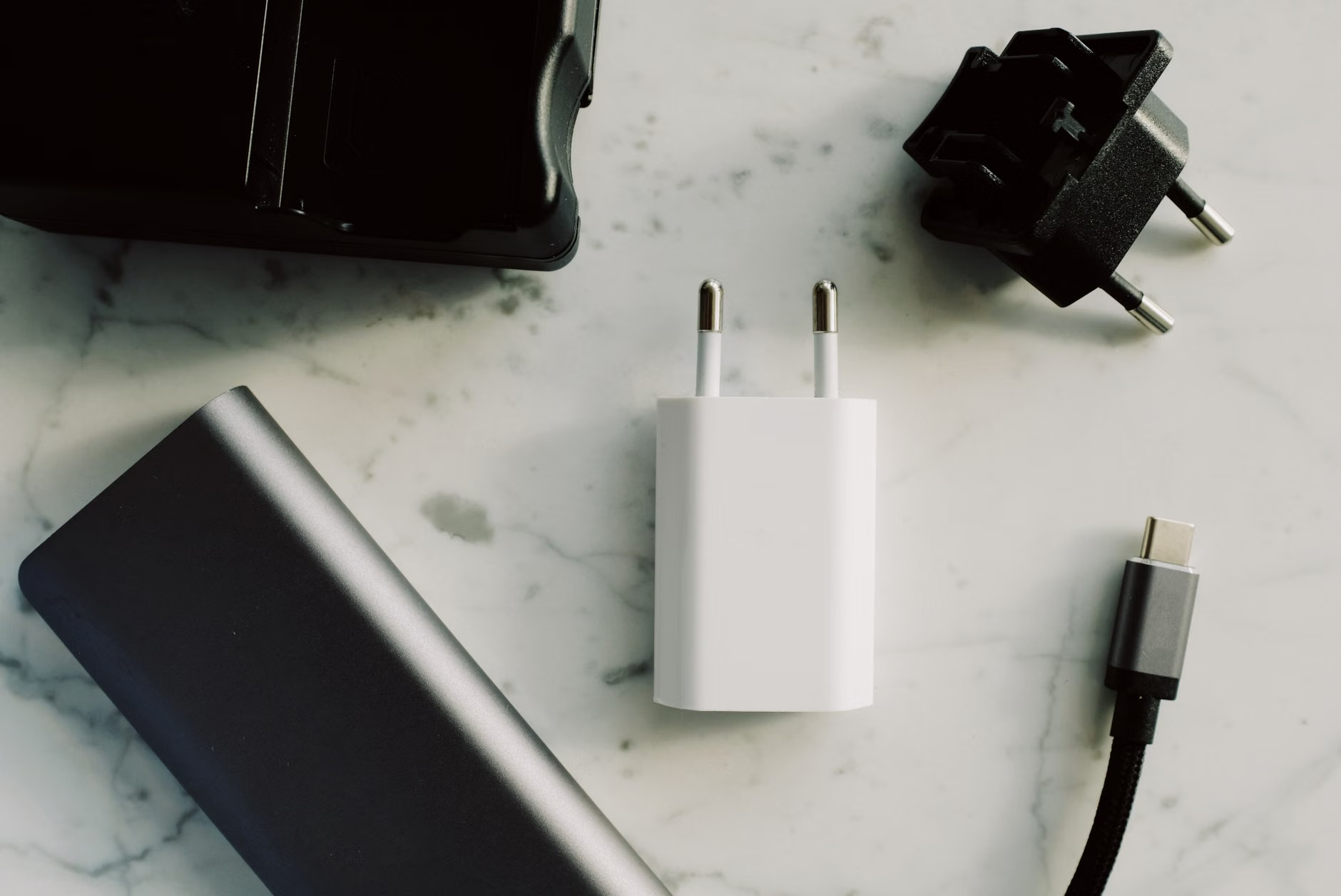
In a multi-generational group, everyone has a device. The grandparents might have a tablet, the kids have a game console, and you have your work phone. If everyone brings their own bulky charging brick, you will quickly run out of wall outlets in your hotel room. The solution is to move to a Unified Charging Ecosystem.
Invest in one high-wattage (at least 65W or 100W) GaN (Gallium Nitride) wall charger with multiple USB-C ports. These chargers are smaller, lighter, and more efficient than traditional bricks. By having one “Master Station,” you can charge four devices simultaneously from a single outlet. This is a game-changer in older hotels or cruise ships where outlets are often inconveniently located behind furniture.
| Device Category | Packing Strategy | Common Mistake |
|---|---|---|
| Charging Gear | One high-wattage GaN charger + 3 universal cables. | Each person packing their own proprietary brick. |
| Entertainment | Download all content to a single tablet/laptop. | Relying on hotel Wi-Fi for streaming. |
| Navigation | Offline maps on one “Lead” phone + backup paper map. | Assuming everyone will have data coverage. |
When it comes to entertainment, do not rely on the hotel’s Wi-Fi. It is notoriously unreliable for streaming, especially when multiple people are trying to use it. Download movies, games, and audiobooks onto one or two tablets before you leave. This ensures that the kids have something to do during a long delay, and the grandparents have access to their preferred media regardless of internet quality.
Clothing and Comfort: The “Modular Wardrobe” Concept
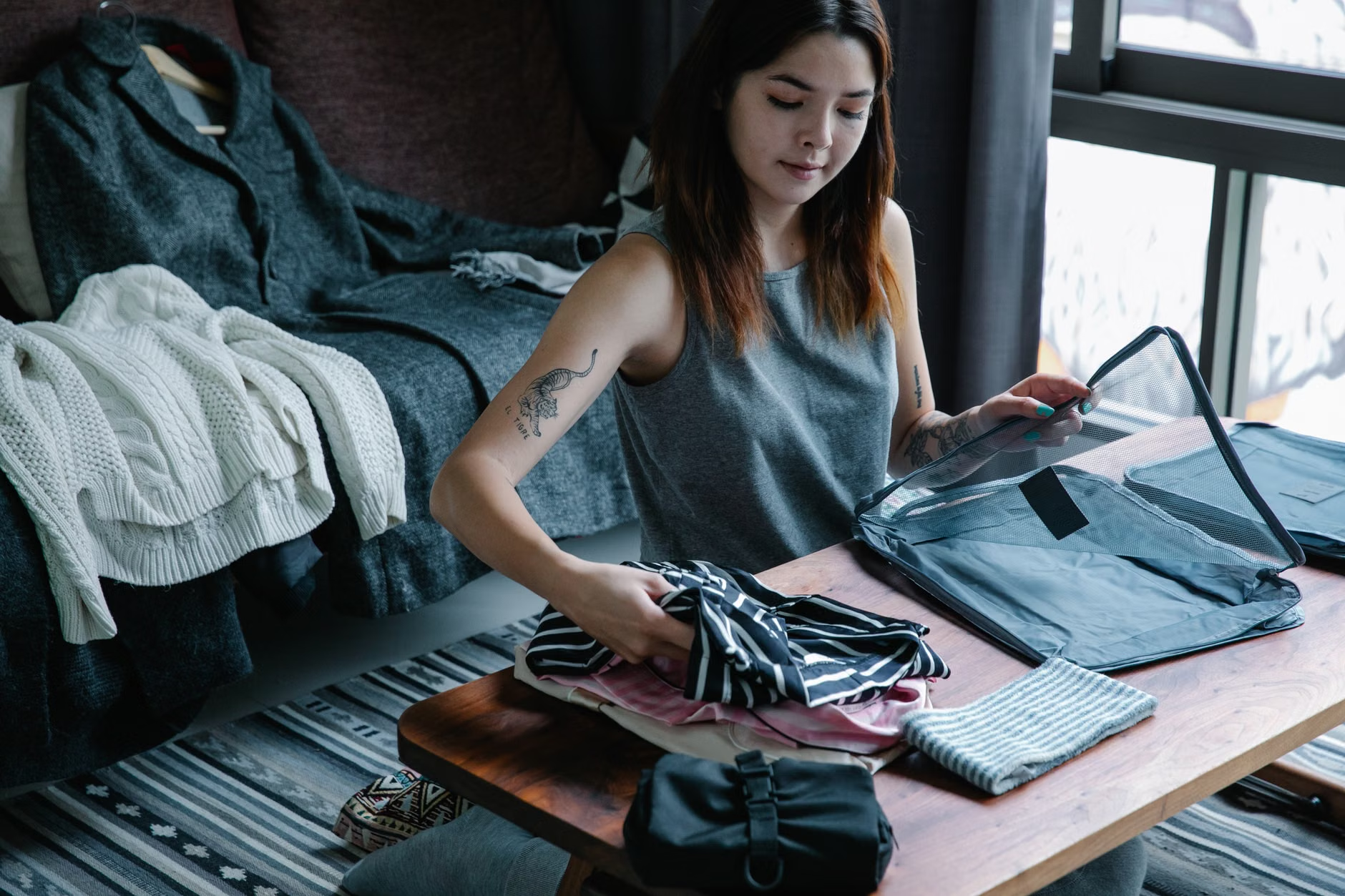
The most common frustration in family travel is the time spent packing and unpacking. To streamline this, use the Modular Wardrobe system. Each family member gets two color-coded packing cubes: one for “Base Layers” (underwear, socks, t-shirts) and one for “Outer/Active Layers” (pants, sweaters, jackets).
If you are staying in a hotel for only one or two nights, you do not need to unpack. You simply take the packing cubes out of the suitcase and place them in the drawers. This prevents the “suitcase explosion” that typically happens when a family of five arrives at a hotel. Furthermore, if you are traveling to a location with varying climates, ensure that the outer layers are layerable rather than bulk-specific. Instead of packing three heavy coats, pack one light, high-quality thermal layer and one windproof shell for everyone. This applies to both the kids and the seniors.
The “Emergency Change” Protocol
Regardless of the duration of the flight or train ride, always pack a “Go-Bag” for each family member that includes one full change of clothes. For children, this is obvious due to spills or accidents. For seniors, it is essential in case of luggage delays, as finding comfortable, familiar clothing in a foreign country can be physically taxing and stressful. This “Go-Bag” should be kept in your carry-on, not the checked luggage.
When traveling with seniors, the concept of “lightweight” takes on a new meaning. If your parents have mobility issues, you should prioritize lightweight, high-capacity luggage over anything else. Look for suitcases with 360-degree spinner wheels, as these require significantly less wrist strength to maneuver than traditional two-wheel bags. If a family member uses a cane or walker, ensure that it is tagged as “medical equipment” at the airline check-in. Most airlines allow you to gate-check these items for free, and they do not count toward your carry-on allowance.
Another overlooked variable is the “Transition Phase.” When moving from an airport to a hotel, you will likely be tired. Do not try to navigate public transit with three generations and a mountain of bags. Budget for a private transfer or a large van taxi. The cost difference is often negligible when split across the group, but the reduction in stress is immense. Having a driver meet you at the terminal means you can focus on helping your parents and keeping an eye on the children, rather than worrying about navigating a subway map with heavy luggage.
The Hidden Costs of Overpacking
Many travelers believe that bringing more is safer. In reality, overpacking creates a “tax” on your vacation. Every bag you carry is a bag you have to lift, store, and track. In crowded European cities or busy Asian transit hubs, having too much luggage makes you a target for pickpockets and makes navigating stairs or narrow doorways nearly impossible.
Adopt a “Laundry-First” mindset. Instead of packing for 14 days, pack for 7 and plan to do laundry once. Most hotels offer laundry services, and in many countries, coin-operated laundromats are a cultural experience in themselves. By reducing your clothes, you create space for the things that actually matter—like the extra medical supplies or the kids’ favorite comfort items. This also leaves room in your suitcase to bring back souvenirs, which is a major point of contention in multi-generational trips where everyone wants to shop.
The Pre-Trip “Sync” Meeting
One week before your departure, hold a 15-minute “Sync Meeting.” This is not a formal presentation, but a quick check-in. During this meeting, confirm that everyone has their travel documents, that the medical bag is finalized, and that everyone knows the plan for the first 24 hours.
This meeting is also the time to discuss “Expectation Management.” If the grandparents need a nap in the afternoon, or the kids need a playground break, factor that into the itinerary. The most successful multi-generational trips are the ones that are not packed with activities. Aim for one major activity per day, leaving the rest of the time for “buffer zones”—periods where the group can split up or rest as needed.
The Importance of Documentation
In the digital age, we often forget the value of paper. While you should have digital copies of everything, keep a physical folder with:
- Copies of all passports.
- Travel insurance policy numbers and emergency contact lines.
- A list of all hotel addresses in the local language (this is vital for taxi drivers).
- A list of any allergies or critical medical conditions for each family member, written in the language of the destination country.
This folder should be kept in your personal bag at all times. If your phone dies or you lose your electronics, this folder is your safety net. It is a low-tech solution to a high-stakes problem.
Final Thoughts on the Intergenerational Journey
Intergenerational travel is a test of patience, logistics, and love. The packing strategy outlined here is designed to remove the friction of the “small stuff” so you can focus on the “big stuff”—the memories you are creating. By centralizing your logistics, standardizing your gear, and respecting the different physical needs of your group, you can transform a potential logistical nightmare into a seamless, enjoyable experience. Remember, the goal is not to have the perfect bag; it is to have the perfect trip. Focus on the people, use the systems to support them, and don’t be afraid to adjust your plans if the day isn’t going as expected. Flexibility is the ultimate packing essential.
Frequently Asked Questions
Q: Should I pack separate snacks for the kids and the grandparents?
A: It is better to pack a “Shared Snack Box.” Include items that are generally universally liked, such as nuts, dried fruit, crackers, and high-quality chocolate. If there are specific dietary requirements (e.g., low sugar for a grandparent or nut allergies for a child), pack those in a clearly labeled, separate sealed bag within the main snack box. This keeps everything together while maintaining safety.
Q: How do we handle luggage if our flight is delayed or cancelled?
A: Always ensure that your “Tier 1” items (passports, medications, chargers, and one change of clothes) are in your carry-on. If your checked luggage is lost, this “survival kit” allows you to function for 24-48 hours without needing to replace essential items. Additionally, take a photo of the contents of every suitcase before you leave; this makes filing a lost luggage claim significantly faster and more accurate.
Q: Is it worth bringing a portable stroller for a toddler if the grandparents are also coming?
A: Absolutely. Even if your toddler walks well, a lightweight, fold-up travel stroller is essential. It serves as a place for the child to nap, a way to move them quickly through crowded areas, and a place to hang your “Tier 2” gear. If the grandparents need to walk slowly, the stroller allows the child to be mobile without slowing down the group. Ensure the model you choose is easily collapsible for taxis and public transit.
Official Resources for Further Planning:
For travel health requirements and vaccination recommendations, consult the CDC Travelers’ Health website. For international travel regulations and entry requirements, always check your home country’s official government travel advisory site, such as travel.state.gov for US citizens or the relevant national equivalent.