- The 4-Hour Rule: Rail travel is most effective when the total transit time is under four hours, minimizing the “travel fatigue” that ruins a short weekend trip.
- Strategic Booking: Avoid peak Friday evening departures; mid-morning Saturday or off-peak Sunday returns offer better pricing and significantly lower stress for parents.
- The ‘Base-Layer’ Packing Method: Pack only one set of secondary clothes and rely on a pre-staged “go-bag” at your destination to reduce luggage weight and transit friction.
The most effective way to maintain family bonds with distant relatives—without sacrificing your sanity or your bank account—is to stop treating every visit like a military operation. In your 30s and 40s, the “Weekend-Rail” strategy isn’t just about catching a train; it’s about shifting from a “destination-focused” mindset to a “transit-as-rest” philosophy.
We often fall into the trap of trying to maximize every second of a visit. We book the earliest flight or the longest train ride to “get there faster,” only to arrive exhausted, irritable, and behind schedule. The Weekend-Rail strategy flips this. It acknowledges that if you have to travel more than four hours by rail, the weekend is likely too short to justify the physical toll. By choosing rail over air or long-haul driving, you reclaim the travel time as a space for reading, playing, or simply sitting still—something that becomes a rare luxury when you are balancing a career and parenting.

Why Rail Outperforms Air and Road for Short-Distance Family Trips
When you are planning a trip to see relatives 200 to 500 kilometers away, the decision often comes down to car vs. train. Air travel is rarely competitive at this range once you factor in security queues, transit to the airport, and the inevitable “liquids and gels” stress. Rail travel, specifically for the 30-to-45 demographic, offers a unique set of structural advantages that directly address the friction points of modern family life.
First, there is the “Freedom of Movement” factor. On a train, your children are not strapped into a car seat for four hours, nor are they confined to a middle seat on a plane. They can walk to the café car, use a larger restroom, or sit at a table seat to color or play cards. This movement is the difference between a child who arrives at Grandma’s house ready to play and one who arrives needing a three-hour “de-escalation” period.
Second, consider the “Productivity Window.” If you are a remote worker or simply need to clear your inbox before the weekend, the train provides a stable, desk-equipped environment. You cannot work in a car, and you certainly cannot work effectively in the cramped confines of a budget airline seat. For parents, this means you can finish your Friday tasks during the commute, allowing you to be fully present the moment you step off the train.
Comparing the Modes of Transit
| Feature | Rail Travel | Driving | Air Travel |
|---|---|---|---|
| Transit Stress | Low (Station-to-Station) | High (Traffic/Parking) | Very High (Security/Boarding) |
| Family Comfort | High (Table seats/Space) | Low (Confined seating) | Medium (Tight space) |
| Effective Cost | Medium (Booking ahead) | High (Fuel/Wear/Parking) | High (Tickets/Transfers) |
| Productivity | High (Dedicated tables) | None (Driver focus) | Low (Limited space) |
The table above highlights that while rail might not always be the cheapest option if booked last-minute, it wins on the “Total Human Cost.” When you account for the stress of finding parking in a city or the logistical nightmare of airport security with a toddler, the train is almost always the superior choice for a 48-hour window.
Mastering the Logistics: The 4-Hour Threshold
The core of the Weekend-Rail strategy is the “4-Hour Threshold.” If your journey by rail exceeds four hours, you are no longer doing a “weekend” trip; you are doing an “event” trip. This distinction is vital. A four-hour train ride is manageable; a six-hour ride requires a level of planning and logistical overhead that turns a relaxing weekend into a project.
If you find that your destination is consistently beyond this four-hour range, you must adjust your expectations. Instead of a weekend, you should shift to a “long-weekend” model (Friday morning to Sunday afternoon). If your professional schedule doesn’t allow for that, you might consider the “Meet-in-the-Middle” variation. This is where you and your relatives agree to meet at a hub city that is roughly two hours for both parties. It cuts the travel time in half and provides a neutral ground that can be far more relaxing than a high-pressure visit to a family home.
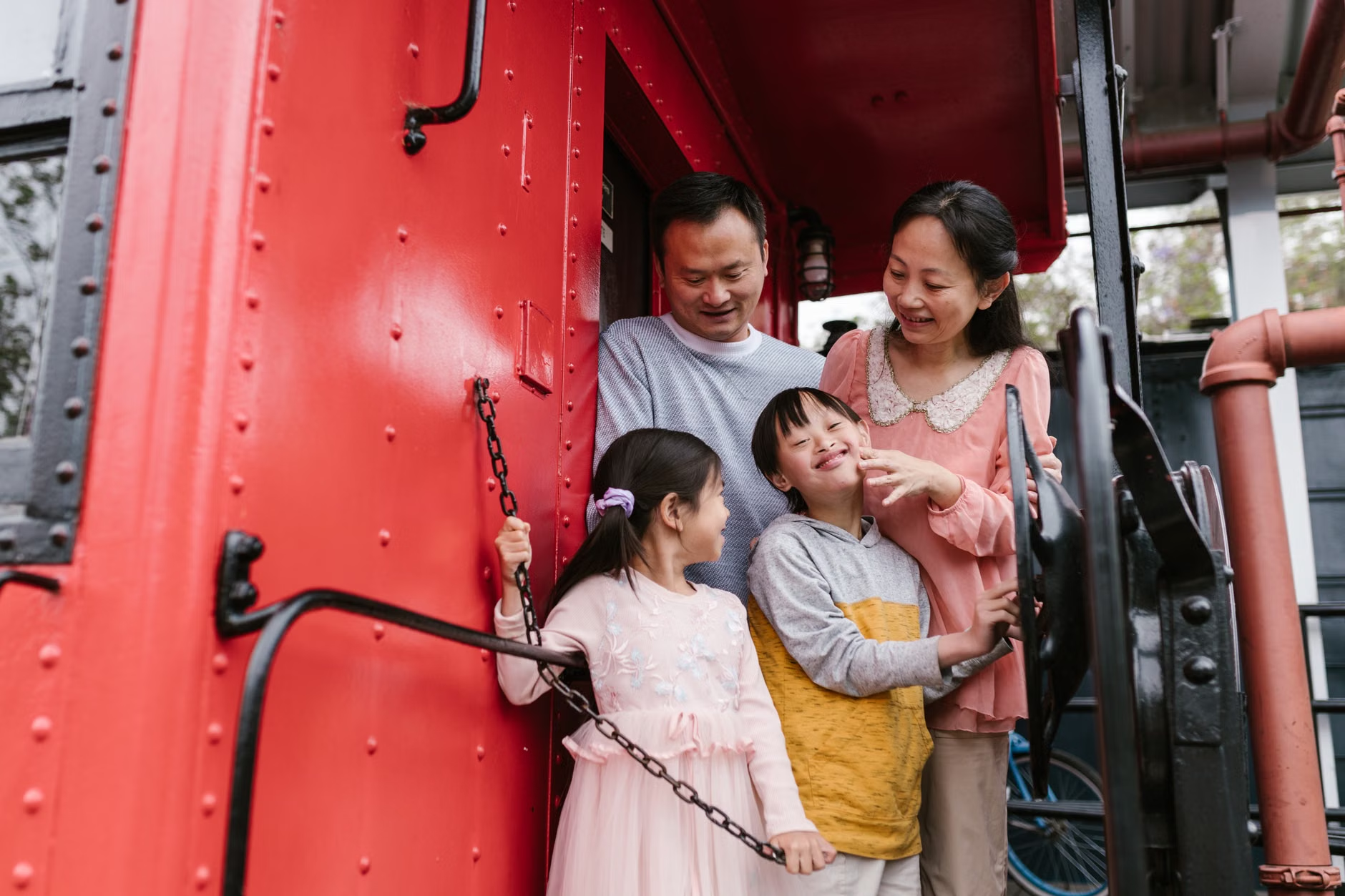
The ‘Base-Layer’ Packing Method
One of the biggest mistakes parents make when visiting relatives is over-packing. We fear the “what-ifs”—what if they spill, what if it rains, what if we need a formal outfit? This leads to heavy luggage that makes navigating train stations a nightmare. The “Base-Layer” method is the solution.
The philosophy here is simple: Keep a secondary wardrobe at your destination. If you visit your parents or siblings regularly, leave a small bin or a dedicated drawer at their place. This should contain:
- Two sets of pajamas for the kids and adults.
- Basic toiletries (shampoo, toothpaste, spare toothbrushes).
- One “emergency” set of clothes for each family member.
- A few board games or books that stay there permanently.
By doing this, your weekend travel bag only needs to contain your clothes for the immediate trip. You stop lugging around heavy suitcases and start traveling with simple, lightweight backpacks. This makes moving through train stations, boarding, and finding your seats infinitely easier. It is a one-time setup cost that pays dividends in reduced stress for every single trip thereafter.
Rail operators often use dynamic pricing, similar to airlines. If you book your Friday 5:00 PM train on Thursday, you are paying the “desperation tax.” The Weekend-Rail strategy relies on a “Shift-by-Two” rule. Try to shift your departure by two hours from the peak rush. If you can leave at 3:00 PM on Friday or, even better, 9:00 AM on Saturday, you will often find significantly cheaper tickets and a much quieter carriage.
Furthermore, look for “Family Railcards” or regional loyalty programs. Many national rail services offer discounts for groups traveling together. For a family of four, the cost difference between a standard fare and a discounted group fare can often pay for your dinner at the destination. It is worth spending 15 minutes on the official rail operator’s website (such as National Rail in the UK, Deutsche Bahn in Germany, or Amtrak in the US) to understand their specific discount structures. Don’t assume the first price you see is the best one.
Managing Expectations: The Hidden Variable
The most overlooked variable in family travel is the “Arrival Intensity.” When you arrive at a relative’s home, there is often an immediate expectation to “start” the visit—to talk, to eat, to catch up. After a four-hour journey, you might just want to sit in silence for twenty minutes. This is a common source of friction.
Communicate this expectation *before* you leave. A simple message like, “We’re really looking forward to seeing you! We’ll be arriving at 3:00 PM, and we might just need a quick 20-minute ‘decompression’ period once we drop our bags before we dive into the fun,” sets a boundary without causing offense. Most relatives will appreciate the honesty, and it prevents the resentment that builds when you feel pressured to perform the moment you arrive.
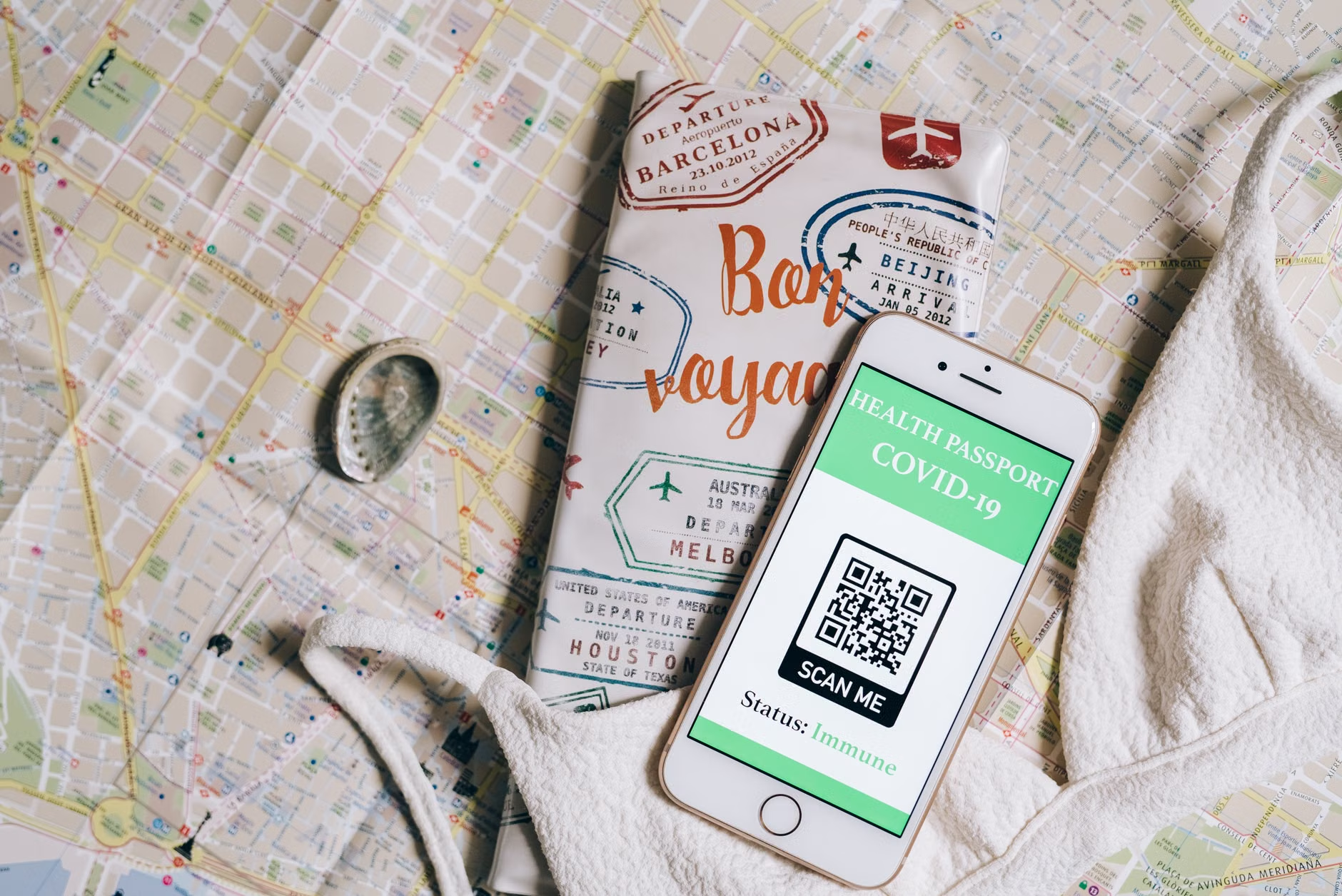
Technical Troubleshooting for the Modern Traveler
Before you commit to the train, there are three technical checks you must perform to ensure your Weekend-Rail trip doesn’t hit a snag:
- The Last-Mile Check: How do you get from the station to the house? If it’s a 30-minute walk with luggage and kids, don’t do it. Pre-book a ride-share or check the local bus schedule. Knowing exactly how you get from the station to the front door removes the last bit of “travel anxiety.”
- The Power and Connectivity Audit: Most modern trains have power outlets, but they aren’t always reliable. Carry a high-capacity power bank. If you are relying on the train’s Wi-Fi for work, have a cellular hotspot as a backup. Never assume the train’s infrastructure will work perfectly.
- The Food Strategy: Train station food is notoriously expensive and often mediocre. Pack your own “picnic” for the train. It’s cheaper, healthier, and prevents the “hangry” meltdowns that occur when a train is delayed and the snack cart is sold out.
Refining Your Approach Over Time
The Weekend-Rail strategy is iterative. After your first trip, conduct a “post-mortem” with your partner or family. Ask: “What was the most stressful part of that trip?” Was it the packing? The walk to the station? The timing? Adjust one variable for the next trip. Maybe you switch to a different train line, or perhaps you decide to leave an hour earlier. Over the course of a year, these small refinements will turn a chaotic, stressful ordeal into a seamless, enjoyable ritual.
Remember that the goal isn’t perfection; it is sustainability. If you make the act of traveling to see your family feel like a chore, you will naturally start to visit less often. By making the transit part of the relaxation—by reading a book, playing a game, or simply watching the world go by—you turn the act of visiting into a genuine break from your everyday life, rather than just another obligation on your calendar.
As you become more comfortable with this rhythm, you’ll find that the “Weekend-Rail” becomes something you look forward to. The train ride itself becomes the transition space between your professional life and your personal life, a buffer zone that allows you to arrive at your destination refreshed and ready to connect. Start small, be realistic about your time, and don’t be afraid to set boundaries. Your relationships with your distant relatives will be all the better for it.
Frequently Asked Questions
Q: What should I do if my local rail service is notoriously unreliable?
A: If the rail service in your region has a high frequency of delays, the “Weekend-Rail” strategy needs to be adjusted. Build in a “buffer” to your itinerary—always book a train that arrives two hours earlier than you actually need to be there. If the train is on time, you have extra time to grab a coffee or walk around; if it’s delayed, you are still on schedule for your plans.
Q: Is it better to book separate seats or a table seat for a family?
A: If you have children, always prioritize the table seat. The extra surface area for activities is invaluable for keeping children occupied. If a table seat is not available, try to book seats facing each other. This creates a “hub” for your family and makes it easier to manage snacks, toys, and interaction without needing to constantly stand up or lean over.
Q: How do I handle luggage if I don’t have a place to store items at my relative’s house?
A: If you cannot store a “base-layer” of clothing at your relative’s home, look into luggage forwarding services or simply use a smaller, modular packing system. Packing cubes are essential here; they allow you to organize your clothes by day or by person, making it easy to live out of a single, shared suitcase without creating a mess of clothes in your host’s guest room.