- Avoid Vendor Lock-in: Proprietary systems often force you into subscription models or hardware that becomes obsolete when the company stops supporting it. Choose “Open-Standard” (like ESPHome or MQTT-based devices) to ensure your system remains functional for years.
- Cost vs. Control: While off-the-shelf smart controllers seem convenient, open-standard setups (like an ESP32 microcontroller) cost roughly 60% less to build and allow for custom logic—like skipping irrigation if local weather APIs predict rain.
- Reliability is Local: Relying on cloud-based servers for your balcony garden means your plants die if your Wi-Fi drops or the company server goes down. Open-standard systems prioritize local control, keeping your garden alive even when the internet is out.
If you have ever come home from a long weekend trip only to find your prized tomato plants drooping and brown, you know the specific, quiet panic of urban gardening. You try to balance a full-time job, school runs for the kids, and the general chaos of life, yet somehow, you’ve managed to turn your balcony into a small-scale farm. But plants don’t care about your schedule. They care about moisture levels, sunlight, and consistency—three things that are notoriously difficult to manage when life gets in the way.
The market is flooded with “smart” irrigation gadgets. You’ve seen them: sleek, white plastic boxes with proprietary apps that promise to “automate your garden in minutes.” The problem? Most of them are digital dead-ends. They rely on the manufacturer’s server, require a monthly subscription for “advanced” features like weather-based scheduling, and inevitably stop receiving updates three years after you bought them. This is where the concept of “Open-Standard” irrigation becomes a game-changer for the modern household.
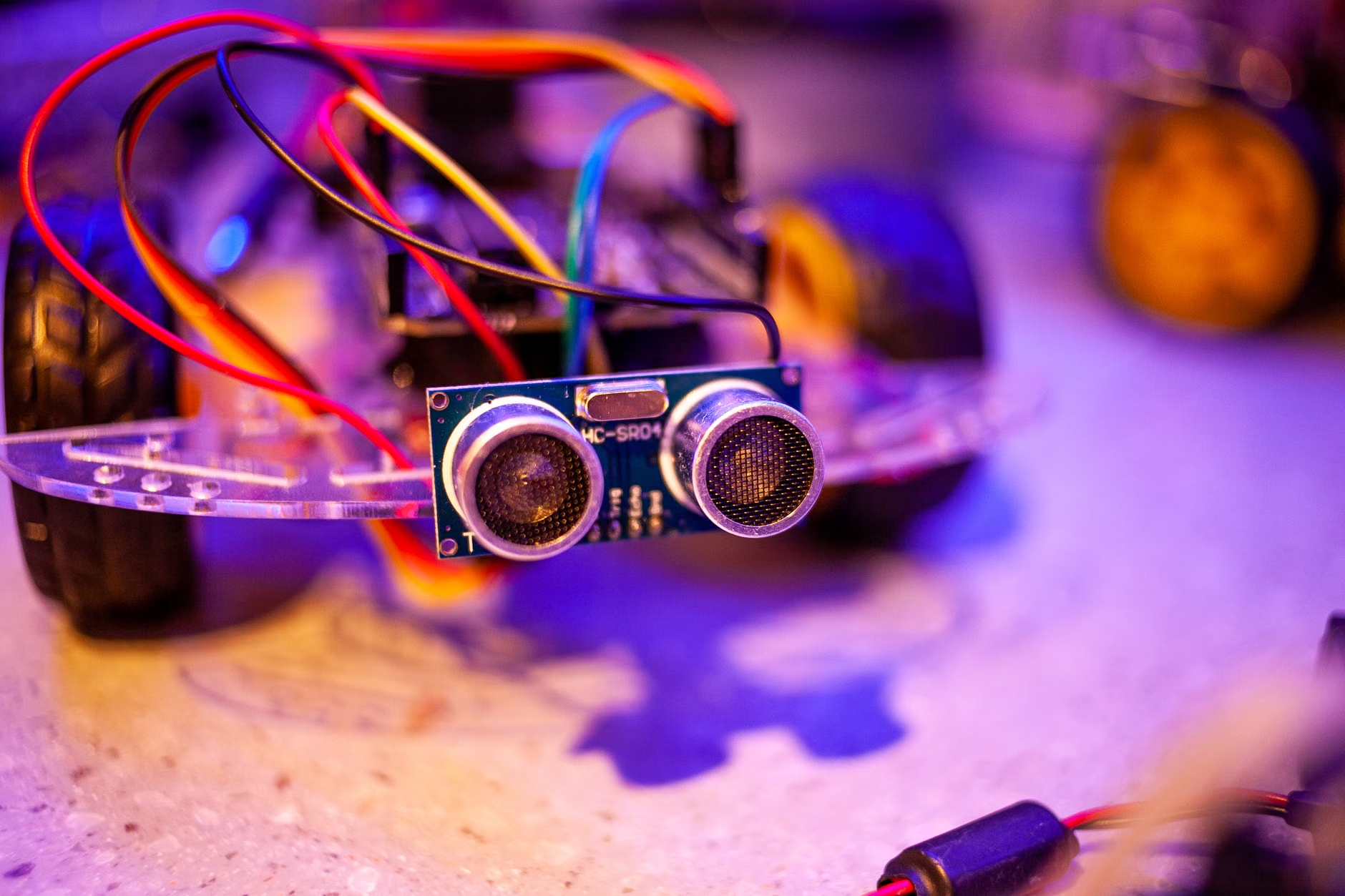
Why Proprietary Systems Are a Hidden Financial Drain
When you buy a brand-name smart irrigation controller, you aren’t just buying hardware; you are entering a relationship with a company. In the tech world, we call this “vendor lock-in.” It is the reason why your old smart light bulbs don’t work with the new hub, or why a perfectly functional sprinkler controller becomes a paperweight the moment the manufacturer shuts down their cloud service.
For a parent in their 30s or 40s, time is the most valuable currency. You don’t have the bandwidth to troubleshoot a proprietary system that refuses to sync with your home network because of a firmware update you didn’t ask for. Furthermore, many of these companies hide “pro” features—like soil moisture monitoring or hyper-local weather adjustments—behind a monthly paywall. Over five years, that “one-time purchase” could cost you double or triple the original price in subscription fees.
Open-standard systems, by contrast, use protocols that don’t belong to any single corporation. They rely on universal languages like MQTT (Message Queuing Telemetry Transport) or open-source platforms like Home Assistant. Because the code is open, you own the system. If one app developer stops updating their software, you can simply switch to another interface. You are building on a foundation that doesn’t rely on a corporate marketing department’s quarterly goals.
The Anatomy of an Open-Standard Irrigation Setup
You might be thinking, “I’m not a computer engineer; how am I supposed to build an irrigation system?” The truth is, the barrier to entry has never been lower. You don’t need to write code from scratch. You are essentially assembling a set of modular parts. Think of it like building with LEGO bricks, but for your balcony’s water supply.
| Component | Function | Why It Matters |
|---|---|---|
| Microcontroller (e.g., ESP32) | The “Brain” | Handles the logic locally without needing the cloud. |
| Solenoid Valve | The “Faucet” | Opens and closes the water flow based on signals from the brain. |
| Capacitive Moisture Sensor | The “Eyes” | Measures how much water is actually in the soil. |
| Relay Module | The “Switch” | Allows a low-power brain to control higher-power equipment safely. |
This setup works because it is modular. If your moisture sensor fails, you buy a new one for $5 and swap it out. You aren’t replacing a $200 master unit. This is the “Right to Repair” in action, applied to your hobby garden.
Real-Life Scenario: The “Rain-Skip” Logic
Let’s look at a common frustration: the automated timer that waters your plants while it is raining. This is a classic waste of water and a recipe for root rot. With a proprietary off-the-shelf timer, you are often limited to basic “on/off” schedules. If the device doesn’t have an integrated rain sensor, it just keeps watering.
In an open-standard system, you can integrate data from any weather service API. You can set a rule: “If the local forecast shows a 60% or higher chance of rain in the next 12 hours, do not trigger the irrigation cycle.” You can also add a secondary rule: “If the soil moisture level is above 40%, skip watering regardless of the schedule.”
This level of precision isn’t just about saving water; it’s about plant health. Overwatering is the #1 killer of container plants. By allowing your garden to respond to environmental variables rather than just a clock, you are mimicking the natural cycles that plants actually thrive in.
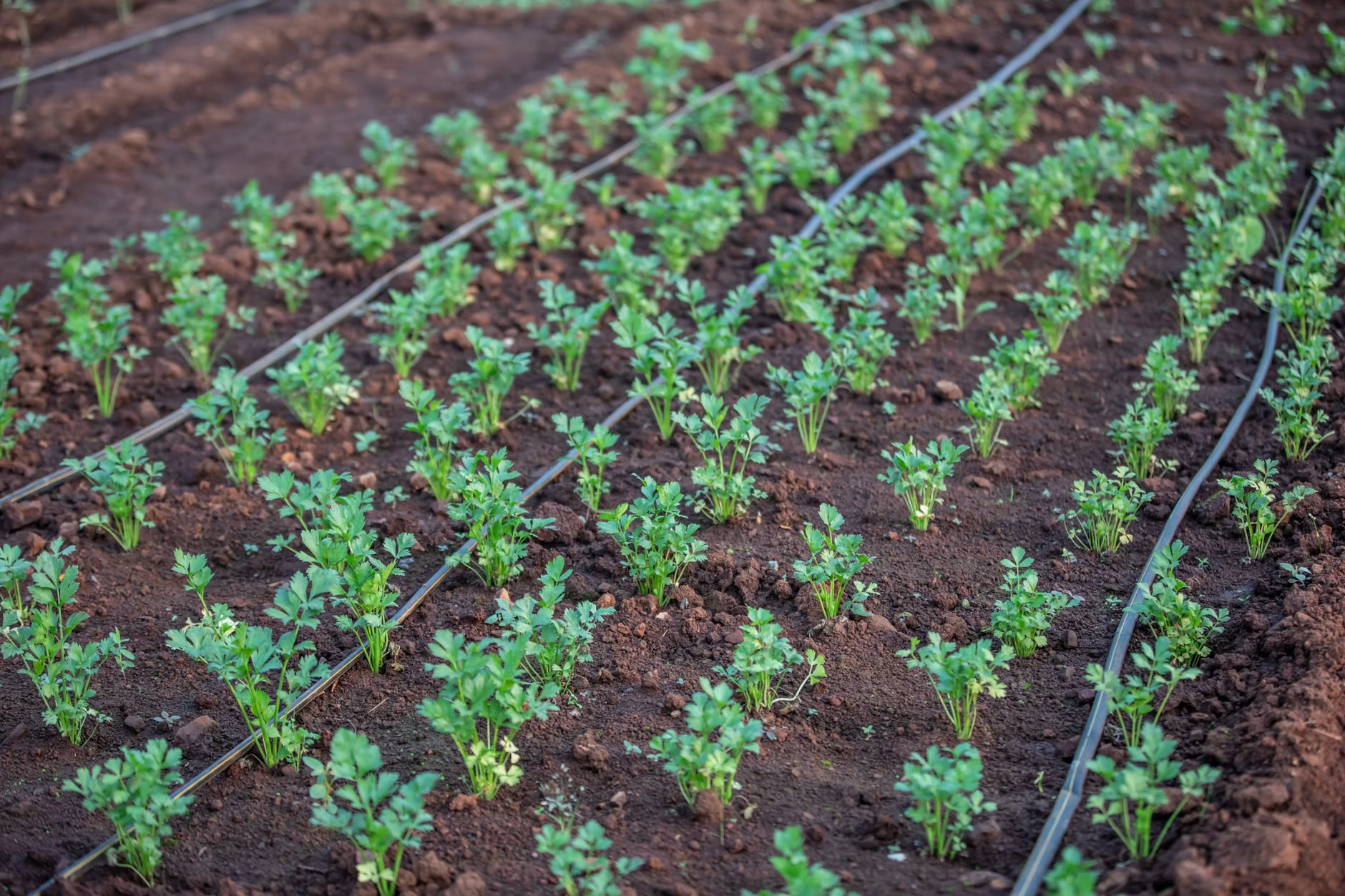
Common Mistakes to Avoid When Designing Your System
Even with the best hardware, you can run into trouble if you don’t plan for the physical reality of water. Here are the pitfalls I see most often in urban gardening tech setups:
- Ignoring Water Pressure: If you are using a standard tap, the pressure might be too high for a drip system, causing your connections to blow off. Always install a pressure regulator. It’s a $10 part that prevents a flooded balcony.
- The “Fire and Forget” Fallacy: Even the best smart system needs a physical check. Sensors can get clogged with soil, or valves can stick after a long winter. Treat your system as an assistant, not a replacement for your own observation. Once a month, walk the line and ensure the emitters aren’t blocked.
- Underestimating Power Requirements: Many people try to run their controllers off a single battery that dies in a week. If you have an outlet nearby, use a wall adapter. If you are off-grid, invest in a small solar panel and a deep-cycle battery. Do not rely on AA batteries for a system that needs to be reliable.
The Shift Toward Local Control
There is a growing movement in the smart home community toward “Local Control.” This means that your devices talk to each other within your home network, rather than sending data out to a server in a different country and waiting for a signal to come back. Why does this matter for your garden? Because your garden is physical. It doesn’t need to be “in the cloud.”
When you use open-standard platforms like ESPHome, you program the logic directly onto the controller. If your Wi-Fi goes down, the controller keeps working. If the internet provider has an outage, your tomatoes still get watered. This isn’t just about being tech-savvy; it’s about resilience. In an era where digital services are increasingly unstable, keeping your essential home systems local is a smart way to simplify your life.
Furthermore, local control is significantly more private. You aren’t feeding data about your home habits—like when you are home or how much water you use—into a corporate database. For families, this is a privacy-first approach that is becoming increasingly important as smart devices infiltrate every corner of our lives.

Implementation Guide: Taking the First Step
If you are ready to move away from proprietary systems, here is how you start. Don’t try to automate the whole balcony in one weekend. Start with a single “test zone.”
- Pick your platform: If you are already interested in home automation, start with Home Assistant. It is the gold standard for connecting diverse, open-standard devices.
- Choose a controller: An ESP32 or ESP8266 board is the industry standard for DIY smart gardening. They are cheap, powerful, and have massive community support.
- Use Pre-built Hardware: If soldering intimidates you, look for “Shelly” or “Sonoff” relays. These are off-the-shelf, open-standard friendly devices that can be flashed with custom, open-source firmware like Tasmota or ESPHome.
- Focus on the sensor: Start by just measuring the moisture. Don’t even automate the water yet. Just get the data. Once you trust the data, then add the solenoid valve to control the flow.
The beauty of this approach is that you learn as you go. You aren’t trapped in a walled garden. You are building a skill set that helps you understand how the technology in your home actually works, which is a powerful feeling when you’re used to being a passive consumer of black-box technology.
Addressing the Longevity Factor
Urban gardening is often a long-term commitment. You are nurturing perennials, shrubs, and perhaps even small fruit trees. You want a system that will be there five years from now. Proprietary tech companies often pivot their business models. They might decide that a specific line of garden controllers isn’t profitable enough and kill the app support. When that happens, you are left with a pile of plastic and wires that you have to throw in the trash.
Open-standard hardware doesn’t have an “end of life” date set by a board of directors. As long as you can buy a replacement sensor or a new microcontroller, your system lives on. This is the definition of sustainability. It’s not just about saving water; it’s about reducing the electronic waste that comes from replacing perfectly good hardware because the software behind it was abandoned.
For the busy parent, this is the ultimate time-saver. You spend a bit more time on the front end setting it up, but you save yourself the headache of replacing the system every two or three years. You are investing in a system that grows with your garden, not one that forces you to start over every time a company updates their terms of service.
Practical Decision Criteria: Should You DIY or Buy?
It is worth noting that open-standard doesn’t always mean “build it from scratch with a soldering iron.” There are increasingly more companies that offer “open-hardware” or “open-API” products. When you are shopping, look for these keywords: “Local API,” “MQTT support,” “No cloud required,” or “ESPHome compatible.”
If you see a product that requires a mandatory account creation just to turn on a valve, walk away. If you see a product that mentions “Local Control” or “Home Assistant integration,” that is a sign that the manufacturer respects your ownership of the device. Use this as your primary filter when browsing Amazon or specialized gardening sites.
The trade-off is almost always between convenience (proprietary) and control (open-standard). If you have zero interest in the tech and just want something that works for a year or two, maybe a basic timer is fine. But if you are building an urban garden that you intend to keep for years, the time spent setting up an open-standard system is an investment that pays dividends in both reliability and peace of mind.
Final Thoughts on Building Your Garden’s Brain
The goal of smart irrigation isn’t to create a complex system that takes over your life. It’s to create a system that disappears into the background, doing its job quietly so you can focus on the joy of watching your plants grow. By choosing open standards, you are ensuring that your technology remains a tool for your garden, rather than a master of it.
Don’t be intimidated by the technical jargon. The community surrounding open-source home automation is incredibly welcoming, and there are thousands of guides available for every step of the process. Start small, stay curious, and remember that the most “smart” system is the one that you actually understand and control. Your future self—and your plants—will thank you.
Frequently Asked Questions
Q: I’m not a programmer. Is this really feasible for me?
A: Yes. Most modern open-standard projects use “no-code” or “low-code” interfaces. If you can follow a recipe, you can follow an ESPHome configuration guide. There is no need to write complex software from scratch; you are mostly just configuring existing, well-documented templates.
Q: What happens if I go on vacation and the system loses power?
A: This is a risk with any system, proprietary or open. The key is to have a “fail-safe” state. Most solenoid valves are “normally closed,” meaning if they lose power, they stay closed. This prevents your garden from flooding while you are away. For extra security, some gardeners use a secondary, non-smart manual timer as a redundant backup.
Q: Are there any hidden costs I should know about?
A: The upfront cost of an open-standard system is lower, but you might spend more on quality components like brass valves or high-grade tubing. The “hidden” cost is your time during the initial setup, but this is offset by the lack of monthly subscription fees and the long lifespan of the equipment.
For further research on open-source home automation, visit the official Home Assistant documentation. For specific details on building irrigation controllers, check out the ESPHome project page, which offers extensive guides on sensor integration and automation logic.