The most effective way to reclaim your sanity as a parent this autumn is to stop chasing flights and start embracing the rhythmic, predictable pace of heritage-rail travel. Unlike modern high-speed transit or the chaotic logistics of budget airlines, heritage railways offer a controlled, low-stress environment where the “journey” is the destination, allowing you to actually enjoy your children rather than just managing their movement through security checkpoints.
- Predictability beats speed: Heritage rail eliminates the “wait-time” anxiety of airports, providing dedicated seating and space for children to move safely.
- Seasonal value: Autumn is the low-shoulder season for many historic lines, meaning fewer crowds and better pricing on “Gold” or “Dining” carriage upgrades.
- The “Slow-Travel” Dividend: By choosing a route that takes three hours instead of a 45-minute flight, you reduce cortisol levels for the entire family, leading to better sleep and more meaningful engagement.
If you are in your 30s or 40s, you are likely part of the “sandwich generation” of travel: you want the aesthetic appeal of a European autumn getaway, but you are limited by the brutal reality of school schedules, toddler nap times, and the sheer exhaustion of navigating a modern travel hub with a stroller. We have been conditioned to believe that “faster is better,” but in the context of family travel, speed is often the enemy of comfort.
Heritage rail—often referred to as preserved, tourist, or scenic railways—offers a reprieve. These are not commuter lines. They are carefully maintained relics of the golden age of steam and diesel travel. They don’t just move you from Point A to Point B; they provide a sensory experience that modern travel has scrubbed away.
Why the “Slow-Rail” Shift Matters for Families
When you travel with children, the “overhead” of the trip—the packing, the security lines, the waiting at the gate—often costs more energy than the destination itself. A 2023 study on travel stress indicated that parents experience a 40% higher cortisol spike during transit than solo travelers. By opting for a heritage rail experience, you are effectively outsourcing the “entertainment” portion of your trip to the landscape outside the window.
Think of it as a moving living room. You aren’t confined to a middle seat or restricted by the “fasten seatbelt” sign every twenty minutes. You have the ability to walk the aisles, observe the changing autumn leaves, and explain the mechanics of a steam engine to a curious four-year-old without the pressure of a flight attendant hovering over your shoulder.
Furthermore, heritage rail lines often traverse rural areas that are inaccessible by modern highways. You get a view of the countryside that is entirely private. For a parent who spends 50 hours a week looking at a screen or a spreadsheet, that view—unfiltered and slow—is not just a vacation; it is a mental reset.

Selecting the Right Route: A Decision Framework
Not all heritage lines are created equal. Some are short, 30-minute “rides to nowhere” designed for children, while others are full-day excursions that traverse mountain passes or coastal cliffs. For a family in their 30s or 40s, the “Goldilocks” zone is a 2-to-4-hour journey that includes a destination with a walkable town center.
When evaluating a route, look for these three criteria:
| Feature | Why it matters | Parenting Tip |
|---|---|---|
| Dining Car Availability | Eliminates the “hangry” phase | Book the dining package in advance |
| Open-Air Carriages | Better photography, sensory engagement | Bring layers; autumn wind is cold |
| Station Proximity | Walkability saves car rental costs | Choose a hotel within 1km of the stop |
Avoid the “tourist trap” lines that offer nothing but a loop. Instead, look for lines that serve a functional purpose in their history, such as those that connected mining towns or coastal villages. These routes tend to have more dramatic geography and more interesting “stop-over” potential.
Managing the Logistics: The “Pro-Parent” Rail Checklist
Even with the reduced stress of rail travel, you still need to be prepared. The most common mistake parents make is assuming that because it is a “slow” trip, they don’t need to pack for the journey. On a vintage train, there is no Wi-Fi, and the outlets are often non-existent or inaccessible.
1. The Power & Entertainment Gap: Since you won’t have USB ports at your seat, bring a high-capacity power bank. Download your offline content—podcasts, audiobooks, or movies—at least 24 hours before departure. Do not rely on local signals in rural valleys.
2. The Clothing Strategy: Heritage trains are drafty. They weren’t built with modern HVAC systems in mind. Dress your family in layers. A wool sweater and a windproof outer layer are essential. If you are traveling in late autumn, bring a lap blanket. It sounds old-fashioned, but it turns a drafty carriage into a cozy, private cabin.
3. The “Stroller-vs-Carrier” Decision: Most heritage carriages have narrow aisles. If you have a toddler, opt for a soft-structured carrier. If you must bring a stroller, ensure it is a “travel-size” folding model. Many stations have “luggage storage” areas, but do not assume you can leave a full-sized jogging stroller on the train while you explore the destination.
Financial Considerations and Hidden Costs
Heritage rail is often more expensive than standard regional rail. You are paying for the maintenance of 100-year-old equipment, which is a specialized, costly endeavor. However, when you compare the total cost of a heritage trip against a “theme park” day or a multi-leg flight journey, the math often shifts in favor of the train.
Look for “Family Passes.” Many heritage railways offer a flat rate for two adults and two children that is significantly lower than individual tickets. Also, check for “Mid-week” discounts. In the autumn, these lines often have lower ridership on Tuesdays and Wednesdays. If your schedule allows for a mid-week trip, you can often secure a private compartment for the price of a standard seat.
One hidden cost to watch for is the “onward connection.” You might arrive at a remote station, but if there is no taxi service or bus connection, you could be stranded. Always verify the “last mile” logistics before booking your train tickets. Use local government transit maps or call the station office directly to confirm if local transport is available upon arrival.
The Psychological Benefit of “Slow Arrival”
Why do we travel? Usually, it’s to escape the pressure of the “to-do” list. When you fly, your brain remains in “efficiency mode”—checking the clock, watching the boarding group, worrying about baggage weight. When you ride a heritage train, your brain is forced to shift into “observation mode.”
This is where the real value lies for people in their 30s and 40s. You are likely at a stage where you are constantly managing the output of others. By putting yourself in a situation where you have no control over the speed of the train or the route it takes, you give yourself permission to stop managing. You just sit. You observe the transition of the landscape from urban to rural. You see the trees change color. You watch your child interact with the world through a window rather than a screen.
This isn’t just “nice to have.” It is an essential component of preventing burnout. By choosing a travel method that respects the pace of human biology rather than the speed of a jet engine, you are setting a tone for your family that says, “We are here to be together, not just to arrive.”
Actionable Steps for Your Upcoming Trip
If you are ready to book, don’t just search “scenic train.” Use the official national rail heritage registers. In the UK, the Heritage Railway Association provides a comprehensive map. In the United States, the National Park Service often highlights historic rail lines that are integrated with natural landscapes. In Europe, look for the “Tourist Train” classifications on national rail websites like Eurail.
Once you have identified a line, follow these steps:
- Check the schedule: Many heritage lines only run on weekends or specific days during the autumn.
- Book the “Premium” seat: It is usually only 20% more expensive and guarantees you a seat in a better-maintained carriage with more legroom.
- Call the station: Ask them about the “best” foliage viewing side of the train. They know the route better than any blog.
- Plan a “Zero-Agenda” arrival: Don’t schedule a museum visit or a restaurant reservation for the hour after you arrive. Give yourself time to walk from the station to the town center at your own pace.
Frequently Asked Questions
Is it safe to bring a toddler on a heritage train?
Yes, but with caveats. Heritage trains are not modern in their safety features. There are no seatbelts, and the gaps between the platform and the train can be wider than you are used to. Always hold your child’s hand when boarding and stay away from the carriage doors while the train is in motion. The train staff are usually very experienced and will assist you if you ask.
What happens if the weather is bad?
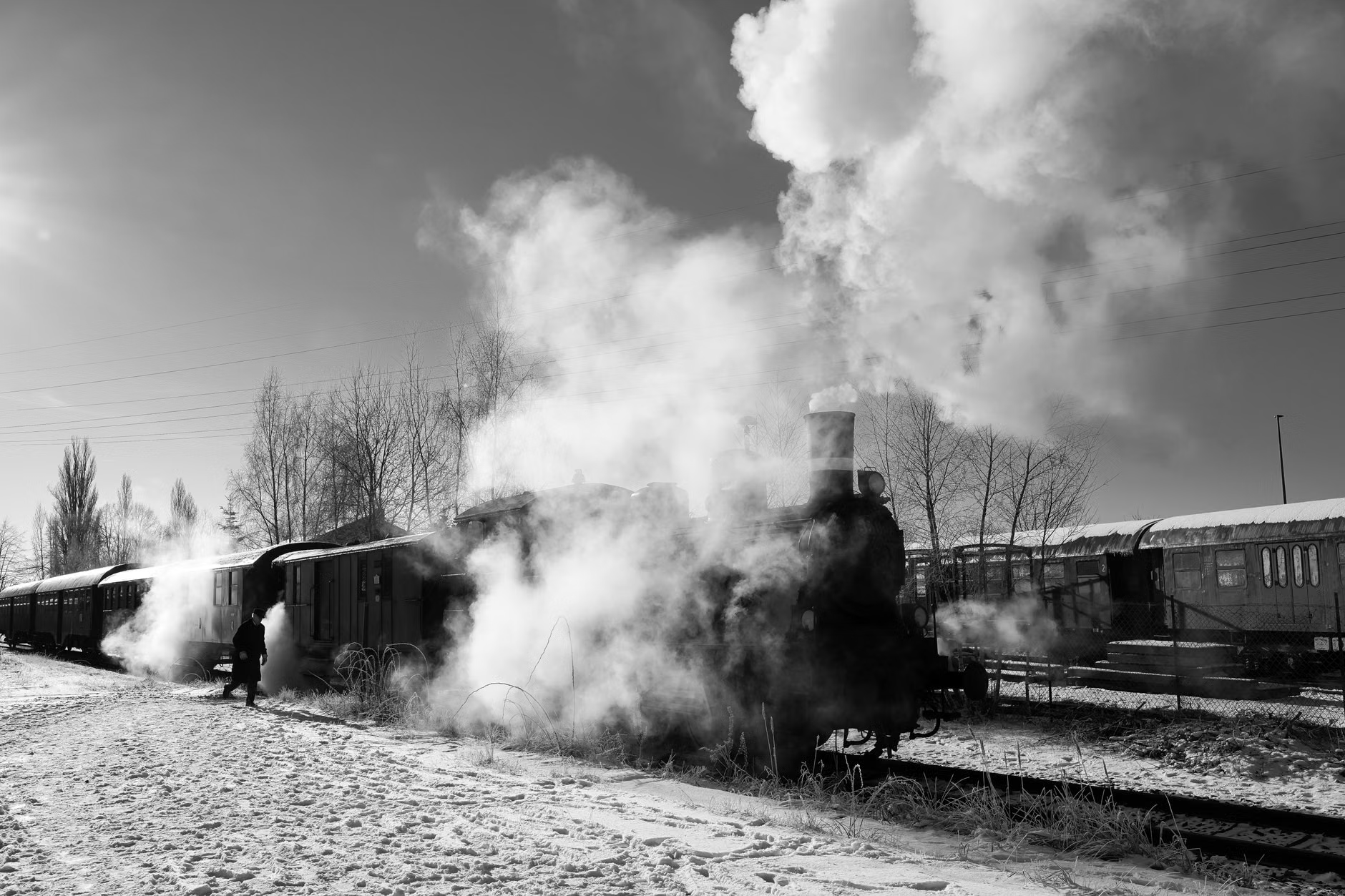
Heritage rail is one of the few “all-weather” activities. In fact, a rainy autumn day can be incredibly atmospheric. The steam from the engine against the grey, moody sky, combined with the warmth of the vintage carriage, creates a “hygge” experience that is difficult to replicate. Just ensure you have waterproof gear for the walk to and from the station.
Can I bring my own food on board?
Most heritage lines allow you to bring your own snacks, provided you clean up after yourself. However, many lines rely on the revenue from their onboard cafes to keep the trains running. Buying a coffee or a snack on board is a great way to support the preservation of these historical assets, and it’s a nice way to chat with the volunteers who run the line.
As you plan your next family break, remember that the goal isn’t to see as much as possible, but to feel as much as possible. A heritage-rail trip provides the perfect container for that. It allows you to step back from the frantic pace of modern life and experience the world at a speed that actually allows you to see it. Take the slow route this autumn; your future self—and your family—will thank you for the extra time to breathe.