Key Takeaways:
- Redefine the Goal: Abandon the “summit-first” mentality; in slow-adventure hiking, the goal is discovery, not distance or elevation gain.
- The 1:1 Rule: For every hour of walking, budget at least 30 minutes for “curiosity stops” to prevent fatigue-driven meltdowns.
- Strategic Gear: Focus on weight and accessibility rather than high-performance technical equipment to keep the experience manageable for young children.
The most successful family hike I ever witnessed didn’t happen on a rugged mountain peak or a famous national park trail. It happened on a flat, three-quarter-mile loop behind a local library. A father and his five-year-old daughter spent forty-five minutes examining a single rotting log, counting beetles, and discussing why the moss on one side was greener than the other. They never reached the “viewpoint” marked on the map, and they didn’t care. That is the essence of slow-adventure hiking.
For parents in our 30s and 40s, we are constantly programmed to optimize. We optimize our work schedules, our grocery runs, and our kids’ extracurriculars. When we take that same “optimization” mindset to the hiking trail—trying to hit a specific distance or reach a landmark before nap time—we inevitably turn a leisure activity into a high-stress logistical nightmare. Slow-adventure hiking is the intentional rejection of this efficiency-first approach.
Why the “Summit Mentality” is Ruining Your Weekends
We often carry a “conqueror’s bias” into the outdoors. We see a trail map, identify the highest point, and decide that reaching it is the only way to validate the effort of packing the car, wrangling the kids, and driving out of town. But for a child, the trail isn’t a means to an end; it is the entire experience. When we force a child to “keep moving” because we are behind schedule, we aren’t just ignoring their needs—we are training them to view nature as a place where they are constantly being rushed.
This creates a classic parenting trap. You have a “destination” goal, and your child has a “discovery” goal. When these collide, you get the mid-trail meltdown. By shifting the objective to sensory engagement rather than geographic completion, you remove the primary source of conflict. If the hike is meant to be a 45-minute exploration of a forest floor rather than a 3-mile trek to a waterfall, the pressure evaporates.

The Mechanics of Slow-Adventure: Planning for the Unexpected
Slow-adventure isn’t about aimless wandering; it’s about structured flexibility. You need a framework that allows you to feel in control while giving your child the autonomy to explore. The most effective way to do this is to treat the trail as a series of “nodes” rather than a single line.
1. Identifying the Right Trail Profile
Not all trails are built for slow-adventure. Avoid “out-and-back” trails with significant elevation changes. These are psychologically difficult for children because the return trip feels like a chore, not a continuation. Instead, look for:
- Loop Trails: Loops provide a sense of progress without the feeling of retracing steps.
- High-Interest Density: Look for trails near water, through varied terrain (meadows to forest), or those that feature interpretive signage.
- Short Distances with High Potential: A 1-mile trail that takes 2 hours is infinitely better than a 4-mile trail that takes 2 hours of forced marching.
2. The “Curiosity Budget” Framework
Think of your hike as a budget. If you have 120 minutes of total “out-of-house” time, break it down using this decision rule:
| Phase | Time Allocation | Focus |
|---|---|---|
| Arrival & Buffer | 20% | Acclimatization, potty breaks, snacks. |
| Active Exploration | 60% | Slow movement, intentional stops. |
| Transition & Return | 20% | Winding down, final snack, exit. |
If you don’t account for the “buffer” and “transition” time, you will inevitably end up rushing the “active exploration” phase, which is exactly when the kids are having the most fun. By acknowledging that 40% of your time will be spent on non-walking tasks, you effectively lower your own stress levels.
Equipping for the “Slow” Lifestyle
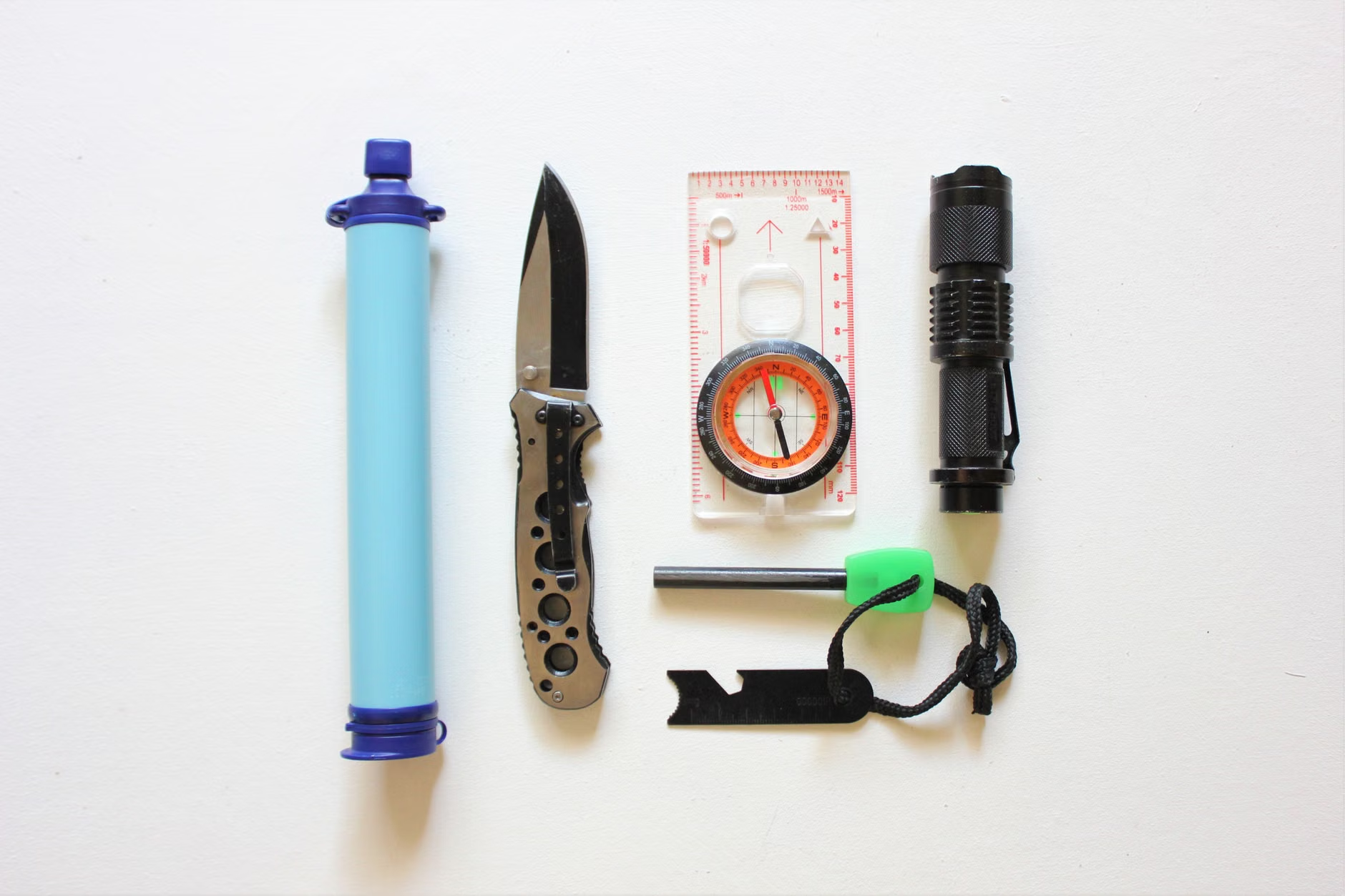
There is a common misconception that “adventure” requires specialized, expensive gear. For slow-adventure, the opposite is true. You want gear that is accessible and encourages interaction with the environment, not gear that acts as a barrier or a status symbol.
The “Discovery Kit” for Parents
Instead of investing in high-end trekking poles or GPS watches for your children, invest in a “discovery kit.” This keeps them engaged with the world at their feet. Include items like:
- A Magnifying Glass: The ultimate tool for turning a patch of dirt into a landscape.
- A Small Field Guide: Local flora and fauna books help children feel like “experts” when they identify a common leaf or bird.
- A “Treasure” Bag: A small cloth sack for collecting non-living items (rocks, pinecones, fallen leaves). Note: Always follow local “Leave No Trace” principles—ensure the kids know to only pick up things that are already on the ground and not part of a living plant.
The Clothing Trade-off
Avoid the “fashionable” outdoor gear trap. Kids need clothing that allows for movement and is easy to clean. The biggest mistake is dressing them in layers that are too stiff or difficult to put on/take off. A simple, comfortable set of clothes that can handle mud is better than expensive, technical “hiking” clothes that the child will find restrictive. If they are worried about getting their clothes dirty, they won’t engage with the “slow” aspect of the hike.
Even with the best intentions, it is easy to slip back into “hurry-up mode.” Here are the three most common traps and how to bypass them.
Mistake 1: The “Just a Little Further” Promise
We often tell our kids, “Just a little further and we’ll see the waterfall!” This is a lie, and they know it. It sets up a dynamic where the destination is the reward. If the destination doesn’t live up to the hype—or if they are tired—the disappointment is magnified. Decision Rule: Never use the destination as a bribe. Instead, frame the current moment as the reward. “Look at this interesting rock we found; let’s see what else is under it.”
Mistake 2: Ignoring the “Energy Dip”
Every child has a predictable energy dip. For many, it’s about 30-45 minutes into an activity. If you are far from the car when this hits, you are in trouble. Action: Plan for a “refueling station” before the dip occurs. Find a comfortable spot—a bench, a stump, or a flat rock—and have a snack break 15 minutes before you think they will get tired. This resets the internal clock and buys you another hour of good mood.

Mistake 3: The “Nature is a Classroom” Trap
Many parents try to make the hike educational, turning it into a biology lesson. While that’s fine in small doses, it can quickly become “school outside.” Let them lead the questions. If they are obsessed with a pile of mud, let them talk about the mud. You don’t need to turn every interaction into a lecture about the ecosystem. Let them experience the texture, the smell, and the mess.
The Psychological Shift: Why It Matters for You
For parents in their 30s and 40s, life is often a series of high-speed transitions. We go from the morning school rush to the workplace, then back to the evening routine. Our nervous systems are rarely allowed to shift out of “high-alert” mode. Slow-adventure hiking is a form of active mindfulness.
When you force yourself to walk at the pace of a toddler, your heart rate naturally drops. Your eyes are forced to focus on the immediate, small-scale environment rather than the abstract, large-scale stressors of your life. This isn’t just “nice for the kids”; it is a physiological reset for the adult. You are essentially doing a walking meditation, even if you are doing it with a snack-seeking toddler.
If you find yourself feeling impatient, use the “Five Senses” technique. Stop and ask yourself: What are five things I can see, four things I can hear, three things I can feel, two things I can smell, and one thing I can taste? This brings you back into the present moment with your child, rather than letting your mind wander to the emails waiting for you at home.
Implementation Framework: Your Next Trip
Ready to try it? Here is your step-by-step checklist for your next outing:
- Choose a Local “Low-Stakes” Trail: Pick a trail within 30 minutes of your home. If it goes wrong, you can bail out easily.
- Set the Expectation: Tell the kids, “We are going on a discovery walk today. We aren’t going to the end of the trail, we are going to see how many cool things we can find.”
- Pack the “Discovery Kit”: Include the magnifying glass, the snack, and the water. Keep it light.
- The “Stop-and-Look” Rule: Agree that if one person stops to look at something, everyone stops. This creates a shared experience rather than a “chase.”
- Document (Briefly): Take a photo of their discovery, not just them posing. This helps them feel that their findings are valuable.
Remember, the goal is to create a positive association with the outdoors. If your child remembers the hike as “the time we looked at the cool beetle” rather than “the time we walked for hours and I was tired,” you have succeeded. The distance covered is irrelevant. The quality of the connection is everything.
Frequently Asked Questions
What if my child just wants to run ahead?
Running is natural for kids. If they want to run, let them run ahead to a “safe zone”—a visible landmark like a specific tree or a trail marker—and then have them wait for you. This gives them the physical release they need while ensuring they stay within your supervision. You don’t have to keep up with them, but they must wait at the designated “stop point.”
How do I handle the “I’m bored” comment?
Boredom is the precursor to creativity. Instead of immediately providing a distraction, ask them a question about their surroundings. “If you were a squirrel, where would you hide your nuts in this forest?” or “What do you think is the loudest thing in these woods?” Give them a prompt to engage with the environment, and let them lead from there.
What about weather conditions?
Unless it is dangerous (severe storms, extreme heat, or freezing temperatures), “slow-adventure” thrives in less-than-perfect weather. A rainy day offers a completely different set of “discoveries”—puddles, worms, and the smell of wet earth. Invest in a decent rain jacket for the kids and go out anyway. The “slow” mindset makes it much easier to manage a rainy walk than a fast-paced one.
The beauty of the slow-adventure approach is that it is infinitely scalable. As your children grow, the “discoveries” will become more complex—from beetles to geology, from local plants to identifying bird calls. But the core principle remains: the trail is a place to be, not a place to conquer. By stepping off the treadmill of productivity and into the rhythm of the woods, you are giving your family the one thing that is increasingly rare in our modern lives: the permission to simply slow down.
For more resources on family-friendly outdoor activities, you can check out the National Park Service’s trail guide for general tips on trail safety and selection, or look for local “Nature Play” initiatives in your specific region which often map out shorter, high-engagement trails perfect for this approach.