The most effective study desk for a neurodivergent teen isn’t the one with the most storage—it’s the one that requires the least amount of “activation energy” to start a task. For teens with ADHD or other executive function challenges, a cluttered or over-stimulated workspace acts as a barrier, turning the simple act of sitting down to study into a monumental cognitive hurdle.
- Minimize Visual Noise: Keep the desk surface clear of everything except the specific task at hand to prevent the brain from wandering.
- The “Launchpad” Concept: Treat the desk as a launchpad where all necessary materials are pre-staged, removing the “searching” phase that often kills motivation.
- Sensory Regulation: Balance lighting and sound to meet your teen’s specific sensory needs—what provides focus for one can be an agonizing distraction for another.
If you have ever watched your teen stare at a desk full of supplies, only to end up reorganizing their pens instead of starting their essay, you are witnessing an executive function breakdown. It is not a lack of willpower; it is a lack of clear, externalized structure. The brain is struggling to prioritize which item to engage with first. When we build an “Executive-Function Desk,” we are essentially building an external prefrontal cortex that guides them through the process of starting, maintaining, and finishing their work.
Why “Minimalist” Isn’t Just an Aesthetic Trend
For neurotypical brains, a desk filled with books, sticky notes, and gadgets might look like a productive hub. For a teen with executive function challenges, that same desk is a sensory minefield. Every item on that desk is a potential “interruptor.” If they see a drawing pad, a phone charger, and an old textbook, their brain is constantly processing the presence of those items in the background.
This is known as visual noise. When the visual field is cluttered, the brain spends a portion of its limited cognitive resources just filtering out the irrelevant information. By clearing the desk, you are freeing up that mental bandwidth. The goal is to make the desk “boring” when it is not in use, and “focused” when it is. Think of the desk surface as a blank canvas; if there is too much paint already on it, you can’t start a new picture.
The Rule of Two: Limiting External Stimuli
A practical rule for the desk surface is the “Rule of Two.” At any given moment, only two items should be on the desk: the task (e.g., the textbook or laptop) and the tool (e.g., a notebook and a pen). Everything else, including the pencil case, should be stowed in a drawer or a bin within arm’s reach. This creates a clear boundary between “finding materials” and “doing the work.”
The Anatomy of a “Launchpad” Setup
Executive function challenges often manifest as difficulty with task initiation. If a teen has to find their calculator, look for a charger, and hunt for a specific highlighter, they have already exhausted the mental energy required to actually solve the math problem. A “Launchpad” setup solves this by front-loading the organization.
| Feature | Purpose | Action Step |
|---|---|---|
| The “Ready” Bin | Reduces search time | Keep a single bin with essential tools (calculator, pens, ruler) |
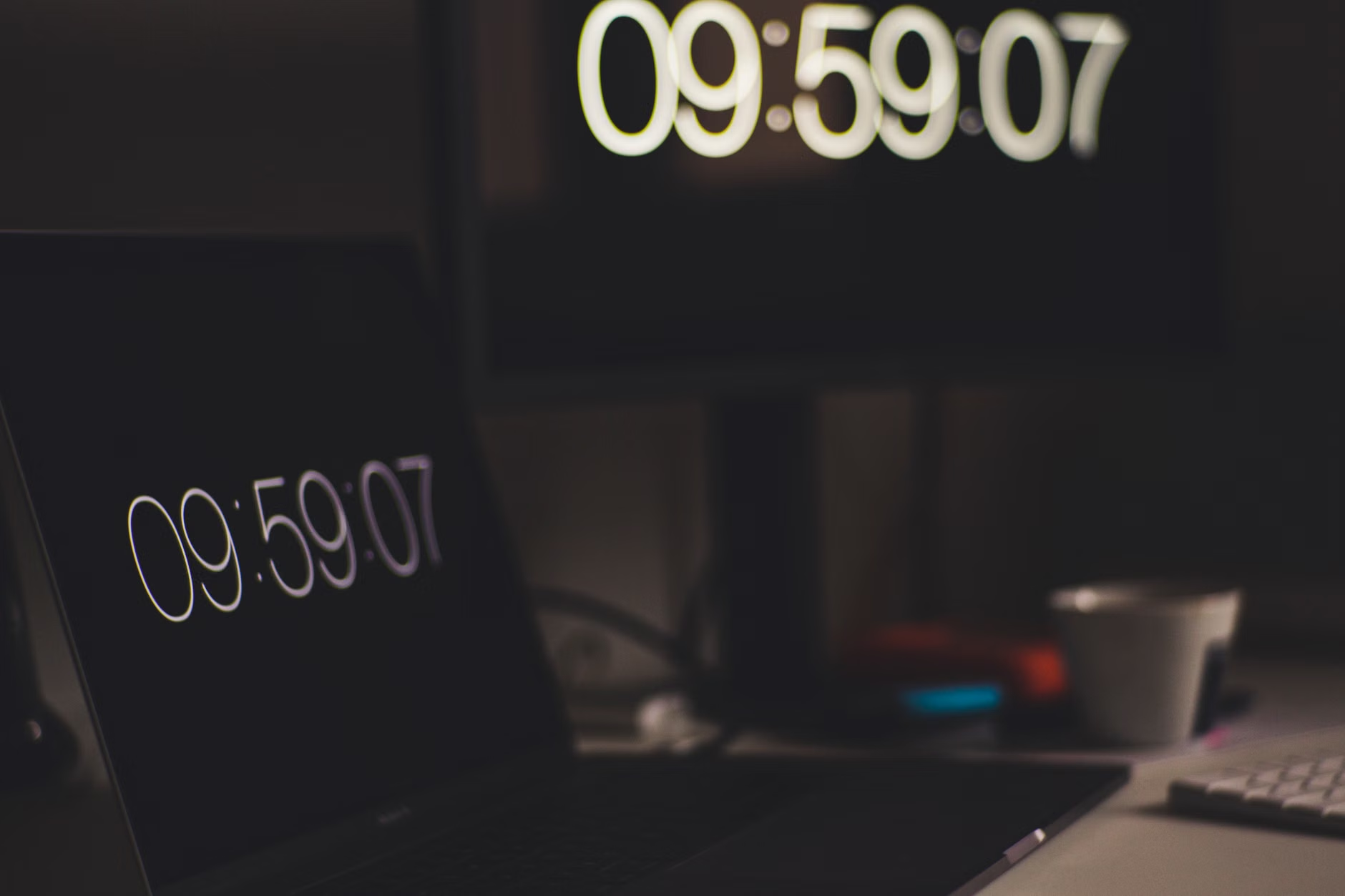
| Visual Timer | Creates urgency | Use an analog visual timer to show time passing |
| Cable Management | Reduces visual stress | Use clips or sleeves to hide all cords |
The “Ready Bin” is a game-changer. Instead of having a desk covered in loose items, keep a small, opaque bin that contains everything they need for homework. When study time is over, everything goes into the bin, and the bin goes into a drawer. The desk is now empty. This provides a clean, psychological “reset” every time they sit down. It also prevents the “out of sight, out of mind” problem because the essential tools are contained, not scattered.
Managing Sensory Overload: Lighting and Sound
Neurodivergent teens often have heightened sensitivities to their environment. A flickering fluorescent light or a hum from a computer fan might be barely noticeable to you, but to them, it can be a source of constant, low-level irritation that drains their ability to concentrate.
Lighting Strategies
Overhead lighting is often too harsh and diffuse. It illuminates the whole room, which makes it harder for the brain to “zone in” on the desk. Instead, use a dedicated task lamp with a warm, adjustable color temperature. A warm light (around 3000K) creates a cozy, focused “bubble” around the workspace, effectively telling the brain, “This is where we are working right now.”
Soundscapes and White Noise
Absolute silence is not always the answer. For many, a “neutral” sound environment is superior. If your teen is distracted by household noises—the dishwasher, a sibling talking, or the TV—consider noise-canceling headphones or a white noise machine. The key here is consistency. If they use music, encourage them to use a playlist without lyrics. Lyrics engage the language center of the brain, which is the same part they need for writing or reading, creating a conflict that slows them down.
The “Zoning” Principle: Separating Work from Rest
One of the most common mistakes parents make is placing the study desk in the bedroom. While this seems convenient, it often blurs the line between the place where they go to relax and the place where they go to work. If a teen is stressed about homework, having that “stress” associated with their bed can lead to sleep disturbances. If possible, set up the desk in a neutral area, like a quiet corner of the living room or a dedicated office space.
If the desk must be in the bedroom, use a physical divider or even a simple curtain to hide the desk when it is not in use. This creates a psychological “off switch.” When the curtain is closed, the desk doesn’t exist. This prevents the guilt of “I should be studying” from creeping in while they are trying to wind down for bed.
Step-by-Step Implementation for Parents
Don’t try to overhaul the entire desk in one afternoon. Neurodivergent teens often experience “change anxiety,” where a sudden shift in their environment feels overwhelming. Instead, implement these changes incrementally.
- Week 1: The Declutter. Focus only on clearing the surface. If it’s not used every day, it doesn’t belong on the desk. Use a drawer or a box for the “overflow.”
- Week 2: The Lighting. Introduce a dedicated task lamp. Ask your teen how it feels compared to the overhead light. Let them adjust the angle.
- Week 3: The Routine. Establish the “Launchpad” routine. Spend five minutes at the end of every study session “resetting” the desk to its empty state.
The goal is to create a sense of agency. If your teen feels like they have control over their environment, they are much more likely to use it effectively. Ask them: “What is the one thing on this desk that annoys you the most?” Start there. By involving them in the design process, you shift from being a “manager” of their study habits to a “consultant” for their success.
Beyond the Desk: The Hidden Variables
Even with the perfect desk, there are hidden factors that can disrupt focus. One of the most overlooked variables is posture and movement. Many neurodivergent individuals find that “fidgeting” is actually a way to maintain alertness. If they are forced to sit perfectly still in a rigid chair, their brain may actually drop into a lower state of arousal, leading to daydreaming.
Consider a stool that allows for subtle movement, or a desk that can be switched between sitting and standing. A standing desk, or even a simple riser that allows them to stand for 15 minutes of an hour, can provide the proprioceptive input (the sense of body position) that keeps their nervous system regulated. It’s not about being “professional”; it’s about being functional. If they need to stand to read their history chapter, let them stand.
Another factor is the “digital clutter” on their computer. If their browser has 40 tabs open, that is the digital equivalent of a messy desk. Use browser extensions like “OneTab” or “StayFocusd” to limit the number of active windows. If the computer is the primary tool, the digital environment must be as clean as the physical one.
Troubleshooting Common Roadblocks
What happens when they stop using the system? It is common for a system to work for two weeks and then fall apart. This is not a failure; it is a feature of the neurodivergent brain, which often seeks novelty. When the system stops working, don’t revert to the old way. Instead, “refresh” the system. Change the color of the bins, move the desk to a different wall, or swap out the lamp. Sometimes, the brain just needs a small, low-stakes change to re-engage with the environment.
Remember that the “perfect” desk is a moving target. As your teen grows and their academic demands change, their needs will shift. A high-schooler taking AP classes has different requirements than a middle-schooler. Keep the communication lines open. Ask them regularly: “Does this space still help you work, or is it getting in your way?”
Conclusion
Creating an executive-function-friendly desk is not about imposing order for the sake of aesthetics; it is about creating a cognitive environment that supports your teen’s specific way of processing the world. By reducing visual noise, creating clear boundaries, and prioritizing ease of initiation, you are providing them with the tools to manage their own productivity. It is a slow process, but it is one that pays off in reduced friction and increased confidence. Start small, be consistent, and keep the focus on their comfort and functionality rather than an idealized version of what a “study space” should look like.
Frequently Asked Questions
- Should I force my teen to clean their desk every day?
Rather than “forcing,” frame it as a “reset” for their future self. Explain that they are doing a favor for their “tomorrow self” by leaving the desk ready for the next task. If they find daily cleaning too much, aim for a “reset” at the end of each major study block instead. - My teen insists on playing music while studying. Is this okay?
It depends on the music. Instrumental music, lo-fi beats, or ambient noise are usually fine as they don’t compete with the language centers of the brain. If the music has lyrics and they are struggling with reading or writing, encourage them to switch to instrumental tracks during those specific tasks. - Is a standing desk worth the investment for a neurodivergent teen?
For many, yes. Movement is a powerful tool for self-regulation. A standing desk doesn’t have to be expensive; even a simple, height-adjustable laptop riser can provide the necessary flexibility to switch positions, which can help maintain focus during long study sessions.
For more research on how environment impacts executive function, you can visit the Children and Adults with Attention-Deficit/Hyperactivity Disorder (CHADD) resource center.