By 2026, the global supply chain for essential household goods has transitioned from a “just-in-time” model to a “just-in-case” reality, meaning you should expect higher price volatility and occasional inventory gaps for non-perishable staples.
- Inventory Buffers: Maintaining a 30-day supply of non-perishable essentials is now a recommended hedge against regional logistics disruptions.
- Predictive Pricing: Seasonal price spikes for imported goods are more predictable; monitor regional logistics indices to time your bulk purchases.
- Local Sourcing Shift: Diversifying your household staples to include locally produced alternatives reduces exposure to trans-oceanic shipping bottlenecks.
If you have spent the last few months wondering why your favorite brand of detergent or a specific imported pasta suddenly vanishes from the shelf for three weeks, you are not imagining things. We aren’t looking at a total collapse, but rather a “friction-heavy” logistics environment. For those of us balancing work, school runs, and the daily grind, this means the old strategy of “I’ll just pick it up on the way home” is becoming a risky gamble.
Understanding the “Just-in-Case” Shift in Logistics
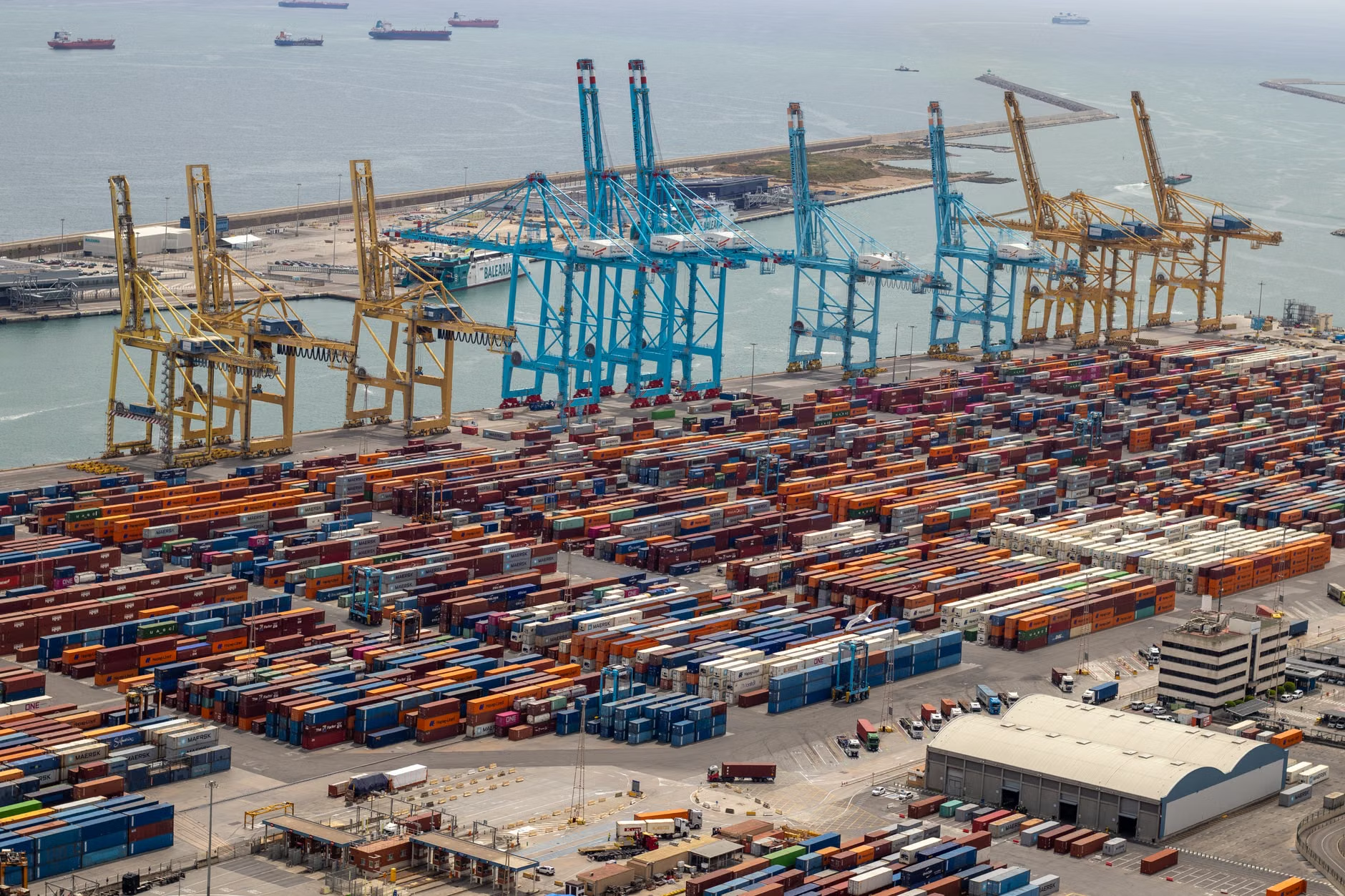
Historically, companies relied on “just-in-time” logistics—a system where parts and products arrive exactly when needed to minimize storage costs. In 2026, that model is effectively dead for many consumer goods. Why? Because the global network is grappling with what analysts call “polycrisis” logistics: a mix of geopolitical trade realignments, labor shortages in the trucking sector, and climate-induced port closures.
For a family in their 30s or 40s, this matters because it changes the definition of “essential.” It is no longer just about having food; it is about having a reliable supply of the items that keep your household running—cleaning supplies, toiletries, and shelf-stable pantry items. When global shipping routes become congested due to regional conflicts or extreme weather events, the impact trickles down to your local supermarket’s distribution center within weeks.
Think of it like a traffic jam on a highway. If one lane closes (a port strike or a canal blockage), the ripple effect hits the exit ramps (your local stores) long before the traffic clears. In 2026, we are living in a state of semi-permanent, minor “traffic jams” in the shipping world. This means we must shift our personal shopping habits from reactive to proactive.
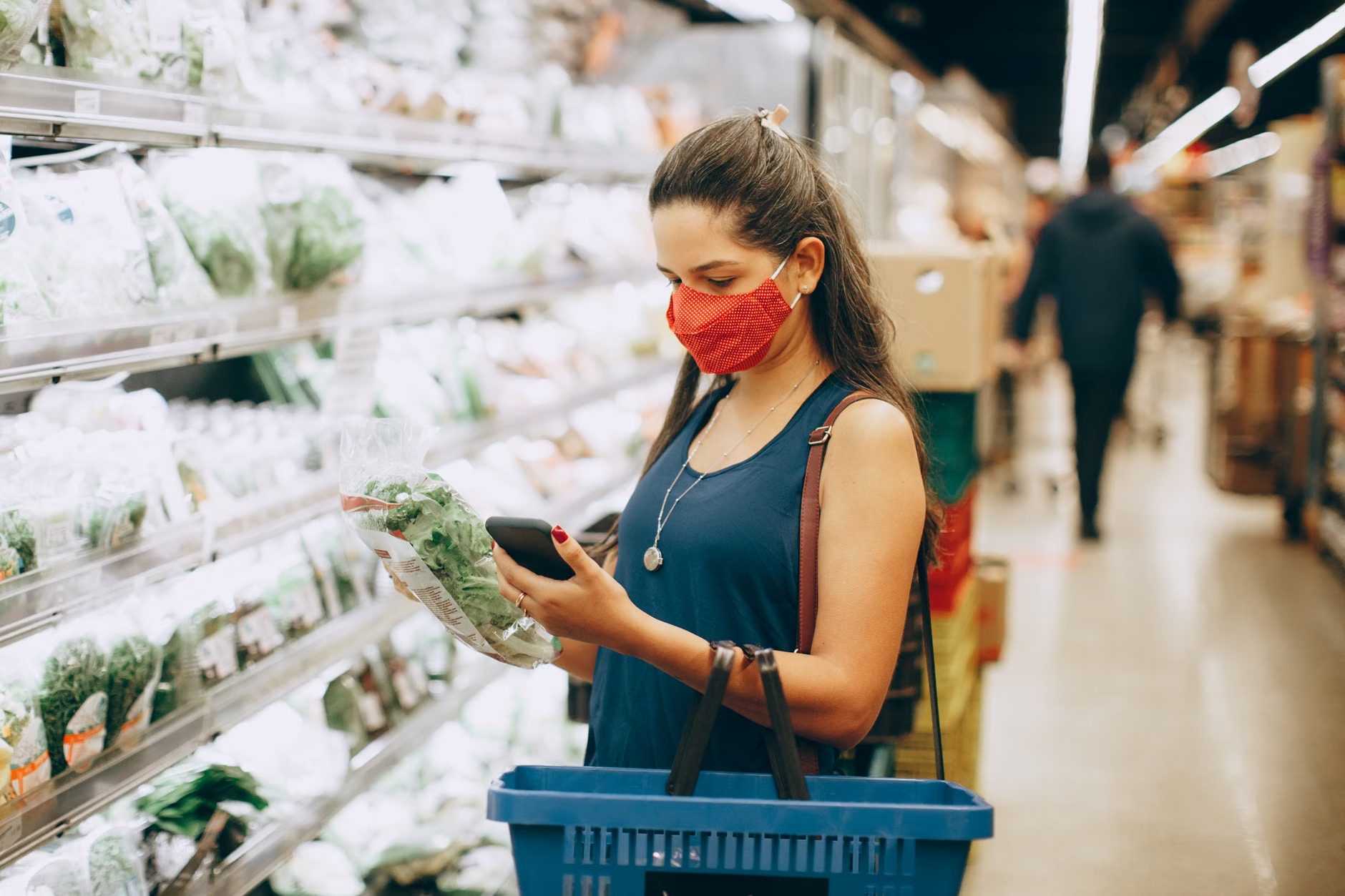
How Global Disruptions Impact Your Grocery Bill
It isn’t just about availability; it is about price. When logistics networks are stressed, companies pass the cost of “expedited shipping” or “inventory buffering” onto the consumer. If a shipping container costs 40% more to move from Southeast Asia to Europe or North America than it did two years ago, that cost is hidden in the price of your bulk-buy paper towels or processed snacks.
You might notice a pattern: items that rely on complex, multi-stage supply chains—like electronics, high-end skincare, or certain imported food ingredients—are seeing the most significant price fluctuations. Conversely, goods produced within your domestic region or within your trade bloc tend to show more price stability. This is your first actionable insight: Prioritize brands that have localized their manufacturing.
Comparing Supply Chain Vulnerability
| Product Category | Supply Chain Sensitivity | Strategy for 2026 |
|---|---|---|
| Fresh Local Produce | Low | Buy in season; support local farm-to-table networks. |
| Imported Dry Goods | High | Stock up when prices are low; avoid brand loyalty. |
| Household Chemicals | Medium | Buy in large, concentrated formats to reduce shipping weight. |
| Electronics/Appliances | Extreme | Repair before replacing; budget for long lead times. |
The table above highlights that not all items are created equal. If you are trying to manage your household budget in 2026, focus your energy on the “High” sensitivity items. By purchasing these in larger quantities during periods of stability, you insulate your household from the sudden price spikes that occur when a supply chain bottleneck inevitably hits.
Building a Resilient Household Inventory
I know what you are thinking: “I don’t have the space for a warehouse in my apartment.” That is fair. But building a “resilient” household doesn’t mean becoming a doomsday prepper. It means adopting a “Rolling Inventory” system. This is a simple, effective way to ensure you never run out of the items that make your life manageable.
The process is straightforward:
- Audit: Spend one weekend tracking what your family actually uses over a 30-day period.
- Establish a Buffer: Once you know your monthly burn rate, aim to keep 1.5 times that amount on hand.
- Rotate: Always put new items at the back of the shelf (First-In, First-Out).
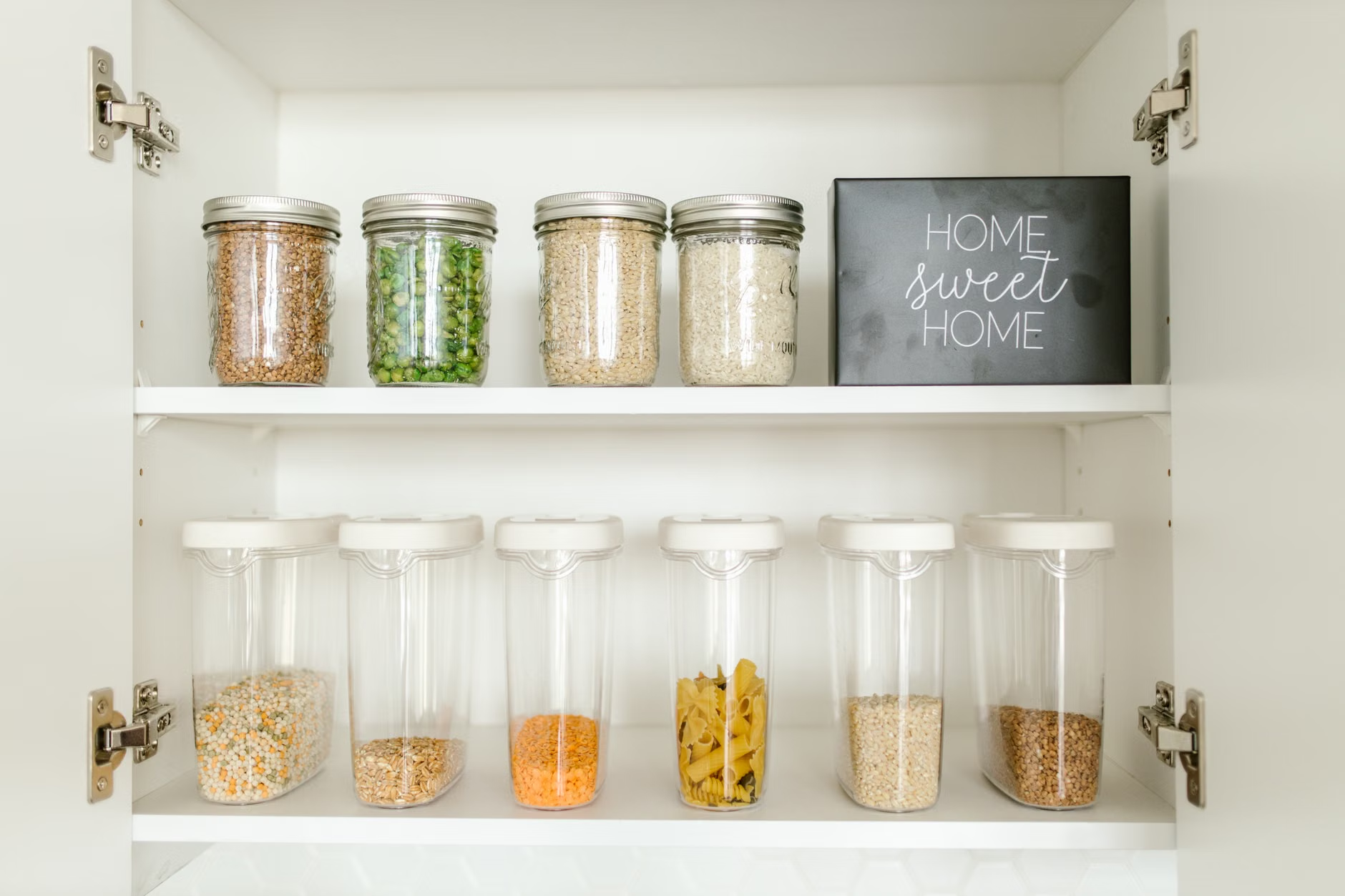
This strategy serves two purposes. First, it eliminates the “emergency run” to the store at 9 PM because you ran out of toothpaste. Second, it allows you to buy when prices are favorable. If you see your favorite brand of laundry detergent on sale, you buy two or three units. You aren’t “hoarding”; you are practicing smart household management in an era of logistical uncertainty.
The Hidden Costs of Convenience
One of the most overlooked variables in the 2026 supply chain is the “convenience tax.” Many of us have grown accustomed to same-day delivery services. However, these services are the most vulnerable to logistics disruptions because they rely on highly optimized, fragile delivery networks. When a storm hits or a fuel shortage occurs, these are the first services to experience delays or price surcharges.
If you are a parent juggling work and kids, relying on same-day delivery for essential items is a high-risk strategy. Instead, look for “Scheduled Delivery” or “Click and Collect” options. These models allow retailers to consolidate shipments, which is not only more cost-effective for them (often resulting in lower fees for you) but also more reliable. By opting for a scheduled pickup, you move your logistics needs into a more stable “bulk” category rather than the “urgent” category, which is always the first to fail during supply chain stress.
In 2026, where you live matters more than ever. Different trade blocs (like the EU, USMCA, or ASEAN) have implemented different regulations regarding the movement of goods. For instance, if you live in a region that is currently renegotiating trade tariffs, you might see specific categories of imported goods—like certain textiles or kitchenware—hit with sudden surcharges.
It is worth spending five minutes once a month checking your local government’s trade news. If you see headlines about a new “logistics tariff” or “import restriction” on goods from a specific region, that is your signal to buy those items now. It sounds like a lot of work, but compared to the cost of a 20% price hike on your monthly household goods, it is a high-return activity for your personal finances.
Common Mistakes to Avoid
The biggest mistake people make in this environment is panic-buying. When you see a news story about a port strike, the immediate instinct is to buy six months’ worth of toilet paper. This is counter-productive. It creates artificial shortages, drives up prices, and leads to wasted products that expire before you can use them. Maintain a steady, incremental buffer, not a chaotic stockpile.
Another common mistake is brand rigidity. In 2026, the supply chain for “Brand A” might be broken, while “Brand B” (which uses a different logistics provider) is perfectly fine. Being willing to switch brands for non-critical household items—like paper towels, soap, or basic dry goods—is a powerful tool. Test a few alternatives now, while you don’t *need* them, so you know which ones your family can live with when the preferred brand is unavailable.
Practical Next Steps for Your Family
If you want to start today, begin by doing a “Logistics Audit” of your pantry and utility closet. Identify the top 10 items you use every single week. For each of these items, identify a secondary brand or a local alternative. If you are currently buying these items via a subscription service, check if you can opt for a “bulk delivery” every two months instead of a “small delivery” every two weeks. This simple shift reduces the frequency of your exposure to shipping delays.
Remember that the goal isn’t to control the global supply chain—that’s impossible. The goal is to create a “shock absorber” for your home. By keeping a modest, well-managed surplus of essentials and choosing flexible shopping methods, you turn a potential stressor into a manageable part of your household routine. Stay informed, stay flexible, and focus on the items that truly matter for your family’s comfort.
Frequently Asked Questions
Q: Is it really necessary to store extra supplies in 2026?
A: It is not about “prepping” for a crisis, but rather “smoothing” the bumps of a volatile global logistics market. Having a 30-day buffer protects you from temporary price surges and local stockouts, which are becoming more frequent as global supply chains prioritize efficiency over redundancy.
Q: How do I know which products are most likely to be delayed?
A: Look for products that are heavily imported or have complex, multi-component manufacturing processes. If a product requires parts from three different countries before final assembly, it is significantly more likely to face a delay than a locally manufactured product.
Q: Should I stop using subscription-based delivery services?
A: Not necessarily. Subscription services are convenient, but they are vulnerable to logistics failures. If you use them, treat them as a “bonus” rather than your sole source of supply. Always maintain a backup stock so that if a subscription shipment is delayed, your daily life remains unaffected.
For further reading on global trade trends and logistics, you can monitor updates from the World Trade Organization regarding international trade policy and the World Shipping Council for insights into the state of global maritime logistics.