Choosing “slow-transit” for your daily family commute isn’t just about reducing your carbon footprint; it is the most effective way to reclaim your mental health and transform the chaotic “school run” into a shared moment of calm and connection.
Key Takeaways for the Modern Commuter
- Prioritize Protected Infrastructure: Always choose routes that feature physical barriers between you and motorized traffic, even if the distance is 20% longer.
- The “Cargo Advantage”: For families with children under 8, a front-loading cargo bike (long-john style) is significantly safer and more stable than a rear-mounted seat.
- Manage the “Transition Gap”: Treat the commute as a decompression phase, not a race. Building in a 10-minute buffer prevents the urge to speed or take risks.
Why the “Slow-Transit” Shift Matters for Parents
If you are in your 30s or 40s, your daily schedule likely resembles a high-stakes game of Tetris. Between early morning meetings, school drop-offs, and the looming threat of traffic gridlock, the commute is often the most stressful part of the day. We have been conditioned to believe that “faster is better,” but in urban environments, the “fastest” route often leads to elevated cortisol levels and a frazzled arrival at the office or classroom.
Slow-transit is not about being slow; it is about being intentional. It is the practice of choosing cycling routes that prioritize safety, scenery, and low-conflict zones over the shortest possible path. When you swap the car for a bicycle, you aren’t just moving from Point A to Point B; you are creating a predictable, reliable, and sensory-rich experience that helps children understand their neighborhood geography while allowing you to clear your head before the workday begins.
The research is clear: active commuting is linked to higher life satisfaction and improved psychological well-being. However, the barrier is rarely the physical effort—it is the perceived danger of urban traffic. By choosing a “slow” route, you minimize exposure to high-speed vehicles, which is the single most effective way to reduce anxiety for both the parent and the child.
Evaluating Your Route: The 3-Tier Safety Framework
Not all bike lanes are created equal. Many cities paint a line on the road and call it a “bike lane,” but for a parent carrying children, this is insufficient. You need to evaluate your route based on a hierarchy of protection.
When planning your commute, categorize every road segment into one of the following tiers. Your goal is to keep your entire route in Tier 1 and Tier 2.
| Tier | Description | Risk Level |
|---|---|---|
| Tier 1 | Protected bike lanes (curb, bollard, or planter-separated) and multi-use paths. | Very Low |
| Tier 2 | Low-traffic residential streets (“bicycle boulevards”) with speed calming. | Low |
| Tier 3 | Painted bike lanes on high-speed arterials or shared traffic lanes. | High/Avoid |
Decision Rule: If your route requires more than 15% of the distance to be in Tier 3, look for a detour. Even if it adds 5-8 minutes to your ride, the reduction in cognitive load—the mental energy spent scanning for aggressive drivers—is worth it. A calm 20-minute ride is infinitely more sustainable than a stressful 12-minute ride.
Choosing the Right Gear: Stability Over Speed
The most common mistake parents make is attempting to use a standard road bike with a rear-mounted child seat for daily urban commuting. While functional for short trips, it is not optimized for the “slow-transit” lifestyle. As your children grow, the center of gravity shifts, making the bike feel “twitchy” or unstable at low speeds.
The Case for the Cargo Bike
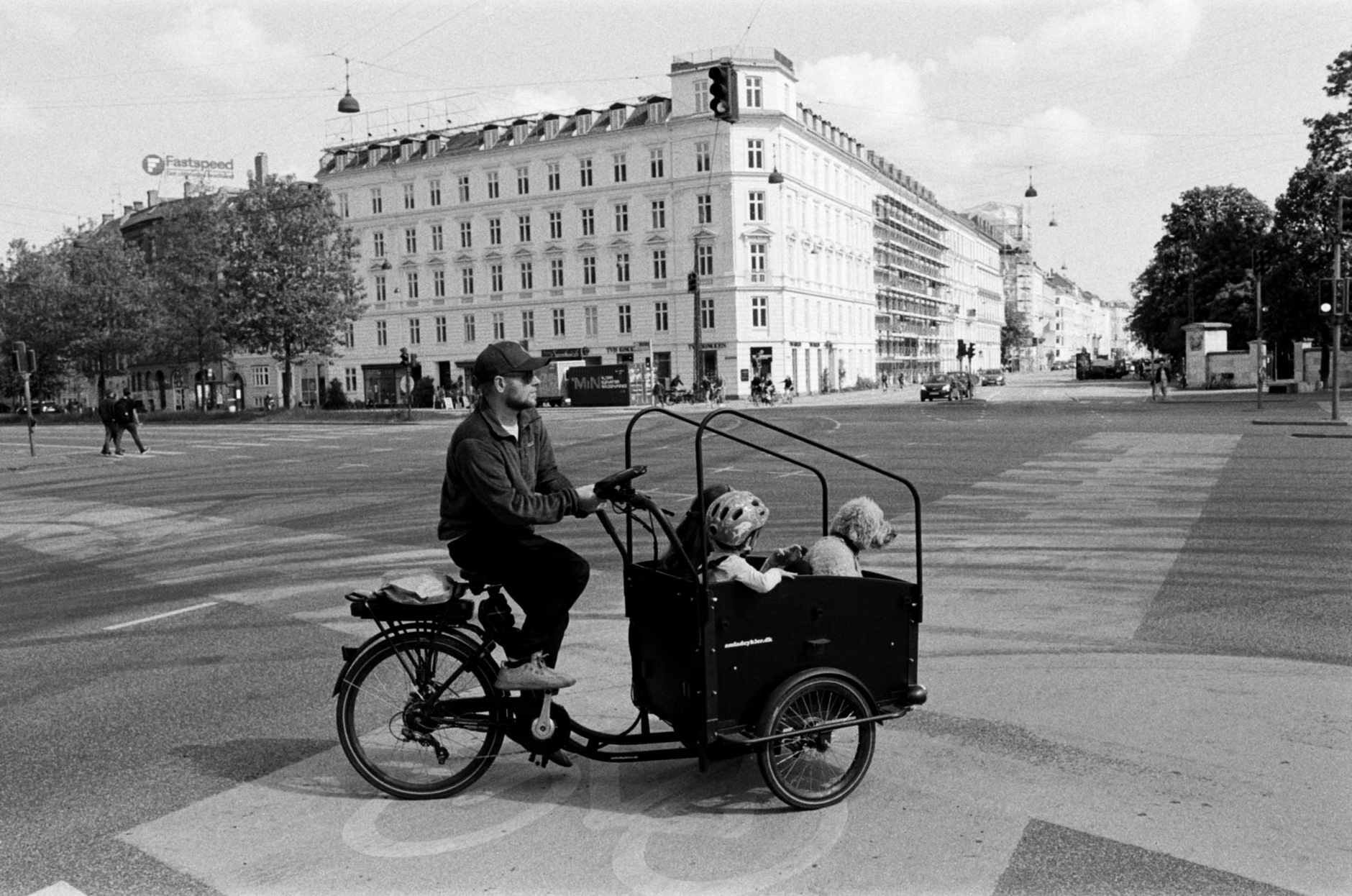
Front-loading cargo bikes (often called “Long Johns”) are the gold standard for family commutes. By placing the children in a low-slung box between the handlebars and the front wheel, you achieve three things:
- Constant Supervision: You can see your children, talk to them easily, and monitor their comfort without looking back.
- Lower Center of Gravity: The weight is distributed near the ground, making the bike significantly more stable when stopped at traffic lights.
- Cargo Capacity: These bikes can carry backpacks, groceries, and gym bags, eliminating the need for a secondary car trip later in the day.
The “Electric Assist” Variable
Do not be afraid of the “e” in e-bike. For a parent commuting with 20-40kg of extra weight (children + gear), an electric motor is not a shortcut—it is a tool for consistency. It removes the “sweat factor,” allowing you to ride in work clothes without needing a full wardrobe change upon arrival. It also helps you maintain a steady pace on inclines, which keeps you predictable for other road users.
Real-World Commuting Scenarios
Let’s look at a hypothetical scenario: The “School-to-Office” chain. A parent needs to drop two children at school and then travel to a corporate office.
The Mistake: Trying to take the “main road” to save time. This leads to the parent feeling rushed, leading to aggressive riding, which in turn causes the children to feel unsafe. The result is a cycle of stress that repeats every single morning.
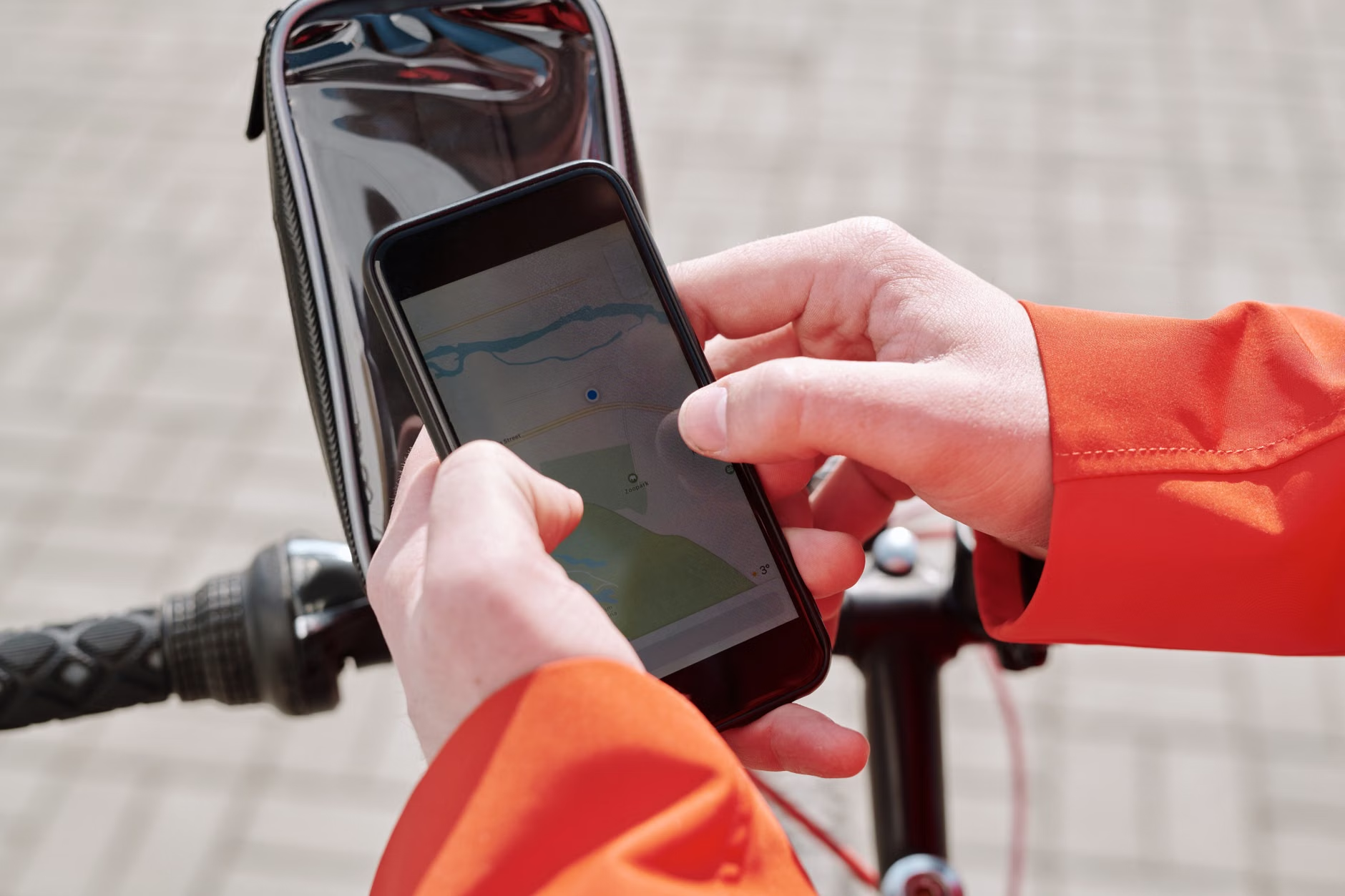
The Better Approach: The parent maps out a route using a community-sourced cycling app (like Strava Heatmaps or local city cycling maps) that identifies “low-stress” streets. They leave 10 minutes earlier than necessary. The commute becomes a “rolling conversation” where the parent points out landmarks or changes in the neighborhood. By the time they reach the school, the children are engaged and calm, and the parent has had a period of physical activity that boosts blood flow to the brain.
Hidden Costs & Considerations:
- Security: If you invest in a cargo bike, the cost of a high-quality, insurance-approved lock (like a heavy-duty chain or D-lock) is non-negotiable. Always lock the frame and the rear wheel to a fixed object.
- Maintenance: Cargo bikes are heavier and put more wear on brake pads and tires. Budget for a professional service at least twice a year. Think of this as your “car maintenance” fund—it is still a fraction of the cost of fuel, insurance, and parking for a second family vehicle.
- Weatherproofing: Most high-end cargo bikes come with rain covers. Don’t view these as optional. They turn the bike into a “tiny car,” keeping the kids warm and dry, which is the difference between a fun commute and a miserable one on a drizzly Tuesday.
Intersections are where the vast majority of cycling accidents occur. When riding with children, your strategy at an intersection must change from “assertive” to “defensive-plus.”
The “Box Turn” Technique
If you are at a large intersection where you need to make a left turn, do not attempt to merge across multiple lanes of traffic. Instead, use the “box turn.” Cross the intersection straight, stop in the designated bike box on the other side, turn your bike 90 degrees to the left, and wait for the light to change in your new direction. It takes an extra cycle of the traffic light, but it keeps you out of the flow of turning cars.
The “Last Mile” Protocol
The “last mile” is the distance from the end of the protected bike lane to your actual destination (the school gate or office entrance). This is often where infrastructure fails. Always have a plan for the final 200 meters. If the street is busy, dismount and walk your bike on the sidewalk if local laws permit, or use the pedestrian crosswalk to reach the other side of the street. Never assume a driver sees you just because you are in a bike lane.
Common Misconceptions About Urban Cycling
There is a persistent myth that “cycling is only for the fit.” In reality, urban cycling is about mobility, not athletics. If you find yourself needing to pedal hard enough to break a sweat, you are likely going too fast or using the wrong gear ratio. The goal is to reach your destination in the same state you left your house—ready for the day.
Another misconception is that “cities aren’t built for bikes.” While it is true that many cities are car-centric, almost every major metropolitan area has an “underground” network of quiet streets, parks, and alleyways that locals use to bypass major traffic. Your job is to become a student of your own city. Use resources like OpenStreetMap or local municipal cycling portals to find these “quietways.”
Building Your Routine: A Step-by-Step Guide
1. The “Dry Run”: Before the first day of school, do a test run on a Saturday morning. Ride the route at your own pace. Identify where the traffic lights are, which intersections feel “sketchy,” and where the best places to lock up are. A trial run removes the “unknown” factor that causes anxiety.
2. Gear Check: Ensure every rider has a properly fitted helmet. For children, ensure the harness in the cargo box is snug. Check tire pressure every two weeks; low tire pressure makes the bike feel sluggish and prone to flats.
3. The “Buffer” Rule: Add 20% more time than you think you need. If the ride usually takes 20 minutes, plan for 25. This buffer allows for minor delays like a missed light or a loose shoelace, ensuring you never feel the need to rush.
4. Visibility: Even in the daytime, use high-output LED lights. Modern daytime running lights (DRLs) for bikes are incredibly effective at making you visible to distracted drivers. Use them on “flash” mode during the day and “steady” mode at night.
Final Thoughts on the Slow-Transit Lifestyle
The shift to slow-transit is a rebellion against the constant, frenetic pace of modern life. It requires a bit of upfront planning, an investment in the right equipment, and a willingness to prioritize safety over speed. However, the return on this investment is significant: a calmer morning, a more connected relationship with your children, and a sense of agency in your daily environment.
Start small. If a full-time commute feels daunting, try it one day a week. Use the weekend to explore the quiet routes in your neighborhood. You will quickly find that the “slow” way is actually the most efficient way to enjoy your life. Remember, you aren’t just commuting; you are teaching your children that the journey is just as important as the destination.
Frequently Asked Questions
Q: What should I do if my city has very little bike infrastructure?
A: Focus on “low-traffic” routes. Even in car-centric cities, there are often residential streets with low speed limits (30km/h or 20mph) that run parallel to major roads. Use these as your primary corridors. Avoid arterial roads at all costs, regardless of whether they have a “bike lane” painted on them.
Q: Is it safe to cycle with children in heavy rain or winter conditions?
A: Yes, with the right equipment. High-quality rain covers for cargo bikes are essential. For winter, ensure you have appropriate tires (winter-specific tires with better tread) and that you are visible. If conditions are icy or visibility is extremely poor, there is no shame in taking public transit or a car. Flexibility is part of the “slow-transit” mindset.
Q: How do I handle the “cargo bike” storage problem if I live in an apartment?
A: This is a common barrier. Before purchasing, check if your building has a bike room or a secure garage. If not, look for “compact” cargo bikes (often called “long-tail” bikes) that have a smaller footprint and can be stored vertically or in standard bike racks. Some cities also offer secure, on-street bike parking boxes that you can rent.
For more information on cycling safety and urban planning, visit your local municipal government’s transportation department website or global resources like the Cycling Embassy of Great Britain or NACTO (National Association of City Transportation Officials) for urban design standards.