By 2026, the era of “just-in-time” delivery for every household item is shifting toward a “just-in-case” hybrid model, meaning you should adjust your purchasing habits to prioritize durability and local sourcing to avoid sudden shortages.
Key Takeaways for 2026
- Inventory Resilience: Maintain a 30-day “buffer stock” of essential non-perishables to mitigate the impact of localized logistics bottlenecks.
- Regional Shift: Prioritize brands that utilize regional manufacturing hubs, as these are less susceptible to trans-oceanic shipping delays.
- Digital Transparency: Use consumer-facing logistics apps to monitor the origin of high-demand items, allowing you to pivot to alternative sources before price spikes occur.
If you have spent the last few years feeling like your favorite coffee brand or specific household cleaner is perpetually “out of stock,” you aren’t imagining it. The global supply chain has moved past the chaos of the early 2020s, but it has settled into a new, more rigid complexity. For parents in their 30s and 40s, this means the convenience of the “everything-tomorrow” delivery model is becoming less reliable and more expensive.
Understanding how global logistics works in 2026 isn’t about becoming a supply chain expert; it’s about knowing how to keep your household running without the stress of last-minute scrambles. Let’s look at what is actually happening behind the scenes and how you can adapt your home management strategy.
The Shift from Global Efficiency to Regional Reliability
For decades, the global supply chain focused on one thing: the lowest possible cost. This meant shipping components across multiple continents just to assemble a single toaster. By 2026, that model has hit its limit. Companies are now embracing “near-shoring”—moving production closer to where the goods are consumed.
Why does this matter to you? Because the goods you rely on—from baby formula to replacement parts for your smart home devices—are now subject to regional economic policies rather than just global shipping rates. When a production facility is located in your own trade bloc (like the EU, USMCA, or ASEAN regions), your supply is less likely to be disrupted by a canal blockage or a port strike on the other side of the planet.
What it looks like in real life: You might notice that “Made in [Region]” labels are becoming more common for household staples. When you choose these products, you aren’t just supporting local jobs; you are opting for a shorter, more resilient supply chain. If you are choosing between two similar detergents, the one manufactured within your continent is statistically more likely to be on the shelf when you need it next month.

The Hidden Cost of “Ultra-Fast” Expectations
We have been conditioned to expect two-hour or same-day delivery. In 2026, this expectation is the primary driver of supply chain fragility. When retailers rush to meet these demands, they often bypass regional inventory centers, pulling stock from wherever it is available globally. This creates a “bullwhip effect”—a small spike in demand causes massive volatility in the supply chain.
To future-proof your household, move away from the “panic-order” mentality. Instead, adopt a “rolling inventory” system. If you use a product regularly, keep the next one in your cabinet before the current one is empty. This simple habit removes the pressure on the logistics network to perform a miracle every time you run out of laundry pods.
How to Strategically Manage Your Household Inventory
Managing a household in 2026 requires a bit of data-driven planning. You don’t need a spreadsheet for everything, but you do need to understand the “lead time” of your essential goods. Lead time is simply the duration between when you realize you need an item and when it actually arrives at your door.
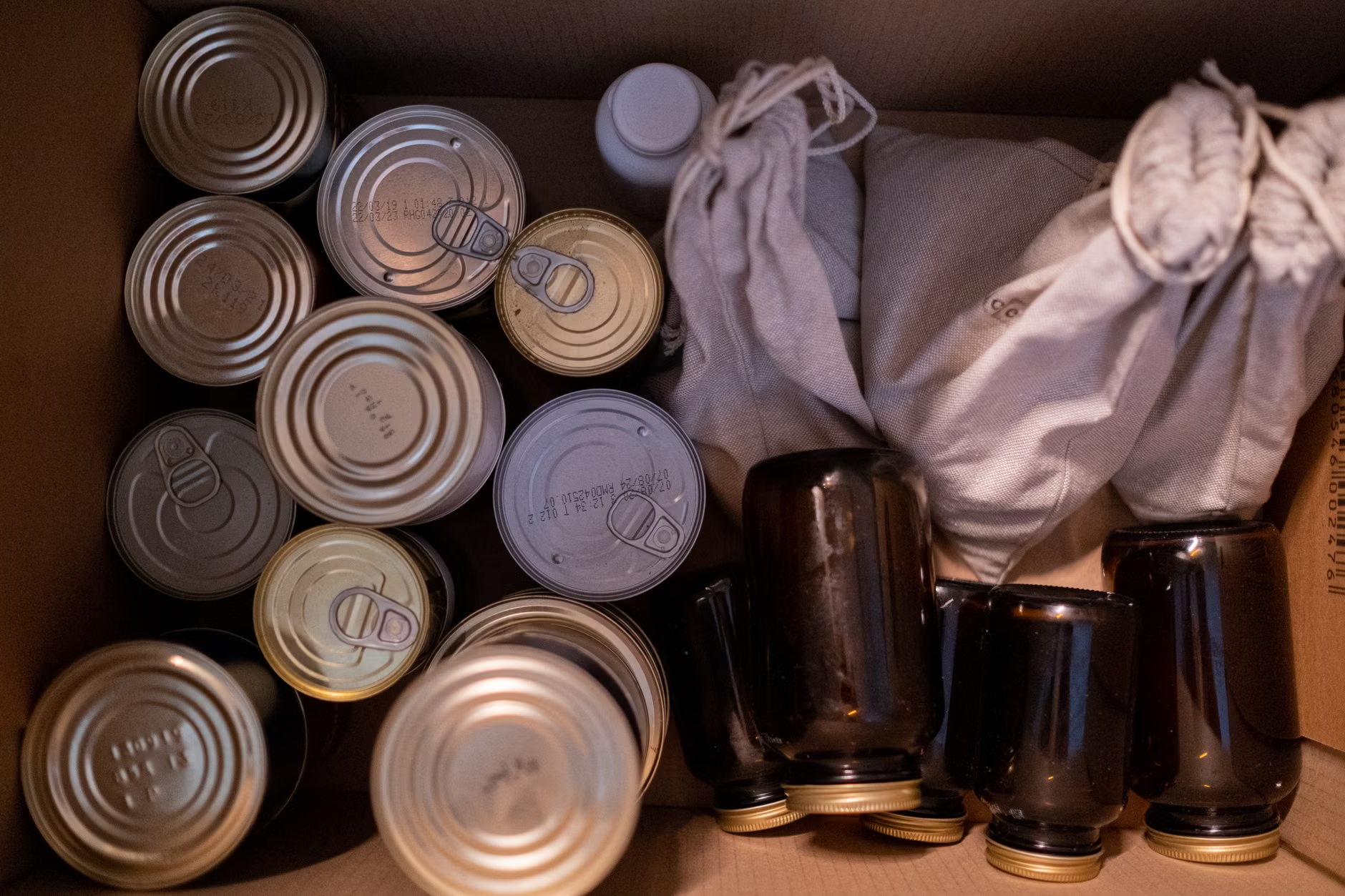
The 30-Day Rule for Essentials: For items that are non-perishable—such as diapers, cleaning supplies, personal care items, and shelf-stable dry goods—aim to maintain a 30-day buffer. This buffer acts as a shock absorber. If a global logistics event disrupts shipping for two weeks, your household won’t feel the ripple effect.
| Category | Strategy | Why it works |
|---|---|---|
| Perishables | Source locally (Farmers markets, regional grocery) | Minimal transit time reduces spoilage and dependency on long-haul logistics. |
| Household Staples | Maintain 30-day buffer stock | Absorbs minor delays without impacting family routine. |
| Tech/Specialty Goods | Check regional availability first | Reduces customs delays and ensures easier warranty support. |
This comparison table highlights a critical decision rule: Do not treat all household items the same. If you try to stock-pile fresh produce, you will end up with waste and financial loss. If you don’t stock-pile essential non-perishables, you are essentially gambling with your time and convenience during every supply chain hiccup.
You might have noticed that many retailers now offer “track your order” features that go beyond the basic “shipped” notification. By 2026, this technology is standard. Use it. When you order a higher-value item (like a new vacuum or a specific piece of nursery furniture), look at the origin location. If the tracking shows the item is moving through a region known for logistical congestion, you can anticipate a delay.
Common Mistake: Many people ignore the “estimated delivery date” until it passes. If you see a notification that your package is stuck at a major port or sorting hub for more than 48 hours, that is your signal to look for an alternative source if the item is truly urgent. Don’t wait for the retailer to tell you it’s delayed; be proactive.
The Trade-off: Convenience vs. Sustainability
There is a growing tension between the desire for fast delivery and the environmental cost of the supply chain. In 2026, carbon-conscious logistics is no longer a niche concern; it is a major factor in corporate strategy. Companies are consolidating shipments to reduce their carbon footprint. This means your package might arrive slightly later, but it is part of a more stable, efficient delivery route.
For the parent in their 30s or 40s, this is a trade-off worth making. Choosing “slower” delivery options often aligns with more reliable, consolidated shipping lanes. It is a win-win: you reduce your household’s carbon footprint, and you get a more predictable delivery schedule.
Building Your “Resilience Kit” for 2026
What does a resilient household look like in practice? It is not about hoarding. Hoarding is an emotional reaction; resilience is a logical one. A resilient household is one that has identified its “critical path” items—the things that would cause a major disruption if they were missing for a week.
Step-by-Step Action Plan:
- Audit your pantry and utility closet: Identify the top 10 items you use every single week.
- Calculate your burn rate: How many of these items do you use in a month?
- Establish the buffer: If you use 4 bottles of shampoo a month, keep 8 on hand. This ensures that even if a shipment is delayed by an entire month, you are covered.
- Rotate your stock: Always use the “First-In, First-Out” (FIFO) method. Put new items at the back of the shelf and pull from the front. This prevents expiration issues.
This approach transforms your pantry from a chaotic collection of half-used bottles into a well-oiled logistics hub for your family. It sounds slightly clinical, but the peace of mind it provides when a global shipping bottleneck hits is immense.

Identifying the “Silent” Risks
Not all supply chain issues are obvious. While we often hear about major disasters, the most common disruptions in 2026 are “silent.” These include labor shortages at regional distribution centers, software glitches in inventory management systems, and minor regulatory changes that slow down customs processing.
The Insight: The best defense against silent risks is diversification. If you rely on a single online retailer for all your household goods, you are at the mercy of that one company’s supply chain management. By diversifying—using a mix of local big-box stores, specialized online retailers, and direct-from-manufacturer subscriptions—you spread your risk. If one channel goes down, the others remain open.
Another overlooked variable is the “subscription trap.” Many people subscribe to automated deliveries to save time. While this is efficient, it can lead to over-stocking or, conversely, being stuck in a cycle where you are dependent on a single company that may be experiencing internal logistics issues. Review your subscriptions every 90 days. If a brand is consistently late, cancel the subscription and find a more reliable alternative.
Addressing Common Misconceptions
There is a persistent myth that “global supply chain” means everything is controlled by a few massive, faceless corporations. While large companies play a major role, the 2026 landscape is actually becoming more decentralized. Small, agile businesses that use local fulfillment centers are often more reliable than giant retailers that depend on complex, fragile global networks.
Don’t be afraid to try smaller, regional brands. They are often more transparent about their supply chain and are frequently more responsive to regional logistics challenges. When you support these businesses, you are helping to build a more diverse and resilient local economy, which in turn benefits your own household stability.
Final Thoughts: Taking Control of Your Environment
The 2026 supply chain is a complex web, but it is not impenetrable. By shifting your mindset from “instant gratification” to “informed management,” you can insulate your family from the volatility that has become the new normal. Focus on your 30-day buffer, prioritize regional sourcing, and diversify your shopping channels. These aren’t just logistical tips; they are ways to reclaim your time and reduce the daily friction of managing a busy household.
Stay observant, keep your inventory rotating, and don’t let the unpredictability of global logistics dictate the quality of your family life. You have more control than you think.
Frequently Asked Questions
Q: Should I start stockpiling food in case of a major supply chain collapse?
A: There is a significant difference between “stockpiling” (hoarding large quantities of goods) and “buffer stocking” (maintaining a reasonable 30-day supply). Focus on the latter. A 30-day buffer helps you manage minor disruptions without contributing to the panic-buying that actually causes shortages. Avoid stockpiling perishables or items with short shelf lives, as these lead to waste.
Q: How can I tell if a product is sourced from a reliable region?
A: Check the product packaging or the retailer’s website for “country of origin” labeling. Many modern e-commerce sites now include this in the product details section. If you are unsure, look for brands that highlight their regional manufacturing or “farm-to-table” practices. These companies are usually transparent about their supply chain because it is a key part of their marketing.
Q: Will prices continue to fluctuate as much as they did in the early 2020s?
A: While the extreme volatility of the past has moderated, price fluctuations are still expected in 2026 due to regional energy costs, labor availability, and transportation logistics. By maintaining your buffer stock, you can buy during periods of price stability rather than being forced to buy at peak prices when an item is suddenly out of stock everywhere else.
Official Resources for Further Research:
For those interested in tracking global trade trends, the World Trade Organization (WTO) Trade Topics provide in-depth analysis on logistics and supply chain developments. You can explore their latest reports at https://www.wto.org/english/tratop_e/tratop_e.htm. Additionally, the OECD’s Supply Chain Resilience initiative offers insights into how governments and businesses are adapting to these challenges: https://www.oecd.org/trade/topics/global-value-chains-and-trade/.