Key Takeaways
- Direct Tax Reduction: The 2026 energy efficiency credits are non-refundable tax credits, meaning they reduce your tax liability dollar-for-dollar, not just your taxable income.
- Focus on Infrastructure: Small gadgets rarely qualify; focus your budget on high-impact structural upgrades like energy-efficient windows, insulation, and heat pumps.
- Documentation is Critical: To claim these credits, you must keep detailed records, including Manufacturer Certification Statements and itemized receipts, as the IRS requires proof for all energy-related claims.
If you have been working from home for the past few years, you have likely noticed that your utility bills are no longer just a “household” expense—they are a business overhead. As we look toward the 2026 tax year, the conversation around energy efficiency is shifting from a general “go green” initiative to a targeted financial strategy for remote workers. The reality is that if you are spending eight hours a day in a home office, your heating, cooling, and lighting costs are significantly higher than they would be if you were commuting to an office building. Understanding how to leverage government energy credits isn’t just about environmental impact; it is about reclaiming part of your paycheck that is currently disappearing into your electricity bill.
Understanding the Mechanics of Energy Efficiency Credits
Many people confuse “tax deductions” with “tax credits.” A deduction lowers your taxable income, while a credit reduces your tax bill directly. For example, if you owe the government $5,000 in taxes and you qualify for a $1,000 energy efficiency credit, your bill drops to $4,000. This is the gold standard of tax planning. For 2026, the federal government (specifically under the framework established by the Inflation Reduction Act) continues to incentivize taxpayers to make their primary residences more energy-efficient.
The most important thing to realize is that these credits are not “rebates” that you receive in the mail for simply buying a lightbulb. They are part of your annual tax filing process. You are essentially being rewarded for making permanent improvements to your home that lower its overall energy consumption. If you are in your 30s or 40s, you are likely at a stage where you are balancing mortgage payments, childcare costs, and retirement savings. Every dollar saved on utilities is a dollar that can be redirected toward your family’s financial goals.
The core policy currently in effect, often referred to as the Energy Efficient Home Improvement Credit (EEHIC), allows you to claim 30% of the cost of eligible improvements. This is capped at specific amounts depending on the type of upgrade. The critical constraint for most remote workers is that the credit is generally available only for your primary residence. If you are renting, your options are more limited, as you usually need to own the property to qualify for credits tied to structural changes like windows or insulation.
The Top Three Upgrades for Home-Office Productivity and Savings
Not every “green” upgrade is worth the tax credit. Some are too expensive for the return, while others simply don’t qualify under federal guidelines. To maximize your 2026 planning, focus on these three areas where the return on investment (ROI) is actually tangible.
1. High-Performance Windows and Doors
If your home office is drafty, you are likely cranking up the heat in the winter or the AC in the summer just to stay comfortable at your desk. Replacing old, single-pane windows with Energy Star-certified windows is a major qualifying expense. These upgrades can reduce your energy usage by 10% to 20% annually. The credit is capped at $600 per year for windows, but because this is a rolling credit structure, you can potentially spread your window replacements over several years to maximize the total benefit.
2. Insulation and Air Sealing
We often ignore the “envelope” of our home. If you have an attic office or a room located over an uninsulated garage, you are losing a massive amount of climate-controlled air. Adding insulation is one of the most cost-effective ways to lower your utility bills. Unlike windows, which have a strict cap, insulation credits are often part of a broader “energy property” category. The key here is to use professional-grade materials that meet the International Energy Conservation Code (IECC) standards.
3. Heat Pumps and HVAC Upgrades
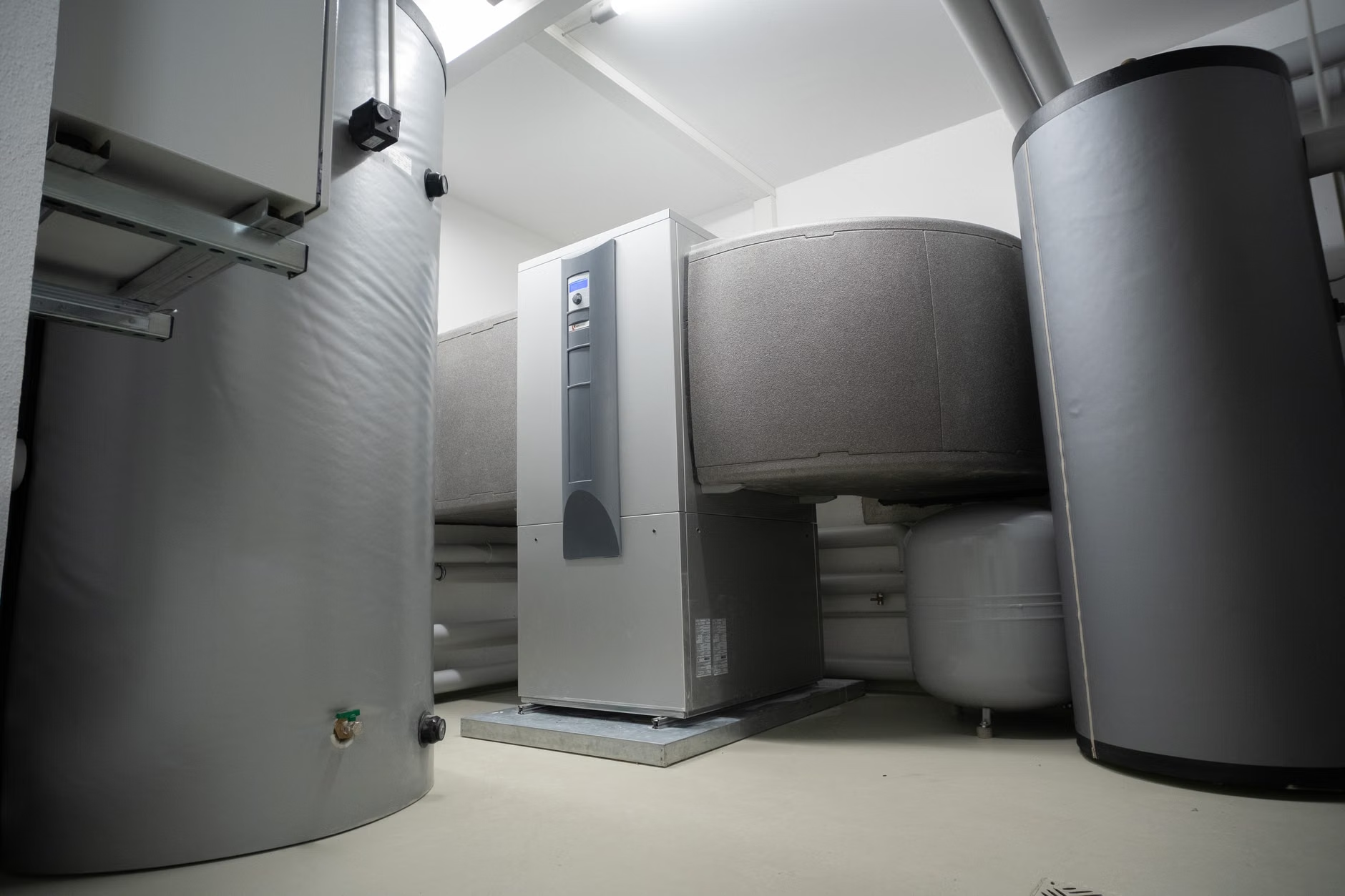
This is the big one. If your home office gets uncomfortably hot or cold, a mini-split heat pump is often the best solution. It provides targeted heating and cooling exactly where you need it, rather than trying to regulate the temperature of the entire house. The federal credit for heat pumps can be as high as $2,000 annually. This is a significant investment, but when you factor in the energy savings and the tax credit, the “break-even” point is often much sooner than people expect.
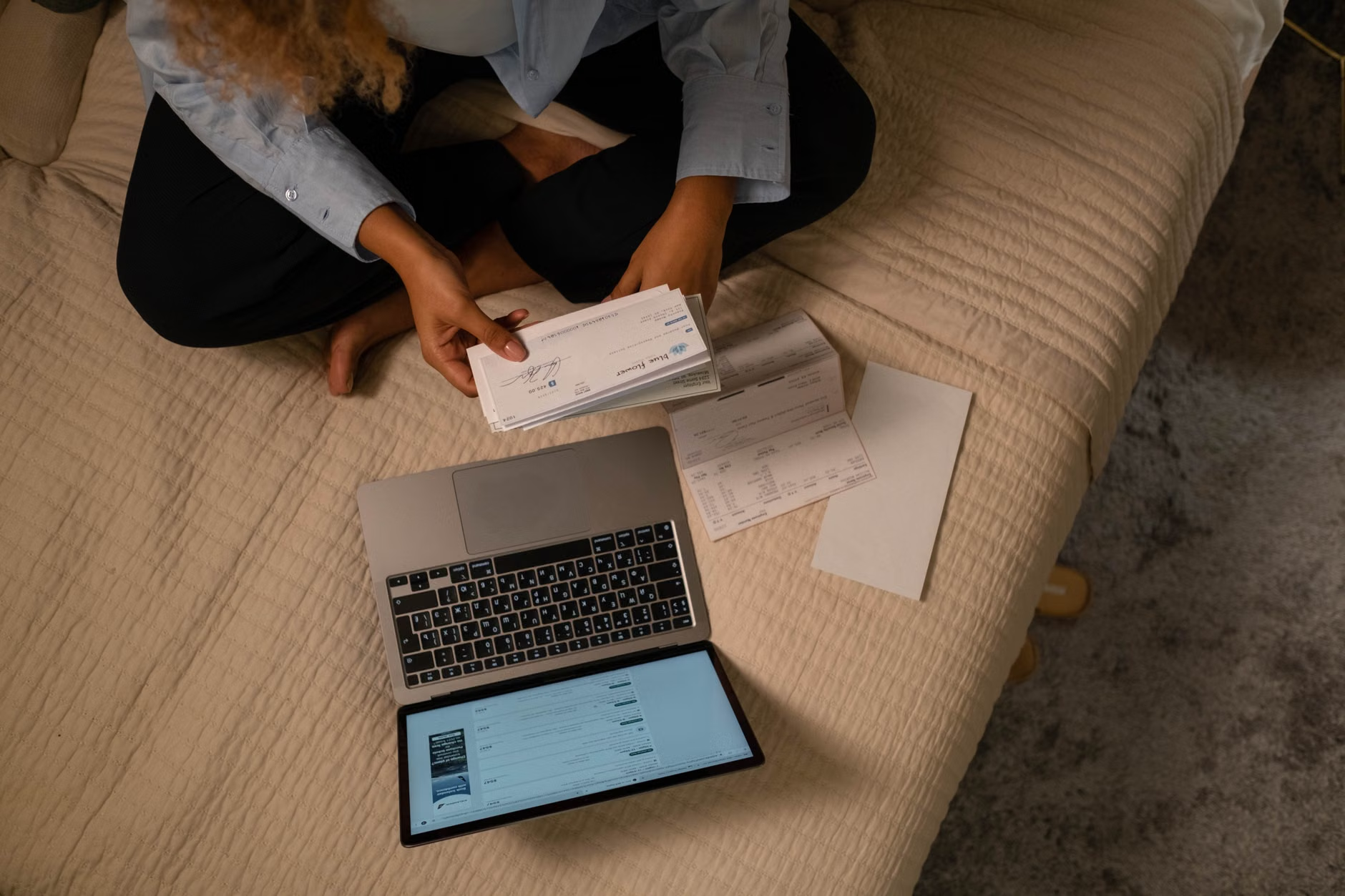
Comparing Costs: What Actually Makes Financial Sense?
When you are looking at home improvements, it is easy to get caught up in the “green” marketing. However, as a parent or a busy professional, you need to look at the numbers. Let’s compare two hypothetical scenarios to see how the math plays out for a typical household.
| Improvement Type | Estimated Cost | Potential Credit | Net Cost |
|---|---|---|---|
| Energy Star Window (1 unit) | $1,500 | $450 (30%) | $1,050 |
| Attic Insulation Upgrade | $2,000 | $600 (30%) | $1,400 |
| Heat Pump Installation | $6,000 | $2,000 (Max) | $4,000 |
The table above shows that while the heat pump is the most expensive, it also offers the highest absolute tax savings. If your current HVAC system is nearing the end of its life, replacing it with a high-efficiency heat pump is a no-brainer. However, if your HVAC is relatively new, don’t rush to replace it just for the tax credit. The ROI on insulation is often faster because the upfront cost is lower and the energy savings are immediate.
Common Mistake: Many people purchase high-end “smart” appliances like refrigerators or dishwashers expecting them to qualify for these specific energy credits. In most cases, they do not. While these appliances save energy, they are classified differently by the IRS. Always verify the specific Energy Star certification requirements before assuming a purchase qualifies for a tax credit.
Step-by-Step: How to Prepare for Your 2026 Filing
If you decide to proceed with home improvements, you need to be organized. The IRS is not interested in your good intentions; they want documentation. Follow these steps to ensure you don’t lose out on your money come tax season.
Step 1: Verify the Certification
Before you buy, ask the contractor or retailer for the “Manufacturer Certification Statement.” This is a document that confirms the product meets the specific energy efficiency standards required by the government. If they can’t provide this, the product likely doesn’t qualify for the tax credit.
Step 2: Keep an Itemized Receipt
A credit card statement is rarely sufficient proof for an IRS audit. You need an itemized receipt that shows the specific model number, the date of purchase, and the cost of the item. If you are paying for labor, ensure the invoice separates the cost of the equipment from the cost of installation, as some credits only apply to the equipment itself.
Step 3: Consult Your Tax Professional
If you use tax software, these credits are usually found under the “Energy Efficient Home Improvement” section. However, if your tax situation is complex—for example, if you are also claiming a portion of your home as a business office—it is worth speaking to a CPA. They can help you determine whether you should claim the energy credit as a personal expense or if it needs to be factored into your business deductions. Generally, you cannot “double dip”—you cannot claim the same expense as both a personal tax credit and a business deduction.
The Overlooked Variable: Why Timing Matters
One of the most overlooked aspects of tax planning in your 30s and 40s is the concept of “tax capacity.” If your income is low in a given year, you might not have enough tax liability to use the full credit. Because these credits are non-refundable, if you owe $500 in taxes but have a $1,000 credit, you will only get $500 of benefit; the other $500 does not carry over as a refund check (though some credits allow for carry-forward, the rules vary by specific type). Always check the specific carry-forward rules for the credit you are pursuing.
Furthermore, consider the “energy audit.” Many utility companies offer free or low-cost home energy audits. These professionals will come to your house, use infrared cameras to find heat leaks, and provide a roadmap of exactly which improvements will give you the biggest energy savings. Doing this before you spend a dime is the smartest move you can make. It transforms your “guesswork” into a data-driven investment strategy.

Practical Considerations for Renters
If you are renting your home or apartment, you are in a tougher spot. Most of the energy efficiency tax credits are tied to home ownership. However, you are not entirely out of luck. You can still save on energy costs by focusing on “behavioral” efficiency—using smart power strips, installing LED lighting (if your landlord allows), and using thermal curtains to keep your home office temperature stable. While you won’t get a tax credit, the reduction in your monthly utility bill is a “tax-free” gain in your pocket every single month.
Additionally, talk to your landlord. If you are a long-term tenant, your landlord might be willing to invest in energy-efficient upgrades if you present the data. They can claim the tax credits for themselves, and you get a more comfortable, lower-cost home office. It is a win-win scenario that many people never even bother to propose.
Closing Thoughts on Sustainable Spending
Improving your home office for energy efficiency is one of the few instances where your financial goals and your lifestyle goals align perfectly. By upgrading your infrastructure, you aren’t just lowering your tax bill—you are creating a more comfortable workspace that helps you stay focused and productive. Don’t feel pressured to do everything at once. Pick one area, like windows or insulation, and tackle it when your budget allows. The tax credits are there to act as a nudge, not a command to spend money you don’t have.
Remember that the goal is to lower your long-term cost of living. Focus on the structural changes that provide the highest ROI, keep your paperwork organized, and always verify certifications before handing over your credit card. Your future self—and your future utility bills—will thank you.
Frequently Asked Questions
1. Can I claim the energy tax credit if I have a home office deduction for my business?
In most cases, you cannot claim the same expense twice. If you use a portion of your home as a business office and deduct that portion of your utilities, you must be careful not to claim the federal energy credit on the same items. Consult a tax professional to ensure you are allocating your expenses correctly without triggering an audit.
2. Do these credits expire, or will they be available in future years?
The current framework for these energy efficiency credits is set to continue through 2032 under the Inflation Reduction Act. However, the specific rules, caps, and eligible technologies can change based on legislative updates. Always check the official IRS guidance for the current tax year before planning major investments.
3. Is it worth hiring a professional to do an energy audit?
Yes. In many regions, your local utility company provides these audits for free. They identify exactly where your home is losing energy, which helps you prioritize which upgrades will actually lower your bills. It is the best way to ensure you are spending your money on the right improvements.
Official Resources:
For the most accurate and up-to-date information, refer to the official IRS resources: