Buying a luxury watch to celebrate a career milestone is a rite of passage, but opting for the pre-owned market rather than a brand-new retail purchase is the most financially sound way to secure a high-quality timepiece that holds its value.
Three Key Takeaways for the Discerning Buyer:
- Depreciation is your advantage: By buying pre-owned, you avoid the immediate 20–30% value drop that occurs the moment a watch leaves a retail boutique.
- Condition over provenance: For a wearable milestone piece, prioritize a watch that has been authenticated and serviced by a reputable dealer over one with “full set” papers that might be overpriced.
- Maintenance is a recurring cost: Budget an extra $500–$1,000 every 5–7 years for professional servicing to ensure your movement remains precise and functional.
You’ve hit a significant career goal—maybe a promotion, a successful project launch, or finally making the jump to a role you’ve been chasing for years. It’s the kind of moment that warrants a permanent, physical reminder. For many, that reminder is a mechanical watch. But when you’re in your 30s or 40s, juggling mortgage payments, school fees, and the general chaos of family life, dropping five figures on a brand-new watch at a retail store can feel like an unjustifiable luxury.
This is where the “second-hand” or pre-owned market shifts from being a risky gamble to a strategic financial decision. It isn’t just about saving money; it’s about accessing higher-quality engineering that would be out of reach if you were buying new. Let’s break down how to navigate this market without getting burned.
The Financial Logic of the Pre-Owned Market
Most luxury goods are depreciating assets, similar to a car. The moment you walk out of an authorized dealer with a new watch, its market value often dips. By purchasing a watch that is three to five years old, you are letting the previous owner absorb that initial, steepest part of the depreciation curve. You are essentially buying an asset that has already “found its floor” in terms of market price.
Furthermore, the luxury watch market is not a monolith. While entry-level luxury watches can be found for under $3,000, the “sweet spot” for a career milestone piece often lies in the $5,000 to $8,000 range. In the retail world, this budget might get you a basic model. In the pre-owned market, it can land you a classic, robust reference that features superior finishing, a more complex movement, or a more prestigious brand pedigree.
When you view a watch as a “store of value”—a piece of jewelry that you can wear and potentially sell for a similar price if life circumstances change—the barrier to entry feels much lower. You aren’t spending money; you are shifting it into a different, more durable form.

What “Condition” Actually Means in Real Life
When browsing online listings, you will see terms like “Unpolished,” “Mint,” “Excellent,” and “Good.” For a parent or professional who plans to actually wear the watch—not hide it in a safe—these terms can be misleading. Here is how to interpret them for practical use:
| Condition Grade | What it means for you | Best for… |
|---|---|---|
| Mint/Unworn | Looks brand new. Often comes with original stickers. | Collectors who want a “perfect” experience. |
| Excellent | Minimal hairline scratches, only visible under bright light. | Daily wearers who want a clean, professional look. |
| Good/Very Good | Visible signs of wear on the clasp or case. | Those who want a “beater” watch they won’t stress about. |
The most important factor is the movement condition. A watch can look like it has been through a war, but if the internal movement—the “heart” of the watch—is clean, oiled, and running accurately, it will serve you for decades. Conversely, a watch that looks pristine on the outside might have a rusted or neglected movement that will cost you $1,500 to repair immediately after purchase. Always prioritize a seller who provides a “timegrapher” reading or a recent service receipt.
The Hidden Costs: Servicing and Maintenance
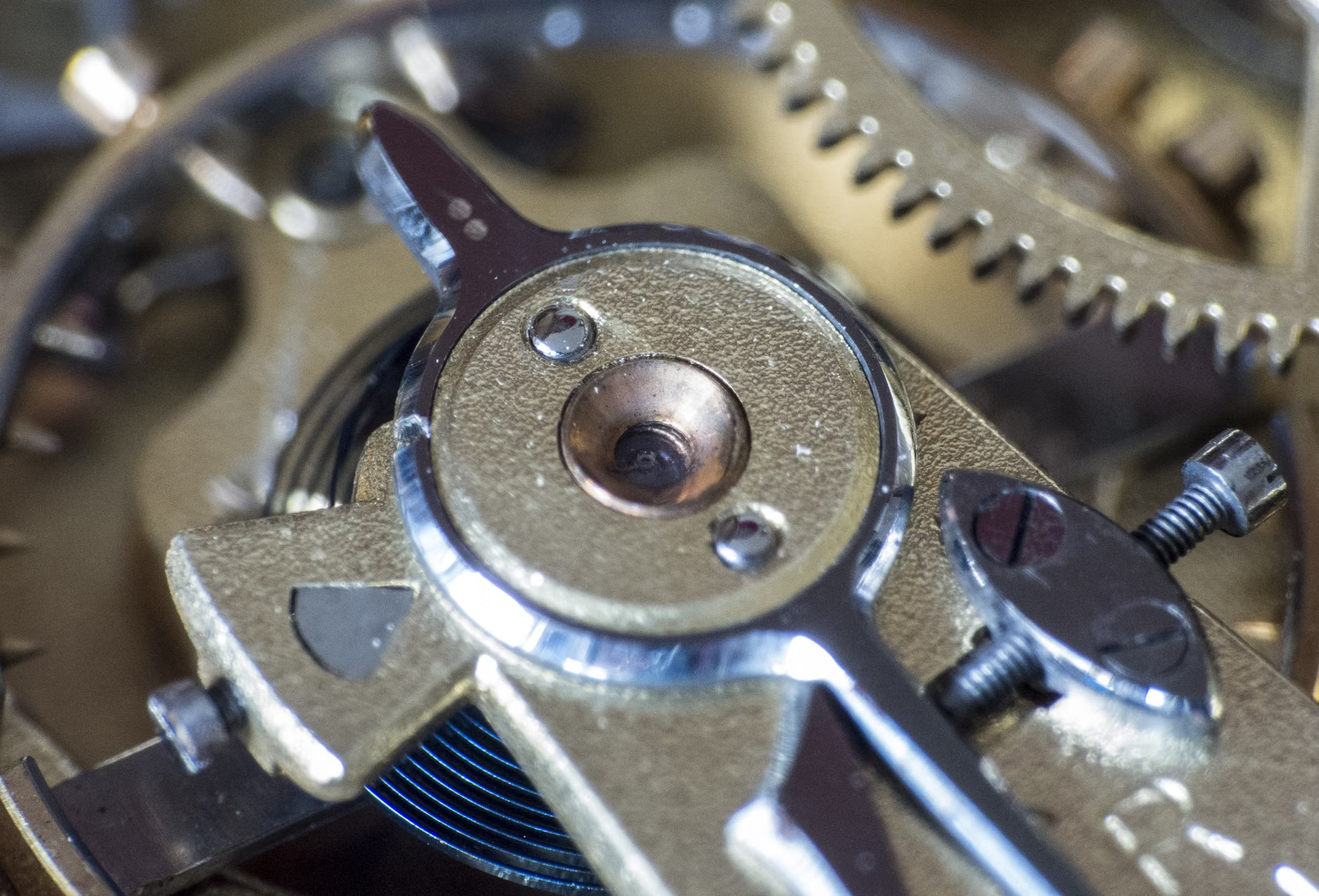
A common mistake is forgetting that a mechanical watch is a machine. It contains gears, springs, and lubricants. Just like your car requires an oil change, a mechanical watch needs a full service every five to seven years. If you buy a five-year-old watch that hasn’t been serviced, you should factor in the cost of that service as part of your total investment.
When you buy from a reputable dealer, they often provide a warranty. This is not just a piece of paper; it is an insurance policy against the “hidden” costs of a neglected movement. If you buy privately (e.g., from an individual on a forum), you are responsible for any immediate repairs. This is why paying a slight premium at a trusted dealer is often the “cheaper” option in the long run.
How to Spot a “Franken-Watch” and Other Traps
The market is flooded with “Franken-watches”—timepieces assembled from parts of different watches. They might look correct to an untrained eye, but they lack the integrity of a factory-original piece. Here is your decision rule for verifying authenticity:
- Check the Serial Number: Every major watch brand has a database or tracking system. Ensure the serial number on the case matches the papers if they are included.
- Verify the Reference Number: Does the dial color, hand style, and bezel material match that specific reference number? A simple Google search of the model number will show you what the “standard” version looks like.
- The “Too Good to be True” Rule: If the price is 30% below the market average for that specific model, it is almost certainly a scam or a watch with major mechanical issues.
If you are new to this, stick to “Certified Pre-Owned” (CPO) programs offered by major retailers or brands themselves. While you pay a premium, the vetting process is rigorous, and you are essentially paying for the peace of mind that the watch is 100% authentic.
Balancing Parenting and the “Watch Hobby”
In your 30s and 40s, time is the scarcest commodity. You don’t have time to scour forums for hours or negotiate with strangers. Your strategy should be efficiency-focused. Identify two or three models that fit your lifestyle—perhaps a versatile “dive” watch that looks good with a suit but handles a trip to the beach with the kids—and monitor only those models.
Consider the “One-In, One-Out” rule. If you feel like your watch collection is becoming an unnecessary expense, treat it as a revolving fund. If you decide to upgrade in five years, you can sell your current piece and put the proceeds toward the next milestone watch. This keeps your capital tied up in the hobby relatively stable rather than constantly bleeding cash.
The Emotional Utility of a Milestone Piece
Beyond the spreadsheets and financial logic, there is the emotional weight of the watch. A career milestone is a fleeting moment; a watch is a permanent companion. When you look down at your wrist during a stressful meeting or a long day of parenting, that piece of engineering serves as a grounding mechanism. It reminds you of your capability and the progress you’ve made.
However, avoid the trap of “status signaling.” If you choose a watch because you think it will impress your colleagues, you will eventually find yourself unhappy with the choice. Choose a watch that resonates with your personal aesthetic. Whether you prefer the understated elegance of a vintage dress watch or the rugged utility of a modern chronograph, the “right” watch is the one that makes you feel like the version of yourself you’ve worked so hard to become.
Practical Steps to Your First Purchase
If you have decided to move forward, follow these steps to ensure a smooth transaction:
- Define Your Budget: Include a 15% “buffer” for shipping, insurance, and potential minor service costs.
- Research the “Market Price”: Look at sites like Chrono24 or WatchCharts to see what actual sold prices look like, not just asking prices.
- Select Your Seller: Look for dealers with a long, verifiable history. Check their reviews on independent platforms, not just their own website.
- The First Date: Once the watch arrives, inspect it immediately. Check the movement accuracy against a time-sync app. Wear it around the house for a few days before removing any protective stickers or resizing the bracelet.
- Documentation: Keep a folder—physical or digital—with the purchase receipt, any warranty papers, and the service history. This makes future resale or insurance claims significantly easier.
Refining Your Perspective on Luxury
The concept of “luxury” in your 30s and 40s shifts from owning “the newest thing” to owning “the best thing for your life.” A brand-new watch is a consumer product; a well-maintained, pre-owned luxury watch is a piece of industrial art. By choosing the latter, you are participating in a cycle of sustainability and value preservation that aligns better with a responsible, family-oriented lifestyle.
Don’t be afraid to take your time. The watch you want will always be available on the secondary market. If the current price doesn’t feel right, wait. The market fluctuates, and your patience will be rewarded with a better deal or a better condition piece. This isn’t a sprint to the finish line of “collecting”; it’s a slow build of a collection that marks the chapters of your life.
Frequently Asked Questions
Is it safer to buy from an individual or a professional dealer?
For your first major purchase, a professional dealer is almost always the better choice. They offer a layer of accountability, warranty, and authentication that an individual seller cannot. While you might pay 5-10% more, you are paying for the assurance that you aren’t buying a stolen, counterfeit, or broken item. Look for dealers with a physical storefront or a long-standing presence on platforms like Chrono24.
How do I know if a watch is too small or too large for my wrist?
A good rule of thumb is the “lug-to-lug” measurement. This is the distance from the top of the watch case to the bottom. If the lugs overhang your wrist, the watch is too big. For most people, a case diameter between 36mm and 40mm is the “goldilocks” zone that fits almost any wrist size and looks timeless. Don’t get caught up in the trend of oversized watches; they rarely age well in terms of style or comfort.
What should I do if the watch stops working shortly after I buy it?
If you bought from a reputable dealer, contact them immediately. Most offer a 6-to-12-month mechanical warranty. If you bought privately, you are likely on your own, which is why having an independent watchmaker contact is vital. Find a local, certified watchmaker *before* you need one. They can often perform a “regulation” (adjusting the timekeeping) for a very modest fee, which might be all the watch needs if it was just jarred during shipping.
Final Takeaway: Treat your milestone watch purchase as a calculated investment in both your professional identity and your personal satisfaction. Prioritize the movement’s health, buy from verified sources, and remember that the best watch is one that you wear, enjoy, and care for over the long haul. You’ve earned this—make it count.
For further research on market trends and authentication guides, visit WatchCharts for pricing data and Hodinkee for deep dives into watch history and technical details.