The most effective way to travel in 2027 isn’t about how many flight miles you accumulate, but how deeply you connect with the specific ecological and cultural zone you call home.
- Redefining Boundaries: Bio-regional travel prioritizes natural ecosystems—watersheds, mountain ranges, or climate zones—over political borders or arbitrary travel hubs.
- Reduced Friction, Increased Depth: By traveling within a 200-mile radius of your home, you eliminate the stress of long-haul logistics while gaining a profound understanding of local flora, fauna, and history.
- Economic and Environmental Impact: This approach keeps your tourism spending within your own community and drastically lowers your family’s carbon footprint compared to international air travel.
If you are in your 30s or 40s, you likely remember a time when “vacation” meant a flight to a destination thousands of miles away. But as we navigate the costs, logistics, and environmental realities of 2027, the traditional “getaway” is starting to feel more like a chore than a recharge. The constant pressure to find the “next big place” can be exhausting for parents who are already balancing work, school runs, and household management.
Enter the bio-regional travel trend. It’s not just a fancy term for a “staycation.” It is a deliberate shift in how we perceive our relationship with the world around us. By focusing on your specific bio-region—an area defined by its natural geography rather than state or country lines—you stop treating travel as an escape from your life and start treating it as an exploration of your own home turf.
What Exactly is a Bio-Region, and Why Should You Care?
A bio-region is a land and water territory whose limits are defined not by political boundaries, but by the geographical limits of human communities and ecological systems. Think of it as your “home patch.” It includes the rivers that supply your water, the forests that filter your air, and the unique climate that dictates the crops grown by your local farmers.
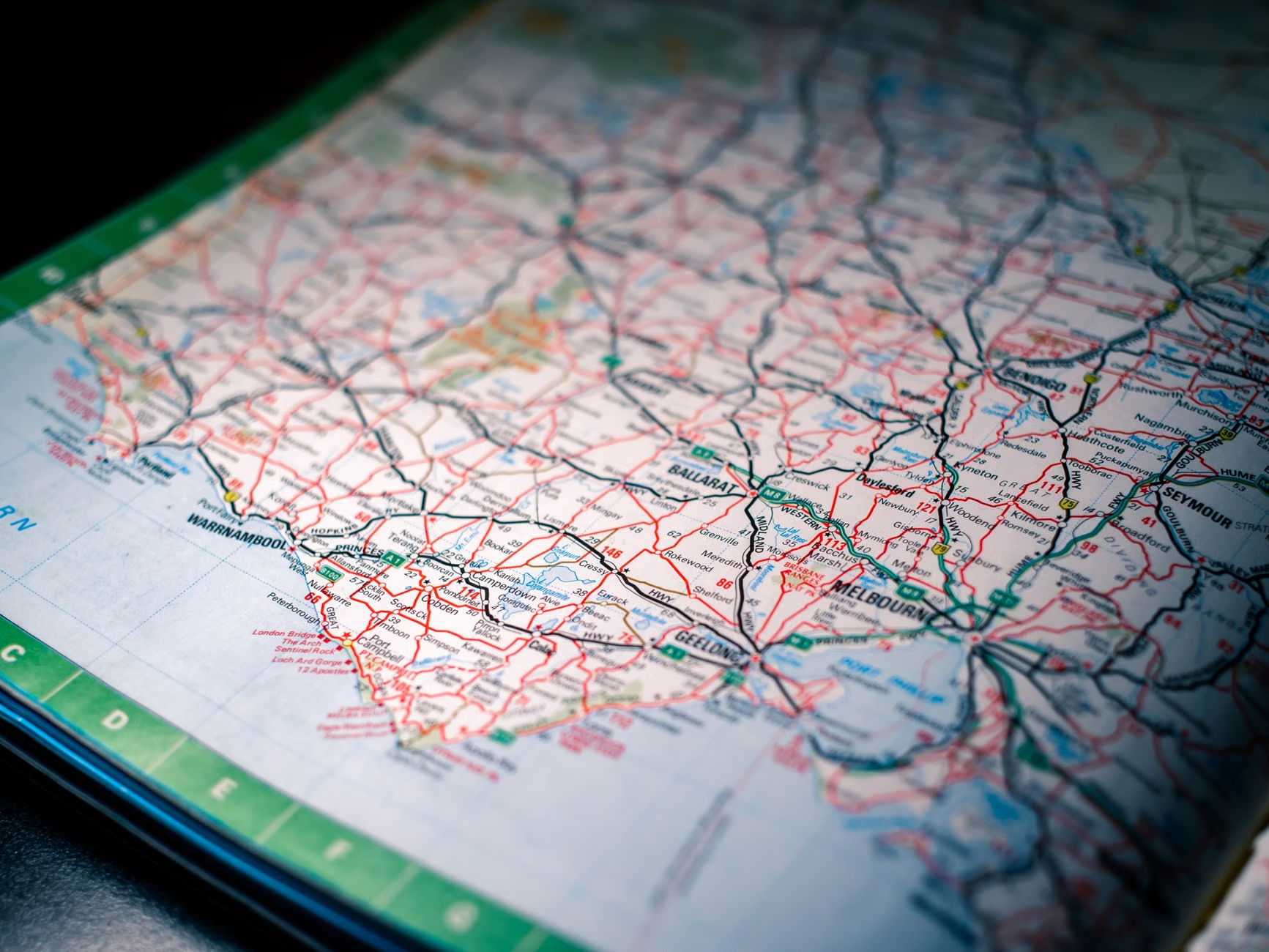
For a parent, this matters because it simplifies the “what are we doing this weekend” dilemma. Instead of scrolling through travel apps looking for flights, you look at a topographical map. You start asking questions like, “Where does the water in our river go?” or “What species of birds migrate through our specific valley?” This curiosity turns a simple weekend hike or a local camping trip into a learning journey for your children, grounding them in the reality of the world they actually live in.
Why this matters for your sanity: The logistical friction of modern travel is high. Between airport security, baggage claims, and jet lag, the first 48 hours of any long-distance trip are usually spent in a state of stress. Bio-regional travel effectively removes these barriers. You pack the car, you drive three hours, and you are in a completely different ecosystem. The transition is seamless, leaving you more energy to actually enjoy your family.
Mapping Your Own Bio-Regional Playground
The first step is to stop thinking in terms of “cities” and start thinking in terms of “watersheds.” You don’t need a formal certification to define your region. A simple way to start is to look at a watershed map of your area. Where does the rain that falls on your roof eventually end up? That path is essentially your home ecosystem.
To plan a trip, you need to change your research criteria. Instead of searching for “best family resorts near me,” try searching for “ecological preserves in [your watershed],” or “sustainable farms within 100 miles.”
Step-by-Step: The Bio-Regional Planning Framework
If you’re ready to try this for your next family trip, follow this framework to move from “tourist” to “inhabitant”:
| Step | Action | Goal |
|---|---|---|
| 1. Define | Identify your watershed or mountain range. | Understand your local geography. |
| 2. Inventory | List three local natural features you haven’t visited. | Find your “unknown” local spots. |
| 3. Engage | Source all food and gear from within the region. | Support the local circular economy. |
A common mistake: Many people assume that because they live near a place, they already know everything about it. However, most of us only know our “commute path.” We know the grocery store, the office, and the school. We rarely venture into the specific micro-climates or community-run spaces that exist just outside our daily routine. Treat your local area with the same curiosity you would apply to a foreign country, and you will be surprised at how much you’ve missed.
The Economic Reality of Staying Local
One of the hidden benefits of bio-regional travel is the impact on your wallet. When you travel internationally, a large portion of your budget disappears into “leakage”—money spent on international flight carriers, global hotel chains, and transit hubs that provide very little benefit to the local people living in your destination. By keeping your travel within your bio-region, your money stays within your own economic ecosystem.

When you buy a locally sourced meal or pay for a stay at a family-owned cabin, you are directly investing in the preservation of the landscape you are enjoying. This creates a positive feedback loop: the more you support local, sustainable businesses, the more likely those landscapes are to be preserved for your children to enjoy in the future.
The “Hidden Cost” of Convenience: Be wary of the “convenience trap.” It is tempting to book a stay at a large, familiar hotel chain because you know what to expect. But these structures often operate in isolation from the local environment. Choosing locally owned guesthouses or campgrounds often provides a more authentic experience and ensures your money supports people who are actively managing the land you are visiting.
Environmental Stewardship as a Vacation Activity
In 2027, the concept of “leave no trace” is evolving into “leave it better.” Bio-regional travel encourages families to engage in regenerative activities. This doesn’t mean you have to spend your vacation doing manual labor, but it does mean being mindful of the impact you have.
For example, if you are visiting a local river, consider spending an hour picking up trash or learning about the local fish species from a ranger. This is a powerful lesson for kids. It teaches them that they are not just consumers of nature, but participants in its health. It shifts the vacation narrative from “what can I get out of this?” to “how can I contribute to this place?”
Realistic Scenario: Imagine a family weekend at a local state park. Instead of just setting up a tent and playing games, the family spends an afternoon helping a local volunteer group identify invasive plant species. They learn why those plants are harmful, and they walk away with a sense of accomplishment that a standard resort stay could never provide.
Practical Tips for Success
To make this work, you need to treat your bio-regional trip with the same level of planning as a major holiday. If you don’t plan, you’ll end up defaulting to your usual weekend habits.
- Use Digital Mapping Tools: Use tools like Google Earth or local GIS (Geographic Information System) maps to find green corridors or protected areas near you.
- Seasonal Awareness: Bio-regional travel is deeply tied to the seasons. Learn what is happening in your area at different times of the year—when do the wildflowers bloom? When is the harvest? Plan your trips to coincide with these natural events.
- Disconnect to Reconnect: Since you aren’t traveling far, the temptation to “check in” at work is high. Set strict boundaries. Treat this as a “real” vacation, even if you are only 50 miles from home.
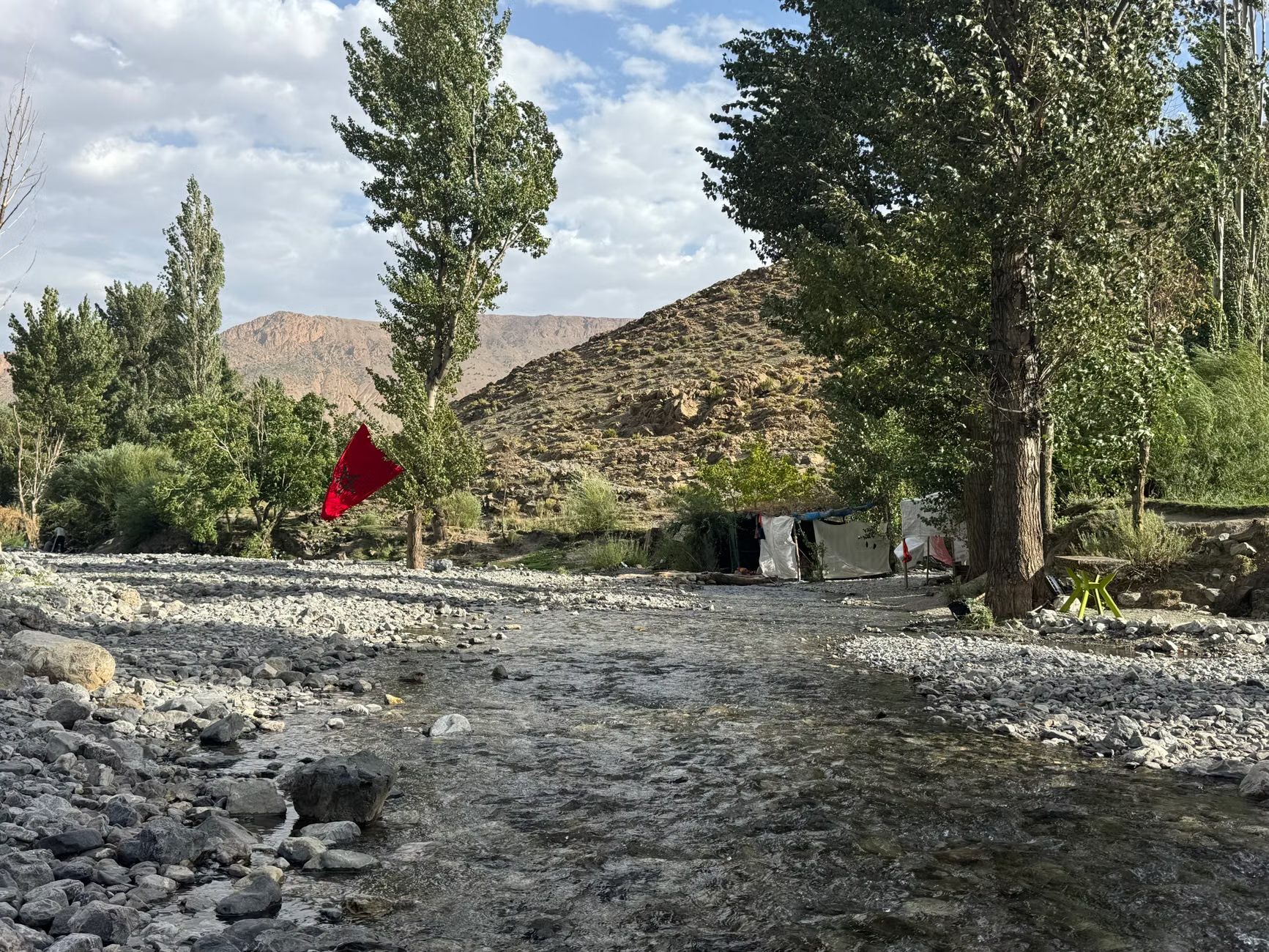
Common Pitfall: Don’t try to cram too much into your schedule. The philosophy of bio-regional travel is “slow.” Because you don’t have the stress of travel transit, you might be tempted to over-schedule. Resist this. The point is to slow down and observe the details of the place you are in.
Frequently Asked Questions
Is bio-regional travel just for people who live in rural areas?
Absolutely not. Every city exists within a bio-region. Even in a dense urban environment, you are part of a watershed, an air basin, and a local food-shed. Urban bio-regionalism is about exploring the green spaces, community gardens, and local history that sustain your city. It’s about understanding how your city interacts with the natural world around it.
How do I define my specific bio-region if I live near a border?
Bio-regions are fluid. If you live near a political border, your bio-region likely crosses it. Don’t let political lines stop you. A river doesn’t care about a state or national border. If you live in a watershed that spans two states, your bio-region encompasses both. Focus on the geography, not the lines on a map.
What if my local area doesn’t have “exciting” tourist attractions?
The core of bio-regional travel is that you aren’t looking for “attractions”—you are looking for an ecosystem. If your area doesn’t have a major park, look for a local farm, a community forest, or a historical site that tells the story of how people have lived on that land for centuries. The “excitement” comes from your shift in perspective, not from a manufactured tourist experience.
Moving Forward with Intention
The shift toward bio-regional travel is a reaction to a world that feels increasingly fragmented and disconnected. By focusing on your own backyard, you are reclaiming your time, your money, and your connection to the planet. It’s a sustainable, practical, and deeply rewarding way to live.
Start small. Next weekend, don’t look for a destination. Look for a map. Find the nearest river or forest that you’ve never visited, and go spend a day there. You don’t need a passport to find wonder; you just need to look at your own home with fresh eyes.
Official Resources for Further Exploration:
- EPA: Understanding Your Watershed – A great starting point to define your local geography.
- IUCN (International Union for Conservation of Nature) – Information on local ecosystems and protected areas.
- National Park Service (or your country’s equivalent) – Often contains detailed maps and guides to local natural heritage sites.
Remember, the goal is not to be a perfect explorer but to be a more present inhabitant. Take the time to understand where you are, and the rest will follow. Enjoy the journey back to your own home.