Sibling conflict is rarely just about the toy they are fighting over; in a small living space, it is almost always about the lack of physical and emotional boundaries that triggers a nervous system overload for everyone involved.
- Co-regulation precedes discipline: You cannot teach a child to problem-solve until their nervous system has shifted from “fight-or-flight” to “rest-and-digest.”
- Spatial boundaries are non-negotiable: In homes with limited square footage, creating “micro-zones” for personal space reduces the baseline irritation that fuels daily arguments.
- The “Body-First” approach: Prioritize physical calming techniques—like deep pressure or rhythmic movement—before attempting to mediate the verbal argument.
If you live in a two-bedroom apartment or a compact urban home, you know the specific brand of exhaustion that comes with sibling friction. The walls are thin, the floor space is shared, and the volume of a disagreement reaches a crescendo within seconds. When we talk about “co-regulation,” we aren’t talking about “fixing” the kids or making them stop fighting immediately. We are talking about the biological process where your calm, regulated nervous system acts as an external stabilizer for their dysregulated one.
The Science of Co-Regulation in Small Spaces
Co-regulation is the process by which a caregiver’s calm presence helps a child’s nervous system settle. It’s a physiological “syncing.” When a child is screaming because their sibling took a crayon, their amygdala—the brain’s alarm system—is firing. If you respond with your own frustration, you are essentially “co-regulating” them into further chaos. In a small space, this effect is magnified because there is nowhere for the tension to dissipate.
Why does this matter for parents in their 30s and 40s? Because you are likely juggling work, household management, and your own stress. When the kids start fighting, your cortisol spikes, and your ability to think logically plummets. Understanding that your calm is a physiological tool, not just a parenting style, changes how you enter the room when the shouting starts. It isn’t about being a “perfect” parent; it’s about being a “regulated” one.
What Happens When We “Co-Regulate” Instead of “Correct”
Most parents are trained to jump straight into “correction.” We want to identify who started it, assign blame, and dole out consequences. But when the nervous system is overwhelmed, the prefrontal cortex—the part of the brain responsible for reasoning, empathy, and impulse control—is effectively offline. You cannot reason with a child who is in a state of physiological distress.
The shift: Instead of asking “Who had it first?”, you move toward “I see you are both feeling overwhelmed.” By lowering your voice, slowing your speech, and perhaps even physically getting down to their level, you provide a biological anchor. This isn’t about ignoring bad behavior; it is about creating the conditions under which “good” behavior (or at least, calm communication) becomes possible.
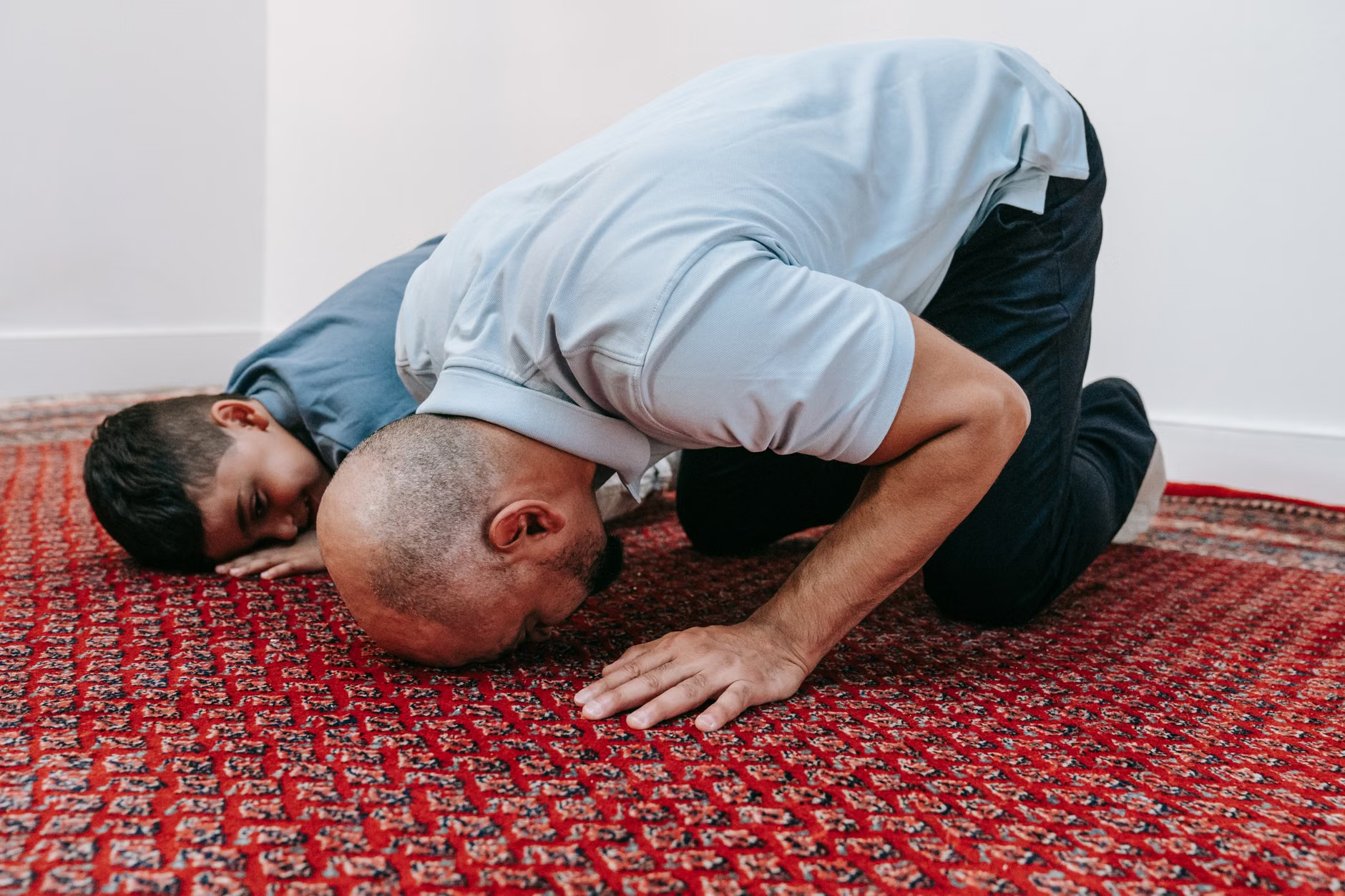
Designing the “Low-Conflict” Environment
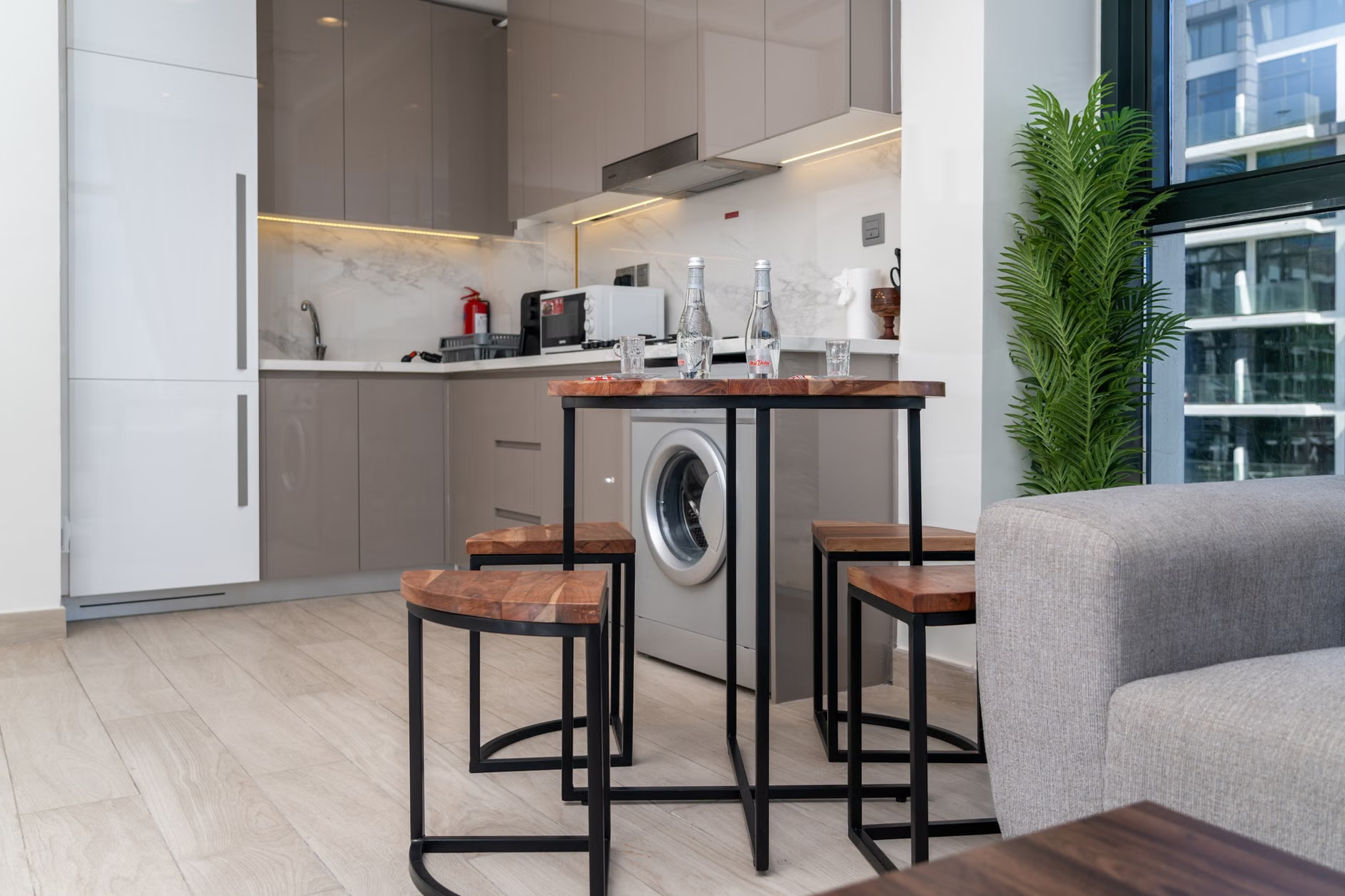
In a larger house, a child can walk into another room to cool down. In a small apartment, “walking away” often means just turning around. This lack of physical escape is a major contributor to chronic sibling irritability. You need to engineer the environment to compensate for the lack of square footage.
The Concept of Micro-Zones
You don’t need a basement or a playroom to create personal space. You need “micro-zones.” A micro-zone is a space that belongs to one child, even if it’s just a corner of a shared bedroom or a specific shelf in the living room. The key is that the other sibling is physically prohibited from touching anything in that zone without explicit permission.
Common mistakes here include “shared ownership” of all toys. While sharing is a virtue, it is also a source of constant friction. If you have two children in a small space, ensure that 70% of their toys are shared, but 30% are “sacred” personal property that they never have to share. This reduces the daily “he took my toy” battle by a significant margin.
| Strategy | Why It Works in Small Spaces | Implementation Tip |
|---|---|---|
| Visual Timers | Removes the parent as the “referee” and makes the clock the bad guy. | Use a digital timer that shows a countdown, not just an alarm. |
| The “Quiet Box” | Provides sensory regulation tools for when frustration peaks. | Keep it in a central, accessible location. |
| Sacred Zones | Guarantees autonomy in a shared environment. | Use painter’s tape to mark the floor if space is very tight. |
Step-by-Step: The Co-Regulation Protocol
When the conflict erupts, follow this sequence. It is designed to move from physiological stabilization to social resolution.
Step 1: The Pause. Before you intervene, take three deep, intentional breaths. If you are already angry, you will only escalate the situation. Your goal is to enter the space as a “calming force,” not a “judgment force.”
Step 2: The Physical Bridge. If the children are physically fighting, separate them gently but firmly. Don’t worry about who started it yet. Focus on the body. If one is crying, offer a heavy blanket or a firm hug—deep pressure helps the nervous system reset. If they are too agitated for touch, offer them a cold glass of water; the act of swallowing and the temperature change can force a “reset” of the vagus nerve.
Step 3: The Narrative. Only once the breathing has slowed down, narrate what you see. “I see you both wanted the same spot on the rug. That is frustrating.” You aren’t judging; you are reflecting. This helps the children feel heard, which is often the primary goal of the conflict in the first place.
Common Misconceptions About “Calm Down”
A major misconception is that a “time-out” is a form of co-regulation. It isn’t. A traditional time-out sends a child away to regulate alone, which can feel like abandonment to a child who is already in a state of high alarm. In a small space, where a child can’t really “go” anywhere, a time-out often just leads to them sitting in the corner feeling resentful and still just as dysregulated.
Instead, use a “time-in” or a “calm-down corner.” This is a space where they are welcome to go when they feel the “big feelings” coming on. It’s not a punishment; it’s a resource. Equip it with things that provide sensory input: a squishy pillow, a textured blanket, or noise-canceling headphones. If you live in a small space, this corner can be as simple as a beanbag chair in the corner of the living room.
Managing the “Pressure Cooker” Effect
In smaller homes, noise and physical movement are constant. This creates a “pressure cooker” effect where even minor annoyances trigger major explosions. As a parent, you have to manage the “ambient noise” level of your home.
If you find that your children are constantly fighting in the late afternoon, consider the “transition” period. This is when everyone is tired, hungry, and has been in close proximity all day. This is the time to prioritize low-stimulation activities. Instead of asking them to play nicely together, you might need to facilitate a “parallel play” activity where they are in the same room but focusing on different tasks—like one child drawing and the other listening to an audiobook.
The Insight: Many parents try to force “cooperative play” because they think it’s better for social development. However, in small spaces, constant cooperation is exhausting. Giving them permission to be in the same space while doing different things is a valid and often necessary survival strategy.

The Role of Parental Boundaries
You cannot co-regulate if your own battery is at zero. One of the most overlooked variables in sibling conflict is the parent’s own “space.” In a small home, you often don’t have a “door to close.” You need to create symbolic boundaries.
When you are working or resting, use a visual cue—like wearing headphones or placing a specific “do not disturb” sign on your chair. This teaches your children that even in a small space, people have boundaries. By respecting their boundaries (their micro-zones), you set a precedent that they must respect yours. This reciprocal respect is the foundation of a calmer household.
If your children share a bedroom, the bedtime routine is often the site of the most significant conflict. When one child is ready to sleep and the other is still fidgeting, the proximity is a trigger. The solution is often “sensory separation.”
Use white noise machines to create an “auditory bubble” for each child. Even if they are in the same room, a pair of noise-canceling headphones for the child who is still awake can prevent them from disturbing the one who is trying to sleep. This isn’t about isolation; it’s about respecting the different nervous system needs of each child.
Practical Next Steps for Your Home
If you want to start implementing these strategies today, don’t try to change everything at once. Start with these three actions:
- Identify one “Micro-Zone”: Pick a corner, a shelf, or a basket that belongs to one child. Make it “sacred.” No touching allowed by the sibling.
- Practice the “Pause”: The next time they argue, force yourself to count to ten before you speak. Use that time to regulate your own breathing.
- Stock the “Quiet Box”: Gather a few sensory items—a stress ball, a piece of velvet fabric, a small puzzle—and place them in an accessible spot. Introduce them as “tools for when feelings get big.”
Sibling conflict will never disappear entirely—it is a natural part of growing up and learning to navigate relationships. However, by shifting your focus from “policing behavior” to “facilitating regulation,” you can turn your small space from a pressure cooker into a place where everyone has the tools to find their own calm.
Remember: You are the thermostat of your home. If you stay cool, the house stays cool. It takes practice, and some days you will lose your cool, and that is okay. The goal is progress, not perfection. Keep breathing, keep observing, and keep creating those small, essential boundaries.
Frequently Asked Questions
1. What if my child refuses to use the “calm-down corner” and prefers to lash out?
If your child is in a state of high agitation, they may not have the cognitive capacity to “choose” to go to a calm-down corner. In these moments, your physical presence is the calm-down corner. Stay close, keep your voice low, and wait for the energy to dissipate. The “corner” is a tool for when they are beginning to feel overwhelmed, not necessarily for when they are already at full-blown tantrum stage.
2. How do I handle it when the “victim” sibling is actually provoking the “aggressor”?
This is a common issue. Often, the quieter sibling is using subtle behaviors to get a reaction. Instead of focusing on the explosion, focus on the “pre-explosion” phase. Observe the patterns. If the younger one always pokes the older one when they are trying to read, it’s a sign that the younger one is craving attention or interaction. Redirect the younger one to a different activity before the provocation happens. You are managing the environment, not just the behavior.
3. Is it ever okay to let them “fight it out”?
There is a difference between “working it out” and “fighting it out.” If they are using words and trying to negotiate, let them be, even if it’s loud. The moment it turns into physical aggression or verbal abuse, the “fight” is no longer productive. That is your cue to step in and facilitate a reset. You are not there to referee; you are there to ensure the safety and regulation of the space.
For more research on child development and nervous system regulation, see the resources provided by the Center on the Developing Child at Harvard University regarding the importance of “serve and return” interactions in early childhood.