- Legacy through conversation: Turning travel into an oral history project requires shifting from “seeing sights” to “listening to stories” by dedicating specific low-stimulation windows for interviews.
- The 30-minute rule: Avoid burnout by limiting formal recording sessions to 30-minute blocks, allowing for natural breaks and spontaneous storytelling during downtime.
- Tech-light approach: Utilize simple, high-quality audio recording apps on smartphones rather than complex camera setups to keep the atmosphere relaxed and authentic.
The most profound souvenir you can bring back from a family trip isn’t a trinket from a gift shop or a curated collection of photos on your phone; it is the firsthand account of your family’s history, told by the people who lived it. For those of us in our 30s and 40s, we are often caught in the “sandwich” of life—managing the logistics of our own children while trying to cherish the remaining time with our parents or grandparents. Travel provides a unique, neutralized space where the distractions of daily chores vanish, making it the perfect laboratory for an oral history project.
Why Your Next Trip Should Be an Oral History Expedition
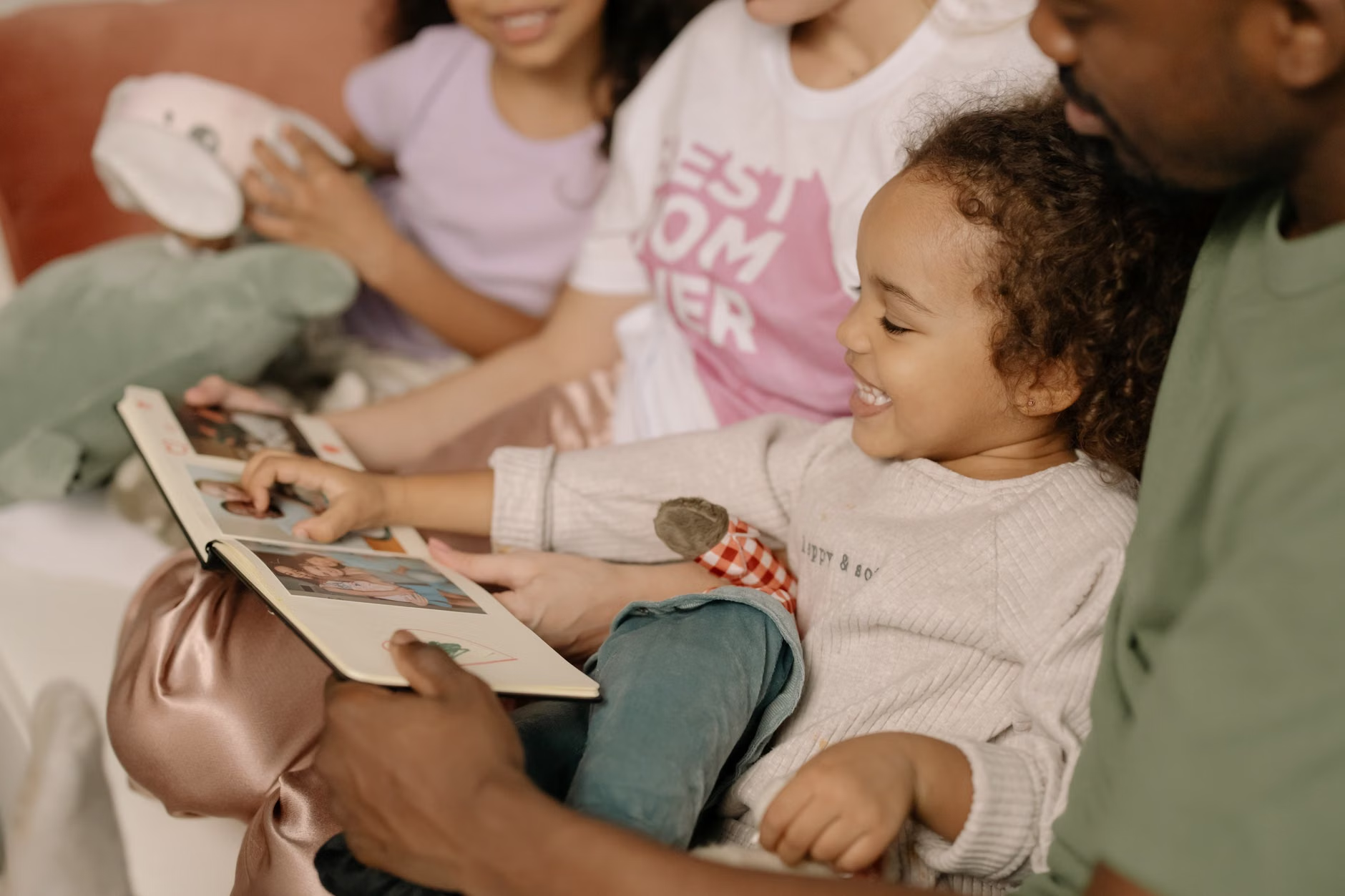
Most family travel planning revolves around logistics: where to eat, how to get from point A to point B, and how to keep the kids entertained. While these are necessary, they rarely result in deep connection. An oral history project changes the objective of the trip. Instead of just “visiting” a destination, you are using the destination as a prompt. If you are taking your parents back to their hometown or a place of significance, the physical environment acts as a mnemonic device—a trigger for memories that might otherwise never surface in the living room.
When you are at home, your parents are often in “parent mode,” focused on their current tasks or their relationship with you. When you are traveling, that dynamic shifts. You are both away from the rigid structures of your regular lives. This creates a “third space”—an environment where you can relate to one another as adults, as peers in the journey of life. This is the optimal time to ask the questions you’ve been too busy or too shy to ask.
However, the biggest mistake most people make is trying to turn the entire vacation into an interview marathon. This will lead to frustration for everyone. Instead, consider this a “low-intensity, high-impact” project. You are not a journalist on a deadline; you are a family member looking to preserve a narrative. The goal is to integrate these moments into the rhythm of your trip, not to override the vacation itself.
Establishing the Framework: How to Structure Your Conversations
Before you pack your bags, you need a loose plan. Spontaneity is wonderful, but relying on it entirely for a project like this usually results in zero recordings. You need a “Trigger Strategy.” This means identifying specific times or locations where the environment will naturally prompt conversation.
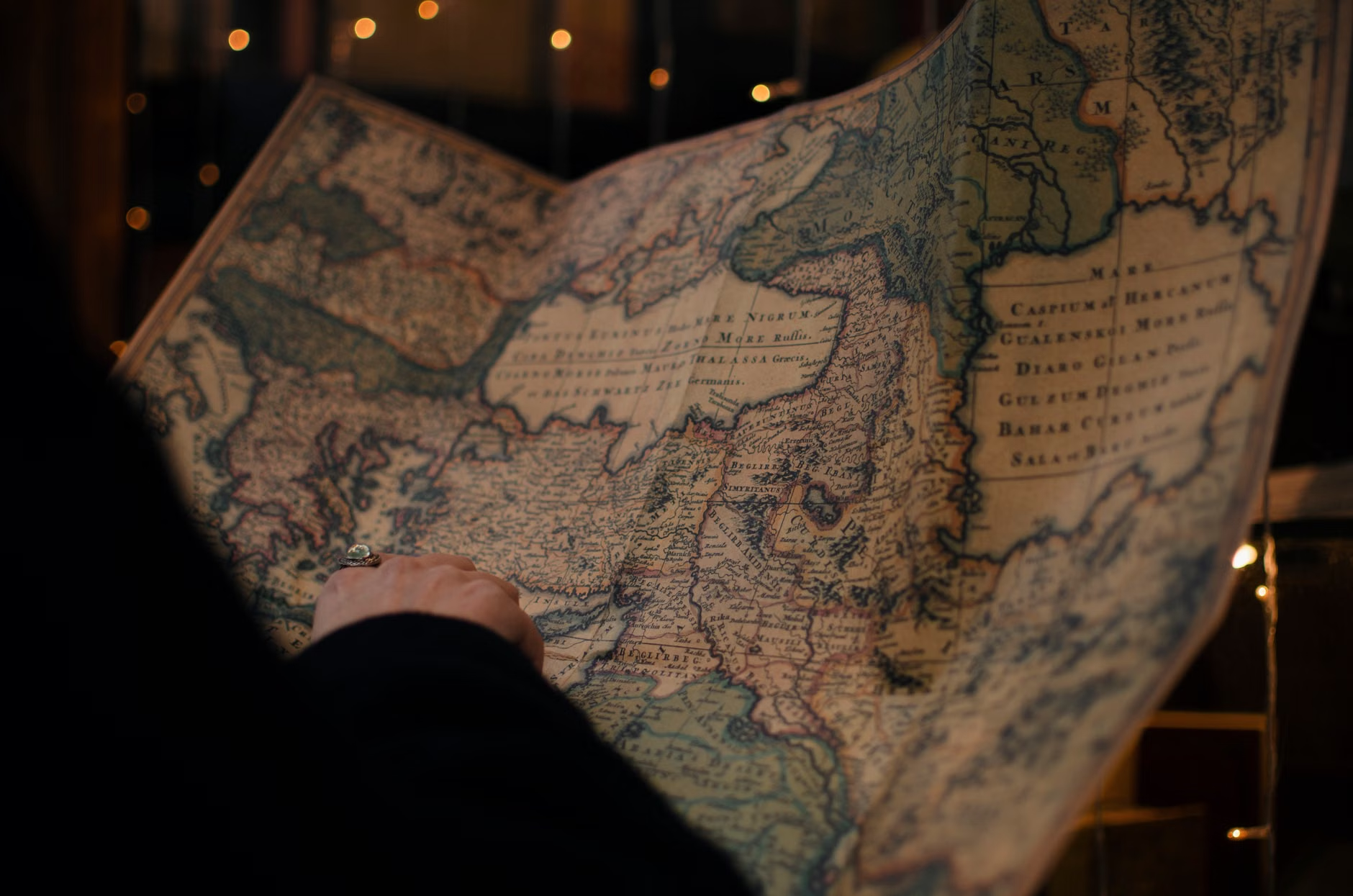
Step 1: The Pre-Trip “Memory Map.” Ask your parents or elders to identify three locations they are excited to visit or that hold personal significance. This is your primary anchor. If you are traveling to a new city, find a connection point—a place that relates to their career, their hobbies, or a historical era they lived through.
Step 2: The 30-Minute Rule. Never aim for a two-hour interview. It is exhausting for the speaker and intimidating for the listener. Limit your recording sessions to 30 minutes. This is long enough to get into a deep story but short enough that it doesn’t feel like a chore. If the conversation is going well, you can always extend it, but starting with the 30-minute expectation keeps the pressure low.
Step 3: The “Artifact” Trigger. People struggle with open-ended questions like “Tell me about your childhood.” Instead, use physical artifacts. Bring an old photo, a postcard from a place you’re visiting, or even a specific food item. When you are sitting at a cafe, place the item on the table. It gives the speaker something to focus on, which reduces the performance anxiety of being “recorded.”
The Technical Side: Keeping It Simple
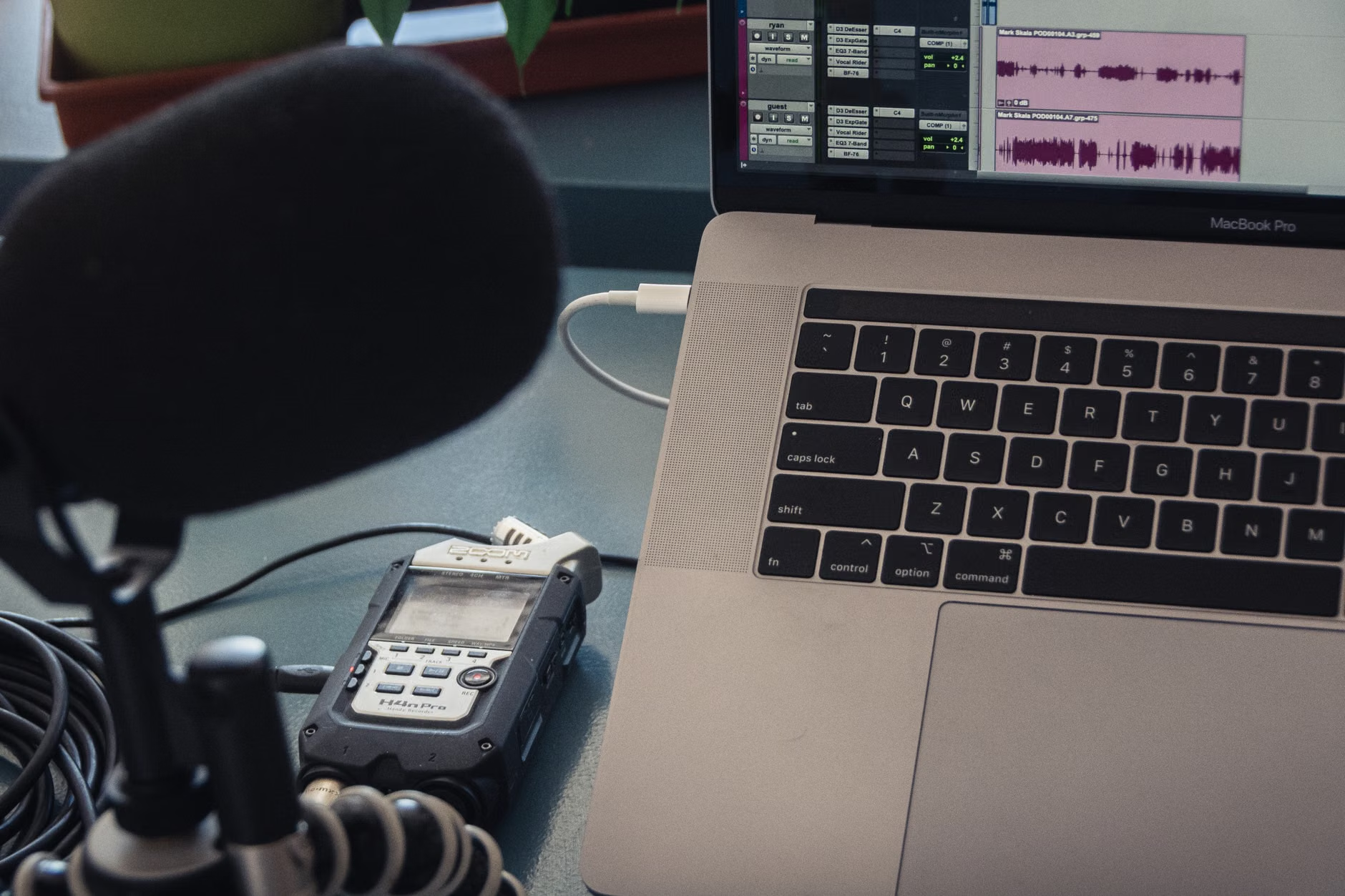
Many people fail at this project because they overcomplicate the technology. They think they need a professional microphone, a tripod, and a complex audio setup. In reality, the best tool is the one you already have in your pocket: your smartphone. However, there are a few rules to ensure the audio is actually usable years from now.
| Tool | Pro | Con |
|---|---|---|
| Smartphone Voice Memo App | Always available, zero cost, low profile. | Picks up ambient noise if not positioned correctly. |
| Dedicated Digital Recorder | Superior battery life, high-quality directional mic. | One more device to carry and charge. |
| Video Recording | Captures facial expressions and gestures. | Makes the subject feel self-conscious or “performed.” |
For most readers, I recommend using a high-quality voice memo app. The key is microphone placement. If you are in a crowded restaurant, the background noise will ruin the recording. Instead, aim for a quiet park bench, a hotel lobby during off-hours, or a quiet corner of a museum. If you must record in a public space, use a small lapel microphone that plugs into your phone, which will isolate the speaker’s voice from the ambient noise.
Important: Always test your recording setup before the trip. Do a five-minute test run at home. Listen to it. Does it sound like you’re standing in a wind tunnel? If so, adjust your equipment or your environment. The goal is clarity, not studio-grade perfection.
Intergenerational interviews can sometimes veer into territory that is painful or complicated. Your parents may have lived through experiences that are difficult to articulate or that you may find challenging to hear. This is where your role as a “listener” becomes more important than your role as a “recorder.”
If a conversation hits a wall or becomes emotionally heavy, you must be prepared to hit “stop.” There is no story worth preserving if the process causes genuine distress or fractures your relationship. If the subject says, “I don’t really want to talk about that,” respect it immediately. A simple “I understand, we can talk about something else” is all that is required. The goal is to build a bridge, not to mine for trauma.
Conversely, if they are open to sharing, practice “active silence.” After they finish a sentence, wait three seconds before asking your next question. You will be surprised by how often the speaker will fill that silence with an even deeper, more nuanced detail. We are often so eager to ask the next thing on our list that we cut off the most important part of the story.
Creating the Final Archive: From Audio to Legacy
Once you return home, you will have a collection of audio files. If you leave them sitting in a folder on your phone, they will eventually be lost to a cloud storage upgrade or a phone replacement. You must process them within 30 days of returning. This is the “hidden cost” of the project—the time required for post-production.
You don’t need to transcribe every word, but you should create a simple index. Use a spreadsheet or a notebook to list the date, the location, the primary topic discussed, and a link to the file. If you have the time, use AI transcription tools (like Otter.ai or similar services) to generate a rough transcript. Having a written record makes the stories searchable and much easier to share with other family members.
Think about the end product. Is this for your children? For your siblings? For your own reflection? You might consider creating a simple digital “family archive” on a private blog or a shared cloud drive. You can upload the audio clips alongside the photos you took during the trip. This turns the memory into a living document that can be updated over time.
Common Pitfalls and How to Avoid Them
Even with the best intentions, projects like this can derail. Here are the most common mistakes I’ve observed and how you can sidestep them.
- The Interviewer Persona: Do not treat your parent like a witness on a stand. If you sound like you are interrogating them, they will naturally clam up. Keep your questions phrased as curiosities: “I’ve always wondered how you handled that transition” rather than “What happened in 1985?”
- Ignoring the Kids: If you have your own children with you, they are part of the intergenerational loop. Don’t push them away to get the “perfect” interview. Let them ask questions too. A child’s perspective on their grandparent’s stories is often refreshing and can lead to insights you wouldn’t have reached on your own.
- Technological Failure: Always have a backup. If you are using your phone, make sure it is charged, and consider using a second device (like a tablet or a friend’s phone) as a backup recorder if the conversation is truly significant.
- The “Right” Time Fallacy: You will keep waiting for the “perfect” moment—that golden hour on the beach with no one around. It rarely happens. If the conversation starts, record it. A messy, imperfect recording in a noisy hotel room is infinitely better than a “perfect” recording that never happened.
The Deeper Value of Oral History
Why go through all this effort? Because in our 30s and 40s, we are the bridge. We are the generation that remembers life before the ubiquity of digital social media, yet we are fully integrated into the digital world. We are uniquely positioned to translate the stories of our parents for our own children.
When you record these stories, you are capturing more than just facts. You are capturing the cadence of their voice, the way they laugh, the specific vocabulary they use, and the way they view the world. These are things that a written biography can never fully capture. When they are no longer with us, these recordings become a way to keep their presence in our lives.
Furthermore, the act of asking these questions changes the relationship. When you show genuine interest in their life story, it validates their experience. It tells them that their life mattered, that their history is worth preserving, and that you are interested in who they are beyond their role as a parent or grandparent. This is a powerful form of connection that can heal long-standing tensions and bring a new level of intimacy to your family dynamic.
Actionable Next Steps for Your Journey
If you have a trip coming up, start your preparation today. Do not wait until you arrive at the airport. Sit down with your family and explain what you want to do. Frame it not as “collecting data” but as “sharing stories.”
1. Select your focus: Choose one or two themes for the trip (e.g., their early career, how they met, their childhood home). Don’t try to cover their entire life in one vacation.
2. Prepare your “cheat sheet”: Keep a small list of 5-10 open-ended questions in your notebook or phone. If the conversation lags, you have a fallback.
3. Set the expectation: Tell your family, “I’m going to try to record some of our chats while we’re away. I really want to make sure I don’t forget these stories.” Most people will be flattered and happy to participate.
4. Commit to the post-trip review: Put a date on your calendar for two weeks after you return to organize the files. If you don’t do this, the files will become “digital clutter.”
Travel is fleeting. We often return home and fall back into the grind, and the memories of the trip begin to fade within weeks. By turning your travel into an oral history project, you are creating a permanent artifact of your family’s life. You are doing something that will matter long after the photos have been buried in a digital folder. You are building a legacy, one conversation at a time.
Frequently Asked Questions
1. What if my parents are uncomfortable with being recorded?
It is very common for people to feel self-conscious. Start by not recording. Spend the first day or two of the trip just talking. Once they get used to the rhythm of sharing stories, ask, “Do you mind if I record this? I really want to make sure I remember exactly what you said.” If they still say no, just use a notebook and write down the key points afterward. The priority is their comfort, not the recording itself.
2. Are there specific questions that work best for this kind of project?
Focus on “process” questions rather than “event” questions. Instead of “What was your wedding like?”, try “How did you feel on the morning of your wedding, and what was going through your mind?” Instead of “What was your job?”, try “What was the most surprising thing you learned while working in that industry?” These questions invite reflection rather than just a recital of facts.
3. How do I handle multiple family members wanting to talk at once?
This is the “dinner table problem.” If you have multiple elders sharing stories, it can get chaotic. If you are recording, try to gently guide the conversation to one person at a time. You can say, “That’s a great story, let’s hear more about that,” while turning your focus to the person speaking. If it becomes a group discussion, accept it—sometimes the best stories come from the interplay between family members, even if the audio is a bit harder to transcribe later.
For further guidance on preserving family history and conducting oral interviews, you may find the resources at the Library of Congress American Folklife Center helpful for understanding the basics of field documentation and storytelling.