Key Takeaways
- Low-code meal planning replaces rigid, complex systems with modular, reusable “building blocks” that adapt to your family’s actual schedule.
- The 80/20 Rule of Ingredients: Focus on standardizing 80% of your pantry staples while allowing 20% for “creative variance” to prevent meal boredom without increasing shopping stress.
- Automation over Willpower: Use recurring digital grocery lists and a fixed “theme night” rotation to remove the cognitive load of decision-making during the busiest part of the day.
The most exhausting part of parenting isn’t the physical labor; it’s the constant, low-level hum of decision fatigue. Every evening, you are faced with the same question: “What are we having for dinner?” If your current meal planning system feels like a full-time job that you never applied for, it’s time to stop trying to be a Michelin-star chef and start thinking like a systems designer.
In software development, “low-code” allows people to build functional applications using visual interfaces and pre-built modules instead of writing complex lines of code from scratch. We can apply this exact same logic to your kitchen. Instead of agonizing over new recipes every week, you build a modular library of “deployable” meals that work for your family’s specific needs, energy levels, and time constraints.

Why Traditional Meal Planning Systems Fail Families
Most meal planning advice is designed for people who have hours to browse Pinterest, curate aesthetic grocery lists, and spend Sunday afternoons in a culinary trance. If you are a parent in your 30s or 40s balancing a career, school runs, and extracurriculars, these systems aren’t just inefficient—they are destined to collapse by Tuesday.
The primary failure point of traditional planning is high cognitive overhead. When you treat every week as a blank slate, you are forcing your brain to make hundreds of micro-decisions: What do we have in the pantry? Is the chicken defrosted? Do I have enough cumin? Is this recipe actually kid-friendly?
When you encounter a hurdle—a late meeting, a sick child, or a forgotten grocery item—the entire system breaks. This leads to the “takeout trap,” where the stress of the failed plan results in higher food costs and a cycle of guilt. To shift to a low-code model, we must move from planning to templating.
The Concept of Modular Meal Modules
Think of your meals not as singular events, but as modules. A module is a repeatable, reliable dinner solution that requires zero mental energy to “program” into your week. A low-code module might be “Taco Tuesday” or “Sheet-pan protein + roasted veg.”
By creating a library of 10–12 of these modules, you never have to “plan” dinner again. You simply select from your pre-approved list. This reduces the decision-making process from an open-ended creative act to a simple selection task. If you have 10 modules, you have a rotating menu that can last you for months without repeating a sequence, all while keeping your shopping list predictable.
| Module Type | Complexity | Best For | Required Prep |
|---|---|---|---|
| The “One-Sheet” Roast | Low | Busy weeknights | Chop & Season |
| The “Pantry-Staple” Pasta | Low | Low-energy days | Boil & Toss |
| The “Build-Your-Own” Bar | Medium | Picky eaters | Prep ingredients |
| The “Slow-Cooker” Set & Forget | Low | Days with long commutes | Morning assembly |
Building Your Low-Code Kitchen Infrastructure
To implement this, you need to establish your “infrastructure.” This is the foundation upon which your meals are deployed. Without a stable foundation, even the best meal plan will crumble.
Start by auditing your pantry. A low-code kitchen relies on a “Core 20″—a list of 20 ingredients that you always keep in stock. These are the building blocks that allow you to execute your modules at a moment’s notice. Common examples include canned tomatoes, dried pasta, rice, frozen vegetables, canned beans, and a reliable set of spices.
When your pantry is stocked with these constants, you stop shopping for “recipes” and start shopping for “replenishment.” This is a fundamental shift in how you navigate the grocery store. Instead of scanning for ingredients for a specific, one-off dish, you are simply maintaining your inventory levels.
Automating the Grocery Loop
The most effective way to lower the “code” in your meal planning is through digital automation. Use a shared grocery app (like AnyList, OurGroceries, or even a simple shared note) that allows every family member to add items the moment they run out.
The “low-code” secret here is the recurring list. Most digital grocery tools allow you to save a master list. By segregating your items into categories—Produce, Pantry, Dairy, Frozen—you can walk through the store (or click through your online delivery app) in a linear fashion. This removes the need to cross-reference recipes while standing in the middle of the aisle.
Managing the “Variance” Without Losing Control
One common mistake is trying to make every meal a “new experience.” When you introduce too much variance, you increase the probability of error. If you decide to try a complex new recipe on a Wednesday night, you are effectively “introducing a bug” into your system. You don’t know the prep time, you don’t know if the kids will like it, and you don’t know if you’ll have leftovers.
Instead, apply the 80/20 Rule of Ingredients. 80% of your meals should be standard, proven modules. The remaining 20% is where you allow for experimentation. This could be a new sauce, a seasonal vegetable, or a different protein preparation. By keeping the core structure stable, you can afford a little bit of complexity in the periphery without the whole system crashing.
Handling the “Edge Cases”
What happens when the system fails? What do you do when a kid gets sick, a meeting runs late, or you simply forgot to defrost the meat? In software, these are called edge cases. In your household, these are “emergency protocols.”
Every family should have three “hard-coded” emergency meals that require zero prep and zero fresh ingredients. These are your “system restores.” Examples include:
- The “Breakfast for Dinner” backup: Eggs, toast, and fruit.
- The “Pantry Pasta” backup: Pasta with jarred sauce and frozen peas.
- The “Freezer Stash” backup: A pre-cooked meal or high-quality frozen pizza.
When you have these backups, you eliminate the need to order expensive, unhealthy takeout when the unexpected happens. You simply “deploy” the emergency module, and you’re back on track.
The Hidden Costs of “Perfect” Planning
There is a hidden cost to trying to be perfect: Food Waste. When we over-plan, we buy too much. When we try to be too healthy, we buy vegetables that we don’t actually have the energy to prep. The low-code approach prioritizes sustainability—not just for the planet, but for your sanity.
Be honest about your energy levels. If you know you are exhausted on Thursday, don’t plan a meal that requires 45 minutes of active cooking. That is a design flaw. Your plan must account for your actual, real-world energy levels, not your “best self” aspirations.
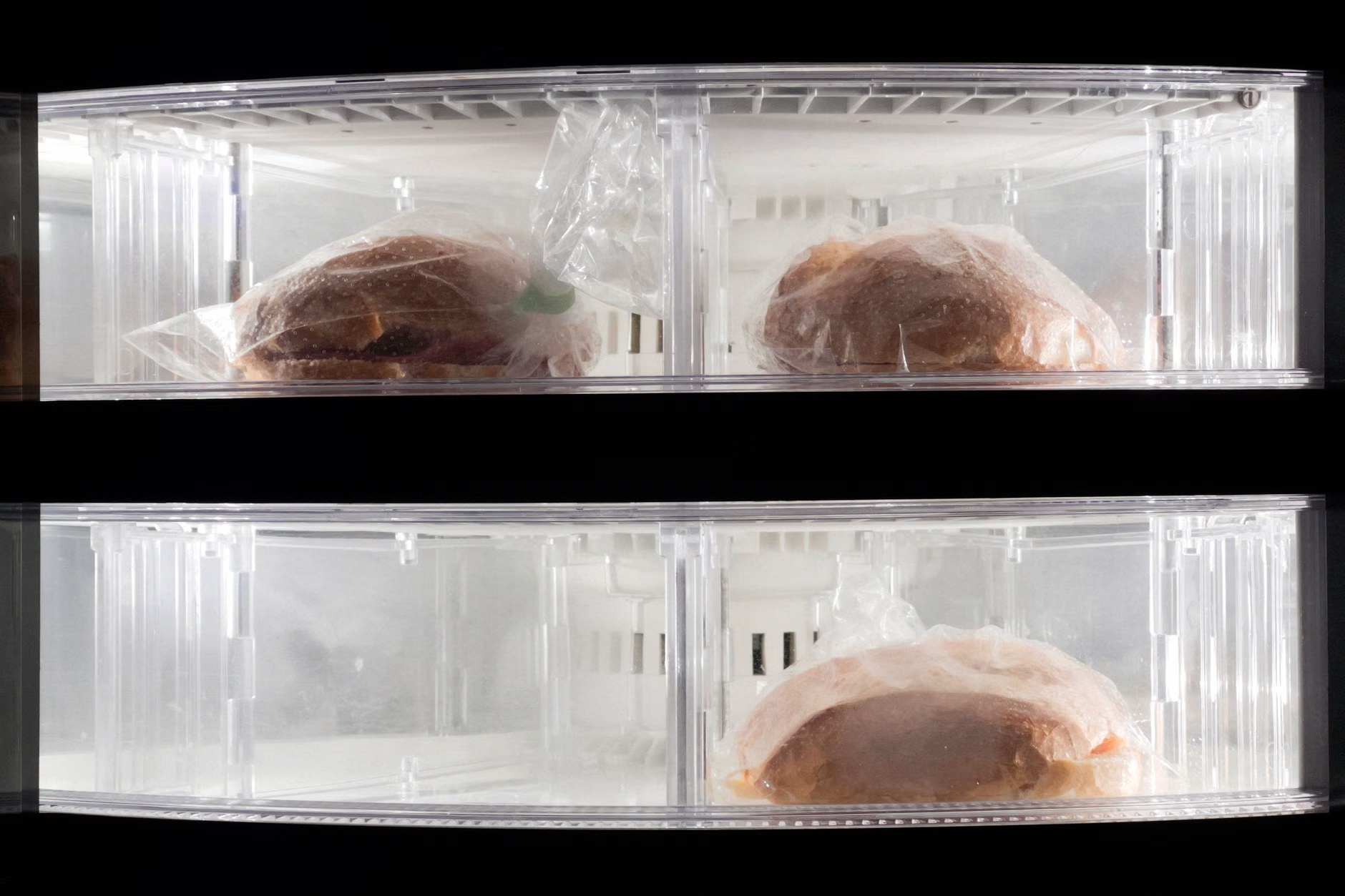
Another overlooked variable is the “Leftover Latency.” If you cook for four but only eat for three, what happens to the extra portion? In a low-code system, this isn’t a surprise; it’s a feature. Designate one day a week (e.g., “Fridge Clean-out Friday”) as a day where the goal is to consume the accumulated leftovers. This prevents the “tupperware graveyard” from forming in the back of your fridge.

Step-by-Step Implementation Guide
If you want to transition to this system, don’t try to overhaul everything at once. Follow these steps over the next two weeks:
- Week 1: The Audit. For seven days, don’t change your habits. Just track what you actually eat and what you throw away. Identify which meals were “wins” (easy, well-received) and which were “losses” (time-consuming, stressful).
- Week 2: The Module Creation. Take your 5–7 “wins” and turn them into modules. Write down the core ingredients for each. Add these to your “Master Pantry List.”
- Week 3: The Deployment. Start using your module list to populate your weekly plan. If a module requires an ingredient you don’t have, add it to your recurring digital grocery list.
- Ongoing: The Refinement. Every month, review your modules. If you find yourself dreading a specific meal, delete the module and replace it with a new one. This is how you iterate toward a system that actually serves your family.
Remember, the goal is not to have a perfectly curated Instagram-worthy kitchen. The goal is to spend less time thinking about food so you can spend more time actually enjoying it with your family. By reducing the complexity of your planning, you are reclaiming the most valuable resource you have: your evening.
Frequently Asked Questions
Does low-code meal planning mean I have to eat the same thing every week?
Not at all. While you should keep your “Core 20” pantry staples consistent, your modules can be seasonal. You can swap out a summer vegetable module for a winter root vegetable module without changing the underlying “structure” of the meal. The system stays the same, but the inputs change with the seasons.
What if my children are picky eaters?
The “Build-Your-Own” module is your best friend here. By serving components separately (e.g., taco meat, cheese, lettuce, and shells in separate bowls), you allow family members to construct their own meals. This reduces the pressure on the cook and increases the likelihood that everyone will find something they are willing to eat.
How do I handle grocery price fluctuations without re-planning everything?
By focusing on pantry staples, you are less vulnerable to price spikes in fresh produce. When a specific fresh ingredient becomes too expensive, simply swap it out for a frozen or canned alternative that fits the same “module” (e.g., swapping fresh berries for frozen ones, or fresh green beans for frozen ones). The module remains stable even if the individual ingredients fluctuate in price.
For further reading on household management and efficiency, you may find the following resources from established health and family organizations helpful:
- Academy of Nutrition and Dietetics: How to Meal Plan on a Budget
- CDC: Healthy Eating for a Healthy Weight
Start small. Pick three modules this week, automate your grocery list, and watch how much mental space you suddenly have on a Wednesday night. You’ve got this.