The most effective way to improve your gardening success while slashing your grocery bill is to stop buying commercial seed packets and start swapping locally-adapted seeds with your neighbors. By focusing on “hyper-local” seeds—varieties that have already proven they can thrive in your specific microclimate—you bypass the trial-and-error phase that plagues most casual gardeners.
- Climate Resilience: Seeds saved from plants grown in your immediate neighborhood are genetically predisposed to handle your local soil, rainfall, and pest pressures better than mass-produced store varieties.
- Financial Efficiency: A single heirloom vegetable plant can produce hundreds of seeds; swapping these essentially turns your garden into a self-sustaining, zero-cost food supply.
- Community Connection: Seed swapping acts as a low-pressure social anchor, providing a tangible way to build relationships with neighbors without the awkwardness of traditional networking.
Why Hyper-Local Seeds Outperform Store-Bought Packets
If you have ever spent a small fortune on organic seed packets in the spring, only to watch half of them fail to germinate or succumb to the first sign of a local blight, you are not alone. This is the “genetic mismatch” problem. Most commercial seeds are bred for high yield, uniform shipping, and aesthetic consistency—not necessarily for the unique humidity, wind, or soil pH of your specific backyard or balcony.
When you participate in a hyper-local seed swap, you are doing more than just trading items; you are participating in a process called acclimatization. When a neighbor gives you seeds from a tomato plant that survived a particularly brutal, wet summer last year, those seeds carry the “memory” of that resilience. Over time, your local community develops a library of plant genetics that are essentially “hardened” to your region.
For those of us in our 30s and 40s, balancing the demands of career, childcare, and household maintenance, the appeal here is clear: efficiency. You want a garden that works with you, not against you. By selecting seeds that have already succeeded in your area, you reduce the time spent troubleshooting stunted plants and increase the time spent enjoying the harvest.
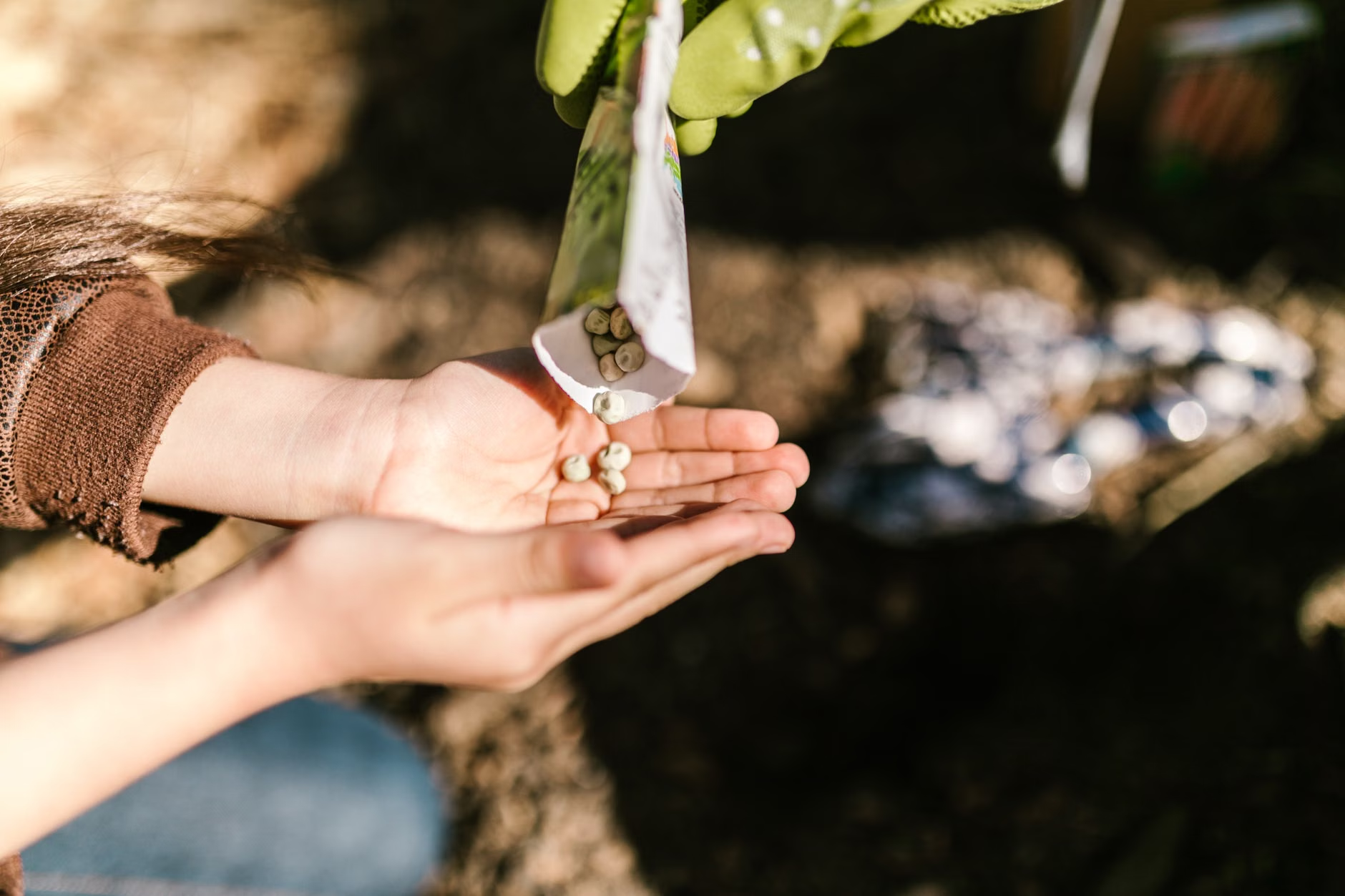
How to Start or Join a Seed Swap Without the Overwhelm
The biggest hurdle to starting a seed swap is the perception that you need to be an expert botanist. You don’t. You simply need to be organized and willing to share. Here is the realistic workflow for integrating this into a busy life.
1. Identifying Your Local Hub
Start by looking for local gardening groups on platforms like Facebook, Nextdoor, or even local library bulletin boards. If your area doesn’t have a dedicated seed swap, check for “Master Gardener” programs through your local university extension office (in the US) or local horticultural societies (in the UK/EU). These organizations often host annual “seed exchanges” in late winter, which is the prime window for planning.
2. The “Label-First” Rule
The most common mistake beginners make is bringing unlabeled or poorly labeled seeds. If you are swapping, the integrity of your information is your reputation. Every envelope you provide should include:
- The Variety Name: (e.g., “Cherokee Purple Tomato”).
- The Year Harvested: Seeds degrade over time; knowing the year is crucial for viability.
- Growth Notes: A simple note like “Thrived in partial shade” or “Needs heavy staking” is gold for the recipient.
3. Managing Expectations
Understand that not all seeds are equal. If you are starting out, stick to “open-pollinated” or “heirloom” varieties. Avoid “F1 Hybrids,” which are seeds that won’t necessarily grow true to type in the next generation. If you aren’t sure, ask the swapper. Part of the culture of seed swapping is the conversation itself.
| Seed Type | Viability for Swapping | Why? |
|---|---|---|
| Heirloom/Open-Pollinated | Excellent | Seeds produce plants identical to the parent; perfect for saving. |
| F1 Hybrids | Poor | Offspring will be unpredictable and often lack the parent’s traits. |
| GMO/Patented Seeds | Do Not Swap | Often legally restricted or biologically sterile; stay away to avoid issues. |
Understanding this table is vital for your credibility. If you accidentally pass on F1 hybrid seeds, you might find yourself explaining why your neighbor’s tomatoes didn’t turn out as expected. Always verify your seeds before you head to the swap.
The Unexpected Benefits for Modern Families
Beyond the obvious cost savings, there is a psychological shift that happens when you stop viewing seeds as disposable commodities and start seeing them as an investment in your local ecosystem. For parents, this is a masterclass in biology and patience that you can teach your children without needing a formal curriculum.
When you involve kids in the process of drying, sorting, and labeling seeds, you are teaching them about cycles of production and the value of community exchange. It’s a tangible way to explain that food doesn’t just come from a plastic container at the supermarket. It also provides a low-stakes way to connect with neighbors who might be in the same life stage as you.
I have observed that many people in their 30s feel a sense of “community isolation”—the feeling that you live near people but don’t really know them. A seed swap is a natural icebreaker. It is inherently non-competitive. You aren’t selling anything; you are offering a small, living gift. It is one of the few remaining social activities that doesn’t feel like a transaction or a performance.
Practical Logistics: Storing and Preparing Your Seeds
If you are going to be a serious participant in the hyper-local movement, you need a system. A messy drawer of loose seeds will quickly become a graveyard of dead potential. Here is how to keep your collection functional.
The “Cool, Dark, Dry” Mantra
Seeds are living embryos. If they get too hot, too damp, or too exposed to sunlight, they will die. A simple, airtight plastic container or a metal tin kept in a cool, dark closet is sufficient. Do not store seeds in a garage or shed where temperatures fluctuate wildly; those shifts will break the dormancy of the seed and lead to failure.
The Silica Gel Hack
If you live in a humid climate, throw a few food-safe silica gel packets (the kind you find in new shoe boxes or medicine bottles) into your seed storage container. This keeps the moisture levels low, which is the single biggest factor in extending seed life.
Testing for Viability
If you are unsure if your seeds are still good, don’t waste your entire season finding out. Perform a “paper towel test.” Place 10 seeds on a damp paper towel, fold it over, and place it in a plastic bag. Check them after 7–10 days. If 8 out of 10 sprout, you have an 80% germination rate, which is excellent. If only 2 sprout, it’s time to retire those seeds and start fresh.
Common Mistakes to Avoid
Even with the best intentions, it is easy to trip up. Here are the most frequent pitfalls I’ve seen in community gardening circles.
- Over-promising: Do not bring 50 packets to your first swap. Bring 5–10 high-quality varieties that you have personally grown and liked. Quality over quantity is the golden rule.
- Ignoring Cross-Pollination: If you are saving seeds from squash or pumpkins, be aware that they cross-pollinate easily. If you have two different types of squash growing next to each other, the seeds you save may produce a strange hybrid next year. If you are new to this, stick to beans, peas, and tomatoes—they are generally “self-pollinating” and much safer for beginners.
- The “Mystery” Factor: Never swap seeds that you found in an old, unlabeled packet. If you don’t know what it is, don’t pass it on. It creates frustration for the next person and erodes the trust that the swap relies on.
The goal is to foster a culture of reliability. When you become known as the person who provides accurate, well-dried, and well-labeled seeds, you will find that the best seeds from other people’s gardens start finding their way to you first.
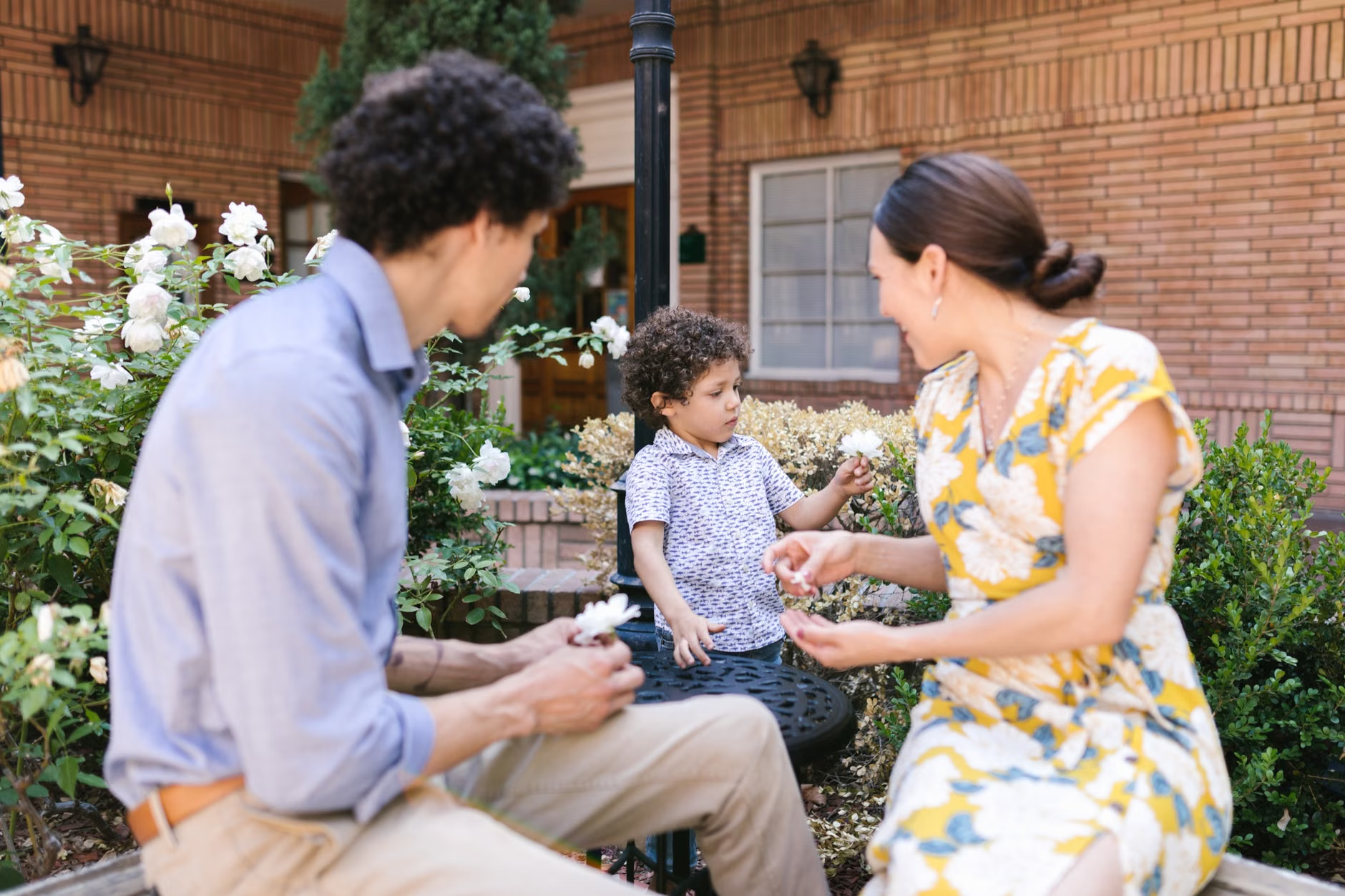
Integrating Seed Swapping into Your Lifestyle
You might be thinking, “This sounds like a lot of work.” It doesn’t have to be. You don’t need to dedicate your entire weekend to this. Treat it like a seasonal ritual. Spend one Saturday in the autumn, when the garden is winding down, to harvest and store. Spend one afternoon in the late winter to organize your packets and check your local listings for swaps.
This rhythm aligns perfectly with the seasonal nature of parenting and family life. It forces you to slow down during the quiet months and builds anticipation for the busy spring. It also serves as a hedge against the rising costs of organic produce. When you grow your own heirloom vegetables, you are effectively paying pennies for produce that would cost dollars at a specialty market.
Moreover, consider the environmental impact. By swapping locally, you are reducing the carbon footprint associated with shipping seeds across the country. You are supporting local biodiversity and ensuring that unique, flavorful varieties don’t go extinct in favor of commercial “standardized” crops.
Final Thoughts: Why This Matters Now
We are living in an era where we are increasingly reliant on global supply chains for everything, including our food. There is a quiet, powerful resistance in taking back even a small fraction of that process. Seed swapping is a low-barrier, high-reward entry point into self-reliance.
If you are in your 30s or 40s, you are likely looking for ways to make your home life more sustainable without adding more stress to your plate. Seed swapping isn’t just about gardening; it’s about reclaiming a bit of autonomy and building a local network that cares about the same things you do. Start small, be consistent with your labeling, and don’t be afraid to ask questions. You might be surprised at how much your neighbors have to offer.
If you want to dive deeper into the technical side of seed saving, I highly recommend checking out resources like the Seed Savers Exchange. They offer excellent, science-backed guides on how to properly harvest and store almost any variety you can imagine. Their approach is rigorous but accessible, and it will give you the confidence to move from a casual swapper to a local seed steward.
Frequently Asked Questions
1. Can I swap seeds if I live in an apartment with no garden?
Absolutely. Many people in urban areas swap seeds for container-friendly varieties like herbs, microgreens, or dwarf tomato plants. You don’t need an acre of land to participate; you just need a sunny windowsill or a small balcony.
2. What if I don’t have any seeds to trade yet?
Most seed swaps are very welcoming to beginners. Many people bring “starter” packets of high-quality seeds they bought from reputable companies, or they simply come to learn. You can also offer to help with the organization of the event in exchange for seeds. Just be honest about your level of experience.
3. How long do seeds actually last?
It varies by plant. Beans and peas can last 3–5 years if stored properly. Smaller seeds like onions or parsnips often lose viability after just 1–2 years. When in doubt, perform the paper towel germination test mentioned earlier in this guide to avoid disappointment.
Note: Always check your local regulations regarding the movement of plant materials, especially if you are swapping across regional or national borders, as some areas have strict biosecurity laws to protect local agriculture.