- Focus on Discovery, Not Distance: The core of “slow-adventure” is prioritizing the child’s engagement with nature over reaching a specific summit or distance marker.
- The 1:4 Rule: Always budget four times the adult pace for a trail when hiking with children under seven to account for frequent breaks, exploration, and fatigue.
- Strategic Prep beats Gear: Bringing the right snacks and managing expectations about “bad weather days” is more critical for success than buying expensive, high-end hiking equipment.
If you have ever spent thirty minutes trying to convince a four-year-old that a rock is not, in fact, a fascinating technological marvel, you understand the tension of family hiking. We often approach the outdoors with an “adult” mindset: we look for distance, elevation gain, and a clear finish line. But for a child, a hike is not a workout; it is a sensory expedition. If you try to force an adult pace onto a young child, you are essentially guaranteeing a mid-trail meltdown.
The “slow-adventure” approach isn’t just a trend; it is a necessary shift in strategy for parents in their 30s and 40s who want to share their love of the outdoors without turning every weekend into a logistical nightmare. By lowering our expectations for distance and increasing our tolerance for “detours,” we can actually finish a hike with our sanity—and our children’s enthusiasm—intact.
Defining the Slow-Adventure Mindset
At its core, slow-adventure is about intentionality. It is the practice of choosing a trail that is significantly below your physical capabilities to allow the group to move at the speed of the slowest member. This is not about being “lazy” or “unfit”; it is about optimizing the environment for a child’s attention span.
When you strip away the pressure of hitting a specific goal, you realize that kids are natural explorers. They don’t want to walk from Point A to Point B; they want to stop and examine every beetle, puddle, and interesting-looking stick. If you fight this, you are fighting their natural curiosity. If you lean into it, you suddenly find yourself looking at the forest through a fresh lens, which is perhaps the best part of parenting.
To implement this, start by reframing your definition of a “successful” hike. Success shouldn’t be about reaching the mountain peak. It should be about completing a loop, finding a specific type of leaf, or simply spending two hours outside without a screen. When you change the metric of success, you remove the primary driver of parental frustration.
The Math of the Trail: Budgeting Your Time
One of the most common mistakes parents make is underestimating how long a trail will take. We look at a 3km trail and think, “I can do that in 30 minutes, so the kids can do it in an hour.” This is a trap. The “1:4 rule” is a much safer bet. If it takes you 30 minutes, assume your child will take two hours. Why? Because you have to account for “stop-and-stare” time, snack breaks, shoe-tying pauses, and the inevitable “my legs are tired” phase.
Here is a breakdown of how to plan your time based on the age of your children:
| Child Age | Expected Pace vs. Adult | Maximum Recommended Distance |
|---|---|---|
| 2-3 years | 1/5th of adult speed | 1-2 km |
| 4-6 years | 1/3rd of adult speed | 3-5 km |
| 7-9 years | 1/2 of adult speed | 5-8 km |
This table isn’t a strict law, but it is a vital planning tool. If you try to push a three-year-old for 5km, you are essentially signing up to carry them for 3km of it. Understand the limit of their stamina and plan your route accordingly. When in doubt, go shorter. You can always turn around early, but you cannot easily add distance if the kids are already exhausted.

Gear That Actually Matters (And What You Can Skip)
The industry loves to sell “miniature” versions of adult gear. While some of it is useful, much of it is unnecessary. When you are moving at a slow-adventure pace, you don’t need high-tech, ultra-lightweight carbon fiber trekking poles for your six-year-old. You need gear that keeps them comfortable and engaged.
1. Footwear: This is the one area where you should not compromise. Kids don’t need expensive hiking boots, but they do need shoes with a decent grip. Avoid smooth-soled fashion sneakers. If the trail is muddy or rocky, a basic trail runner with a rubber lug sole is better than a heavy leather boot that will cause blisters.
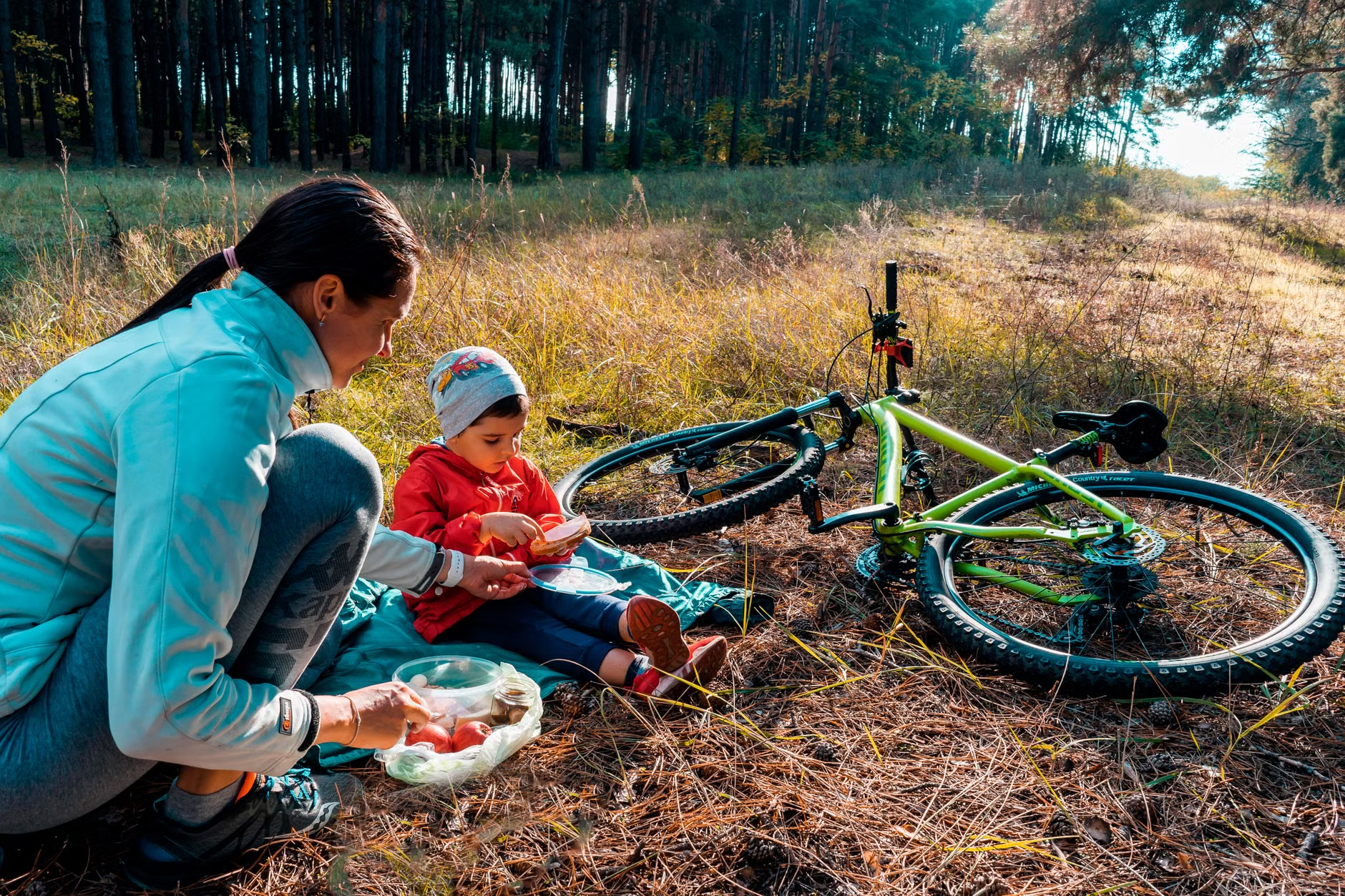
2. The Snack Strategy: Food is your most effective tool for motivation. Don’t rely on one big meal. Use “micro-snacks.” Think about high-energy, easy-to-eat items like dried fruit, nuts (if no allergies), or pieces of cheese. Keep these in a pouch that the child can access themselves. Giving them agency over their own snacks is a great way to keep them moving.
3. The “Adventure Kit”: Instead of expensive gadgets, pack a small kit that encourages engagement. A magnifying glass, a small notebook for sketches, or a DIY “scavenger hunt” list (e.g., find a red leaf, find a smooth stone, find a bird feather) can turn a boring stretch of trail into a mission.
Managing the “I’m Tired” Phase
It happens on every hike. You are 45 minutes in, and suddenly, the child decides they cannot take another step. This is not necessarily physical exhaustion; often, it is mental fatigue or a drop in blood sugar. Before you panic or give up, try these three steps:
- The Pivot: Change the focus. If you are walking uphill, stop and talk about what you see behind you. Distraction is a powerful tool.
- The Refuel: Give them a snack. Often, a small boost of calories is all it takes to reset their mood.
- The Game: Start an I-spy game or a “Who can walk like a bear?” challenge. Engaging their imagination forces them to forget their physical discomfort.
If you have tried these and the child is still genuinely struggling, it is time to turn around. There is no shame in a short hike. The goal is to ensure they have a positive association with the outdoors so they *want* to go back next time.
Common Mistakes to Avoid
The most common mistake is over-planning. Parents often try to cram too much into a single day: a long drive, a long hike, and a stop at a restaurant afterward. This is a recipe for a meltdown. Keep the travel time to the trailhead under an hour if possible. If the drive is longer than the hike, the kids will be restless before they even arrive.
Another mistake is failing to check the trail conditions. An “easy” trail can become a nightmare if it has rained recently and is now a mud pit. Always check local trail reports or community forums (like AllTrails or local parks department websites) to see current conditions. If a trail is known for steep, slippery sections, choose an alternative.
Choosing the Right Location
When picking a trail, look for “loop” trails rather than “out and back” routes if possible. Loops keep the scenery changing, which helps maintain interest. If you have to do an out-and-back, make the halfway point a destination—a pond to throw rocks into, a big tree to sit under, or a viewpoint.
Look for trails with “natural play” potential. A trail that is just a straight, flat path can be boring. A trail that winds through a forest with fallen logs, streams, or interesting rock formations provides built-in entertainment. Check resources like the National Park Service (for US-based readers) or your local equivalent to find trails designated as “family-friendly.”
Why Slow-Adventure Matters for Parents
In our 30s and 40s, we are often juggling work, household management, and the constant digital noise of modern life. Hiking is one of the few places where we can disconnect. By slowing down to match our children’s pace, we are actually doing ourselves a favor. We are forced to stop rushing. We are forced to look at the moss on the tree or the way the light hits the stream.
This isn’t just about the kids; it’s about your own mental reset. If you treat the hike as a race, you’ll be stressed about the time. If you treat it as an adventure, you’ll come home feeling refreshed, even if you only walked a kilometer. The “slow” in slow-adventure is the most important part—not just for the kids, but for you.
Final Thoughts and Next Steps
Hiking with young children is a practice in patience and flexibility. There will be days when the weather turns, someone cries, or you have to turn back after ten minutes. That is okay. The goal is to build a habit of enjoying the outdoors together, and that habit is built on positive experiences, not on the distance you cover.
Start small. Find a local park with a gentle loop. Pack more snacks than you think you need. Forget the clock. If you can master the art of the slow-adventure, you will find that the best part of the hike isn’t the destination at all—it’s the conversation and the shared discovery that happens along the way.
Frequently Asked Questions
Q: What should I do if the weather looks questionable?
A: If it is light rain, bring proper gear (rain jackets and boots) and embrace it—kids love puddles. If there is a risk of lightning or severe storms, cancel the hike. Safety always takes precedence over the schedule.
Q: How do I handle a child who refuses to walk?
A: First, check if they are hungry or tired. If they are truly done walking, don’t force it. If you have a child carrier, use it. If not, consider it a sign that the hike is over for the day. Forcing a child to walk when they are at their limit will only make them hate hiking in the future.
Q: Are hiking poles actually helpful for kids?
A: They can be helpful on steep terrain to provide extra stability, but they often become a distraction or a toy. If you use them, teach the child to keep them in front of their body and not to swing them around. For most flat or easy trails, they are unnecessary.
For more information on trail safety and finding local routes, please visit the National Park Service Trails Guide or your local government’s recreation department website.