The most effective way to regulate your nervous system after a day of parenting is to design a bedroom that acts as a sensory “reset” button, specifically stripping away the visual and auditory clutter that triggers neurodivergent overwhelm. For parents navigating ADHD, autism, or sensory processing differences, the bedroom cannot just be a place to sleep; it must be a neutral zone that demands nothing from your cognitive load.
- Visual Minimalism is Biological: Reducing visual clutter is not an aesthetic choice; it is a direct method to lower cortisol levels and prevent “visual noise” from keeping your brain in a state of hyper-arousal.
- Tactile Regulation Matters: Bedding and furniture textures should be chosen based on sensory comfort—prioritizing weight (weighted blankets) or smoothness (high-thread-count cotton) to provide consistent proprioceptive input.
- The “Transition Zone” Rule: Treat the entrance to your bedroom as a psychological boundary where you shed the “parenting persona,” utilizing specific lighting and sound-dampening techniques to signal the nervous system that the day’s sensory demands have ended.
Why “Sensory-Neutral” is Not Just Another Design Trend
If you are a parent in your 30s or 40s, you likely spend your day managing a barrage of sensory inputs: the high-pitched whine of a toddler’s toy, the chaotic visual landscape of scattered LEGO bricks, the sticky textures of snacks, and the constant demand for verbal communication. By the time you reach your bedroom, your “sensory bucket” is usually overflowing.
For neurodivergent individuals, this overflow isn’t just “tiredness.” It is sensory dysregulation. When your brain is already processing too much, even a pile of laundry on a chair becomes a visual stressor. A sensory-neutral bedroom aims to minimize these inputs. It is not about making your room look like an Instagram magazine; it is about creating a low-arousal environment where your brain can finally stop “scanning” the room for potential tasks or stimuli.
The science of environmental psychology suggests that our surroundings dictate our cognitive state. According to research published in the Journal of Environmental Psychology, cluttered environments compete for your attention, leading to increased levels of stress hormones. For a parent with ADHD, this can manifest as an inability to “switch off” at night. By neutralizing the room, you are essentially reducing the number of things your brain has to categorize, label, and process.
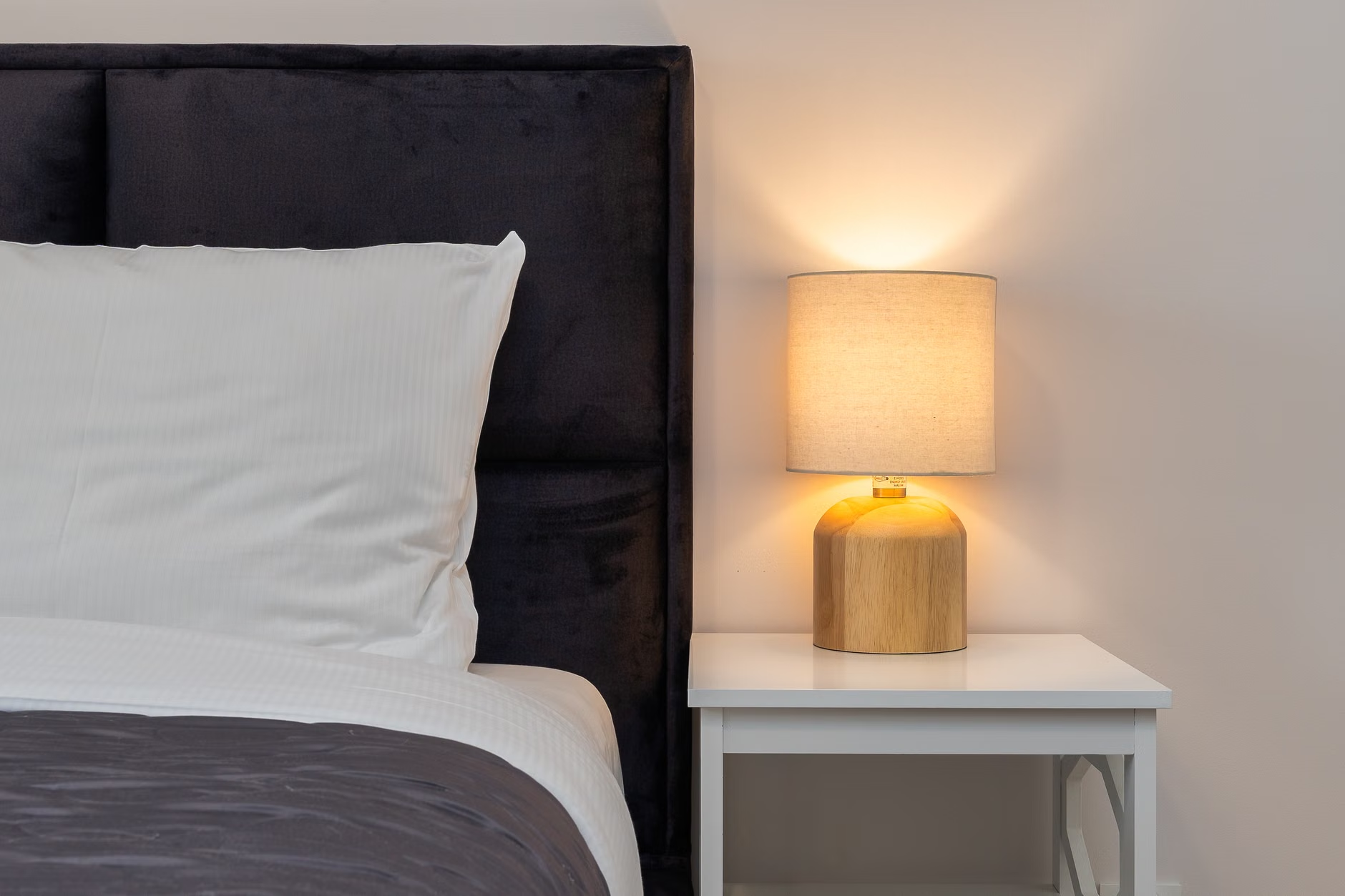
The Anatomy of Visual Noise: What to Remove First
Visual noise is the silent enemy of the neurodivergent parent. It consists of anything that implies a task or creates a pattern your brain feels compelled to track. Think of the pile of mail on the dresser, the half-finished book, or the colorful array of toiletries on the vanity. These are “open loops”—items that represent unfinished business, keeping your brain in a state of low-level anxiety.
To create a sensory-neutral space, you must implement a “closed-storage” policy. If you can see it, your brain is processing it. Here is how to audit your room:
- The “Surface Reset” Rule: Every flat surface, including the top of your dresser and your bedside table, should have no more than three items. Anything else belongs in a drawer or a box.
- Color Palette Control: While “beige” is the current trend, your neutral doesn’t have to be boring. It just needs to be low-contrast. Use muted earth tones, soft grays, or deep, calming blues. Avoid high-contrast patterns or bright, saturated colors that draw the eye unnecessarily.
- Cable Management: The chaotic tangle of charging cables behind a bedside table is a major source of visual stress. Use cable sleeves or clips to hide them. If you can see the technology, it reminds you of work, emails, and the outside world.
Tactile Comfort: Beyond Just “Soft”
Tactile sensory input is often the most overlooked variable in bedroom design. If you are prone to sensory seeking or avoidance, the texture of your environment can either ground you or cause agitation. For many neurodivergent adults, the sensation of “too many textures” can prevent deep sleep.
Consider the “friction” of your environment. If your bedsheets are a synthetic blend that catches on dry skin, or if your rug is scratchy, your brain will subconsciously register these as irritants throughout the night. Here is how to optimize for your specific needs:
| Sensory Need | Material Recommendation | Why It Works |
|---|---|---|
| Proprioceptive Seeking | Weighted blanket (10-15 lbs) | Provides deep pressure stimulation to calm the nervous system. |
| Tactile Sensitivity | High-thread-count long-staple cotton | Smooth, consistent texture that prevents “skin crawling.” |
| Temperature Regulation | Bamboo or linen | Breathable fabrics prevent overheating, which is a major trigger for sensory overload. |
When selecting your bedding, think about the “weight” of the experience. Many neurodivergent people find comfort in the feeling of being “held” by their blankets. If you struggle with restless legs or general anxiety, a weighted blanket is often a game-changer. However, be cautious: if you are a “hot sleeper,” ensure the weighted blanket has a breathable weave to prevent the sensory nightmare of waking up drenched in sweat.

Managing Auditory and Light Pollution
Even if you live in a quiet neighborhood, there is “ambient noise” that you might not notice until you try to focus on resting. The hum of a refrigerator down the hall, the sound of a distant car, or the blinking of a standby light on a TV can be enough to keep a neurodivergent brain in a “high alert” state.
Light is perhaps the most powerful regulator of your circadian rhythm. If your room is too bright or has “blue” light (the kind emitted by LEDs and electronics), your body will struggle to produce melatonin. Here is your action plan for light and sound:
- Blackout Everything: Use true blackout curtains. Even a sliver of streetlamp light can disrupt deep sleep cycles. If curtains aren’t enough, consider a comfortable eye mask that doesn’t put pressure on your eyelashes.
- Warm Lighting Only: Replace all light bulbs in the bedroom with “warm white” (2700K) or amber-toned bulbs. Avoid “daylight” or “cool white” bulbs at all costs, as these mimic midday sun and signal your brain to stay awake.
- Sound Masking vs. Noise Canceling: If silence feels “too loud” (a common experience for those with tinnitus or sensory sensitivity), use a white noise machine or a fan. The key is to create a consistent “sound floor” that masks unpredictable spikes in noise, such as a dog barking or a spouse walking down the hall.
The “Transition Zone” Strategy: Leaving the Parent Identity at the Door
One of the hardest parts of being a parent is the inability to fully disconnect. Your brain is constantly primed for the sound of a baby monitor or a child calling out. To manage this, you need to create a physical and mental transition point.
Establish a “decompression ritual” that happens before you even touch your bed. This could be as simple as changing into specific, soft loungewear that you *only* wear in the bedroom. This serves as a conditioned response—a Pavlovian signal to your brain that the “active parent” phase is over and the “recovery” phase has begun.
If you use a baby monitor, do not keep it on your bedside table. Place it across the room or in a designated “monitoring station” that is far enough away that you aren’t looking at the screen every time you shift in your sleep. If you are a light sleeper, consider using a vibrating alert on your watch or a smart-home light system that flashes a specific color when the baby needs you, rather than relying on jarring audio alerts.

Common Pitfalls and How to Avoid Them
The most common mistake is trying to overhaul the entire room in a single weekend. This is a recipe for burnout. Instead, focus on the “3-Day Rule”: tackle one sensory domain every three days. Start with visual clutter, then move to lighting, then to tactile surfaces.
Another pitfall is “aesthetic over function.” Do not buy a beautiful, velvet-upholstered headboard if you have a sensory aversion to the way velvet feels on your skin. A sensory-neutral bedroom must be built for *your* nervous system, not for a Pinterest board. If you find a piece of furniture that is perfect for your needs but is an “ugly” color, use a slipcover to bring it back to your neutral palette.
Finally, avoid the temptation to make the bedroom a multi-purpose room. If you have a small home, you might feel the need to put a desk in your bedroom. Don’t. If you absolutely must have a workspace in your bedroom, it must be hidden behind a screen or a curtain. When you look at your desk, you think about the emails you didn’t send. That is the opposite of sensory-neutral.
Maintaining the Sanctuary
Once you have built your sanctuary, the challenge is maintenance. Neurodivergent parents often struggle with “maintenance tasks” because they feel like another chore on the list. The secret is to integrate maintenance into your existing habits. Use a “reset basket” for the bedroom. If you bring something into the room that doesn’t belong (like a toy or a piece of mail), put it in the basket. Once the basket is full, clear it out. This prevents the “clutter creep” that happens slowly over the week.
Remember that this is an iterative process. You might find that a certain type of white noise stops working for you, or that your lighting preferences change during different seasons. That is perfectly fine. The goal isn’t to create a static, perfect room, but a dynamic, responsive environment that supports your health as a parent. Your bedroom is the foundation of your capacity to show up for your children. If you aren’t regulated, you cannot co-regulate with them. Therefore, investing in your bedroom is, by extension, an investment in your family’s overall well-being.
Frequently Asked Questions
Q: What if my partner has different sensory needs than I do?
A: It is common for partners to have conflicting sensory requirements. If one needs total silence and the other needs white noise, use high-quality noise-canceling earbuds or a sound-dampening “sleep mask” that plays audio. If one needs total darkness and the other needs a nightlight, use under-bed motion-sensor lighting that stays low to the floor and doesn’t hit the eye level of the person sleeping.
Q: Is a “sensory-neutral” room too expensive for a family budget?
A: Not at all. Most of the changes are behavioral or involve editing what you already have. The most effective changes—removing clutter, changing light bulbs, and organizing cables—are essentially free. Focus your budget on the items that touch your skin, like a high-quality pillow or a weighted blanket, rather than expensive furniture.
Q: How do I keep my kids from turning my “sanctuary” back into a play area?
A: Set a firm boundary that the bedroom is a “quiet zone.” Use a visual cue, like a specific door sign or a rug, to denote the boundary. If the kids do enter, have a “two-minute rule”: they can come in, but they must leave with one item that doesn’t belong. Modeling the habit is key; if they see you keeping the space calm and organized, they are more likely to respect the environment as a place for rest rather than play.
For further reading on how environmental factors impact neurodivergent health, you can explore resources from the ADDitude Magazine or the National Autistic Society for more insights on sensory regulation strategies.