Key Takeaways for Your Next Family Trip
- Reduce Travel Friction: Unlike flying, rail travel eliminates long security lines and baggage weight limits, allowing families to move with significantly less stress.
- Cost-Effectiveness Through Planning: By using regional rail passes and booking overnight sleepers, you can consolidate your travel and accommodation expenses into one ticket.
- Quality Connection Time: The “slow” nature of rail travel provides hours of uninterrupted time for family bonding, games, and shared views, which is impossible in the cramped conditions of a plane.
The most effective way to improve your next family vacation isn’t to find a faster destination—it’s to change how you get there. If you are in your 30s or 40s, you likely know the specific exhaustion that comes with family air travel: the liquid restrictions, the frantic boarding gates, and the inevitable “are we there yet?” while trapped in a middle seat. Rail travel, or the “slow-adventure” movement, offers a radical alternative that prioritizes the journey as much as the destination.
Slow-adventure rail travel is not about being sluggish; it is about intentional movement. It is the conscious choice to trade a two-hour flight for a six-hour scenic train ride. For families, this shift is more than just a preference; it is a tactical decision to regain control over your vacation time and sanity. When you move at a pace where you can see the landscape change, you arrive at your destination refreshed rather than drained.
Why the “Slow-Adventure” Model Works for Modern Families
The core philosophy of slow adventure is simple: eliminate the high-stress bottlenecks of modern travel. When you fly, your family is subjected to a rigid, high-pressure environment. You must arrive three hours early, navigate security, manage carry-on sizes, and sit in a pressurized cabin where physical movement is restricted. For a parent, this is a recipe for anxiety.
In contrast, rail travel is inherently modular. You can walk the aisles, visit the dining car, and, most importantly, you aren’t restricted by the same luggage limitations. If you are traveling with young children, this means you can bring the extra stroller, the favorite books, or the specific snacks that keep the peace, without worrying about airline surcharges or bin space.
Beyond the logistics, rail travel changes the psychological tone of the trip. The transition from “home life” to “vacation mode” is often abrupt when flying. On a train, the transition is gradual. You watch the suburbs fade into forests or rolling hills, giving everyone in the family time to mentally shift gears. This is particularly beneficial for children who struggle with the sensory overload of airports.
The Economics of Slow Travel: Is It Actually Cheaper?
One of the biggest misconceptions about rail travel is that it is prohibitively expensive compared to budget airlines. While a high-speed train ticket from London to Paris can be pricey if booked last minute, the “hidden” costs of flying often outweigh rail fares. When you account for the cost of airport transfers (which can be significant), baggage fees, and the price of airport meals, the gap narrows considerably.
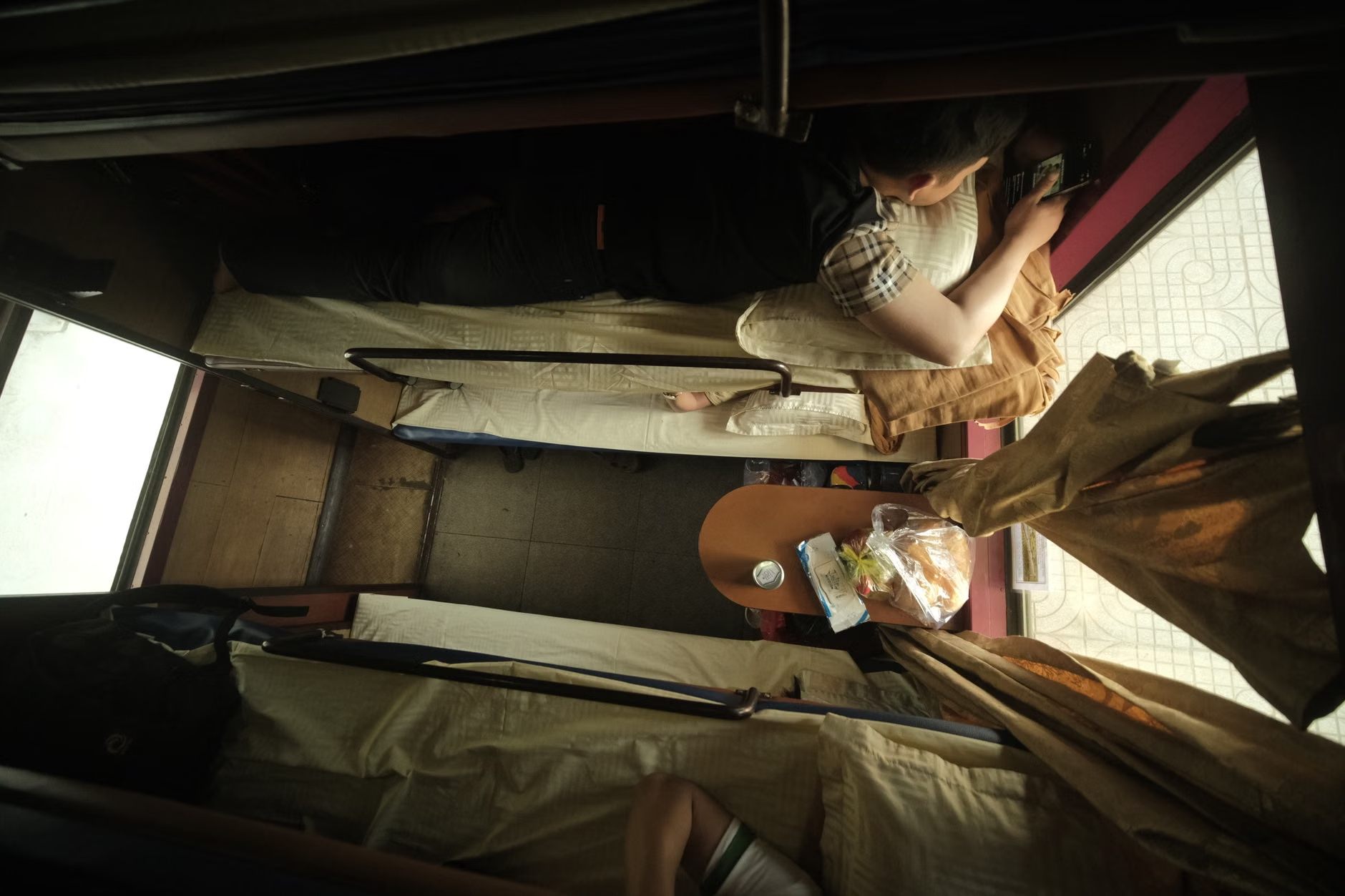
Furthermore, overnight rail travel—using sleeper cars—is a “two-for-one” strategy. By booking a sleeper cabin, you are covering your transportation and your hotel stay for the night. For a family of four, this can be a massive saving. You wake up in the city center of your destination, ready to explore, rather than waking up at 4:00 AM to catch a budget flight that leaves you exhausted by midday.
| Feature | Budget Flight | Slow Rail |
|---|---|---|
| Total Travel Time | Short (but high stress) | Longer (low stress) |
| Luggage Flexibility | Strict/Costly | Generous |
| Destination Arrival | Usually outskirts | City Center |
| Bonding Potential | Low | High |
Planning a rail-based adventure requires a different mindset than booking a flight. You aren’t just looking for the shortest route; you are looking for the best experience. Here is how to approach the planning process without getting overwhelmed by the sheer number of options.
1. Master the Hub-and-Spoke System
Do not try to see an entire continent in one go. Instead, pick a major rail hub—such as Munich, Zurich, or Tokyo—and treat it as your base. From there, use regional lines to take day trips or shorter excursions. This minimizes the amount of time you spend hauling luggage on and off trains. The goal is to spend more time exploring the destination and less time navigating the transit system.
2. The Art of the “Station Strategy”
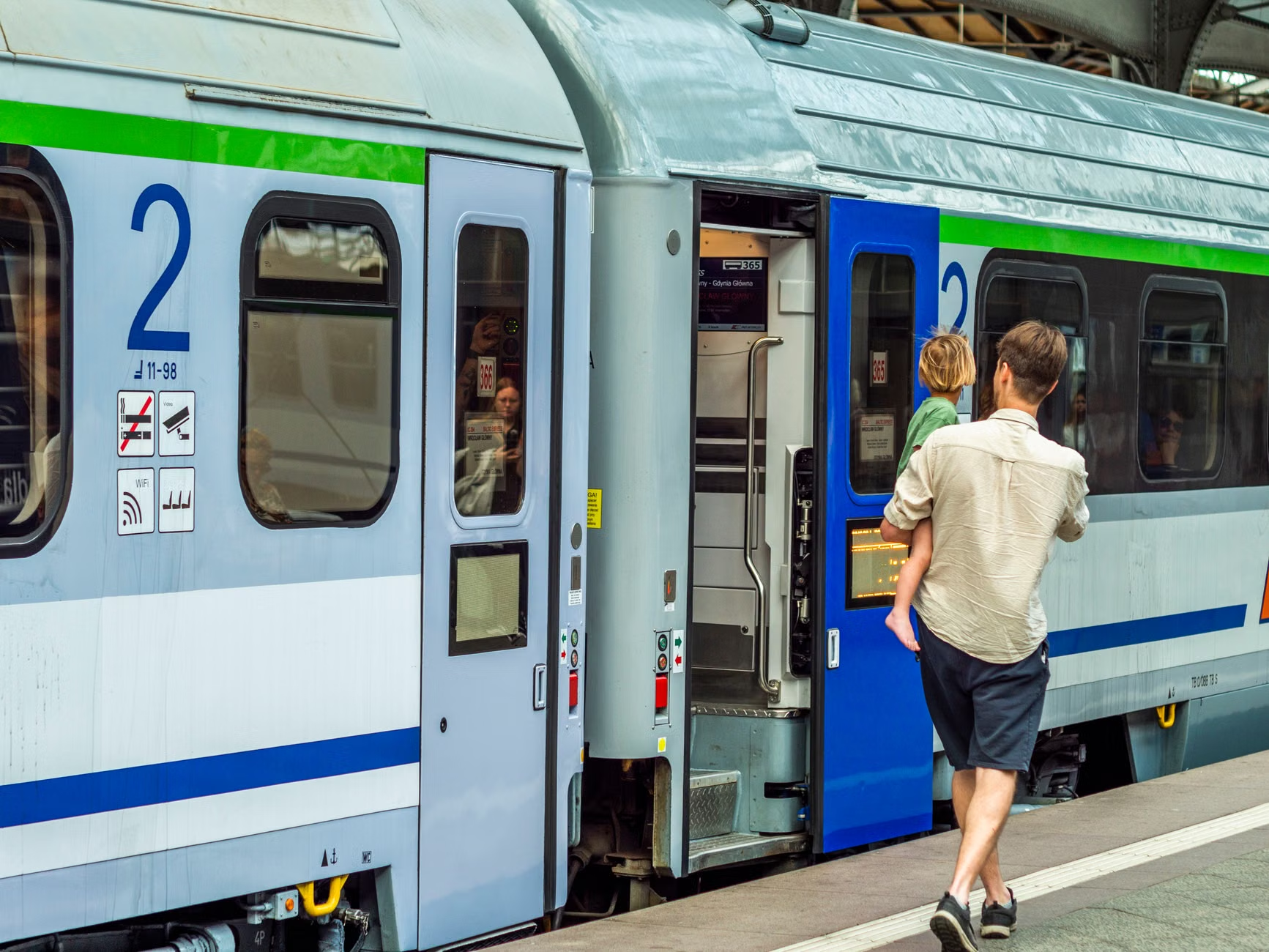
Most major train stations in Europe and Asia are now integrated with malls, grocery stores, and high-quality dining. Before you board, use the station as your resource center. If you are traveling with children, grab fresh fruit, local snacks, and water from the station market. This avoids the “hangry” phase that often hits families halfway through a trip.
3. Use Official Booking Portals
Avoid third-party travel aggregators when booking rail. They often charge unnecessary fees and make it difficult to manage reservations or cancellations. Use the official operator websites (e.g., Eurail for Europe, JR Pass for Japan, or Amtrak for the US). These sites provide the most accurate information on seat availability, family discounts, and amenities like power outlets and Wi-Fi.
Common Mistakes That Can Derail Your Trip
Even the best-planned trips can hit snags. The most common mistake parents make is over-scheduling. Because you are on a “slow” trip, there is a temptation to pack every hour with sights. Resist this. The beauty of rail travel is the downtime. If you spend your entire train ride rushing to find the next activity, you lose the primary benefit of the experience.
Another frequent error is underestimating the need for physical space. While rail travel is spacious compared to flying, cabins can still feel tight for a family of four. If your budget allows, opt for the “Family Cabin” or a private compartment. Having a door that closes allows for nap times, nursing, or simply a quiet space to decompress away from the rest of the passengers.
Lastly, be mindful of the “last mile.” While train stations are central, your final destination (the hotel or Airbnb) might be a 20-minute walk or a short tram ride away. Research this in advance. Nothing ruins a relaxing train journey faster than discovering you have to navigate a steep hill with four suitcases and two tired children at the end of the day.
The Hidden Benefits: Why It Matters for Your Family Dynamic
We often talk about “traveling with kids” as a chore to be completed—a series of tasks to ensure they are fed, happy, and quiet. Slow-adventure rail travel flips this. Because you are in a shared, comfortable space, the journey becomes an activity in itself. You can play card games, look out the window together, or read books without the constant interruption of seatbelt signs or service carts.
There is also a significant educational component. Flying is essentially teleportation; you lose the context of the journey. By train, children see the geography change. They see the architecture shift from city to countryside. They see how people live in different towns and villages. It provides a tangible sense of distance and scale that flying simply cannot replicate.
Is Slow Rail Right for Your Family?
You might be asking if this is suitable for your specific family situation. If you have very young children (infants or toddlers), rail travel is often easier because of the freedom to move. If you have teenagers, the increased personal space (and usually better Wi-Fi access than on planes) makes it easier for them to stay engaged or work on their own projects.
The only real trade-off is time. If you have a very short vacation—say, a four-day weekend—spending two days on a train might not be the most efficient use of your time. In those cases, flying is the practical choice. However, if you are looking at a trip of one week or longer, the “slow” approach pays dividends in both cost and mental clarity.
Actionable Steps for Your Next Booking
If you are ready to try this, start small. Don’t book a two-week transcontinental odyssey for your first attempt. Pick a route that takes between four and six hours. This is the “sweet spot” for families—long enough to enjoy the amenities and the scenery, but short enough to keep everyone’s energy levels high.
- Audit your route: Use Rome2Rio to compare the total travel time of a train versus a flight, including the time it takes to get to and from the airport.
- Check for family discounts: Many rail operators offer significant discounts for children under 12, and some even offer free travel for children under 4.
- Pack a “Train Kit”: Just like an airplane carry-on, pack a specific bag for the train. Include chargers, headphones, a deck of cards, and enough snacks to cover the entire duration of the trip.
Ultimately, the goal of a family vacation is to create shared memories. By choosing the train, you are choosing to make the journey a core part of those memories rather than a stressful obstacle to overcome. It requires a bit more planning and a shift in expectations, but the payoff—arriving rested, connected, and ready to explore—is well worth the effort.
Frequently Asked Questions
1. How do I manage luggage on a train compared to a plane?
Unlike airports, most trains do not have strict weight limits or liquid restrictions. However, you are responsible for carrying your own bags onto the train. The golden rule is: if you can’t carry it yourself, don’t bring it. Use a four-wheel spinner suitcase for easy movement through stations, and consider a foldable stroller if traveling with a toddler.
2. Are there power outlets and Wi-Fi on most trains?
Almost all modern intercity and high-speed trains provide power outlets at every seat. Wi-Fi availability varies by country and operator. Always check the operator’s website before booking. If Wi-Fi is critical for your family, consider bringing a portable hotspot or downloading movies and games to your devices before you leave.
3. What happens if we miss our train connection?
If you miss a connection due to a delay on the same operator’s network, most companies will allow you to board the next available train at no extra cost. Always keep your ticket and receipt handy. If you are booking separate tickets with different operators, try to leave a buffer of at least two hours between connections to account for potential delays.
Start your next family adventure by looking at the map not as a series of dots to fly between, but as a path to be traveled. You might be surprised at how much more you enjoy the destination when you’ve actually seen the world on your way there.