An agritourism farm-stay is one of the few vacation experiences that actually makes parenting easier by trading the high-pressure environment of a resort for the predictable, sensory-rich rhythm of rural life. While the idea of chasing chickens or picking strawberries sounds idyllic, the reality for a parent in their 30s or 40s depends entirely on choosing a farm that prioritizes safety and sanitation over “authentic” dirt-floor rustic experiences.
Three Key Takeaways for Farm-Stay Success:
- Prioritize “Working” vs. “Display” Farms: Choose farms that are designed for guests, not just commercial operations, to ensure basic safety standards like enclosed play areas and sanitized hand-washing stations.
- The “Toddler-Safe” Checklist: Always confirm the presence of gated sleeping areas, allergen-aware kitchens, and distance from hazardous farm machinery before booking.
- Manage the Pace: Treat the farm as a backdrop for daily routines rather than a theme park; toddlers thrive on the repetition of farm chores more than the novelty of the animals themselves.
Why Farm-Stays Are Having a Moment for Tired Parents
If you have spent your last three vacations hovering over a hotel pool, terrified your toddler might jump into the deep end, the appeal of a farm-stay becomes immediately clear. We are seeing a massive shift in travel trends toward “agritourism”—a blend of agriculture and tourism where guests stay on working farms. For parents of toddlers, this isn’t just a trend; it is a functional solution to the “vacation exhaustion” cycle.
In a standard hotel, your toddler is often bored, leading to tantrums, or overstimulated, leading to meltdowns. On a farm, the environment is the entertainment. A pile of hay, a fence to lean on, or a path to walk down provides hours of engagement that requires zero screen time and very little “parental directing.” However, there is a distinct difference between a curated, family-focused farm-stay and a rugged, industrial operation. Understanding that difference is your first step toward a successful trip.
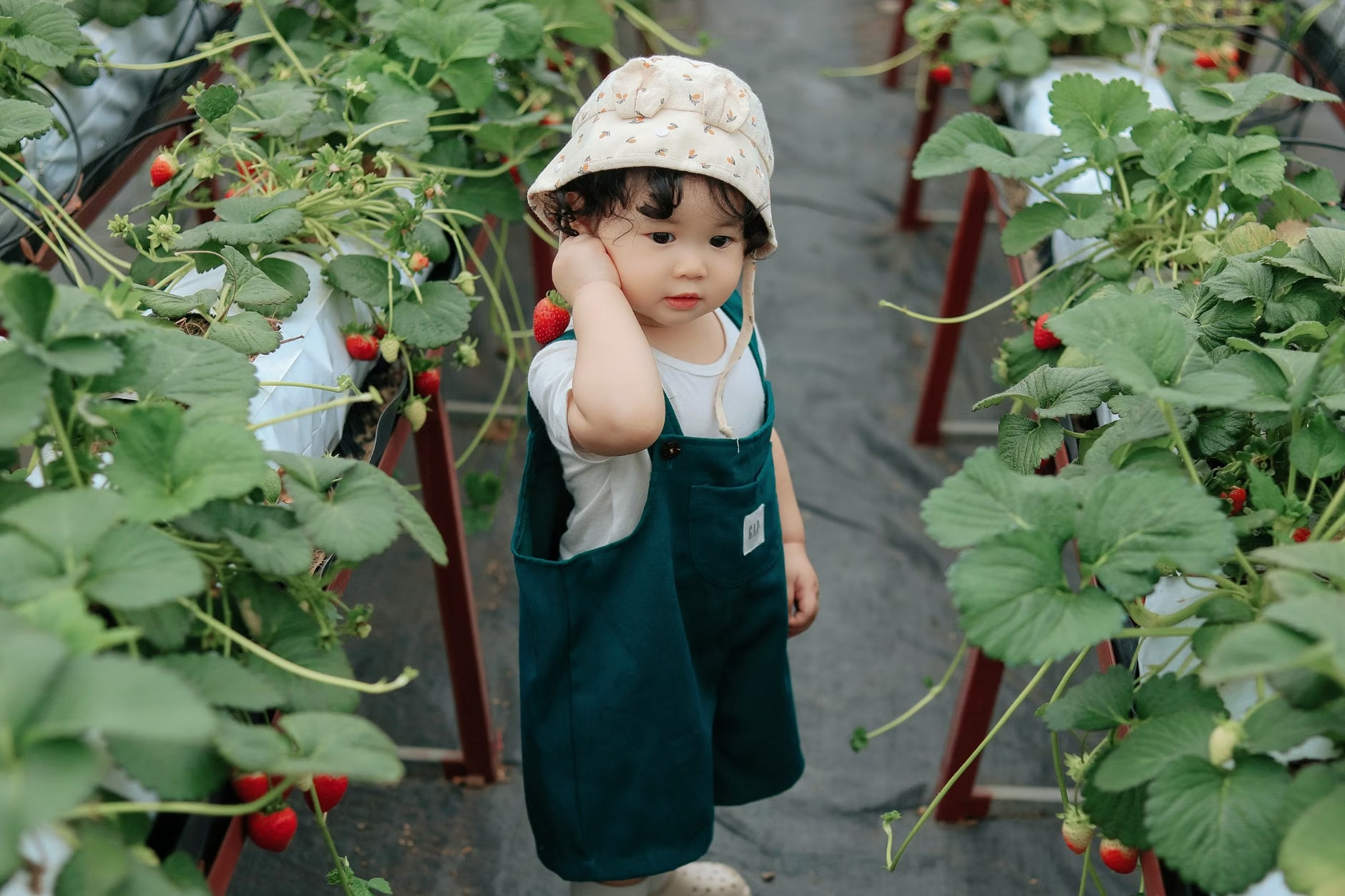
Defining the “Right” Farm: A Decision Framework
Not all farms are created equal. When browsing platforms like Airbnb, Booking.com, or specialized agritourism directories, you need to filter for specific features. The most common mistake parents make is assuming that because a place has animals, it is “kid-friendly.” A farm might be great for an adult wanting a quiet retreat, but it could be a liability for a two-year-old.
Use the following table to categorize the type of farm-stay you are considering. For toddlers, we strongly recommend focusing on “Agri-Retreats” or “Family-Focused Hobby Farms.”
| Feature | Commercial Working Farm | Family-Focused Agritourism |
|---|---|---|
| Primary Focus | Crop/Livestock Production | Guest Experience & Education |
| Safety Features | Minimal (Heavy machinery present) | High (Gated areas, child-proofed) |
| Interaction Level | Passive observation | Guided, safe interaction |
| Suitability | Older children/Adults | Toddlers & Preschoolers |
If you choose a commercial working farm, you are essentially staying in a workplace. This means early morning noise from tractors, potential exposure to pesticides or fertilizers, and complex layouts that are difficult to supervise. Conversely, a family-focused farm usually offers “petting” areas that are distinct from the areas where heavy machinery is stored. Always ask the host directly: “Is your property fully fenced, and are guests allowed in the animal pens without supervision?” If the answer is “yes” to unsupervised entry, look elsewhere.
The Hidden Logistics: What to Pack and What to Expect
The “farm-stay” aesthetic on social media often omits the reality of rural logistics. When you are traveling with a toddler, your biggest enemies are mud, allergens, and the lack of immediate access to convenience stores. You are not just packing for a trip; you are packing for a controlled environment.
1. The “Mud Protocol”: Even if the forecast is sunny, farms are inherently dusty or muddy. Bring at least three pairs of shoes for your toddler: one for indoor use, one for light outdoor exploration, and a pair of dedicated waterproof boots. Do not underestimate the amount of laundry you will generate. If the farm doesn’t offer laundry services, pack 50% more clothing than you think you need.
2. Allergen Awareness: If your child has allergies to hay, animal dander, or specific pollens, a farm-stay can become a medical emergency. Always confirm the sleeping arrangements. Are the guest quarters separate from the barn? Is there a HEPA air purifier in the bedroom? If you have severe allergies, a farm-stay might simply not be a viable option, regardless of how nice the photos look.
3. The Kitchen Reality: Many farm-stays are self-catering. This is great for keeping a toddler’s diet consistent, but it means you need to know exactly what is in the kitchen. Does it have a microwave for heating milk? Is the stove induction (safer) or gas? Do not assume a “farm kitchen” is fully stocked with toddler-friendly utensils or high chairs. Ask for a photo of the kitchen setup before you commit.
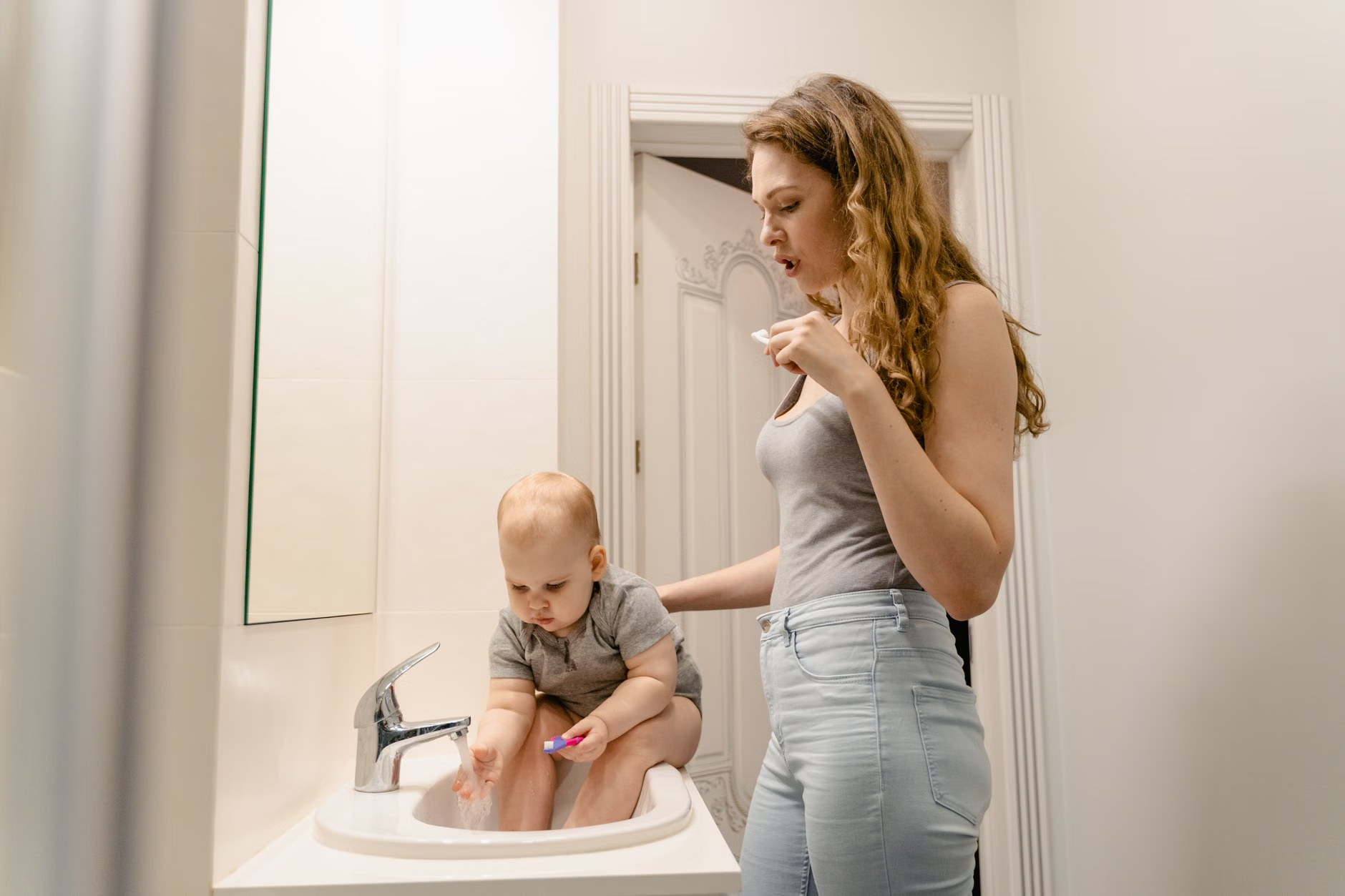
Managing the Daily Rhythm of a Farm Vacation
One of the most significant advantages of a farm-stay is the ability to maintain a sleep schedule. Unlike a city hotel, where sirens and streetlights disrupt your toddler’s circadian rhythm, a farm offers natural darkness and quiet. However, you must align your family’s schedule with the farm’s schedule.
Most farms operate on a cycle that begins at sunrise. If you are a family that likes to sleep until 9:00 AM, you might find the early morning activity of the farm disruptive. Conversely, if your toddler is an early bird, you can integrate into the farm’s morning routine. We suggest scheduling “farm time” for mid-morning, right after breakfast, when the animals are most active and the farm staff is often around to answer questions or help with feeding.
Common Mistake: Trying to do too much. Parents often feel they need to “see” every part of the farm. For a toddler, spending 45 minutes watching a cow chew its cud is a profound experience. You do not need to move from the goat pen to the chicken coop to the garden. Let them lead. If they want to spend the entire morning looking at a tractor, let them. The educational value for a toddler isn’t in the breadth of the experience, but in the depth of the observation.
Infrastructure and Safety: The “Must-Ask” List
Before you finalize your booking, send a message to the host. Do not rely on the listing description, which is often written for marketing purposes. Ask these four specific questions to ensure the safety and sanity of your stay:
- “Are there any open water sources or irrigation ponds on the property?” If yes, are they fenced off? Toddlers are drawn to water, and a farm pond is a significant hazard.
- “Is the farm currently using any pesticides or herbicides that would require a waiting period before playing in the fields?” This is a standard question for organic or regenerative farms, and a good host will have a clear answer.
- “What is the cellular and Wi-Fi signal like in the guest house?” If you are relying on a baby monitor app or need to stream a white noise track for your toddler to sleep, you need to know if the connection is stable.
- “Are there any dogs, cats, or other free-roaming animals on the property?” Even a friendly farm dog can be overwhelming or accidentally pushy with a small toddler. Know what you are walking into.

The Financial and Emotional Trade-offs
Agritourism is not necessarily a budget vacation. While it might feel like “rustic” living, the overhead for a host to maintain a safe, clean, and guest-ready farm is high. Expect to pay a premium for a well-maintained, child-safe farm-stay. Do not view this as a cheap alternative to a resort; view it as an investment in a different kind of experience.
The emotional trade-off is the loss of “resort convenience.” There is no room service. There is no kids’ club where you can drop your child off for two hours. You are the primary caregiver for the entire duration of the trip. If you are looking for a break from parenting, a farm-stay is not the answer. If you are looking for a break from the *city*, the commute, and the digital noise, it is an excellent choice.
Consider the “exit strategy.” If you find yourself on a farm that isn’t working out—perhaps it is too noisy, or your toddler is having an allergic reaction—how easy is it to leave? Choose locations that are within a 90-minute drive of a major hospital or urgent care center. It sounds pessimistic, but for parents in their 30s and 40s, it is simply responsible planning.
Final Recommendations for Your Next Trip
If you are ready to book, start with regional associations. Many countries have official agritourism networks (like the Agriturismo network in Italy or various farm-stay directories in the UK and US). These organizations often provide a baseline of quality and safety standards that individual, unvetted listings on generic rental sites may lack.
Remember that the goal is not to “complete” the farm experience, but to provide a space where your toddler can exist in a environment that is tactile, sensory-rich, and slower than their usual life. If you can manage the logistics of mud, the reality of rural schedules, and the necessity of constant supervision, the farm-stay will likely become your family’s favorite way to disconnect from the modern world.
Frequently Asked Questions
1. How old should my child be before we try a farm-stay?
Most hosts suggest that children aged 2-3 are at the “sweet spot” for farm-stays. They are mobile enough to walk around the farm but old enough to follow basic instructions about not chasing animals or touching machinery. If your child is under 18 months, prioritize farms that offer amenities like pack-and-plays and high chairs, as you will likely be spending more time indoors.
2. Do I need to bring my own food?
Unless the farm specifically offers a “full-board” package with meals included, assume you are fully responsible for your own food. While many farms provide a “welcome basket” with farm-fresh eggs or produce, you should plan to stop at a grocery store on your way to the farm to stock up on your toddler’s specific dietary preferences. Never assume a rural farm store will have the specific milk or snack brand your toddler needs.
3. What if it rains?
Rain is a reality of farm life. Instead of viewing it as a ruined day, plan for it. Bring high-quality rain gear for both you and your toddler. Often, the animals are still visible from the barn, and the farm takes on a different, cozy character in the rain. If you are not prepared to spend time outside in wet weather, a farm-stay might not be the right choice for your family.
For more information on planning safe family travel, visit the CDC Travelers’ Health portal for general guidance on health and safety, and check your local government’s agricultural department website for regional agritourism certification programs.