- Energy-buffer pricing—often called Time-of-Use (TOU) or peak-demand pricing—charges you less when grid demand is low and significantly more during evening “peak” hours.
- You can save 15-30% on your annual electricity bill simply by delaying heavy-load appliances (washers, dryers, dishwashers) to off-peak hours using built-in timers.
- The “buffer” refers to the flexibility of your consumption; by shifting non-essential tasks to mid-day or late-night, you avoid the highest price tiers without sacrificing comfort.
If your electricity bill has been creeping upward despite your best efforts to turn off lights, you aren’t imagining it. The culprit isn’t just your usage volume; it’s the timing of that usage. Most modern utility providers have moved away from flat-rate pricing toward what is essentially an “energy-buffer” model. In technical terms, this is often labeled as Time-of-Use (TOU) or dynamic pricing, but for the average parent juggling work, school runs, and household chores, it’s best understood as a flexible pricing tier that punishes you for using power when everyone else is doing the same.
Understanding this system is the single most effective way to lower your overhead without having to live in the dark or give up your modern conveniences. Here is how the system works and how you can hack your daily schedule to put that money back into your pocket.

The Mechanics of Energy-Buffer Pricing: Why Your 7 PM Laundry Costs More
Utility companies are essentially managing a balancing act. They have to ensure that the power grid can handle the “peak” demand—the period when everyone gets home from work, turns on the oven, starts the dishwasher, and flips on the TV. Building enough infrastructure to meet that momentary peak is incredibly expensive. To discourage this, utilities use energy-buffer pricing to shift demand to off-peak hours, usually the middle of the night or the middle of the day.
Think of it like surge pricing on a ride-sharing app. When demand is high, the cost of the “ride” (your electricity) goes up. When demand is low, the price drops. The “buffer” is the period of time—often several hours—where the price is at its lowest. If you can move your heavy-energy tasks into this window, you aren’t just saving money; you are helping stabilize the grid, which is why utilities offer these lower rates.
In many regions, including parts of North America, Europe, and Australia, the price difference can be stark. During peak hours (typically 4 PM to 9 PM), you might pay two to three times the rate charged during off-peak hours (typically after 10 PM or before 8 AM). If you’re running a dryer during the peak window, you are paying a premium for the exact same kilowatt-hour you could have bought at a fraction of the cost just a few hours later.
Identifying Your Rate Plan: How to Check Your Utility Dashboard
Before you change your habits, you need to know exactly what you are dealing with. Not all utilities use TOU pricing, but many are transitioning to it as a default for new customers. You can usually find this information by logging into your utility provider’s online portal or looking at the second page of your physical bill.
Look for terms like “Time-of-Use,” “Peak/Off-Peak Rates,” or “Demand Charges.” If your bill shows a single, flat rate for all usage, you are on a standard plan. However, even if you are currently on a flat rate, check if your provider offers a “voluntary” TOU plan. Often, switching to a TOU plan can save you money if you are disciplined enough to shift your heavy laundry and dishwasher loads. If your bill already breaks down usage by “On-Peak,” “Mid-Peak,” and “Off-Peak,” you are already on an energy-buffer plan, and you have significant room for optimization.
Common Mistake: Many households assume that “saving energy” means buying new, high-efficiency appliances. While an A+++ or Energy Star rating is great, the math changes significantly if you run a super-efficient machine during peak hours. A slightly older machine run during the “super-off-peak” window will almost always be cheaper to operate than the newest, most efficient model run during peak pricing.
The “Heavy Three”: How to Shift Your Appliance Usage
To really impact your bill, you need to focus on the appliances that generate the most heat or movement. These are the “Heavy Three”: your dishwasher, your clothes washer, and your clothes dryer. These devices are the primary targets for your energy-buffer strategy.
1. The Dishwasher Strategy
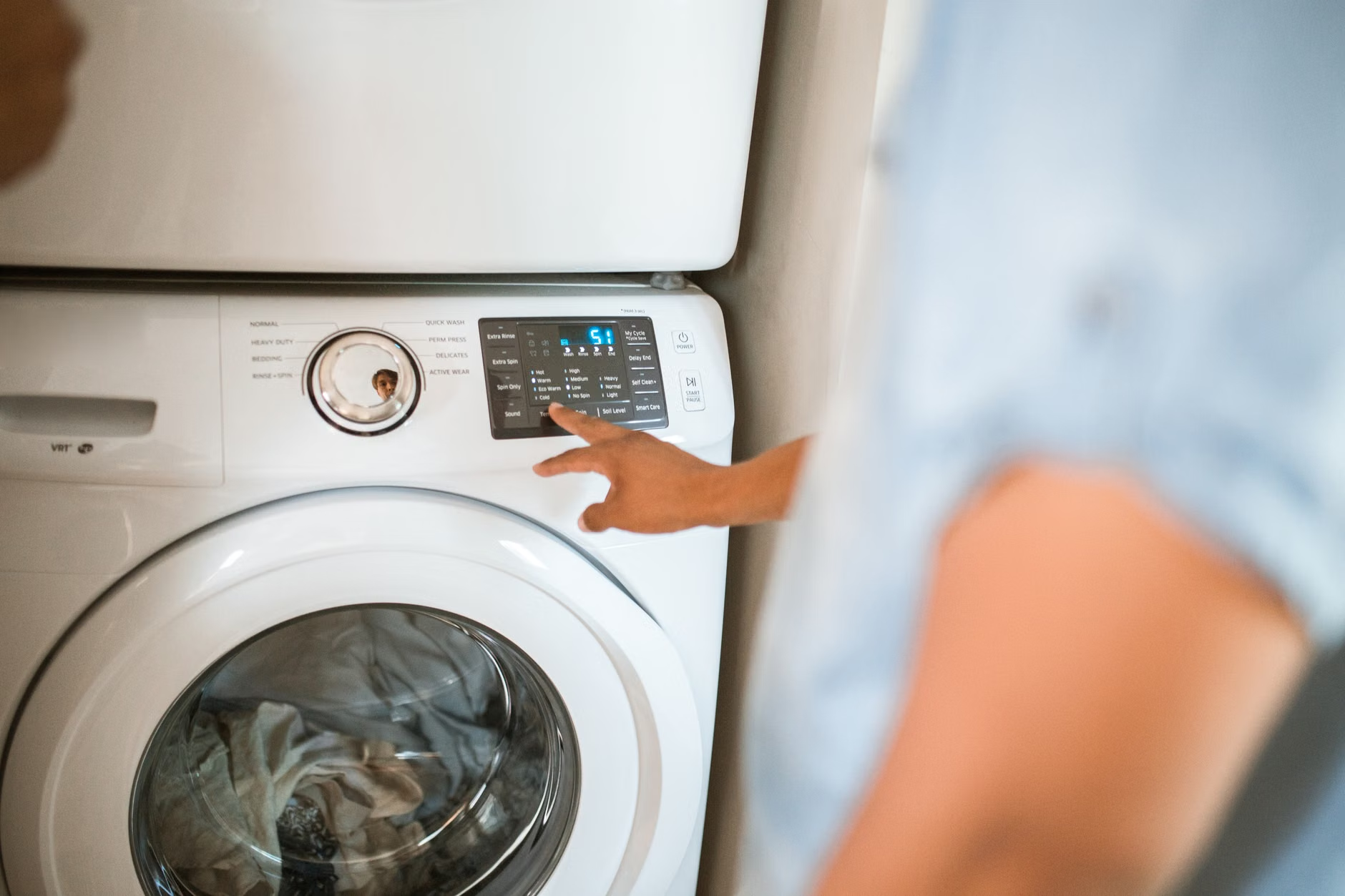
Most modern dishwashers have a “Delay Start” button. This is your best friend. Instead of starting the machine immediately after dinner (during the peak price window), load it as usual and set it to delay for 4 to 6 hours. By the time the machine starts its cycle, the grid demand will have dropped, and you will be in the off-peak pricing tier. The dishes will still be clean and ready for you in the morning, but you’ll have paid 30-50% less for the energy used to wash them.
2. The Laundry Routine
Laundry is the most flexible chore in the house. Unless you have a specific emergency, there is rarely a reason to wash clothes during the 6 PM to 8 PM window. If you work from home, try to start your wash in the morning after the “morning rush” (usually around 9 AM) or set your machine to finish right before you wake up. If you have an electric dryer, this is a massive energy hog. Whenever possible, use a drying rack during the day. If you must use the dryer, utilize the delay function to run it during the late-night off-peak hours.
3. Heating and Cooling (The Invisible Buffer)
HVAC systems are the biggest energy consumers in any home. If you have a smart thermostat, you can “pre-heat” or “pre-cool” your home. For example, in the summer, you can lower the temperature a few degrees before the peak pricing hits at 4 PM. Once the peak period starts, you can raise the set point, letting the home coast on the cooler air you already built up. This is a form of thermal buffering that prevents your AC from running constantly during the most expensive time of the day.
| Appliance | Strategy | Potential Savings |
|---|---|---|
| Dishwasher | Use delay-start for overnight cycles | 15-20% per cycle |
| Clothes Washer | Shift to mid-day or early morning | 10-15% per cycle |
| Electric Dryer | Use drying racks or late-night cycles | 25-40% per cycle |
| HVAC | Pre-cool/heat before peak hours | 20-30% on climate costs |
Note: These savings are estimates based on standard tiered pricing models. Exact savings depend on your specific utility provider’s peak-to-off-peak price ratio.
I know what you’re thinking: “I have two kids, a job, and a life. Do I really want to be managing my dishwasher timer at 11 PM?” This is a valid concern. The goal isn’t to turn your life into a rigid schedule of energy management, but to build “set-and-forget” habits.
The most successful approach is to automate the shift. If you have a newer appliance, it likely has a timer. Use it. If you don’t, a simple plug-in mechanical timer (for appliances that don’t have digital memory) can force an appliance to only receive power during specific hours. However, be cautious with modern digital appliances; some require a manual button press to start after the power is restored. In those cases, the delay timer is your only real option.
Another overlooked variable is the “weekend vs. weekday” dynamic. Many utilities offer lower rates on weekends or holidays. If you have a massive pile of laundry, save it for Saturday morning. By concentrating your heavy tasks into these naturally cheaper windows, you reduce the “mental load” of managing your energy use during the busy work week.
Common Misconceptions and Hidden Costs
One common mistake is the belief that “standby” power is the enemy. While TVs, gaming consoles, and computers do use “vampire power,” the amount is negligible compared to the heavy appliances. Don’t stress over unplugging your toaster every night; focus your mental energy on the heating, cooling, and washing machines. That is where the real money is.
Another misconception is that it’s always cheaper to run appliances at night. While this is true for electricity, it can be a fire safety concern. Always ensure that your machines are in good working order before leaving them to run unattended. Lint traps in dryers should be cleaned after every single load, especially if you are running the machine while you sleep. Safety should never be sacrificed for a few cents of savings.
Finally, be aware of “shoulder” periods. Some utility companies have a three-tier system: Off-Peak, Mid-Peak, and On-Peak. If you can move your high-energy tasks from the “On-Peak” to the “Mid-Peak,” you are still winning, even if it isn’t the absolute lowest rate. Don’t aim for perfection; aim for progress.
Action Plan: How to Start Today
If you feel overwhelmed, don’t try to change everything at once. Start with a one-week audit. For the next seven days, simply observe when you run your dishwasher and dryer. Keep a small note on your fridge. At the end of the week, look at your utility provider’s peak hours. Did you run your dryer during the most expensive window every single day? If so, start by moving just that one task to the weekend or an off-peak time.
Once that becomes a habit, tackle the dishwasher. By the end of the month, you will have naturally shifted your heaviest energy consumption to the cheapest possible times without feeling like you are constantly “managing” your home. This is the beauty of the energy-buffer system: it rewards consistency over intensity.
Remember, the goal is to balance your family’s comfort with the realities of modern energy pricing. You don’t need to be an expert to lower your bills—you just need to be a little more strategic about when you press ‘start.’
Frequently Asked Questions
1. Does my smart meter track when I use power, or just how much?
Most smart meters track both. They record usage in 15, 30, or 60-minute intervals, which allows the utility to apply the correct price to the electricity you used at that specific time of day. This is exactly how they enforce the energy-buffer pricing model.
2. Is it really cheaper to run a dishwasher at night if I have to use a “quick wash” cycle during the day?
Generally, no. The energy required to heat the water for a cycle is the primary cost. Using a standard cycle at night is almost always more efficient than using a “quick” or “high-heat” cycle during the day, even if the quick cycle is shorter. Stick to the efficient, long-duration cycles during off-peak hours.
3. What if my utility doesn’t have a TOU plan?
If you are on a flat-rate plan, shifting your usage won’t lower your bill. However, it is still a good practice. As grids become more strained, more utilities are moving to mandatory TOU pricing. By building the habit now, you are future-proofing your household against inevitable rate changes.
For more information on how to read your specific meter and understand your local grid’s peak hours, visit your national energy regulator’s website or your utility provider’s official “Energy Saving Tips” page. Understanding your local regulations is the first step toward taking control of your monthly expenses.