Key Takeaways
- Predictability is key: Heritage railways often feature fixed, slower routes with consistent stops, reducing the “unknown” factors that trigger sensory overwhelm.
- Control the environment: Unlike high-speed public transit, heritage trains often allow for pre-booking specific carriages or window seats, helping manage sensory input.
- Tactile and visual engagement: The physical nature of vintage trains—mechanical levers, rhythmic sounds, and scenic views—provides “grounding” sensory input rather than the chaotic, over-stimulating environment of modern airports or subway systems.
If you are a parent of a child with sensory sensitivities, you already know that “travel” is rarely a relaxing experience. The typical itinerary—airports, security lines, crowded terminals, and the unpredictable nature of high-speed transit—is often a recipe for sensory overload. We often think that faster is better when it comes to getting from point A to point B, but for many neurodivergent children, the “slow travel” movement—specifically heritage-rail travel—offers a significantly more manageable, and dare I say, enjoyable alternative.
Heritage rail, or “preserved” railways, isn’t just about nostalgia for train enthusiasts. It’s about a different pace of life. By choosing a route that prioritizes the journey over the destination, you remove the pressure of rigid arrival times and the chaos of modern transport hubs. Let’s break down why this shift in travel philosophy might be the secret to your next family outing.
Why Predictability Beats Speed for Sensory-Sensitive Kids
The primary stressor in modern travel is unpredictability. When a train is delayed, a platform is changed, or a crowd pushes through a narrow gate, the sudden shift in environment can be overwhelming. Heritage railways, by design, operate differently. They are usually managed by smaller teams, often volunteers, who operate on a “leisure” schedule. This means there is rarely the frantic energy found in urban transit hubs.
For a child who struggles with auditory processing or spatial anxiety, the environment of a heritage train is vastly different. Modern trains often feature high-pitched braking noises, digital announcements that may be too loud, and flickering fluorescent lights. In contrast, many heritage carriages are built with wood, fabric, and manual components. These materials absorb sound better, creating a “dampened” acoustic environment. The rhythmic, mechanical “clack-clack” of a steam engine is often more predictable and less jarring than the screeching of an electric high-speed train.
Decision Rule: If your child is sensitive to sound, prioritize heritage lines that use steam locomotives over diesel ones. While steam engines are louder overall, their sound is a consistent, low-frequency rumble, which is often easier for the brain to process and “tune out” than the high-frequency whine of modern electric motors or the sudden, sharp beeps of subway doors.
The Benefit of “Slow Travel” as a Sensory Regulation Tool
Slow travel is more than just a marketing buzzword. It is a deliberate choice to reduce the amount of sensory input a child receives per hour. When you travel by high-speed rail or airplane, the scenery rushes past at speeds that can cause visual vertigo or “motion-induced sensory overload.” The brain has to work harder to track the movement outside, which can lead to fatigue and irritability.
Heritage trains typically move at a much slower pace. This allows the child to comfortably process the visual information outside the window—trees, cows, rolling hills—without the blur that triggers discomfort. This visual “grounding” acts as a natural regulator. It keeps the child tethered to the present moment, which is a core component of grounding techniques often recommended for children with ADHD or autism.
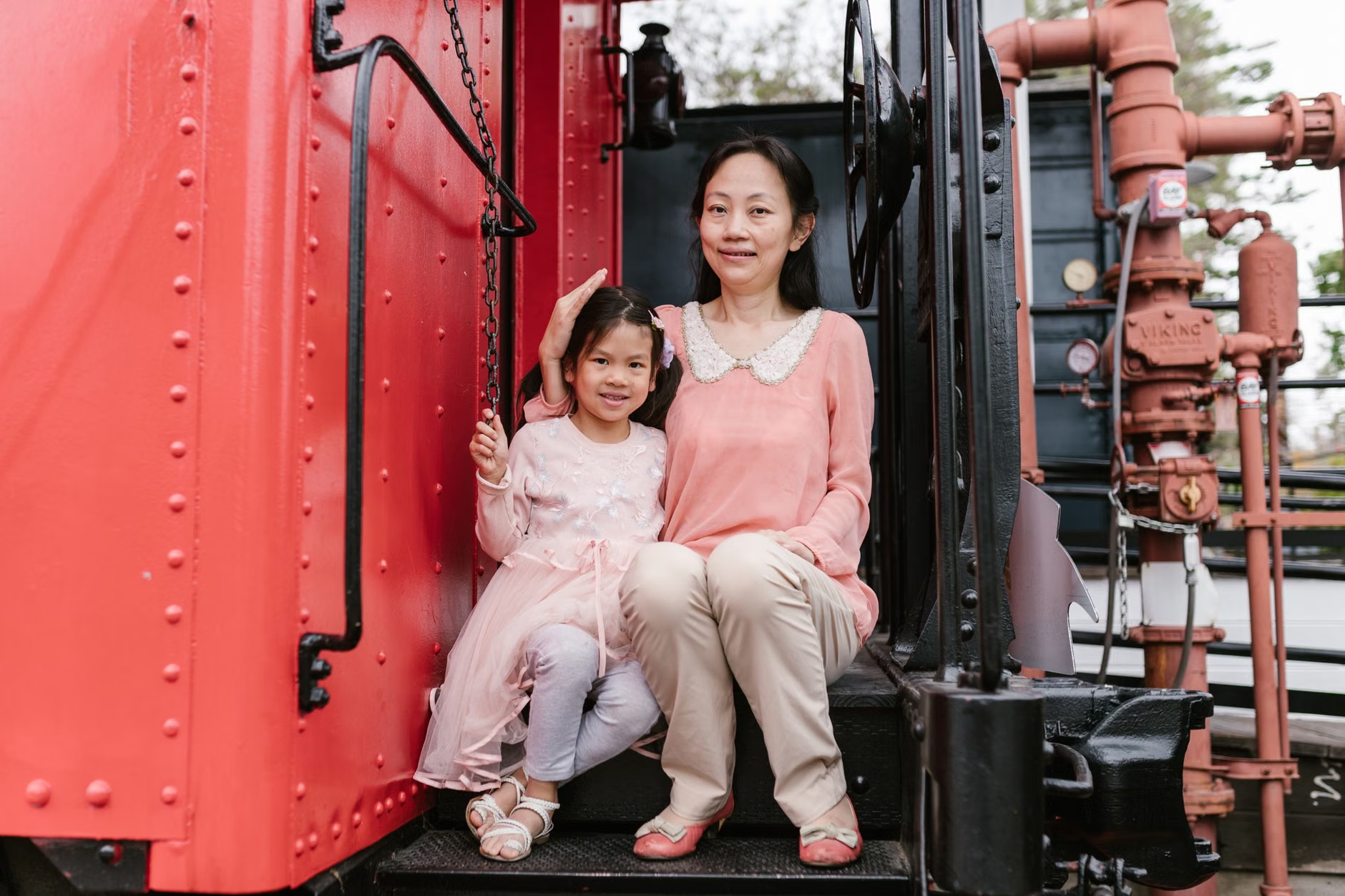
Furthermore, heritage trains often allow you to walk between carriages or step out onto an open-air platform (where permitted). This provides a “sensory break” within the journey itself. If the carriage becomes too warm or the people around you become too loud, having the ability to move to a different, quieter section of the train is a massive advantage over being buckled into a seat on a plane for three hours.
How to Plan a Sensory-Friendly Heritage Rail Trip
Planning a trip on a heritage line requires a different set of logistics than booking a standard ticket. Here is a step-by-step approach to ensuring the trip remains a positive experience:
- Contact the railway in advance: Most heritage railways are run by enthusiasts who are incredibly helpful. Call them directly and ask, “Which carriage is usually the quietest on a Tuesday?” or “Do you have a carriage that is less crowded?” They can often tell you which train sets are running on specific days.
- The “Off-Peak” Rule: Always aim for mid-week travel. Weekend heritage rail trips are often packed with tourists and special events (like Santa Express or murder mystery dinners), which introduce crowds, loud costumes, and unpredictable noise. A quiet Tuesday morning trip is the gold standard for sensory-sensitive families.
- Seat Selection: If the railway uses reserved seating, try to book a “compartment” if available. A private compartment gives you a contained space where you can control the sensory environment—dimming lights, using noise-canceling headphones, or having snacks without worrying about disturbing others.

Comparing Transit Options for Families
To understand why heritage rail is a strong contender for your family’s travel needs, we have to look at the trade-offs between different modes of transport.
| Transport Type | Sensory Predictability | Crowd Density | Control Over Environment |
|---|---|---|---|
| High-Speed Rail | Low (Frequent stops, loud) | High | Low |
| Commercial Airline | Very Low (Security, boarding) | Very High | Very Low |
| Heritage Rail | High (Consistent pace) | Low (Mid-week) | Moderate/High |
As the table shows, the primary advantage of heritage rail is the combination of moderate control and low crowd density. While you cannot control the weather or the train’s mechanical reliability, you can control the “human” factors that often cause the most distress.
The “Hidden” Costs and Trade-offs
It wouldn’t be fair to suggest that heritage rail is perfect. There are real trade-offs you need to consider before committing to a trip. First, accessibility can be a challenge. Many heritage railways are run on historic infrastructure, which means they may not be fully ADA or wheelchair compliant. If your child uses a mobility aid, you must call ahead to verify that the specific station and the specific carriage you are boarding are accessible.
Second, there is the issue of “facilities.” Many vintage trains do not have modern, spacious bathrooms. They are often cramped, and the vibration of the train can make them difficult to navigate for a child who struggles with balance or tactile sensitivities. Plan to use the restroom at the station before boarding and minimize the need to use the onboard facilities.
Third, the cost. Heritage railways are not subsidized in the same way as public transit. Tickets are often more expensive per mile because you are paying for the preservation of the equipment and the labor of the staff. View this as an “experience cost” rather than a “transportation cost.” You aren’t paying to get somewhere; you are paying for a controlled, predictable, and engaging activity.
Practical Tips for the Journey
Preparation is the difference between a meltdown and a memory. Start by creating a “sensory kit” specifically for the train. This should include:
- Noise-canceling headphones: Even if the train is quiet, the headphones serve as a physical signal that the child needs space.
- Tactile items: Since heritage trains have lots of interesting surfaces—velvet seats, wooden armrests, brass fixtures—bring a “fidget” that matches these textures to keep their hands busy.
- Visual schedule: Print out a simple schedule of the stops. Even if the train doesn’t stop often, knowing that “We stop at Station X, then we turn around” provides the child with a sense of completion.
Addressing the “What-Ifs”
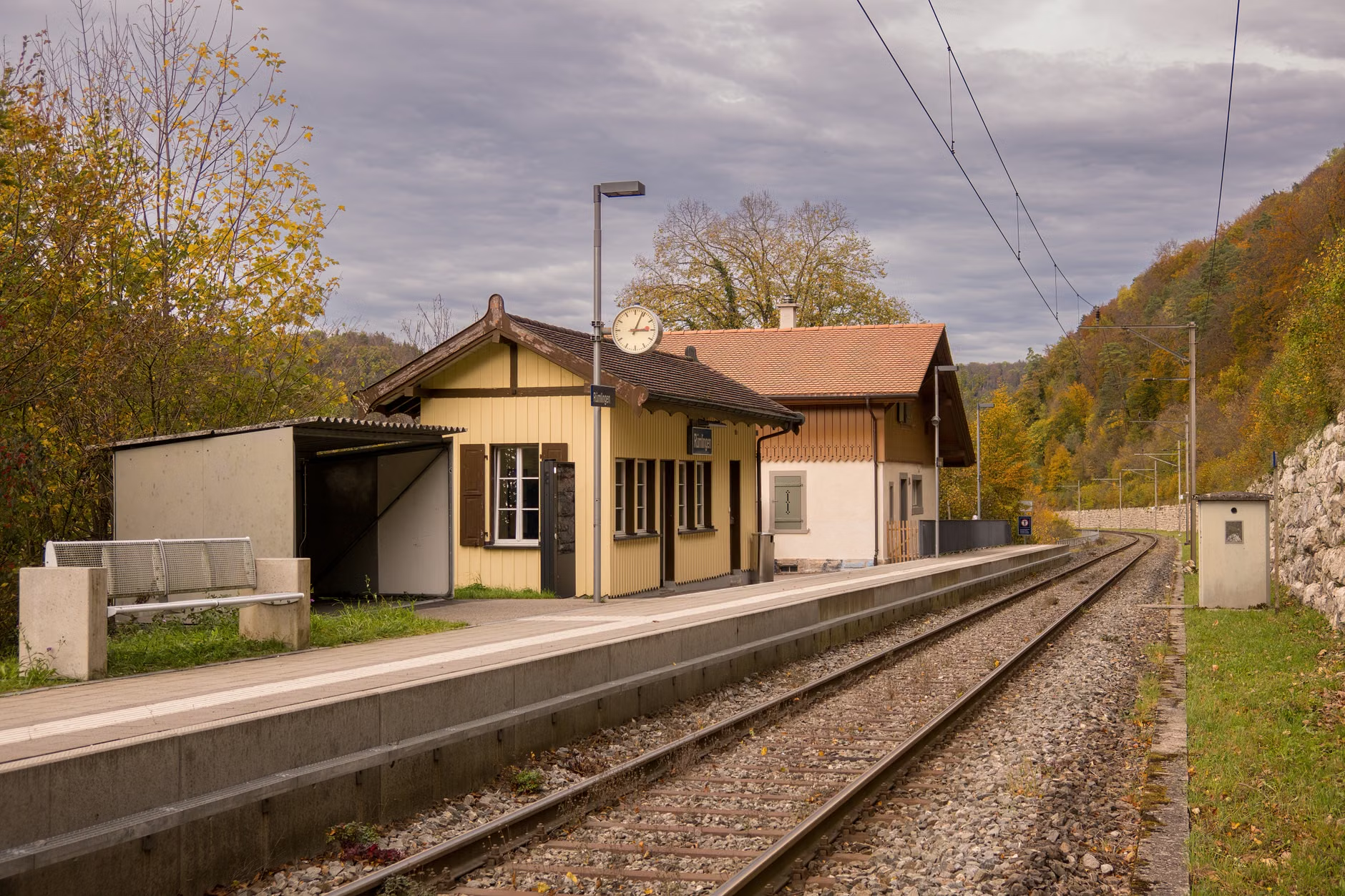
What if the train breaks down? It happens. Heritage trains are old machines. If you are traveling with a sensory-sensitive child, the “unexpected delay” is the biggest threat to the trip. My advice: Always have an “exit strategy.” Research the station locations beforehand. If the train is stuck, can you call a taxi from a nearby road? Is there a park or a quiet spot nearby where you can wait if the train experience becomes too much?
Treat the heritage railway as a “contained experiment.” If your child has never been on a train, don’t start with a three-hour loop. Start with a 30-minute shuttle ride. If that goes well, you can build up to longer journeys. Never assume that because a child likes trains, they will like *all* train travel. The sensory profile of a 1950s carriage is very different from a modern subway car.
One common mistake parents make is trying to “optimize” the trip by adding a museum visit or a long walk on the other end. For a sensory-sensitive child, the train ride *is* the activity. By the time you get off the train, they may have reached their sensory capacity. Keep the rest of the day low-key. Plan for a quiet afternoon at home or a simple walk in a park rather than adding more stimulation to the schedule.
The Value of Slow Travel in a Fast World
We are conditioned to think that travel must be efficient. But for families navigating neurodivergence, efficiency is often the enemy of comfort. By choosing the heritage rail, you are making a conscious choice to prioritize your child’s nervous system over the speed of the journey. You are trading the convenience of a fast, crowded, and unpredictable route for the charm of a slow, steady, and predictable one.
Heritage rail is not just a hobby for enthusiasts; it is a vital tool for families who need a different way to move through the world. It provides the structure, the tactile engagement, and the manageable pace that allows children to explore their surroundings without the fear of being overwhelmed. Start small, research your local lines, and don’t be afraid to reach out to the operators—you might be surprised by how much they are willing to do to help you have a successful trip.
Remember: the goal of the trip isn’t to get to the destination. The goal is to arrive at the end of the day with a sense of connection and a calm nervous system. That, in itself, is a successful journey.
Frequently Asked Questions
Q: Are heritage railways actually accessible for children with mobility issues?
A: It varies significantly. While many have made great strides in adding ramps and accessible carriages, others are limited by historical architecture. Always call the specific railway’s visitor center and ask about “step-free access” and the width of their carriage doors before booking.
Q: Should I bring my own food on the train?
A: Yes. Many heritage trains have small cafes or buffet cars, but they often have limited options and can get crowded. Bringing your own sensory-friendly snacks ensures that your child has access to food they like, which is a key factor in keeping them regulated during a trip.
Q: How do I know if my child will be overwhelmed by the steam engine’s noise?
A: If you are unsure, look for videos of the specific locomotive on platforms like YouTube. Watch them with your child at home with the volume at a realistic level. This “pre-exposure” can help you gauge their reaction in a safe environment before you commit to a ticket.
For more information on heritage railways in your region, visit the official site of your national railway preservation society. In the UK, for example, the Heritage Railway Association (https://www.hrra.org.uk/) provides a comprehensive list of lines and their accessibility features. In the US, the HeritageRail Alliance (https://www.heritagerail.org/) serves a similar purpose.