- Economic Hedge: Micro-community gardening can reduce grocery bills by 10-15% for high-yield crops like herbs, greens, and tomatoes, providing a buffer against food inflation.
- Resilience through Scale: Focusing on “micro” plots—balconies, windowsills, or shared neighborhood patches—minimizes the barrier to entry while maximizing localized food security.
- Social Capital: The primary value of these spaces is the “social infrastructure” they create, which acts as a support network during economic or environmental volatility.
If you have spent any time in the grocery store lately, you have likely noticed that the price of fresh produce has become… let’s call it “unsettling.” For those of us in our 30s and 40s, juggling career demands, parenting, and the general logistics of keeping a household running, the idea of turning into a full-scale homesteader feels like a fantasy. We don’t have acres of land, and we certainly don’t have the time to plow fields. However, there is a quiet, pragmatic shift happening in urban centers globally: the move toward micro-community gardening.
This isn’t about becoming self-sufficient or living off the grid. It is about reclaiming a tiny fraction of your food supply and building a network of neighbors who, when things get tight, actually know each other. Let’s look at how you can implement this without turning your life into a full-time job.
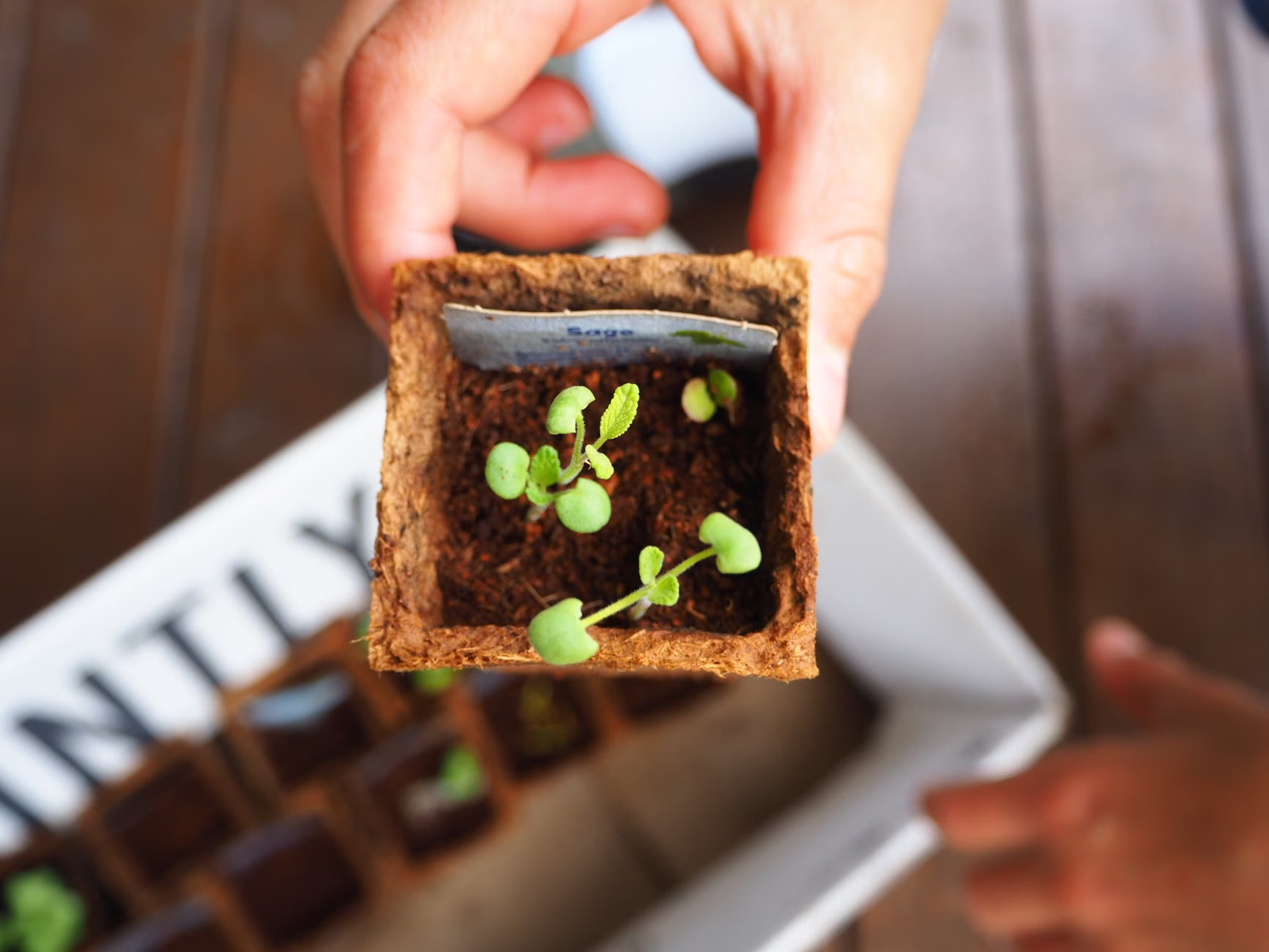
The Logic Behind Micro-Resilience
When we talk about “resilience” in an urban context, it sounds like a buzzword. In practice, it means having a plan for when supply chains wobble. During the 2020 lockdowns, many of us realized that our reliance on long-distance food distribution was fragile. A micro-community garden is a localized, low-effort attempt to address that fragility.
Why “micro”? Because big ambitions lead to big failures. Many urbanites try to start a large garden, get overwhelmed by pests or watering schedules, and give up by July. Micro-gardening focuses on high-yield, low-maintenance crops in containers or small shared spaces. It is about the Principle of Minimal Viable Output: grow what you eat, keep it close, and keep it simple.
The economic reality is that while you won’t save thousands, you will stabilize your costs for high-margin items. Herbs like basil, cilantro, and mint—which often cost $3 to $4 per small plastic clamshell—can be grown for pennies. Over the course of a season, that is a tangible reduction in your “hidden” food costs.
Before you buy seeds, you need to decide on your format. Not all urban spaces are created equal. You are balancing your available square footage against the amount of direct sunlight your space receives. Most edible plants need at least 6 hours of direct sun. If you have less, you are relegated to shade-tolerant greens like kale, arugula, or spinach.
| Setup | Best For | Maintenance Level | Primary Benefit |
|---|---|---|---|
| Vertical Planters | Small Balconies | Medium | Space efficiency |
| Windowsill Herb Box | Apartment Dwellers | Low | Immediate access/cost savings |
| Neighborhood Shared Plot | Community Building | High (Social) | Social capital/Resilience |
If you are a parent, the Windowsill Herb Box is the best entry point. It requires no heavy lifting, is safe from pets or toddlers if placed correctly, and offers a “living science lesson” for children. If you are looking for resilience, the Shared Plot is the winner, but it requires the most social “buy-in.” You aren’t just growing tomatoes; you are growing relationships.
The Hidden Costs and Common Mistakes
The most common mistake beginners make is over-investing in expensive equipment. You do not need a $200 smart-irrigation system to grow lettuce. In fact, complex systems often break, and when they do, you lose your crop. Start with basic plastic or terracotta pots with drainage holes. If you want to be sustainable, repurpose food-grade plastic containers. Just ensure they are cleaned thoroughly and have holes drilled in the bottom.
Another major oversight is the “soil quality trap.” Many people buy the cheapest bag of topsoil from the hardware store. This is a mistake. For containers, you need potting mix, not garden soil. Garden soil is too dense and will compact in a pot, suffocating the roots. Potting mix is designed to provide drainage and aeration. It is a small cost difference that makes a massive difference in your success rate.
Finally, consider the water source. If you are on a high floor, carrying water can become a chore that kills your enthusiasm. If you have a balcony, a simple rain barrel (if allowed by your building) or a dedicated watering schedule is vital. Don’t let your garden become a source of stress. If you find yourself dreading the watering, you have built it too big. Scale back.
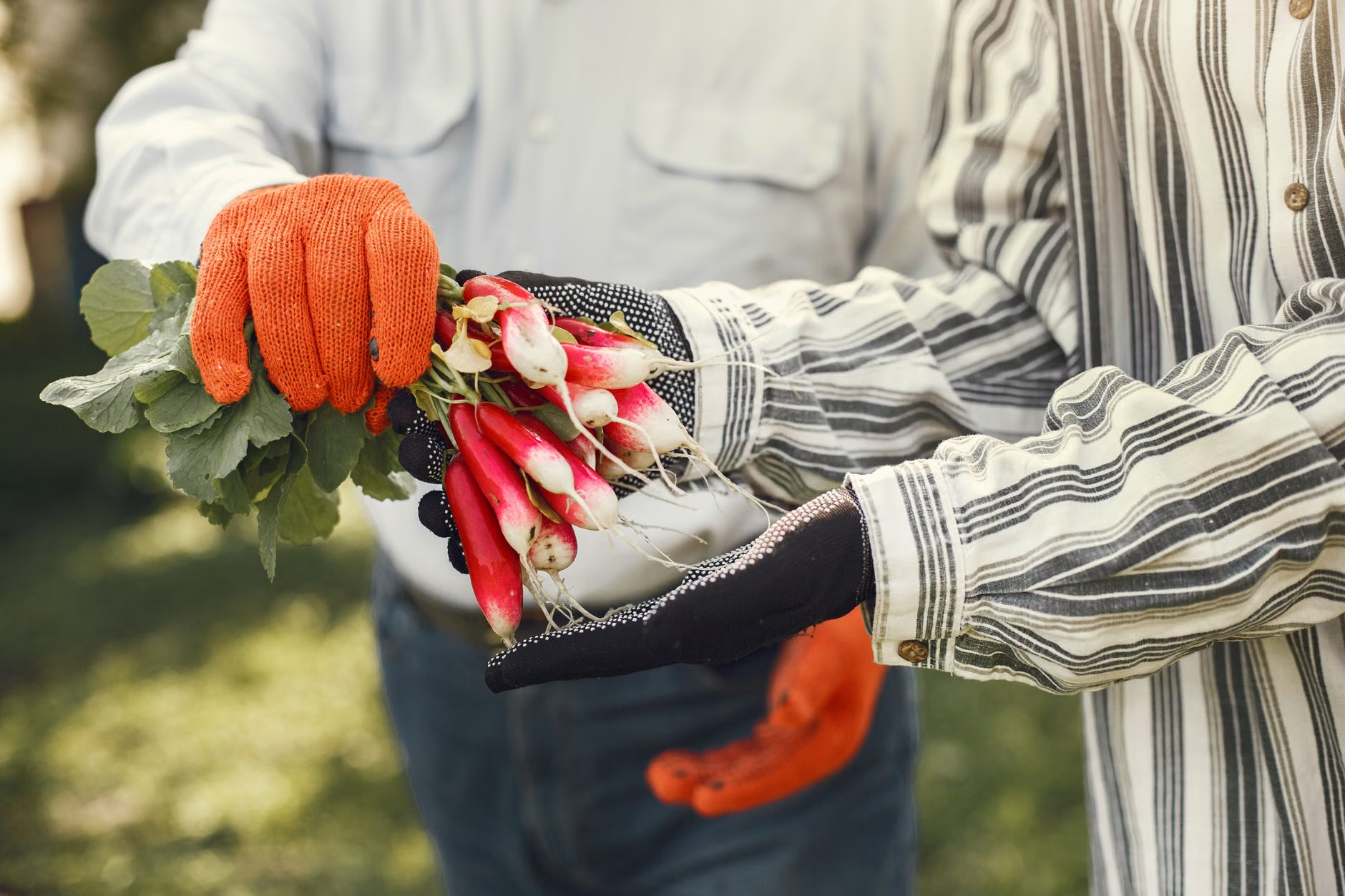
Building the Social Network: The “Community” Part
What makes a “micro-community” garden different from just a “garden on your balcony” is the social element. Resilience is not just about having food; it is about having a network. If you are in your 30s or 40s, you are likely busy, and meeting neighbors is often the last thing on your mind. A garden creates a “third space”—a place that isn’t work and isn’t home—where conversation happens naturally.
How do you start this? Start small. If you have a shared hallway or a small strip of land in front of your building, ask your neighbors if they’d like to contribute. Don’t frame it as “I’m building a garden.” Frame it as “I’m planting some herbs, would anyone like to share the harvest?” This is a low-stakes offer that builds goodwill. If you find that one other neighbor is interested, you have already doubled your resilience. You now have someone to water your plants when you go on vacation, and they have someone to do the same for them.
Remember, the goal is not to feed your entire household from this space. The goal is to create a micro-hub of local resource sharing. If you grow tomatoes and your neighbor grows peppers, you trade. This is the essence of building a resilient community. You are creating a small, localized economy that operates outside of the supermarket supply chain.
Technological Aids for the Time-Poor
If you are balancing a career and family, you might feel like you don’t have time to monitor soil moisture levels. This is where modern, low-cost technology can actually help. You don’t need a high-tech automated greenhouse, but a few simple tools can save you from the “I forgot to water” death spiral.
Simple moisture meters—the kind that cost less than $10—are incredibly effective. They remove the guesswork. Instead of sticking your finger in the dirt and hoping for the best, you get a clear reading. Combine this with self-watering spikes (you can even make these from old wine bottles) and you can extend the time between manual interventions.
For those interested in indoor gardening, vertical hydroponic systems are becoming more accessible. They use water-based nutrient solutions instead of soil, which eliminates the mess of dirt in your living room. They are perfect for growing greens year-round, regardless of the weather outside. While the initial setup cost is higher, the recurring cost of seeds and nutrients is remarkably low.
Managing Expectations and Seasonal Realities
It is important to be realistic about the yield. A small container garden will not provide your daily caloric needs. If you treat it as your primary food source, you will be disappointed. Treat it as a supplemental resource. It is a way to have fresh, nutrient-dense food that hasn’t traveled 2,000 miles to reach your plate. That alone is a win for both your health and the environment.
Also, understand that seasons matter. In the northern hemisphere, your garden will be different in June than it is in October. Don’t fight the climate. If you live in a region with harsh winters, learn to embrace the “off-season” by planning for the spring or growing hardy microgreens indoors. Trying to force a summer crop in the dead of winter is a recipe for expensive, frustrating failure.
As you move forward, keep a simple log. Note what worked and what didn’t. Did the tomatoes get too much shade? Was the mint too invasive (it always is!)? This isn’t about being a master gardener; it’s about collecting data to make next year’s “micro-effort” more efficient. Your 30s and 40s are a busy time, but they are also a great time to start building these habits. The resilience you build today will pay dividends in the years to come.
FAQ
1. Will this actually save me money on my monthly grocery bill?
In the short term, the initial investment in containers, soil, and seeds means you might break even. However, after the first season, your costs drop significantly. For high-value crops like fresh herbs, specialty greens, and cherry tomatoes, you will see a noticeable reduction in your weekly grocery spend. The real value is in the quality and the hedge against future price spikes.
2. What if I have zero experience and kill every plant I touch?
Start with “unkillable” plants. Herbs like mint, chives, and oregano are incredibly resilient. For vegetables, look for bush-variety tomatoes or loose-leaf lettuce, which are much more forgiving than head lettuce or vining plants. The key is to start with one or two pots, not a full garden.
3. How do I approach my neighbors about starting a shared garden without it being awkward?
Keep it casual and benefit-focused. Instead of proposing a “community organization,” just mention you are planning to put some pots out and ask if they’d like to join in or share the herbs. Most people are interested in gardening but feel overwhelmed by the task; if you provide the framework, they are often happy to help with the labor or the costs.
Conclusion: Start Small, Stay Consistent
The beauty of micro-community gardening is that it doesn’t require a total lifestyle overhaul. It requires a balcony, a windowsill, or a small patch of dirt and a little bit of curiosity. By focusing on small, manageable steps, you are building a habit of self-reliance and community connection that is far more valuable than any single harvest. Don’t wait for the “perfect” time or the “perfect” space. Start with one pot, one seed, and one neighbor. That is how true resilience is built.
For further reading on urban agricultural practices and city-specific regulations, check out the resources at the FAO Urban Agriculture portal, which provides global insights into how cities are integrating food production into their infrastructure.