The most efficient way to enjoy coastal autumn foliage without the misery of gridlocked highways is to adopt a “rail-first” itinerary, where the train serves as your primary transport hub rather than a secondary option.
- Eliminate “Driver Fatigue”: By choosing rail, you convert hours of stressful highway navigation into productive or restorative time, allowing you to actually see the scenery rather than the bumper in front of you.
- The “Last Mile” Rule: Coastal rail lines often stop at historic town centers; planning your accommodation within a 15-minute walk or short local transit ride of these stations is the secret to a seamless trip.
- Dynamic Booking: Book your rail segments at least 30 days in advance to secure “quiet carriage” or family-designated zones, which are the first to sell out during peak foliage season.
If you are in your 30s or 40s, you know that the traditional family road trip has a hidden tax: the sheer exhaustion of navigating traffic, finding parking in crowded tourist towns, and the constant “are we there yet” chorus from the backseat. When you add the unpredictable nature of autumn foliage peaks—where thousands of people descend on the same scenic routes—the car becomes a cage.
The “rail-first” strategy isn’t about being a purist; it’s about tactical outsourcing. You outsource the navigation, the parking stress, and the fuel management to the rail operator so you can focus on the reason you left home: the changing colors of the season.

Why Coastal Rail beats the Highway for Autumn Foliage
Most travelers choose the car because they fear a lack of “freedom.” But let’s be honest: is it freedom if you are sitting in a three-hour traffic jam on a winding coastal road? Coastal rail lines often follow historic trade routes that were built before the modern highway system. This means they often cut through deep valleys, cross high trestles, and hug cliff sides that cars simply cannot reach.
The Trade-off Analysis:
| Feature | Coastal Road Trip | Rail-First Trip |
|---|---|---|
| Navigation | High stress; constant focus required | Zero; you are a passenger |
| Parking | Difficult/Expensive | Not applicable |
| Scenery | Limited by road constraints | Unobstructed panoramic views |
When you take the train, you reclaim the “lost” hours of a vacation. For a parent, this is the difference between arriving at your destination frayed and irritable, or arriving with a child who has been happily engaged with a book or a tablet, and a partner who hasn’t had to play navigator for four hours.
Building Your Rail-First Itinerary: Step-by-Step
The biggest mistake travelers make is treating the train like an afterthought. A rail-first itinerary starts with the tracks, not the hotels. Here is how to structure your planning:
1. Identify the “Trunk Line”
Research major coastal rail corridors in your target region. Look for lines that offer “scenic” service designations. These lines are specifically maintained to provide views of the coastline or the mountain foliage. Use official national rail operator websites to check for seasonal fall schedules—sometimes, extra “foliage express” trains are added in October and November.
2. The “Station-Centric” Accommodation Rule
Never book a hotel more than 15 minutes away from a station by foot or local transit. In many coastal towns, the train station is the heart of the village. If you stay within this radius, you eliminate the need for a rental car entirely. If you truly need a car for a specific day-trip, rent it locally for 24 hours rather than paying for a rental for the entire duration of your trip.
3. Strategic Luggage Management
The only downside to rail travel is luggage. If you are traveling with kids, follow the “One Bag, One Person” rule. If you have to haul massive suitcases, you will hate the transition from station to hotel. Use a lightweight, rolling carry-on for each family member. It makes boarding and alighting effortless.
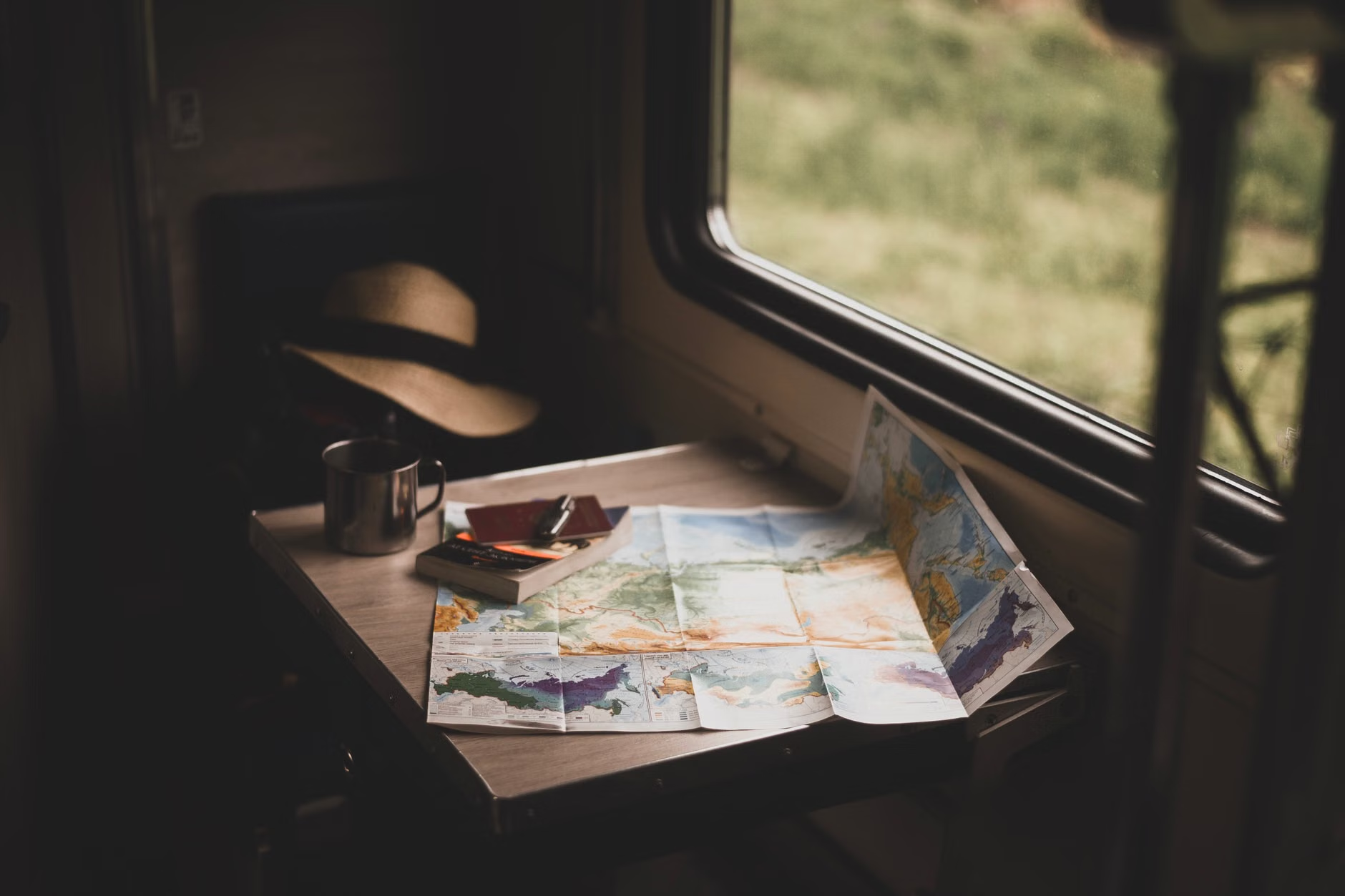
Common Pitfalls and How to Avoid Them
Even the best rail plans can hit snags. The most common mistake is the “connection crunch.” When booking your tickets, always ensure a minimum of 60 minutes between transfers if you are changing lines. Rail systems, especially in older coastal regions, can experience delays due to track maintenance or the high volume of autumn sightseers.
The “Hidden” Cost of Last-Minute Booking:
During peak autumn weeks, regional trains often move to a reserved-seating model. If you show up at the station hoping to buy a ticket on the spot, you risk being denied boarding or being forced to stand for a three-hour journey. Always reserve your seats online at least one month in advance. This also allows you to choose seats on the “scenic side” of the train—the side facing the water or the densest foliage.
Another overlooked variable is the “micro-climate” of the coast. Coastal autumn weather can shift from sunny to foggy in minutes. If you are planning a hike near your rail destination, pack layers. Do not rely on the forecast from the city you left behind. Check local weather stations specifically for the coastal micro-region you are visiting.
Maximizing the Experience for Your Family
For those of us in our 30s and 40s, a vacation is often a balancing act between our own desire for beauty and our children’s need for engagement. Rail travel is surprisingly kid-friendly. The train itself is an adventure. Use the journey as part of the itinerary, not just a way to get there. Bring card games, sketching pads, or even a pair of binoculars for the kids to spot wildlife or changing leaves along the route.
If you are traveling with younger children, look for trains that offer a café car. Having the ability to move around, get a snack, and use a restroom without stopping the vehicle is a game-changer. It turns a “travel day” into a “day out.”
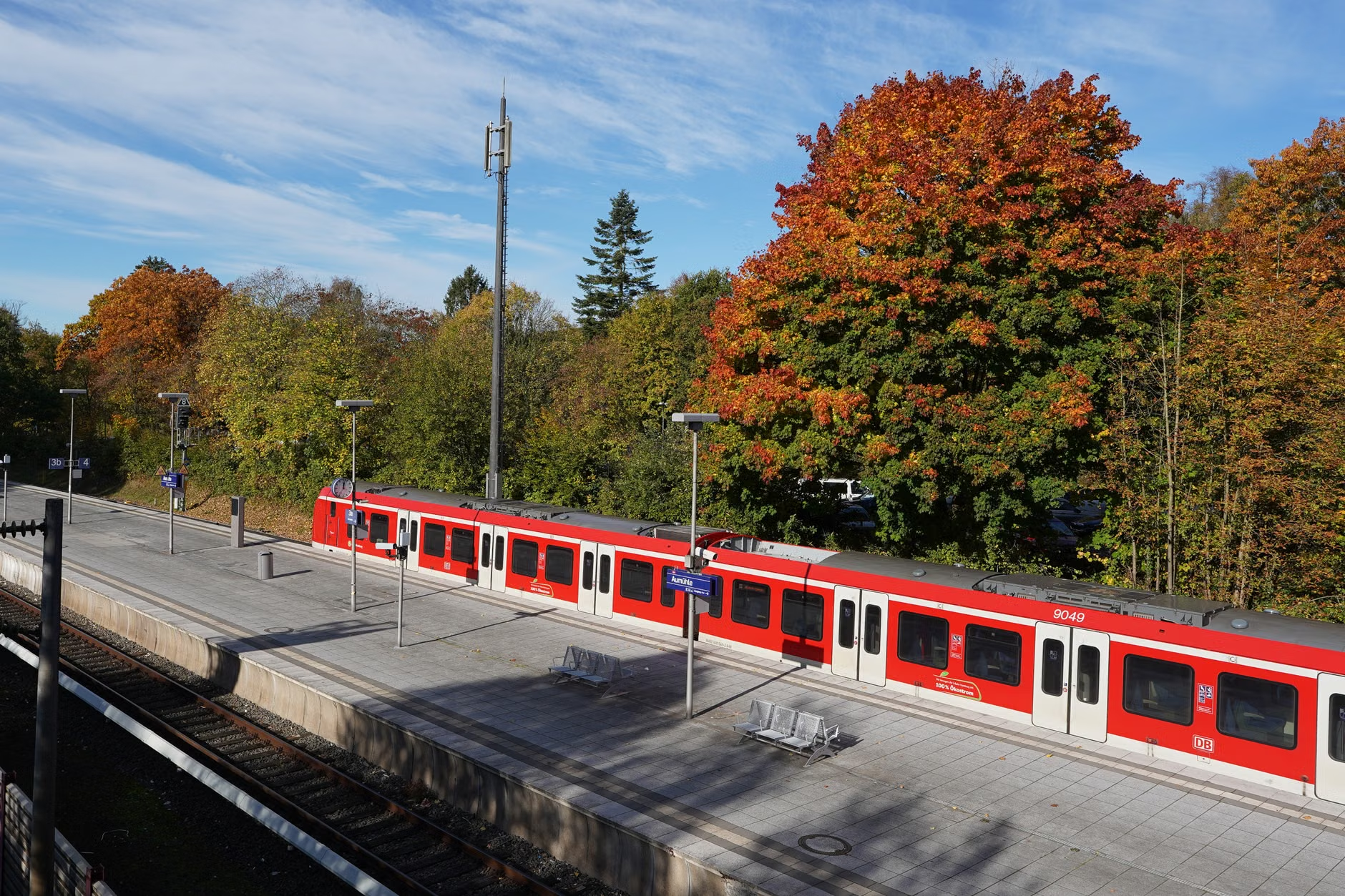
The Decision Matrix: Should you go Rail or Road?
It is worth noting that rail-first isn’t for everyone. Use this simple decision matrix to decide:
- Choose Rail if: You are traveling with 1-3 people, you want to avoid driving stress, you enjoy reading or relaxing, and your destination is well-connected by regional rail.
- Choose Road if: You are traveling with a large group (5+ people), you have significant specialized gear (camping equipment, heavy sports gear), or your destination is in a remote, rural area with no transit access.
If you find yourself in the “Road” category but still want the rail experience, consider a “hybrid” trip. Drive to a major regional hub, park your car in a long-term garage, and take a scenic rail excursion for the “foliage heavy” portion of your trip. This gives you the best of both worlds: the convenience of your own vehicle for the long haul and the beauty of the rail for the scenic parts.
Final Thoughts on Planning
The beauty of the “rail-first” approach is that it forces you to slow down. When you aren’t gripping the steering wheel, you notice the way the light hits the turning maple leaves, the way the fog rolls off the ocean, and the small, quiet details of the coastal towns that you would otherwise zip past at 60 mph.
Don’t over-plan your daily activities. The train schedule will dictate your pace, and that is actually a benefit. Let the train be your guide. Pick one or two “must-see” spots per day, and spend the rest of the time wandering the town centers. You will find that the best memories of an autumn trip are rarely the crowded tourist traps, but the quiet moments spent walking through a colorful park or sitting in a local café with a view of the tracks.
If you take nothing else away from this, remember that your time is the most valuable resource you have as a busy adult. Spending that time in traffic is a loss; spending it on a train is an investment in your own peace of mind.
Frequently Asked Questions
Q: How do I find out if a specific rail line is considered “scenic” for autumn colors?
A: Most national rail operators have a “Tourism” or “Scenic Routes” section on their official websites. Alternatively, search for “[Region Name] scenic rail tours” to see if local operators offer specialized autumn foliage runs. Local tourism boards also frequently list the best rail routes for fall foliage.
Q: Is it difficult to navigate from a train station to a hotel with children?
A: It depends on the size of the town. In most popular tourist coastal towns, hotels are accustomed to rail travelers. Many offer shuttle services from the station. Always call your accommodation before booking to ask, “How do we get to you from the train station?” If they don’t have a shuttle, ask if there is a local taxi or ride-share availability. If the answer is “no,” look for a different hotel.
Q: What happens if I miss my train due to a delay on an earlier connection?
A: This is why you should always book with a single operator if possible. If you book through a single carrier, they are often obligated to put you on the next available train if a delay is their fault. If you are mixing different operators, you are on your own. Always ensure you have a “cushion” of at least 60-90 minutes between connections to account for potential delays.
For further information on rail travel planning and regional schedules, visit your national rail provider’s official website or consult the International Union of Railways (UIC) for global rail standards and information.