- Visual Clutter is a Primary Stressor: Replacing open shelving with opaque storage bins can immediately lower a child’s cortisol response by reducing visual input.
- Lighting Matters More Than Paint: Swap cool-white LED bulbs (which can cause micro-flicker and overstimulation) for warm-spectrum, dimmable lighting to signal the body’s circadian rhythm.
- Zoning is Essential: Clearly separating the “sleep zone” from the “play zone”—even in small rooms—helps the brain associate the bed with rest rather than stimulation.
The most effective way to help a child regulate their emotions after a long day at school is to create a physical environment that does exactly what their nervous system cannot: rest. If you have ever felt your own stress levels spike the moment you walk into a cluttered room, you already understand the principle of sensory-friendly design. For children—especially those who are neurodivergent or simply highly sensitive—a bedroom is not just a place to sleep; it is a primary tool for recovery.
Creating a sensory-friendly bedroom isn’t about buying expensive specialized equipment. It is about systematically removing the “background noise” of a room. Whether it is the hum of an electronic device, the jarring contrast of bright wall colors, or the physical discomfort of scratchy fabrics, every element contributes to a child’s sensory load. By auditing these inputs, you can create a space that actively lowers a child’s baseline anxiety.
The Science of Sensory Load in Small Spaces
In the world of interior design, we often talk about “aesthetics.” In the world of sensory-friendly design, we talk about “cognitive load.” When a child is exposed to excessive visual, auditory, or tactile stimuli, their brain is forced to process that information continuously. For children in their development years, this can lead to “sensory fatigue”—a state where the child becomes irritable, impulsive, or withdrawn simply because their brain is exhausted from managing the environment.
Think of it as a bucket. Throughout the day at school or daycare, your child’s “sensory bucket” fills up with noises, social interactions, and physical activities. By the time they get home, that bucket is often near overflowing. If their bedroom is filled with neon colors, blinking lights, and piles of toys, the bucket spills over. A sensory-friendly room acts as a drain, allowing them to empty that bucket and reset.
Research into environmental psychology suggests that “low-arousal” environments—characterized by soft lighting, neutral palettes, and minimal clutter—significantly improve sleep quality and reduce behavioral meltdowns. This isn’t just a theory; it is a practical application of how our nervous systems respond to our surroundings. If your child struggles to settle down at night, your first step shouldn’t be a new sleep routine—it should be a room audit.
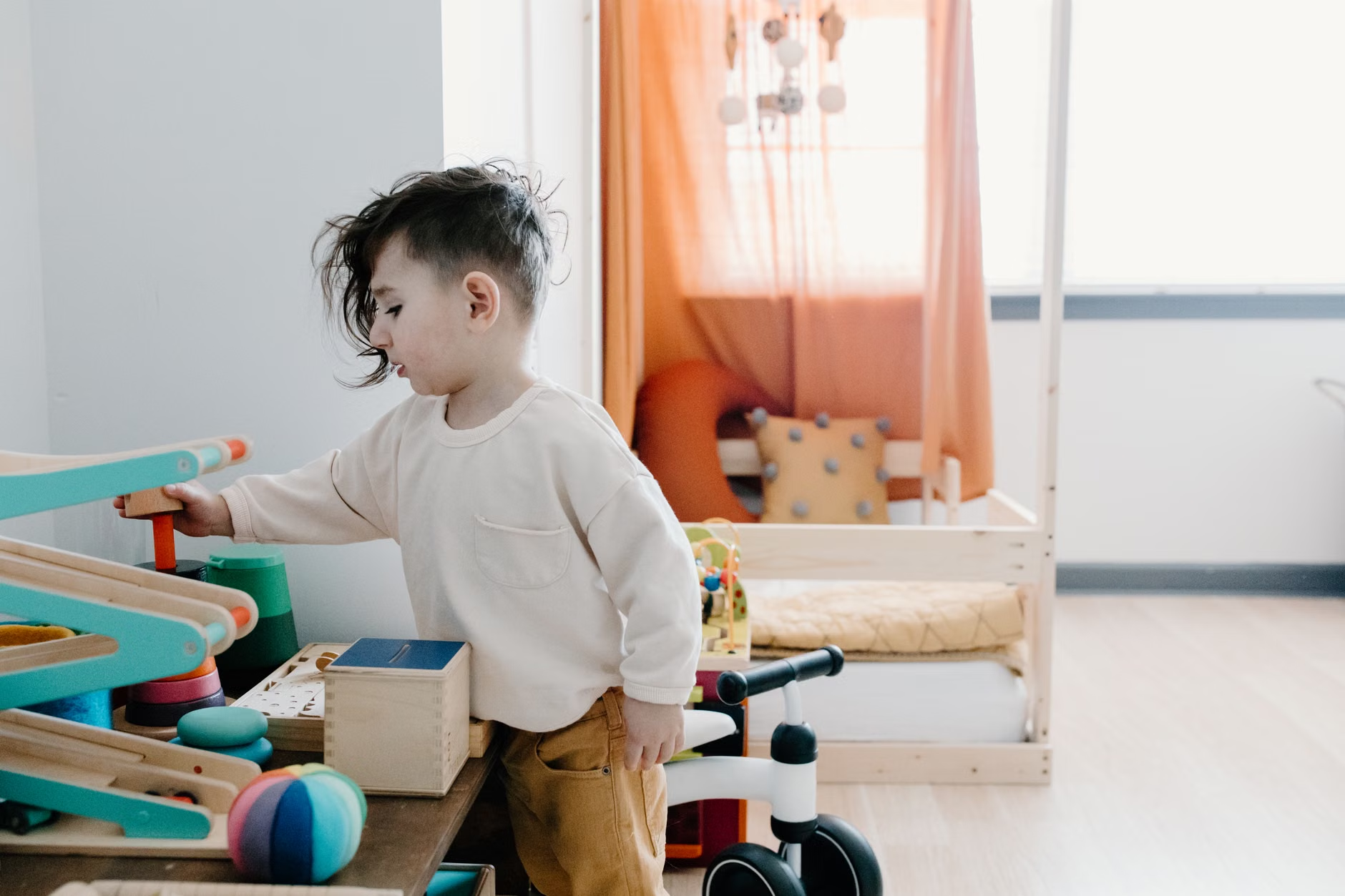
Auditing Your Child’s Room: A 7-Step Implementation Framework
To transform a room effectively, you need a structured approach. Do not attempt to do everything in one afternoon. Overhauling a room can be just as overstimulating for a child as the room itself. Follow these steps in order to ensure you aren’t just changing the decor, but actually changing the sensory experience.
1. Master the Lighting Environment
The biggest offender in most children’s rooms is the ceiling light. Traditional cool-white LEDs (anything over 3000K color temperature) emit blue light, which suppresses melatonin and keeps the brain in an “alert” state. Furthermore, many cheaper LED bulbs have a rapid, invisible flicker that can be deeply agitating for sensitive children.
The Fix: Replace all overhead bulbs with “warm white” (2700K) bulbs. If possible, install a dimmer switch. Use floor lamps or wall-mounted sconces with soft shades to keep the light source below eye level. This creates a “cave” effect that is naturally soothing to the human brain.
2. Eliminate Visual Noise
Visual noise refers to anything that captures the eye and demands attention. A wall covered in posters, an open bookshelf with mismatched spines, or a pile of laundry on a chair all count as visual noise. When a child looks around their room, their eyes should have a place to “rest.”
The Fix: Use opaque storage. If you have open shelving, invest in simple fabric or plastic bins that hide the contents. If your child has a collection of posters, limit them to one or two, and rotate them every few weeks rather than displaying everything at once.
3. Manage Auditory Triggers
Sometimes, the “noise” in a room isn’t just sound—it’s the potential for sound. If a room has hardwood floors, echoes can turn a quiet play session into a cacophony. If a room is near a noisy street, the erratic sounds of traffic can prevent deep sleep.
The Fix: Soften the surfaces. Rugs are essential for sound absorption. Heavy curtains—specifically blackout curtains—serve a dual purpose: they block light and provide a layer of acoustic insulation against outside noise. If your child is sensitive to hums (like a computer fan or air purifier), test these devices before committing to them in the bedroom.
4. Tactile Comfort and Texture
Sensory-seeking children often crave deep pressure, while sensory-avoiding children may be bothered by certain fabrics. The “feel” of the bed is the most important tactile element in the room. Avoid synthetic, slippery fabrics like cheap polyester, which can feel “static-y” and uncomfortable.
The Fix: Stick to natural fibers like cotton or bamboo. If your child responds well to deep pressure, a weighted blanket (properly sized for their weight) can be a game-changer. Ensure the rug is soft enough for floor play but not so thick that it traps allergens or dust.
5. Zoning: Defining the Purpose
Even in a small bedroom, the brain needs to know what it is supposed to do in each area. If the bed is covered in toys, the brain will struggle to switch into “sleep mode.”
The Fix: Use physical boundaries to define zones. A small rug can define the “reading corner,” while the bed should be kept strictly for rest. If you have a desk in the room, ensure that when the child is in bed, they cannot see their homework or their toys. This prevents the “I have to do this, I have to fix that” brain-loop that keeps kids awake.
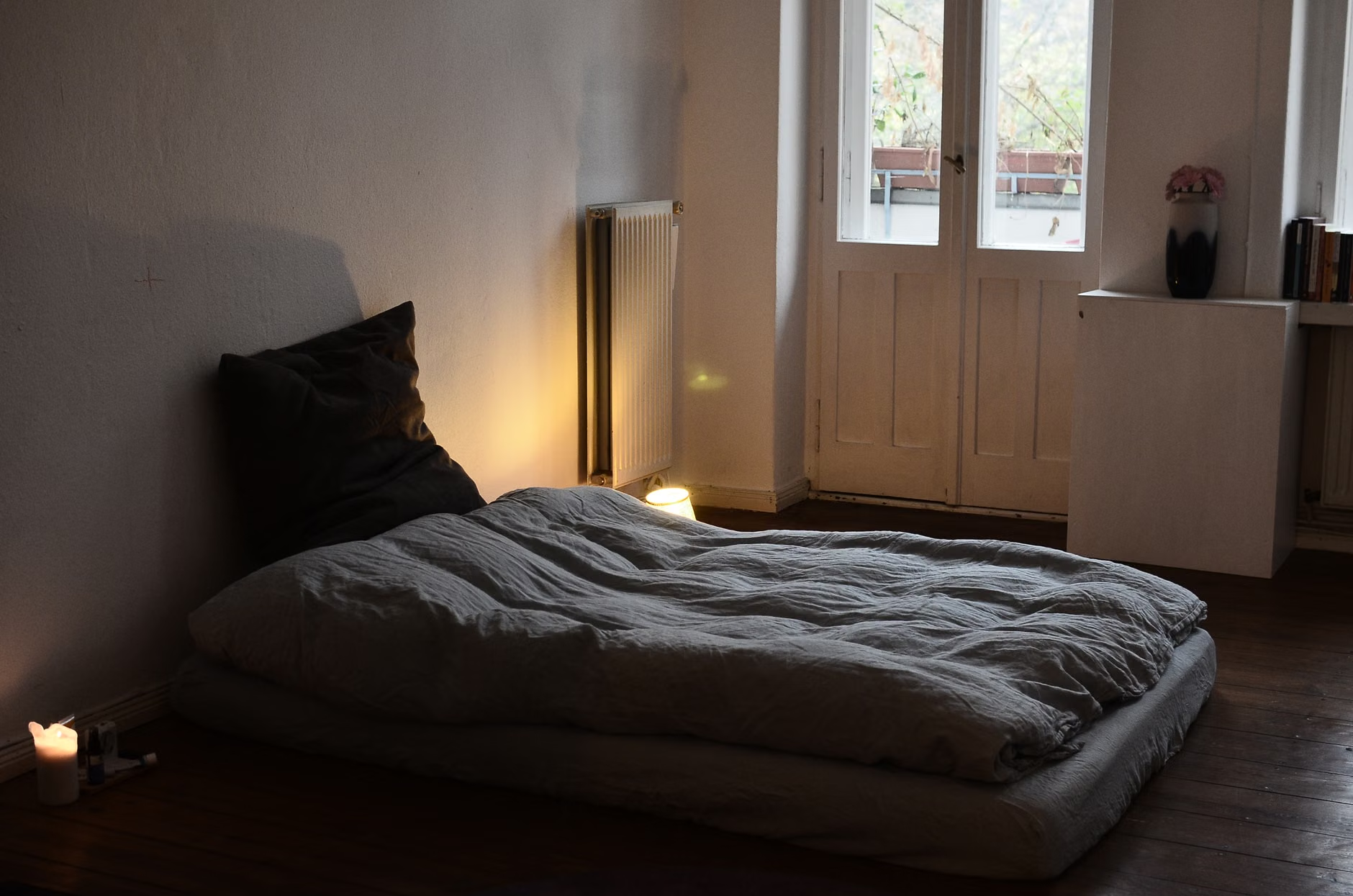
6. The “Cool Down” Corner
Every child needs a place to go when they feel overwhelmed. This shouldn’t be a “time-out” chair, but rather a “safe space.” This area should be the most sensory-neutral part of the room.
The Fix: Use a pop-up tent, a corner nook with a beanbag, or simply a collection of soft cushions. Keep a few “regulatory” items here: a fidget toy, a piece of textured fabric, or a pair of noise-canceling headphones. The goal is to provide a place where the child can retreat without needing to ask permission.
7. Temperature and Air Quality
We often overlook the physical sensation of air. A room that is too hot or too dry can cause significant sensory discomfort. High levels of CO2 can also lead to lethargy and headaches.
The Fix: Keep the room temperature slightly cooler than the rest of the house—around 18–20°C (65–68°F) is often recommended for optimal sleep. Ensure there is adequate ventilation. If you live in a dry climate, a quiet humidifier can help, but ensure it is cleaned regularly to prevent mold, which is a major hidden sensory trigger.
Comparing Approaches: Which One Fits Your Situation?
Not all sensory-friendly designs are the same. Depending on whether your child is a “sensory seeker” (needs more input) or a “sensory avoider” (needs less input), your strategy will shift slightly.
| Feature | Sensory Avoider | Sensory Seeker |
|---|---|---|
| Lighting | Extremely dim, warm tones. | Soft, adjustable color-changing lights. |
| Textures | Smooth, consistent, soft. | Varied: bumpy, soft, weighted. |
| Storage | Hidden, opaque, minimalist. | Accessible, labeled, organized. |
If your child is a sensory seeker, they might feel anxious in a room that is “too empty.” They need input to feel grounded. You can satisfy this by adding a “sensory wall” with different fabric patches or a gentle sound machine that provides a predictable white noise. If they are a sensory avoider, every piece of furniture should be functional and every decor choice should be muted. The goal is to avoid over-stimulating their already heightened system.

Common Mistakes Parents Make (And How to Avoid Them)
The most common mistake is the “Pinterest Trap”—creating a room that looks beautiful in a photo but ignores the practical reality of daily life. A room with pristine white carpets may look heavenly, but if it creates a “don’t touch anything” anxiety in your child, it is failing its purpose. A sensory-friendly room must be a place where the child feels empowered, not restricted.
Another frequent error is neglecting the “transition” aspect. If you overhaul the room while the child is at school, the sudden change can be jarring. Instead, involve them in the process. Ask them, “Does this lamp feel too bright for you?” or “Which of these blankets feels nicer to touch?” This gives the child a sense of agency over their environment, which is itself a powerful tool for emotional regulation.
Lastly, do not forget the trade-off of “smart” technology. While smart bulbs that change color can be fun, they can also be a source of constant frustration if the app glitches or the Wi-Fi drops. If you use smart tech, ensure there is always a simple, manual override (a standard light switch) that the child can use independently.
Beyond the Bedroom: The Wider Impact
While we are focusing on the bedroom, the principles of sensory-friendly design can be applied to the entire home. When a child learns that their bedroom is a place where they can control the sensory input, they are also learning to identify when they are overstimulated. This is a vital life skill. A 35-year-old who knows they need to dim the lights and put on noise-canceling headphones after a stressful day is a person who has mastered their own sensory needs.
You are not just decorating a room; you are building a sanctuary that validates your child’s experience. You are teaching them that their nervous system matters and that it is okay to advocate for an environment that helps them feel safe. This is a lesson that will serve them long after they have moved out of the childhood bedroom.
Final Considerations for Parents
If you are feeling overwhelmed by the prospect of changing the room, start small. Begin with the lighting. It is the cheapest and most impactful change you can make. Then, move to the visual clutter. You don’t need to buy new furniture; you just need to rethink what is currently on display.
Remember that this is a process of observation. Spend an evening in your child’s room with the lights dimmed. What do you hear? What do you see? Where does your eye naturally rest? The answers to these questions will guide your next steps. You don’t need a professional interior designer to create a sensory-friendly space; you just need the patience to observe your child’s needs and the willingness to edit the environment accordingly.
If you find that your child’s sensory needs are significantly impacting their daily life, consider consulting with an occupational therapist. They can provide a personalized sensory profile that can give you even more specific guidance on what your child needs to thrive.
For further reading on sensory processing and environmental design, you can refer to resources from organizations like the American Occupational Therapy Association, which provides excellent guidance on sensory integration in the home environment.
Frequently Asked Questions
1. Is it necessary to paint the walls a specific color?
While there is a lot of talk about “calming” colors, the reality is that the tone and finish matter more than the hue. Avoid high-gloss paints, which reflect light and create glare. Stick to matte or eggshell finishes in neutral, muted tones. A soft sage green or a warm sand color is generally better than a stark, clinical white, but the most important factor is simply avoiding high-contrast, neon, or overly stimulating patterns.
2. How can I implement these changes on a tight budget?
You don’t need new furniture. The most effective changes come from editing: moving items out of the room, swapping bright bulbs for warm ones, and using inexpensive fabric bins to hide clutter. If you need new items, prioritize a high-quality, dimmable lamp over expensive decor. Thrift stores are also excellent places to find solid wood furniture that can be painted in a neutral matte color.
3. My child is a teenager; does this still apply?
Absolutely. In fact, it is arguably more important during the teenage years. Teenagers deal with significant hormonal and social stress. A sensory-friendly bedroom becomes an essential “decompression chamber” where they can escape the pressures of school and social media. Let them lead the design process—the more they feel the room is “theirs,” the more likely they are to use it as a tool for self-regulation.