- Prioritize “Walking-Friendly” Hubs: Select islands where the primary village or beach is within a 15-minute walk of the ferry terminal to eliminate the need for taxis or car seats.
- The “One-Bag-Per-Person” Rule: Car-free travel requires total mobility; if you cannot carry your luggage over a 500-meter stretch of cobblestone or sand, you have too much gear.
- Strategic Scheduling: In Southeast Asia, prioritize early morning transit to avoid afternoon swells; in Europe, book high-speed catamarans over slow ferries to maximize island time.
The most exhausting part of family travel isn’t the flight; it’s the transition. Specifically, the moment you land, drag your luggage to a rental car counter, spend an hour installing car seats, and then navigate unfamiliar roads while your children ask, “Are we there yet?” from the backseat. If you are in your 30s or 40s, you’ve likely realized that the “adventurous” road trip often turns into a logistical nightmare. This is why the car-free island hopping strategy is becoming the gold standard for parents who want to actually enjoy their vacation rather than manage a fleet of vehicles.

Why Car-Free Island Hopping Actually Works for Families
When you remove the car from the equation, you remove the biggest source of travel friction. You aren’t hunting for parking in crowded European villages, and you aren’t negotiating taxi fares in Southeast Asia. Instead, you are walking. You are cycling. You are using the local ferry network as your primary transit system. This shift doesn’t just reduce costs; it changes the pace of your trip. Without the ability to “quickly drive” to a destination, you learn to appreciate the geography of where you are.
For parents, the primary benefit is autonomy. Once you reach your island, your children can walk safely in pedestrian-only zones. You don’t have the constant anxiety of traffic. In places like the Greek Cyclades or the Thai Andaman coast, many of the best experiences are found just beyond the reach of a car anyway. By committing to a car-free itinerary, you are essentially forcing yourself to choose high-quality, accessible locations that are naturally better suited for families.
Evaluating Your Destination: The “Last Mile” Test
Not every island is created equal. Before you commit to a destination, you must apply the “Last Mile” test. This is a simple decision rule: If you cannot get from the ferry dock to your accommodation within 15 minutes by foot or a single, pre-arranged, short-distance transfer, the island is not “car-free friendly.”
Southeast Asia: The Ferry-Dependent Model
In Southeast Asia, island hopping often relies on long-tail boats and high-speed ferries. The challenge here is the “pier-to-resort” transition. In destinations like Koh Lanta or Koh Tao, the dock is often a bustling, chaotic hub. If you arrive with heavy suitcases, you will be forced to hire a songthaew (a modified pickup truck) or a taxi. To stay truly car-free, look for resorts that offer a private, pre-arranged golf cart or boat transfer directly from the pier. This removes the stress of haggling.
Europe: The Pedestrian-Centric Model
Europe, particularly the Mediterranean, offers a different experience. Many islands, such as Hydra in Greece or parts of the Venetian Lagoon, are physically designed to be car-free. Here, the challenge isn’t finding a ride; it’s managing luggage over uneven terrain. Cobblestones are the enemy of standard roller bags. If you are heading to a European island, you must switch to high-quality backpacks or luggage with oversized, rugged wheels. If you are pulling a standard suitcase over the steep, narrow streets of a Mediterranean village, you will regret it within five minutes.

The Logistics of Mobility: Managing Gear Without a Trunk
The biggest mistake parents make when attempting car-free travel is overpacking. When you have a trunk, you tend to bring “just in case” items. When you are carrying your own bags onto a ferry, you quickly learn the difference between a “necessity” and a “burden.”
| Item | Car-Based Strategy | Car-Free Strategy |
|---|---|---|
| Luggage | Large, heavy hard-shell suitcases | Lightweight, soft-sided backpacks |
| Stroller | Full-size travel system | Ultra-compact, carry-on size stroller |
| Transit | Rental car | Local ferries and walking |
The table above highlights the shift in mindset required. If you are traveling with a toddler, you might be tempted to bring a full-sized stroller. Don’t. On a Greek island with stairs or a Thai island with sandy paths, a full-sized stroller is useless weight. Invest in a travel-specific, “umbrella-fold” stroller that fits in an overhead compartment. If your child is older, a simple carrier or letting them walk is often better. The rule is simple: Every item you bring must be manageable by one adult while holding a child’s hand.
Ferry travel is the heartbeat of island hopping, but it comes with its own set of variables. In Southeast Asia, ferry routes are often seasonal. During the monsoon season (roughly May to October in the Andaman Sea), routes can be cancelled at a moment’s notice due to rough seas. Always have a “Plan B” island—one that is closer to the mainland or connected by a larger, more stable ferry service.
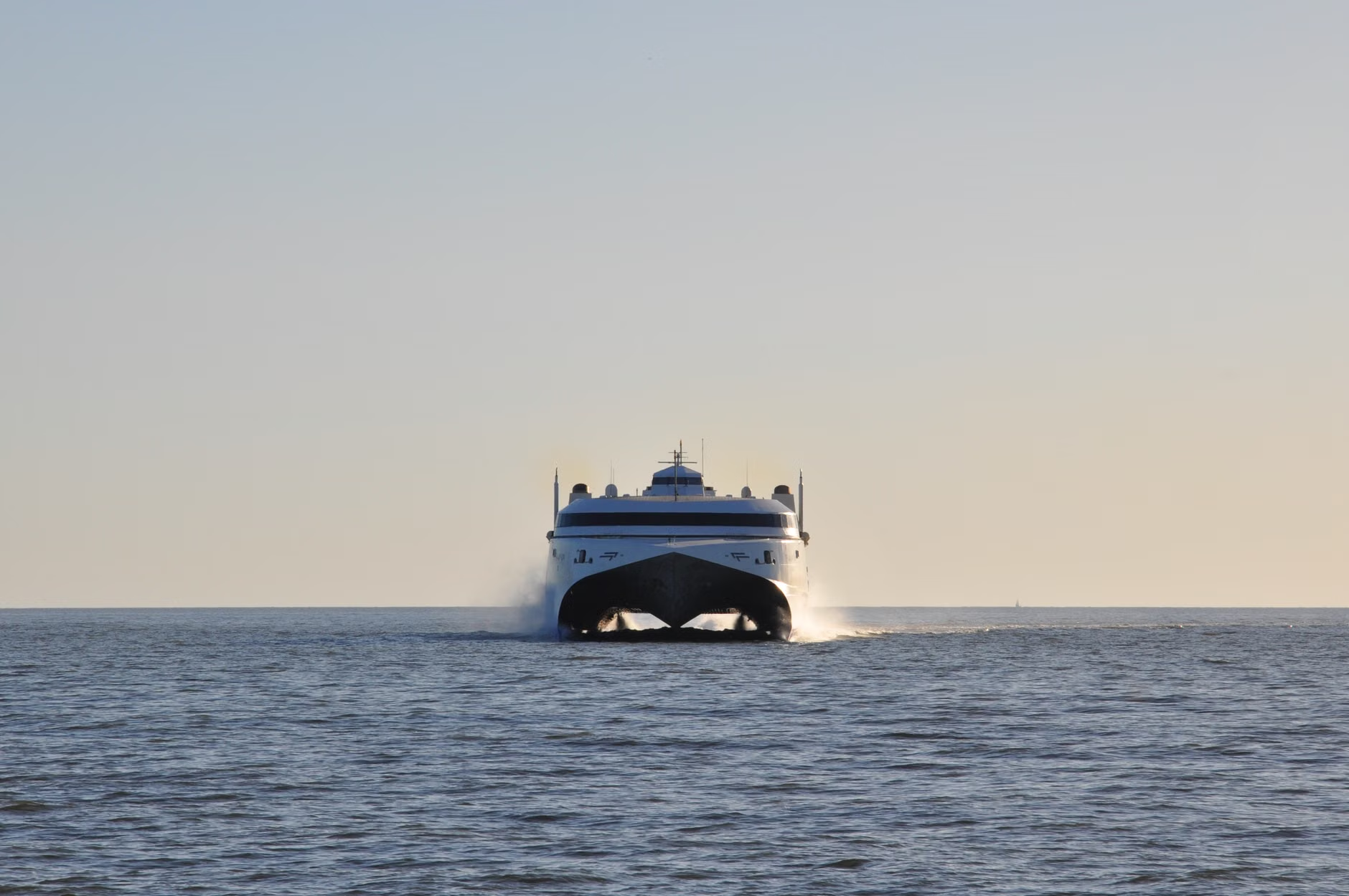
In Europe, the ferry system is more reliable but can be expensive and crowded. Booking your tickets online weeks in advance is essential during the peak summer months. Use platforms like Ferryhopper or 12Go to compare routes and times. Crucially, look for “High-Speed” vs. “Conventional” ferry options. High-speed catamarans are faster but prone to more motion sickness. If you have children who get seasick, the slower, larger ferries are often a much better choice, even if they add an hour to your travel time.
Common Mistakes to Avoid
The most common pitfall is the “Island-Hopping Overload.” Families often try to visit three or four islands in a week. When you are car-free, this is a recipe for burnout. Every move between islands requires checking out of a hotel, hauling gear to the port, waiting for the ferry, and checking into a new place. This process takes half a day. Limit your trip to a maximum of two islands per week. This allows you to settle into a rhythm and actually enjoy the destination.
Another major mistake is ignoring local public transit schedules. In many places, the ferry might only run twice a day. If you miss the 10:00 AM boat, you are stuck until the next day. Always check the local transport schedule 24 hours in advance and have a backup contact for a private water taxi—it’s more expensive, but it’s your insurance policy against a missed connection.
Financial Implications and Hidden Costs
People often assume that being car-free saves money. While you save on rental fees, insurance, and fuel, you might spend more on private transfers and luggage storage. On some islands, you may need to pay a small fee to have your luggage transported from the port to your hotel by a porter or a local van. Factor this into your budget. It is not an “extra” cost; it is a replacement for the cost of parking and gas.
Also, consider the “convenience premium” for accommodations. Hotels near the ferry port are often more expensive than those further away. However, by staying near the port, you save on local transport costs and, more importantly, you save the time and energy of hauling your family across the island. That time is worth more than the price difference.
Actionable Steps for Your Next Trip
- Choose the Region: Decide between the ferry-heavy, lush landscapes of Southeast Asia or the historic, pedestrian-friendly villages of Europe.
- Audit Your Gear: If your current luggage setup requires a car to move, it is not suitable for this trip. Downsize.
- Map the Connections: Use Google Maps to find the distance between your potential hotel and the primary ferry terminal. If it’s over 1km, ensure there is a clear, easy way to get there.
- Book Transfers in Advance: Don’t rely on finding a taxi at the port. Contact your accommodation and ask for a “meet and greet” transfer.
- Slow Down: Build a “rest day” into your schedule after every ferry transfer.
Car-free island hopping is about reclaiming your vacation from the stress of logistics. It requires more planning upfront, but it delivers a significantly more rewarding experience once you are on the ground. By choosing your islands wisely and keeping your gear minimal, you turn the journey itself into part of the adventure rather than an obstacle to overcome.
Frequently Asked Questions
1. Is car-free island hopping suitable for families with infants?
Yes, but it requires a “minimalist” approach to baby gear. Use a high-quality carrier (like an Ergobaby or similar) rather than a stroller to navigate docks and uneven streets. Always check if your accommodation provides a crib, as carrying a travel crib makes car-free travel significantly more difficult.
2. What should I do if a ferry is cancelled due to weather?
Always have the contact details for your accommodation on both the island you are leaving and the one you are heading to. In Southeast Asia, local hotels are often well-versed in rebooking guests on alternative transport or assisting with emergency accommodation. Keep a list of alternative ferry or flight routes saved in your phone notes.
3. How do I manage laundry on a long car-free trip?
Do not overpack. Most islands in both Europe and Southeast Asia have local laundry services that offer 24-hour turnaround for a low price. Plan to pack for 5 days and utilize local laundry services mid-trip. This allows you to travel with a carry-on backpack, which is the ultimate key to car-free freedom.
For more information on transit options in Europe, visit the Ferryhopper official site. For Southeast Asian travel logistics and updates, check 12Go Asia to cross-reference routes and schedules.