Biophilic design isn’t about turning your baby’s room into a high-maintenance jungle; it is a scientifically-backed method of using nature to regulate a child’s nervous system and cognitive development.
Key Takeaways
- Fractal patterns found in nature (leaf veins, wood grain) can reduce physiological stress levels in infants by up to 60%.
- Verticality is the ultimate small-space hack—wall-mounted plants and hanging textures provide biophilic benefits without consuming precious floor real estate.
- Circadian lighting is more critical than decor; mimicking natural light cycles stabilizes a newborn’s sleep-wake patterns faster than traditional nursery lighting.
Most of us living in urban centers face the same “nursery squeeze.” You have a room roughly the size of a walk-in closet, and you’re trying to fit a crib, a changing table, and a lifetime’s supply of diapers into it. When you read about “Biophilic Design,” you see photos of sprawling mansions with indoor trees and floor-to-ceiling glass walls. It feels out of reach. But here is the reality: biophilia is a biological need, not a luxury square-footage requirement.
Our brains, and especially the rapidly developing brains of infants, are hardwired to respond to natural stimuli. In a small apartment, the lack of nature can lead to “sensory deprivation,” making the space feel cramped and stressful for both the parent and the baby. By applying a few specific “hacks,” we can trick the brain into feeling the openness of the outdoors within the confines of a 100-square-foot room.

Why Your Baby’s Brain Craves the ‘Fractal’ Hack
The term “biophilia” literally means “love of living things,” but in design, it refers to the 14 patterns developed by Terrapin Bright Green that connect humans to nature. One of the most powerful for small spaces is the fractal pattern. Fractals are self-similar patterns that repeat at different scales—think of the way a snowflake or a fern leaf is structured.
Research in environmental psychology suggests that looking at fractals with a specific “mid-range” complexity (often found in nature) triggers a relaxation response in the human brain. For a baby, whose visual system is still learning to process the world, these patterns are much more soothing than the sharp, high-contrast geometric shapes often found in modern “minimalist” nurseries.
The Small Space Hack: You don’t need a forest. You need visual texture. Instead of a flat, white-painted wall, consider a removable wallpaper with a subtle, non-repeating botanical print. Or, choose a rug with a natural fiber weave like jute or wool. These textures provide the “visual complexity” that tells the baby’s brain, “This is a safe, natural environment,” which helps lower cortisol levels during those inevitable 3:00 AM meltdowns.
The Circadian Lighting Hack: Beyond the Blackout Curtain
In a small apartment, you often have one of two problems: either the nursery has no windows, or it has one window that faces a brick wall or a neon sign. This wreaks havoc on a baby’s circadian rhythm—the internal clock that tells them when to sleep and when to be awake.
Biophilic design emphasizes “Dynamic and Diffuse Light.” In nature, light isn’t a static “on or off” switch. It changes color and intensity throughout the day. If you want your baby to sleep better (and let’s be honest, that is the goal of every parent in their 30s), you need to mimic this cycle.
| Time of Day | Light Temperature (Kelvin) | Biophilic Goal | Practical Action |
|---|---|---|---|
| Morning | 5000K – 6500K (Cool Blue) | Alertness & Serotonin | Open curtains wide; use “Daylight” smart bulbs. |
| Afternoon | 3500K – 4000K (Neutral) | Steady Energy | Use sheer linens to diffuse direct sunlight. |
| Evening | 2000K – 2700K (Warm Amber) | Melatonin Production | Switch to dimmable floor lamps; avoid overhead LEDs. |
The Mistake: Most parents rely solely on “blackout curtains.” While useful for naps, staying in a dark room all day prevents the baby’s brain from anchoring to the local time. The Hack: Install smart bulbs that automatically shift from cool blue tones in the morning to warm amber tones in the evening. This “Dynamic Light” hack provides the biological cues of the sun’s movement, even if your view is a parking lot.
The Vertical Jungle: Plants That Don’t Take Up Floor Space
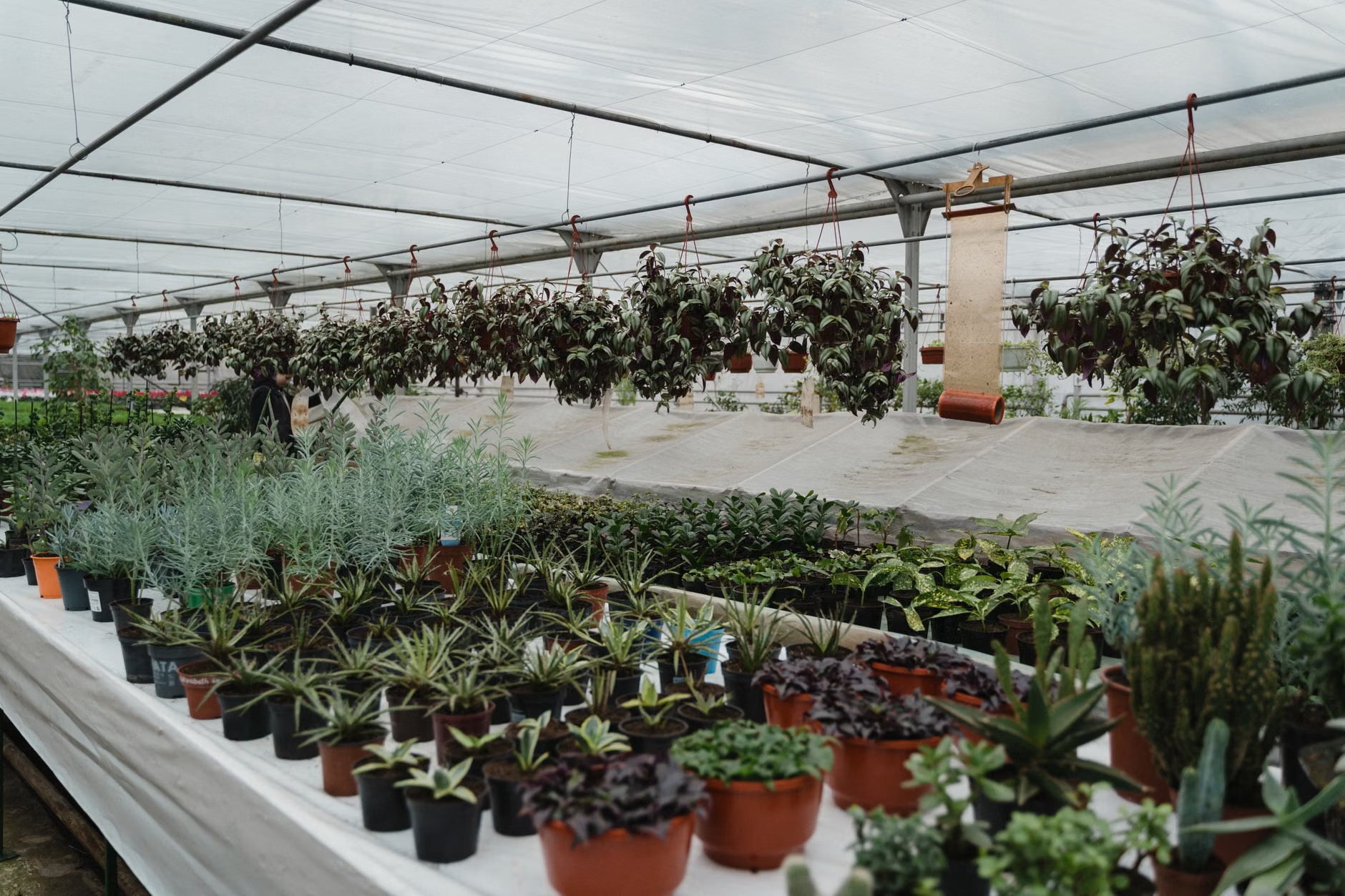
We all know plants improve air quality, but in a small nursery, a large potted fiddle-leaf fig is just a tripping hazard waiting to be knocked over by a crawling infant. The biophilic hack here is verticality.
Wall-mounted planters or “living walls” allow you to introduce greenery at eye level for the baby (great for visual tracking) while keeping the floor clear for the crib and glider. However, you must be selective. Not all plants are “nursery-safe.” Some common houseplants are toxic if ingested, and others are magnets for mold or pests.
Safe and Effective Choices:
- Spider Plants (Chlorophytum comosum): These are non-toxic, incredibly hardy, and excellent at filtering formaldehyde from the air (often found in new furniture).
- Boston Ferns: These love humidity and have a high fractal complexity, making them visually soothing.
- Air Plants (Tillandsia): These require no soil, meaning no mess. You can mount them on a piece of driftwood for a beautiful, natural wall sculpture.
The Hidden Variable: Humidity. Many urban apartments have incredibly dry air due to central heating. Plants act as natural humidifiers through a process called transpiration. By grouping three or four small plants on a wall shelf, you create a “microclimate” that can help keep your baby’s nasal passages clear during flu season. Just ensure they are mounted securely—toddlers are surprisingly good at climbing shelves.
Tactile Nature: Banishing the ‘Plastic Palace’
When you’re on a budget and tight on space, it’s tempting to buy everything from big-box retailers that specialize in molded plastic. While functional, plastic is “biophilically dead.” It has no scent, no temperature variation, and no unique texture.
For a child in their first two years, tactile stimulation is a primary driver of brain growth. Biophilic design encourages “Material Connection with Nature.” This means choosing materials that feel like the earth.
The Decision Rule: If you are buying something the baby will touch frequently—the crib, the changing mat cover, or toys—prioritize authentic materials.
- Unfinished or Beeswax-finished Wood: It changes temperature based on the room and has a natural scent.
- Organic Cotton and Linen: These have irregular weaves that provide subtle sensory feedback.
- Sheepskin or Wool: These materials contain lanolin and have a complex fiber structure that plastic “fleece” cannot replicate.
The “Hack” for the Budget-Conscious: You don’t need a $2,000 solid oak crib. Buy a basic, second-hand wooden crib and sand it down to remove toxic varnishes. Use a 100% wool rug instead of a foam play mat. The “sensory richness” of these materials makes the small room feel more grounded and less like a sterile box.
The ‘Prospect and Refuge’ Concept in Small Layouts
There is an evolutionary theory in design called “Prospect and Refuge.” Humans feel safest when they have a protected back (refuge) and a clear view of their surroundings (prospect). In a small nursery, the baby often feels “boxed in,” which can lead to irritability.
The Layout Hack:
Position the crib so the baby has a solid wall behind their head (refuge) but can see the door and, ideally, the window from their lying position (prospect). Avoid placing the crib directly under a heavy shelf or a bulky air conditioning unit, as this creates a “heavy” ceiling that triggers a subconscious “threat” response.
To enhance the “Prospect” in a tiny room, use mirrors. A mirror placed opposite a window reflects the “view” of the outside world, effectively doubling the visual nature in the room. For a baby, a floor-level acrylic mirror is also a fantastic tool for self-discovery and visual development.
Air Quality: The Invisible Biophilic Element
We often think biophilia is about what we see, but it’s also about what we breathe. Small apartments often suffer from poor ventilation, leading to a buildup of Volatile Organic Compounds (VOCs) from paint, “new car smell” furniture, and cleaning products.
A truly biophilic nursery uses “Air as a Element.” This doesn’t just mean opening a window—which might let in smog and noise—but rather using cross-ventilation and natural filtration.
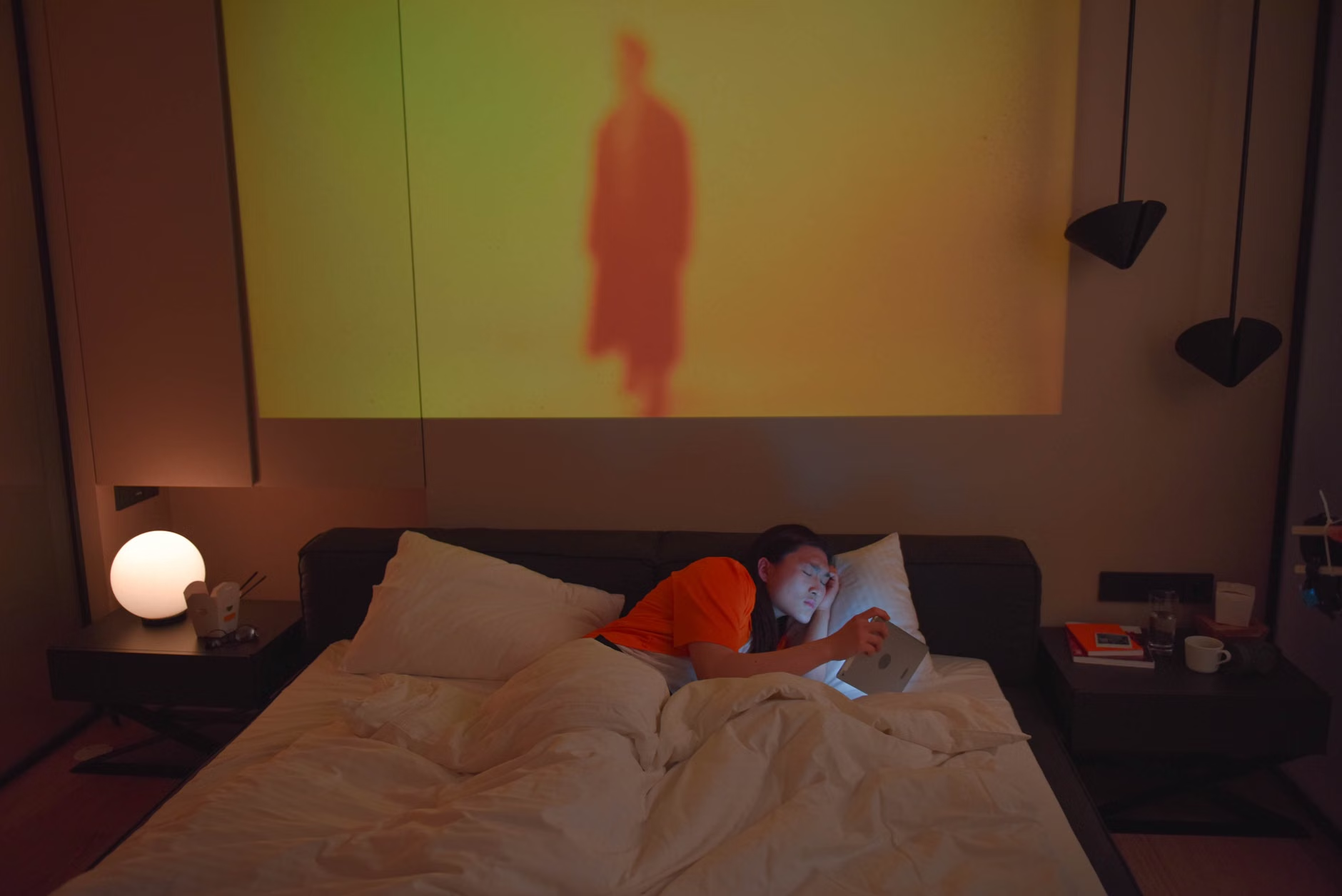
The Step-by-Step Air Hack:
- The 10-Minute Flush: Even in winter, open two windows in the apartment for 10 minutes a day to create a cross-breeze that flushes out stagnant CO2.
- HEPA + Charcoal: In a small room, use a high-quality air purifier with a charcoal filter. This removes the “chemical” smell of modern life.
- Avoid “Fragrance”: Synthetic “mountain breeze” scents are the opposite of biophilic. They are chemical irritants. If you want a natural scent, use a sprig of dried lavender or eucalyptus kept well out of the baby’s reach.
Common Mistakes to Avoid in Small-Space Biophilia
When parents get excited about biophilic design, they often overdo it. In a small space, clutter is the enemy of calm.
Mistake 1: Too many patterns. If you have botanical wallpaper, a patterned rug, and floral curtains, the “visual noise” will overstimulate the baby. Choose one dominant natural pattern and keep everything else neutral.
Mistake 2: High-maintenance plants. You are a parent in your 30s or 40s. You are tired. Do not buy an orchid or a plant that needs daily misting. If the plant dies, it becomes a source of stress (and brown leaves aren’t very “biophilic”). Stick to “unkillable” plants.
Mistake 3: Forgetting the “Soundscape.” Biophilia includes sound. If your apartment is noisy, don’t just use white noise (which is a flat, digital sound). Use “Pink Noise” or “Brown Noise” that mimics natural sounds like rain, wind, or a distant stream. These have the same fractal frequency as natural visual patterns and are much more effective at masking city sirens.
The Final Takeaway: Start Small, Think Biological
You do not need a renovation budget to implement biophilic design. If you can only do three things this weekend to improve your small-apartment nursery, do these:
- Swap your lightbulbs: Get smart bulbs that mimic the sun’s color temperature.
- Go vertical: Hang one non-toxic plant (like a Spider Plant) near the window.
- Introduce one “real” texture: Replace a plastic toy or mat with something made of wood, wool, or cotton.
The goal isn’t to win an interior design award. The goal is to create a “micro-habitat” where your baby’s nervous system feels at home. In the concrete jungle of the city, that small connection to the natural world is the best gift you can give their developing brain.
Official Resources for Further Reading:
- Terrapin Bright Green: 14 Patterns of Biophilic Design
- EPA: Volatile Organic Compounds’ Impact on Indoor Air Quality
- NIH: The physiological effects of Shinrin-yoku (forest bathing) and nature stimuli
Frequently Asked Questions
Q: Can I use fake plants if I have a “black thumb”?
A: While fake plants provide the “visual” fractal benefit, they don’t help with air quality or humidity. If you must go faux, choose high-quality silk plants that don’t look “plastic-y.” However, a real Spider Plant is almost impossible to kill and offers much higher biological value.
Q: Is biophilic design more expensive than regular nursery decor?
A: It can be, but it doesn’t have to be. It’s about substitution rather than addition. Instead of buying a plastic bin, buy a wicker basket. Instead of a polyester blanket, buy a cotton one. The costs are often comparable if you shop mindfully.
Q: My nursery has no windows at all. Can I still use biophilic design?
A: Absolutely. In windowless rooms, biophilic design is actually more important. Focus heavily on “Circadian Lighting” bulbs and high-quality nature soundscapes. You can also use “virtual windows”—large-scale landscape photography or botanical art—to provide the brain with the visual “prospect” it craves.
Stay grounded, keep it simple, and remember: nature doesn’t hurry, yet everything is accomplished. Even in a 5th-floor walk-up.