If you are currently managing a household, you likely have a drawer somewhere filled with half-used batteries, most of which you keep “just in case” but never actually use. When it comes to smart home climate control—those little sensors that monitor temperature and humidity to keep your rooms comfortable—the constant cycle of replacing button-cell batteries is not just an annoyance; it is a design flaw. The future of home automation is moving toward “energy-harvesting” technology, which allows sensors to run indefinitely by pulling power from their environment, effectively eliminating the need for battery changes.
- Maintenance-Free Operation: Energy-harvesting sensors utilize ambient light, temperature differentials, or kinetic motion, meaning you never have to worry about a sensor dying in the middle of a hot summer or cold winter.
- Long-Term Cost Efficiency: While the upfront investment in energy-harvesting hardware is often higher than standard Zigbee or Z-Wave sensors, the elimination of recurring battery costs and the reduction of e-waste provide a superior ROI over a 5-to-10-year horizon.
- Strategic Placement Matters: Unlike battery-powered units, these sensors are dependent on their environment; you must place them where they can access the specific energy source (e.g., light for solar, or high-traffic areas for kinetic) to ensure consistent functionality.
Why Your Current Smart Home Sensors Are a “Battery Trap”
Think about the last time you had to troubleshoot your home climate control. Maybe the smart thermostat stopped adjusting the temperature in the nursery, or the HVAC system didn’t kick on because a remote temperature sensor lost its connection. Nine times out of ten, the culprit is a dead CR2032 battery. In a house with twenty or thirty sensors, you are essentially signing up for a part-time job as a battery technician.
Most smart home sensors on the market today rely on low-power wireless protocols like Zigbee, Z-Wave, or Bluetooth Low Energy (BLE). While these protocols are efficient, they are still tethered to a physical power source. Over time, that power source depletes. For a busy parent juggling work, school runs, and home maintenance, this is a friction point that prevents the “smart home” from actually being smart. If you have to intervene to keep the system running, it isn’t fully automated.
Energy harvesting changes the paradigm. Instead of “storing” energy in a chemical battery that eventually dies, these devices “scavenge” energy from the ambient environment. It’s the difference between carrying a fuel tank and having a solar panel on your roof; one is a finite supply, and the other is a continuous flow. This technology is not just for industrial applications or science fiction; it is rapidly entering the consumer residential market.
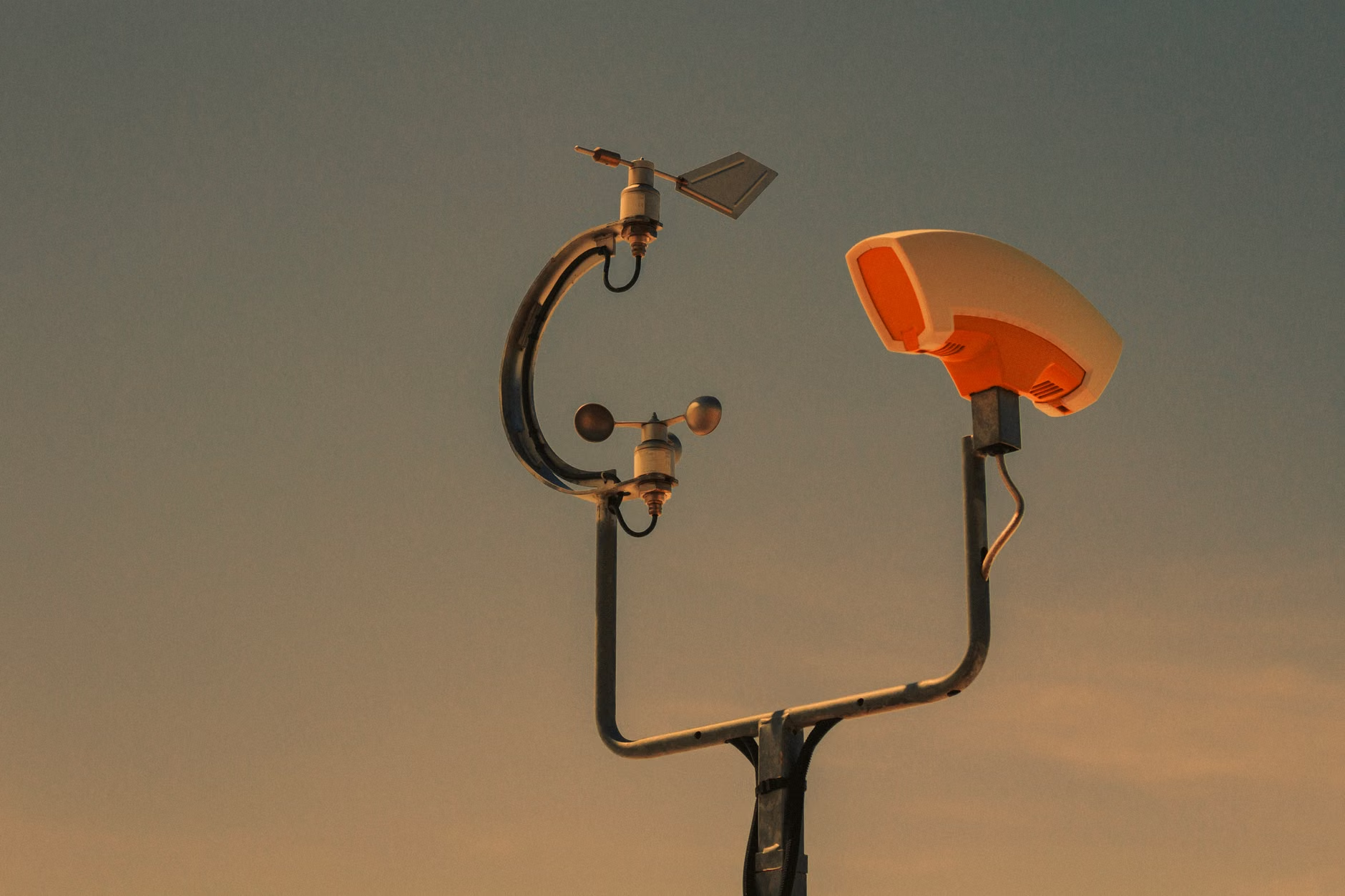
How Energy Harvesting Works: Turning Thin Air Into Power
The term “energy harvesting” sounds complex, but the physics behind it is surprisingly intuitive. These sensors function by converting one form of ambient energy into electrical energy. In a home climate control context, there are three primary sources being utilized today:
1. Photovoltaic (Light) Harvesting
This is the most common method for indoor climate sensors. These devices use high-efficiency indoor solar cells that are designed to capture the specific wavelengths of light found in typical living rooms—even under dim LED or fluorescent lighting. You don’t need direct sunlight; ambient room light is often sufficient to trickle-charge a tiny supercapacitor that keeps the sensor active 24/7.
2. Thermoelectric (Heat) Harvesting
This method exploits the “Seebeck effect,” where a voltage is generated by a temperature difference between two dissimilar electrical conductors. In a home, this could involve a sensor placed near a radiator or a heating vent. As the temperature of the pipe or vent rises above the ambient room temperature, the sensor harvests that thermal energy. It is an elegant solution because the sensor is most active when the climate control system is actually working.
3. Kinetic (Motion) Harvesting
While less common for static climate sensors, kinetic harvesting is frequently used in smart switches or door sensors. Every time you press a button or open a door, the mechanical movement creates a small burst of energy. This is enough to power a short wireless signal transmission to your hub. For climate control, this is useful for “on-demand” sensors that might report data only when a room is in use.
Real-World Scenarios: Where Should You Place These Sensors?
If you are planning to transition your home to energy-harvesting climate sensors, the “set it and forget it” rule applies, but with one major caveat: placement is the new maintenance. Unlike battery-powered sensors that you can shove into the back of a dark closet or behind a bookshelf, energy-harvesting sensors require a “fuel source.”
| Sensor Type | Best Placement | Why it Works |
|---|---|---|
| Indoor Solar | Near windows or under bright LED task lighting. | Maximized lumen intake for consistent capacitor charging. |
| Thermoelectric | Near HVAC ducts or baseboard heaters. | Utilizes the temperature gradient during heating cycles. |
| Hybrid/Kinetic | High-traffic doorways or light switches. | Converts physical interaction into data transmission. |
Let’s say you have a south-facing living room. A solar-powered climate sensor placed on the wall near the window will likely never run out of power. However, if you move that same sensor into a windowless hallway, it may struggle. This is the primary trade-off: you gain the freedom from batteries, but you lose the freedom of placement. Before buying, map out your rooms based on light levels and potential thermal gradients.
The Hidden Costs and Benefits: More Than Just Battery Savings
When evaluating the switch to energy-harvesting tech, look beyond the immediate price tag. A standard Zigbee sensor might cost $20, while an energy-harvesting equivalent might run $50 to $80. At first glance, the cheaper option wins. But let’s crunch the numbers for a household with 15 sensors over a five-year period.
The Battery Tax: If each sensor requires a $3 lithium battery replaced every 18 months, that is roughly $150 over five years just in batteries. Then, consider the “labor cost.” If it takes you 10 minutes to find a ladder, swap the battery, and re-pair the sensor if it drops off the network, you are spending hours of your life on maintenance. For a parent in their 30s, time is often more valuable than the $30 premium on the hardware.
Furthermore, there is the issue of reliability. Batteries fail at the worst times—usually in the middle of a cold snap when the house needs the most consistent temperature management. Energy-harvesting sensors are generally built to higher hardware standards because the manufacturers know they cannot rely on the “crutch” of a replaceable battery to fix power issues. You are essentially paying for a more robust, long-term infrastructure.
Common Pitfalls and How to Avoid Them
Even with the best technology, there are ways to set yourself up for failure. The most common mistake is assuming that “energy harvesting” means “infinite energy under any condition.”
1. The “Deep Sleep” Misunderstanding:
Most energy-harvesting sensors use a “sleep-wake” cycle. They stay in a deep-sleep mode for 99% of their life to conserve power, waking up only to report data. If you try to force them to report temperature every 30 seconds, you will deplete the capacitor faster than it can harvest energy. Stick to the default reporting intervals (usually 5-15 minutes) unless you have a specific, high-priority reason to change them.
2. Ignoring Signal Strength:
Because these sensors are often low-power, they may have a shorter wireless range than their battery-powered counterparts. If you place an energy-harvesting sensor in a far corner of the house, it might fail not because it lacks power, but because it lacks the “oomph” to punch through walls to reach your hub. Ensure you have a strong mesh network (Zigbee or Z-Wave repeaters) distributed through your home before deploying these sensors.
3. Compatibility with Older Hubs:
Some energy-harvesting protocols are proprietary. Before you buy, check if the sensor speaks the language of your current hub (Home Assistant, SmartThings, Hubitat, etc.). Do not assume that just because it is a “smart sensor,” it will automatically integrate with your existing climate control dashboard.
Future-Proofing Your Home Infrastructure
We are currently in a transition phase. For the last decade, we have accepted “batteries included” as a standard. But as we move toward more sustainable and autonomous homes, the expectation is shifting. The goal is a house that manages itself, where the user is an overseer, not a maintenance worker.
If you are renovating or just starting your smart home journey, consider a “hybrid” approach. Use energy-harvesting sensors in your primary living areas, hallways, and near major windows. For critical locations where light is non-existent and temperature is constant—like the inside of a utility closet or a basement—you might still prefer a traditional long-life battery sensor. This allows you to reap the benefits of low-maintenance tech where it shines, while maintaining flexibility where it is needed.
Also, keep an eye on the “Matter” protocol. As the smart home industry moves toward a unified standard, more energy-harvesting manufacturers are building devices that are Matter-compatible. This ensures that even if you switch your hub or app in three years, your sensors will still work. Investing in Matter-certified energy-harvesting hardware is the single best way to ensure your climate control system remains relevant for the next decade.
Final Verdict: Is It Time to Switch?
For most families in their 30s and 40s, the answer is a resounding yes, provided you are strategic. You don’t need to rip out every battery-powered sensor you own today. Instead, adopt a “replace-on-failure” strategy. The next time a sensor in your living room or kitchen dies, replace it with an energy-harvesting model. Over the next two years, you will find your “maintenance list” shrinking, your home becoming more reliable, and your battery drawer finally starting to empty out.
The transition is not just about saving a few dollars on batteries; it’s about reclaiming your mental bandwidth. A smart home should exist to serve you, not to give you another chore to perform on a Saturday morning. By leveraging the ambient energy of your home, you are building a system that is as resilient as it is intelligent.
Frequently Asked Questions
- Do these sensors work at night when there is no light?
Yes. These sensors are equipped with high-capacity supercapacitors or micro-batteries that store the energy harvested during the day. They are designed to carry enough charge to operate throughout the night and even through several days of low-light conditions. - Are these sensors compatible with Apple HomeKit or Google Home?
Compatibility depends on the specific device and its communication protocol. Always look for “Matter” or “HomeKit-enabled” labels on the packaging. If the sensor uses Zigbee or Z-Wave, you will likely need a compatible hub (like Home Assistant or a dedicated smart home bridge) to bridge the connection to your preferred mobile app. - What happens if the energy source is blocked?
If a solar sensor is placed in total darkness, it will eventually drain its stored energy and stop reporting. However, most modern units are designed to enter a “power-save” mode if they detect low energy levels, meaning they will try to stay connected as long as possible before shutting down. Simply restoring the light source will allow the sensor to reboot and resume operation automatically.
For further reading on smart home energy standards, visit the Connectivity Standards Alliance (CSA) website to learn more about the future of the Matter protocol and how it is shaping the next generation of sustainable, interoperable home technology.