The most effective way to improve your child’s play quality and reduce your daily household stress is to aggressively limit the number of toys they have access to at any given time. By shifting from a consumption-based model to a “Post-Growth” curation philosophy, you aren’t just tidying up—you are actively fostering deeper cognitive focus, longer attention spans, and more sophisticated imaginative play.
- The “Less is More” Effect: Research consistently shows that children with fewer toys engage in higher-quality, more creative play because they are forced to explore the possibilities of each item.
- The Power of Rotation: Instead of buying new toys to combat boredom, rotating your existing stock every 2–4 weeks keeps the play environment fresh without adding to the household clutter.
- Focus on Open-Ended Toys: Shift your budget toward high-quality, versatile items (like blocks, silks, or loose parts) rather than battery-operated, single-purpose gadgets that dictate how a child should play.
If you are a parent in your 30s or 40s, you likely know the specific, sharp frustration of stepping on a stray plastic brick at 6 AM or the overwhelming sight of a toy box that has become a graveyard for broken, battery-dead, or forgotten items. We are often told that more toys equal more stimulation, and therefore better development. But the reality of our current consumer culture is that we are drowning in “stuff” that actually inhibits the very development we are trying to encourage.
The Cognitive Cost of Toy Overload
In the world of behavioral psychology, the “paradox of choice” is a well-documented phenomenon. When we are presented with too many options, our ability to make a decision—or to commit to one—diminishes. For a child, a bedroom overflowing with toys acts exactly the same way. When a child is surrounded by dozens of items, they often bounce from one to another, spending only seconds or minutes with each. This is not because they are inherently restless; it is because their environment is overstimulating, preventing them from entering a state of “deep play.”
Deep play, or “flow state,” is the gold standard for childhood development. This is when a child becomes so absorbed in an activity that time seems to disappear. It is during these moments that they are building problem-solving skills, testing physical boundaries, and practicing emotional regulation. When you have a room full of noise-making, light-flashing, single-purpose plastic toys, that flow state is constantly interrupted by the next shiny distraction.
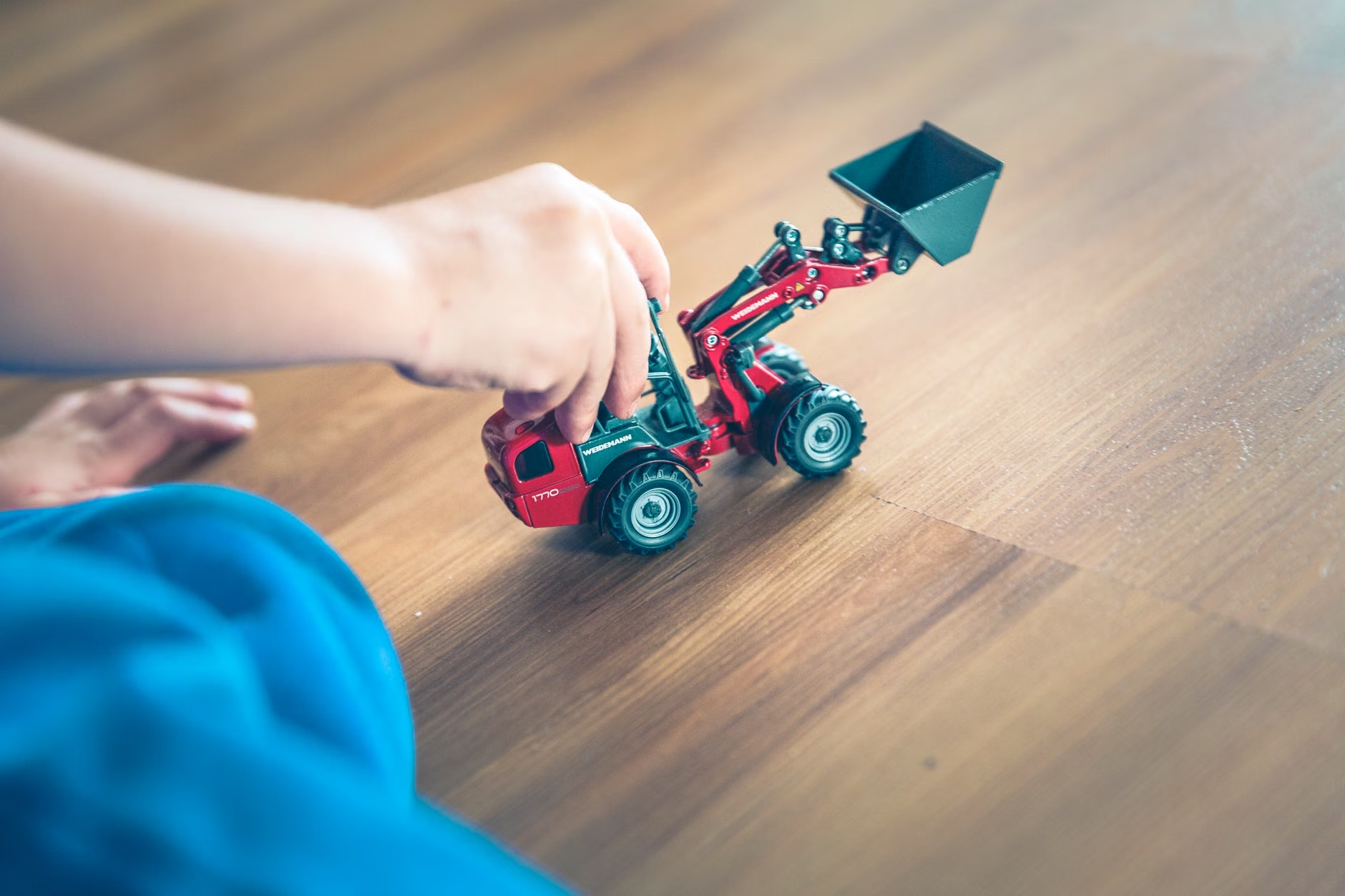
Consider a child with a set of 50 different plastic action figures versus a child with a set of 20 high-quality wooden blocks. The child with the action figures likely plays out a pre-programmed scenario until they get bored and look for the next thing. The child with the blocks, however, must decide what the blocks are: are they a fortress? A train? A rocket ship? By limiting the input, you force the child to provide the output through their own imagination.
Defining the Post-Growth Curation Philosophy
The “Post-Growth” philosophy in toy curation is about decoupling a child’s happiness and development from the constant acquisition of new products. It is a rejection of the idea that growth requires continuous accumulation. Instead, it prioritizes the quality of the interactions over the quantity of the inventory. This approach is not about deprivation; it is about intentionality.
To implement this, we need to move away from the “buy-consume-discard” cycle that dominates the toy industry. In a post-growth home, the goal is to curate an environment that acts as a tool for development, not a source of clutter. This involves a shift in how we view the “utility” of a toy. A toy that can only do one thing—like a plastic toy that plays a specific song when a button is pressed—has low utility because its purpose is exhausted quickly. A set of unit blocks or a collection of simple animal figurines has high utility because they can be used in thousands of different ways over the course of several years.
The Four Pillars of Intentional Curation
To help you structure your home environment, we can break down the criteria for what stays and what goes. When evaluating your current collection, use this decision matrix to determine the long-term value of an item.
| Criteria | High-Value (Keep/Invest) | Low-Value (Donate/Discard) |
|---|---|---|
| Functionality | Open-ended (blocks, art supplies, silks) | Fixed-purpose (battery-operated gadgets) |
| Durability | Heirloom quality (wood, metal, thick rubber) | Disposable (cheap plastic, fragile parts) |
| Engagement | Requires active physical/mental effort | Passive (lights up/makes noise automatically) |
| Versatility | Grows with the child (age-neutral) | Age-restricted (child outgrows in 3 months) |
If you find that your child’s room is dominated by items in the right-hand column, you are not alone. The industry is designed to lure us toward these items. However, the “Post-Growth” shift requires us to stop buying these low-value items entirely. When you do buy, look for items that serve as “foundations” rather than “add-ons.”
The Mechanics of Toy Rotation
If you have already accumulated a large number of toys, you don’t need to throw them all away tomorrow. The most effective, non-wasteful way to implement this philosophy is through a system of rotation. Rotation is the practice of limiting the number of toys available at any given time while keeping the rest in storage.
Step 1: The Great Purge
Go through every toy in your house. Remove anything that is broken, missing pieces, or has become a source of stress rather than joy. If a toy is essentially a “junk” item that was a party favor or a cheap impulse buy, it goes in the donation or recycling bin.
Step 2: The Categorization
Group the remaining toys into categories: construction, imaginative play, puzzles/games, and sensory/art. You want a balanced “menu” of activities available at any time.
Step 3: The Rotation Schedule
Select a small, manageable number of items (aim for 10–15 total) and place them in the play area. Store the rest in opaque bins in a closet or garage. Every 3–4 weeks, swap the items in the play area with items from the storage bins. When you bring the “old” toys back out, they feel brand new to the child, and the cycle of interest begins again.
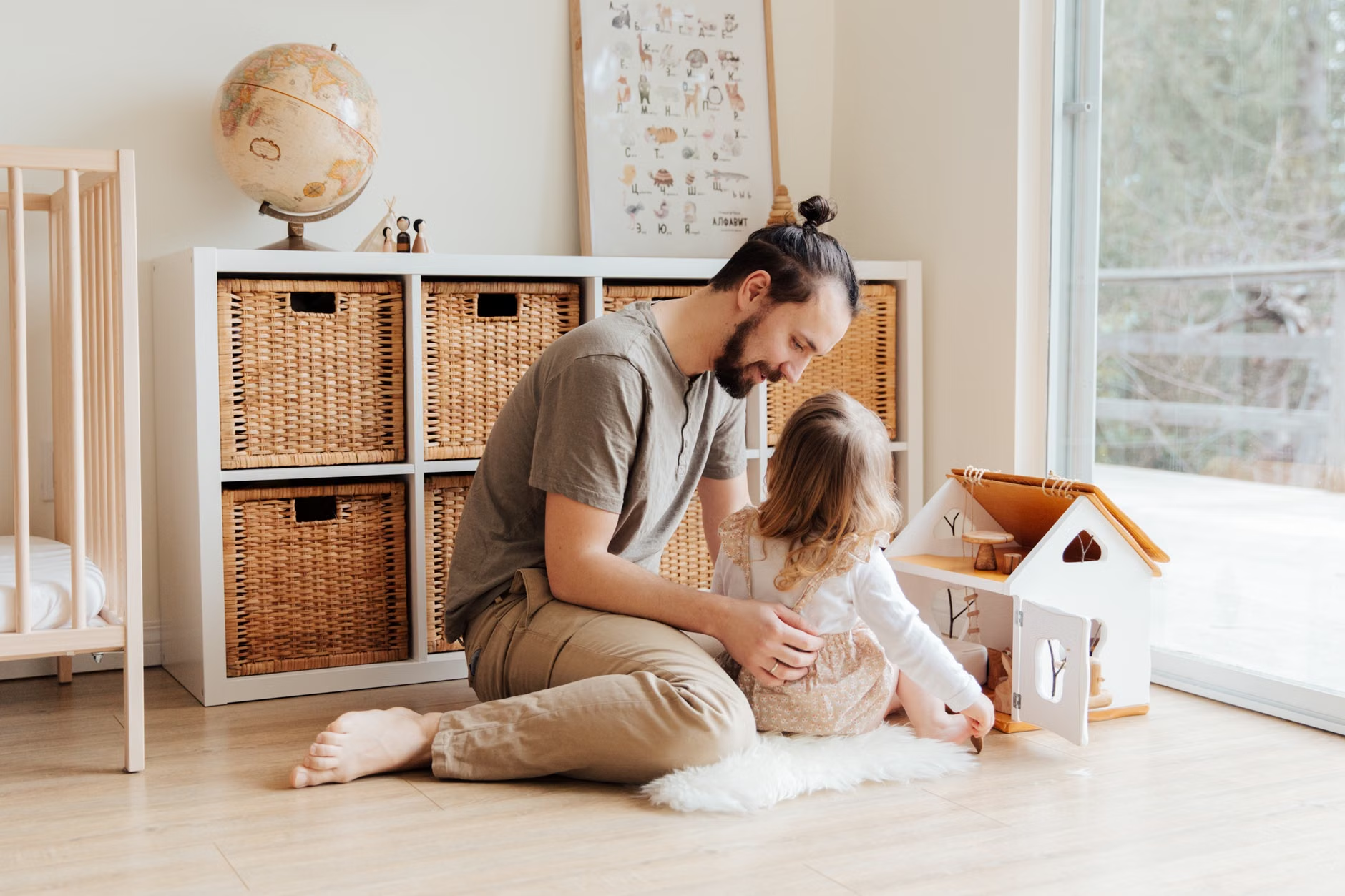
This system has a secondary benefit: it teaches children to respect their belongings. When there are only a few items to care for, it is much easier to manage the cleanup process. A child who has to clear away 500 pieces of LEGO is overwhelmed; a child who has to put away one set of blocks and a few figures can accomplish the task with a sense of pride.
Common Mistakes and How to Avoid Them
Even with the best intentions, parents often fall into common traps when trying to simplify their home. One major mistake is “The Curator’s Ego.” This happens when we buy high-end, aesthetic toys because they look beautiful on Instagram, rather than because our child actually enjoys them. Remember, the goal is not to have a “minimalist aesthetic” home; the goal is to have an environment that supports your child’s development.
Another mistake is failing to involve the child in the process. While you should handle the initial purge of broken items, the rotation should be a collaborative effort. Ask your child, “Which toys do you want to keep out for the next few weeks, and which ones should we put to sleep in the closet?” This gives them a sense of agency and helps them understand that they don’t need everything at once to have fun.
Finally, avoid the temptation to “fill the gaps.” If you notice your child isn’t playing with the current set of toys, the instinct is often to buy something new to fix the boredom. Instead, look at *how* they are playing. Are they lacking a specific tool? If they have blocks but no figures, maybe they need a few simple wooden animals to populate their buildings. But do not use a purchase to solve a lack of engagement unless you have observed a clear, consistent need over several weeks.

Economic and Environmental Considerations
The Post-Growth approach isn’t just better for your child’s brain; it is significantly better for your bank account and the planet. According to various retail reports, the average household spends hundreds of dollars per year on toys that end up in landfills within 18 months. By shifting your spending toward high-quality, durable goods, you spend more upfront but significantly less over time.
Consider the “cost-per-hour” of play. A $50 battery-operated plastic vehicle that breaks in a month costs $50 for a few weeks of engagement. A $100 set of high-quality wooden blocks that lasts for ten years and is passed down to siblings or friends costs pennies per year. The math is clear: quality is the ultimate form of frugality.
Furthermore, by reducing the volume of plastic toys entering your home, you are reducing your contribution to the massive plastic waste crisis. Many modern toys are made of mixed materials—plastics, electronics, and batteries—that are notoriously difficult to recycle. By choosing items made from natural, recyclable, or biodegradable materials, you are making a tangible impact on your household’s environmental footprint.
Beyond the Toys: Creating a Growth-Mindset Environment
The philosophy of post-growth extends beyond the toy box. It is about fostering a home culture where “enough” is celebrated. In a society that pushes us to constantly upgrade, from our phones to our furniture to our children’s playrooms, choosing to opt-out is a radical act of self-care. It frees up your mental energy to focus on what actually matters: your relationship with your child.
When you stop worrying about the latest toy trends or feeling the need to “keep up” with the playroom setups you see on social media, you reclaim hours of time. That is time you can spend reading, going for walks, or simply being present with your family. The most valuable resource in your home is not the toys; it is the time and attention you provide.
If you find yourself struggling with the transition, start small. Don’t try to overhaul the entire house in a weekend. Pick one corner of one room and apply the curation philosophy there. Observe how your child interacts with that space compared to the rest of the house. You will likely find that they gravitate toward the simplified space, and that observation will give you the confidence to continue the process throughout the rest of your home.
Remember that this is a process, not a destination. Your child’s interests will change, and your curation needs will evolve. The key is to maintain the discipline of not letting the accumulation outpace your ability to enjoy and manage what you have. By keeping the environment lean and the play intentional, you are providing the best possible foundation for your child to grow into a creative, focused, and thoughtful individual.
Frequently Asked Questions
Q: How do I handle gifts from relatives who insist on buying “noisy” plastic toys?
A: It is perfectly acceptable to be honest with family members. Explain that you are trying to minimize clutter and encourage open-ended play. Suggest specific, high-quality alternatives or, if they insist on a gift, ask for experiences like museum memberships, zoo passes, or books. If you do receive a toy that doesn’t fit your philosophy, you can keep it in the rotation, but don’t feel obligated to keep it in the permanent collection if it doesn’t serve your child’s development.
Q: At what age should I start rotating toys?
A: You can start as soon as your child begins to show an interest in objects. Even for infants, having a limited selection of sensory toys is better than having an overwhelming pile. As they grow into toddlers and preschoolers, the importance of rotation increases, as this is when they begin to develop the focus required for more complex, imaginative play.
Q: What if my child gets upset when I put some of their toys away?
A: This is a normal reaction to change. Instead of framing it as “taking away,” frame it as “putting them to sleep” or “giving them a rest.” Involve them in the process so they have a say in what stays out. If they are truly attached to a specific item, let them keep it out, but encourage them to put away something else in its place. The goal is to maintain a manageable, limited number, not to enforce a strict rule that causes distress.
For further reading on the impact of play environments on child development, you may refer to the American Academy of Pediatrics’ report on the power of play, which outlines how quality, rather than quantity, is the primary driver of developmental benefits in children.