Key Takeaways
- Quality over Quantity: A post-growth approach focuses on 5–7 high-quality, open-ended toys rather than a volume-based collection, which reduces mental load for both parent and child.
- The Rotation Rule: By keeping 80% of toys in storage and rotating the active set every two weeks, you maintain novelty without adding new physical items to your home.
- Developmental ROI: Toys that require active participation (building, imagining, sorting) yield better long-term cognitive and emotional outcomes than passive, battery-operated toys that do the work for the child.
The most effective way to manage a small nursery is to stop viewing toys as a collection to be amassed and start viewing them as a limited set of tools to be curated. If you feel like you are constantly drowning in plastic, batteries, and the endless “reset” of your living room floor, you are not failing at parenting—you are simply suffering from an over-provisioned environment. A ‘post-growth’ approach to toys isn’t about deprivation; it is about intentionality. It is the practice of choosing fewer, higher-quality items that offer maximum developmental versatility, allowing you to reclaim your physical space and your child’s attention span.
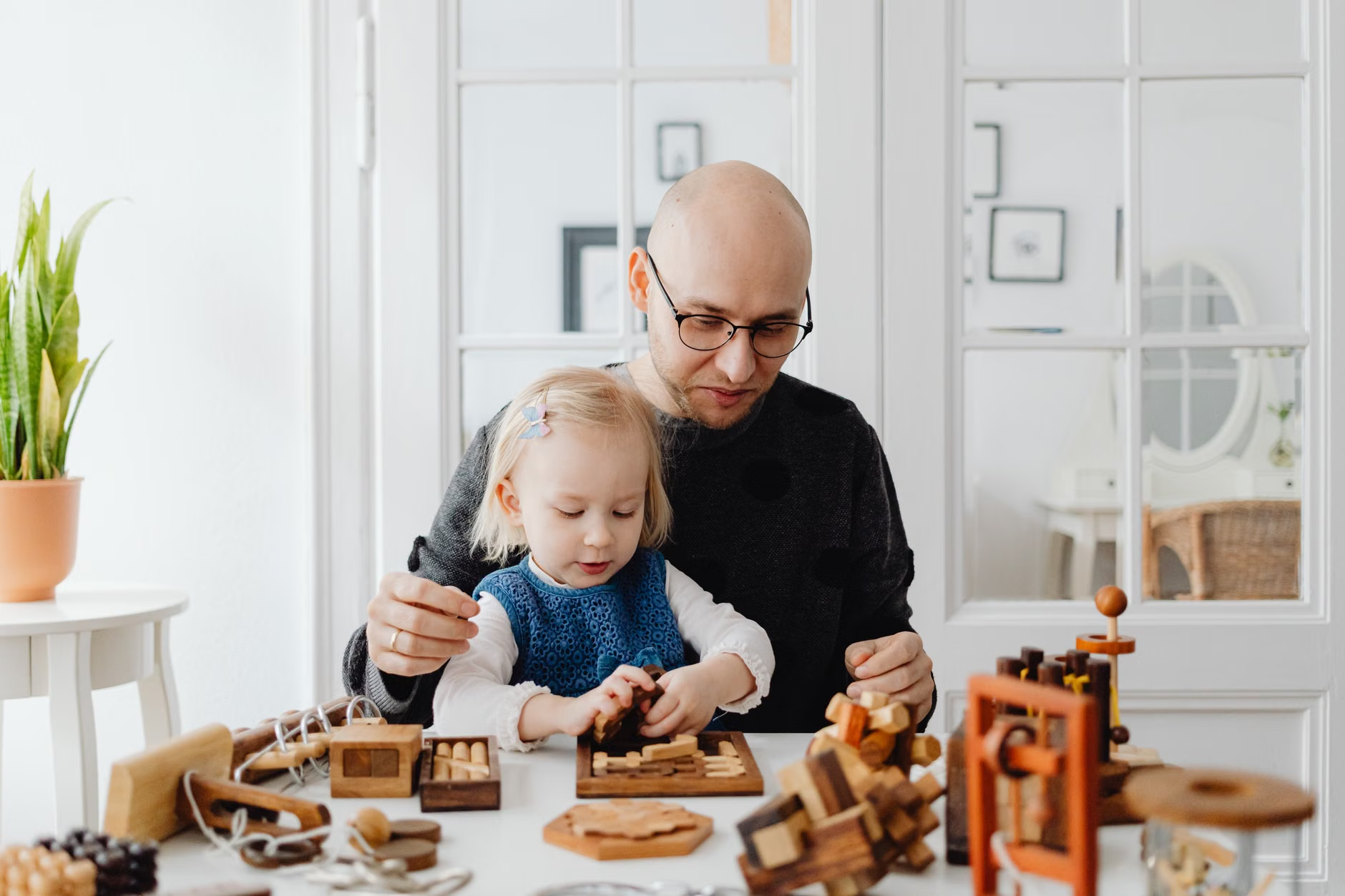
Why Your Nursery Feels Like a Toy Store (And Why That’s a Problem)
We often fall into the trap of “developmental anxiety,” where we feel that if we don’t provide a specific toy for every developmental milestone—from sensory grasping to fine motor sorting—we are hindering our child’s progress. This leads to a massive accumulation of gear. Marketing departments for toy companies know exactly how to trigger this parental guilt. However, research into child development consistently shows that an overabundance of toys—often called “toy flooding”—actually reduces the quality of play.
When a child is presented with too many options, they engage in “shallow play.” They pick up one item, look at it for thirty seconds, drop it, and move to the next. This constant switching prevents the development of deep focus and persistence. From a practical standpoint, this also creates a “reset burden” for you. If you spend 20 minutes every evening tidying up, you are essentially working as an unpaid janitor for a collection of items that your child isn’t even truly using. By capping your inventory, you are not just decluttering; you are curating an environment that forces deep engagement.
The Math of Minimalist Play
Consider the “Rule of Seven.” Developmental psychologists often suggest that for children under the age of five, having more than seven distinct “play stations” or categories of toys is counterproductive. If you have a bin of cars, a box of blocks, a set of dolls, a puzzle, a musical instrument, a soft toy, and an art kit, you have already met the limit. Anything beyond this is essentially redundant noise. If you find yourself with three different versions of a shape-sorter, you are not providing options; you are providing distractions.
Building Your Post-Growth Toy Inventory
To move toward a post-growth nursery, you must first perform a “hard reset.” Gather every toy in your home and place it in the center of the room. It will look like a mountain of plastic. Now, categorize them. You will likely find that 70% of these items are “single-function” toys—items that do one thing, make a noise, and have no room for imaginative input. These are the primary targets for removal.
The post-growth philosophy prioritizes “open-ended” toys. These are items that become whatever the child needs them to be. A block is a car, a building, a piece of food, or a telephone. A silk scarf is a cape, a river, a blanket, or a bandage. When a toy is “open-ended,” the child provides the intelligence, not the battery-powered chip inside the toy.
| Toy Type | Functionality | Developmental ROI |
|---|---|---|
| Battery-operated light/sound | Passive consumption | Low (Limited engagement) |
| Wooden building blocks | Active creation | High (Spatial reasoning) |
| Plastic character figures | Narrative play | Medium (Limited variety) |
| Silk/Fabric play cloths | Abstract imagination | High (Limitless versatility) |
As you can see in the table above, the items with the highest return on investment (ROI) are those that require the child to do the work. If you are struggling with a small nursery, look for items that serve multiple functions. A sturdy wooden crate can act as storage, a stool, and a base for building. A collection of nesting bowls can be used for stacking, water play, or sorting colors. This is the essence of post-growth: utility multiplied by versatility.
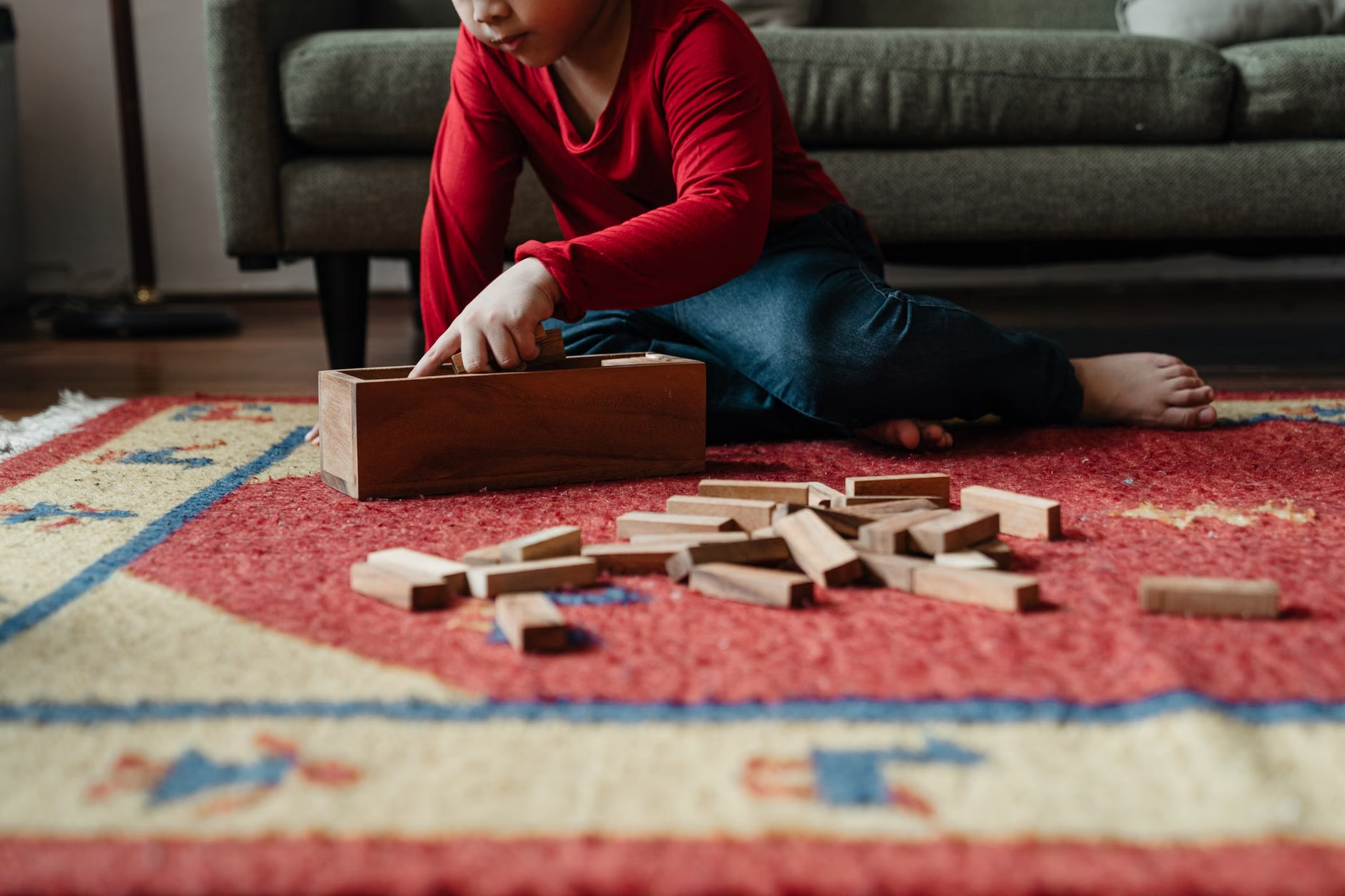
Implementing the Rotation System
The most common mistake parents make when trying to declutter is to get rid of everything at once, only to realize the child “needs” variety. The solution is not to buy more, but to store more. This is the “Toy Library” method. Take your curated set of high-quality toys and divide them into four distinct groups. Keep one group in the nursery and store the other three in a closet, attic, or basement.
Every two weeks—or whenever you notice your child’s interest waning—swap the active set for a new group from storage. This creates a “new” environment without spending a single cent or increasing the physical footprint of your nursery. It also teaches your child that toys are precious and deserve care. When they have fewer items, they are more likely to notice when one is missing or broken, fostering a sense of responsibility.
The “Out-of-Sight” Threshold
If you don’t have storage space, you must be more ruthless with your culling. Use the “Six-Month Rule”: if an item has not been touched in the last six months, it is not part of your child’s current developmental phase. In a small nursery, every cubic centimeter of floor space is valuable. If an item is not being used, it is effectively occupying space that could be used for movement, sleep, or reading. You can donate these items, sell them, or pass them on to friends. The goal is to reach a state where you can see the floor of your nursery at all times.
The Hidden Costs of “Toy Growth”
Why do we keep buying? Often, it is a psychological response to the “parental labor” of play. We think, “If I buy this new interactive toy, my child will play by themselves for 30 minutes, and I can finish my work.” This is a short-term gain that leads to long-term clutter. The irony is that children often play longer and more deeply with simple, non-interactive objects precisely because they are not being “entertained” by a machine. They are being challenged by their own imagination.
Additionally, consider the “maintenance tax.” Every toy you own requires maintenance: checking for broken parts, replacing batteries, cleaning dust, and eventually disposing of them. In a small home, this is a significant mental load. By limiting your collection, you are essentially reducing your administrative burden as a parent. A smaller collection means less time searching for missing pieces and more time engaging with your child or simply enjoying a quiet, organized space.
One of the biggest hurdles to a post-growth nursery is the influx of gifts from well-meaning relatives. We feel guilty saying “no.” However, you are the gatekeeper of your home’s ecosystem. It is entirely acceptable to set boundaries. You can suggest “experience gifts”—a trip to the zoo, a museum membership, or a music class—instead of physical objects. If you do receive physical gifts, you are not obligated to keep them forever. Use them, enjoy them, and when the child outgrows them, pass them on.
If you feel awkward about this, frame it as a benefit to the giver: “We are trying to teach [Child’s Name] to care for a smaller, curated collection of toys so they can really learn how to use them. We’d love it if you could help us by keeping the gift list short.” Most people are actually relieved to have guidance, as buying for children can be overwhelming. They often appreciate knowing that their gift will actually be used and valued, rather than shoved into a corner of a crowded closet.
Decision Criteria for Your Nursery
How do you decide what stays and what goes? Use this decision matrix. If an item fails two or more of these criteria, it is a candidate for removal:
- Is it open-ended? Can it be used in at least three different ways?
- Is it durable? Can it survive being dropped or stepped on?
- Does it require active participation? Does the child have to “do” something to make it work?
- Does it fit the current developmental stage? Is it too simple (boring) or too complex (frustrating)?
- Does it spark joy for the user? (Note: This is for the child, not the parent.)
Remember that a nursery is a room for resting and growing, not a warehouse for consumer goods. The goal of a post-growth nursery is to create a space that feels calm, intentional, and inviting. When you remove the clutter, you aren’t just cleaning; you are creating the physical conditions for focus and creativity to flourish.
Frequently Asked Questions
1. How do I handle the “but they love it” argument when my child resists getting rid of toys?
Children often express attachment to items not because they are playing with them, but because they are familiar. If you are worried about resistance, start by putting the toys in a “waiting box” in a closet. If they don’t ask for the toys within two weeks, they likely don’t actually miss them. This allows you to remove items without the emotional drama of a direct confrontation.
2. Does this approach work for toddlers who need constant stimulation?
Actually, it works better. Toddlers who seem to need constant stimulation are often overstimulated by their environment. When you reduce the visual noise, you allow their nervous system to regulate. Instead of jumping from toy to toy, they will eventually settle into longer periods of play because the environment is no longer “screaming” at them with hundreds of options.
3. Where can I find high-quality, open-ended toys without breaking the bank?
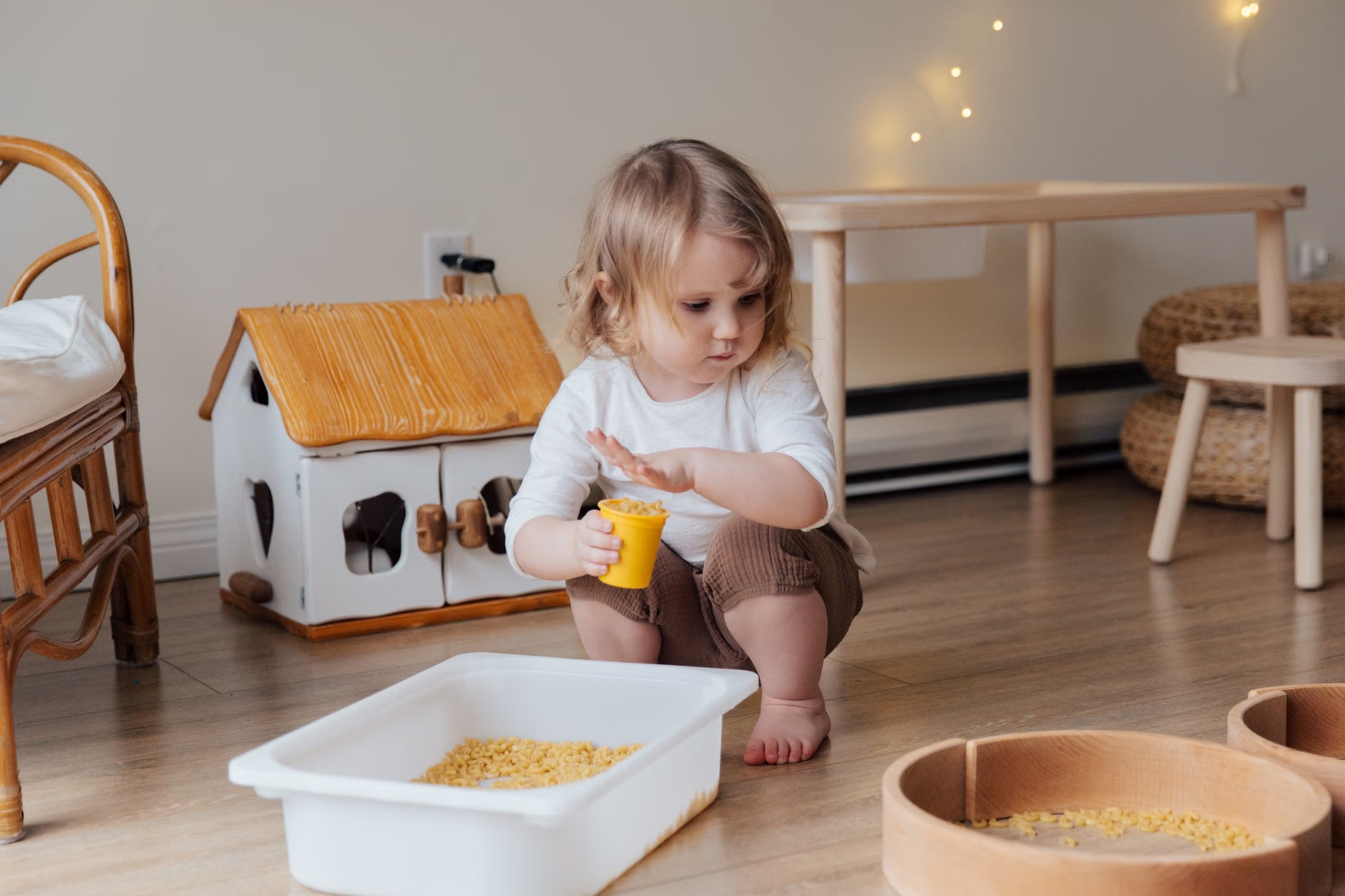
You don’t need expensive boutique brands. Look for second-hand wooden toys, unit blocks, and simple craft supplies at local thrift stores or online marketplaces. Often, the best “toys” are found in your kitchen—a set of stainless steel mixing bowls, a wooden spoon, and some dry pasta for sorting provide more developmental value than a $100 plastic activity center.
Creating a post-growth nursery is a process, not a one-time chore. Start by removing the most obvious clutter, implement a rotation, and observe how your child’s play changes. You will likely find that as your home becomes less crowded, your patience increases and your child’s ability to engage with the world around them deepens. It is a quiet, steady shift toward a more intentional way of living.
For further reading on child development and the impact of the environment, you can refer to the resources provided by the Zero to Three organization, which offers evidence-based insights into how small changes in the home environment can support early learning and healthy development.