A circular wardrobe for toddlers reduces total clothing expenses by up to 40% while preventing hundreds of garments from entering landfills, achieved through a strategic mix of rental subscriptions, high-value resale, and durable fabric selection.
Key Takeaways
- Rental is cheaper than buying: Subscription models for rapidly growing toddlers often cost 30-50% less than purchasing new mid-range outfits every three months.
- Fabric quality dictates resale value: Natural fibers like GOTS-certified organic cotton and Merino wool retain 50-70% of their value, whereas synthetic fast fashion has zero resale liquidity.
- The “Cost-per-Wear” flip: A $40 high-quality romper that is resold for $20 after 40 wears costs $0.50 per use, while a $10 “disposable” romper that falls apart after 5 wears costs $2.00 per use.
If you have a toddler, you are currently living in a state of perpetual biological upgrades. One morning, the pants that fit perfectly on Tuesday are suddenly high-waters on Thursday. It is as if they grow exclusively while we sleep, fueled by a spiteful desire to make our most recent shopping trip obsolete. For most parents in their 30s and 40s, this leads to a “closet graveyard”—bins of outgrown onesies, stained t-shirts, and “nice” outfits that were worn exactly once before the Great Growth Spurt of October.
The traditional linear model of “buy, wear, outgrow, discard” is failing us. It’s expensive, it creates massive physical clutter, and it’s an environmental disaster. According to the Ellen MacArthur Foundation, the equivalent of one garbage truck of textiles is landfilled or burned every second. When you realize that a toddler can go through seven clothing sizes before their third birthday, you start to see the scale of the problem in your own hallway. This is where the “Circular Wardrobe” comes in. It isn’t just a sustainability buzzword; it’s a logistical framework designed to keep clothes in use for as long as possible, saving you money and mental bandwidth in the process.
The Mechanics of the Circular Wardrobe: Beyond “Hand-Me-Downs”
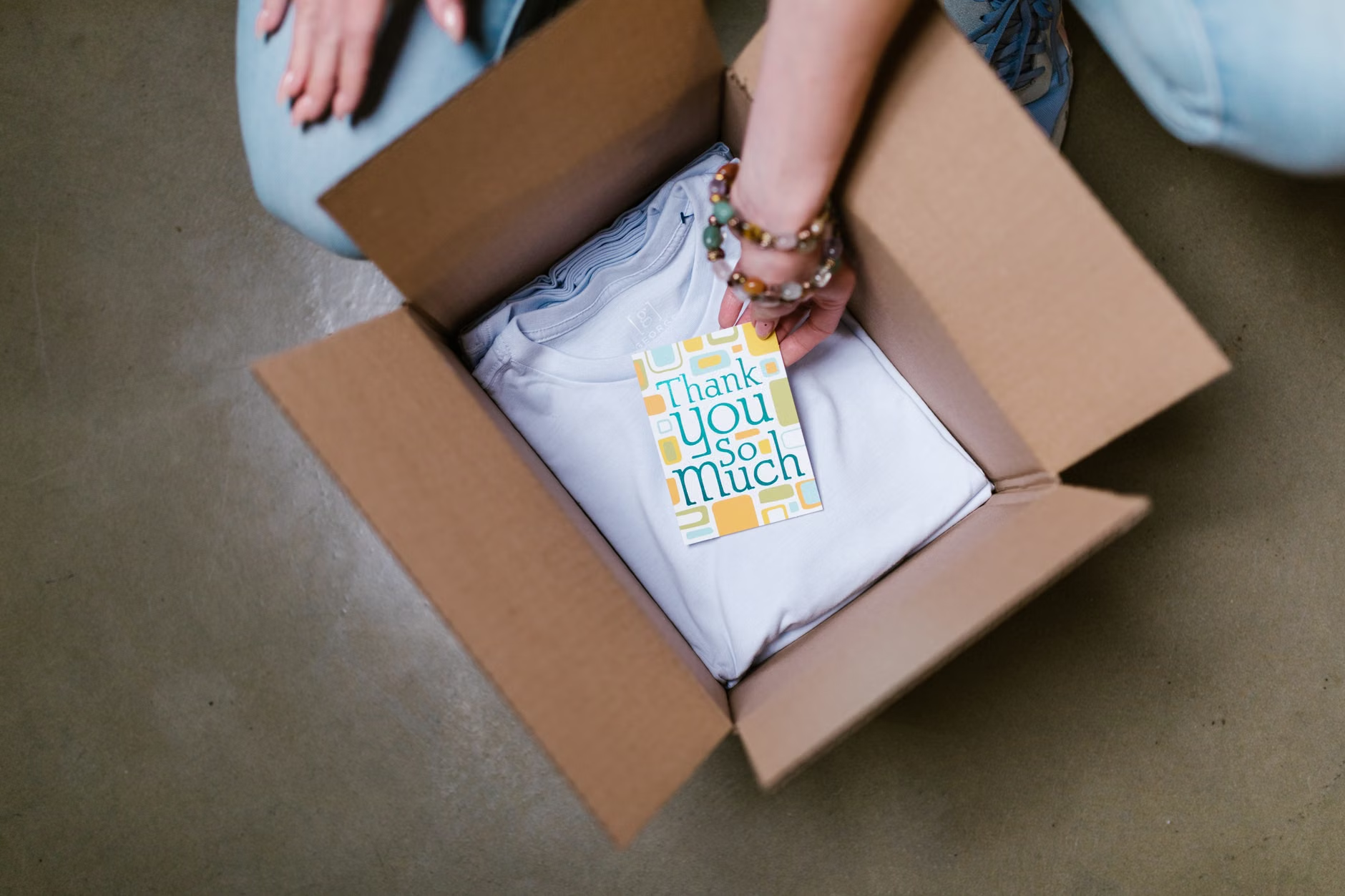
The circular wardrobe is a system where garments never reach a “dead end.” In a linear system, the garment ends in the trash or a donation bin where it likely won’t be sold. In a circular system, the garment moves from Rental → Use → Return or Purchase → Use → Resale → Next User. For a parent, this means shifting your mindset from “owner” to “steward.”
Why does this matter for someone balancing a career and a household? Because “stewardship” actually requires less work than “ownership.” Ownership involves shopping, organizing, storing, and eventually feeling guilty about throwing things away. Stewardship, particularly through rental models, involves a box arriving, your kid wearing the clothes, and you sending them back when they get tight. No long-term storage in the attic required.
The circular model typically rests on four pillars: Rental Subscriptions, Curated Resale, Community Swapping, and High-Durability Procurement. Each has a specific role depending on your child’s age and your local infrastructure. For example, rental is king during the “rapid growth” phases (0-24 months), while high-durability procurement and resale become more viable as growth slows down in the preschool years.
The Subscription Revolution: Why Renting Outfits Makes Financial Sense
Many parents recoil at the idea of “renting” clothes. “What if they get poop on it?” is the universal first question. Most professional circular fashion companies (like Bundlee in the UK, Circos in Europe, or UpChoose in the US) have built-in insurance for “life happens” moments. They expect stains; they have industrial-grade, eco-friendly cleaning processes that outperform your home washing machine.
Let’s look at the math. A typical “wardrobe refresh” for a toddler (roughly 15-20 items) can easily cost $300 at a mid-tier retailer. If your child grows out of those in 4 months, you’re spending $900 a year. A premium rental subscription might cost $50 a month ($600 a year). You save $300, and more importantly, you don’t have to spend your Saturday morning at the mall or browsing 20 different websites. You simply swap the capsule when the sleeves get short.
| Feature | Buying New (Mid-Tier) | Rental Subscription | Winner for Parents |
|---|---|---|---|
| Upfront Cost | $250 – $400 per size | $40 – $60 per month | Rental (Cash Flow) |
| Storage Burden | Bins in attic/garage | Zero (Items returned) | Rental |
| Stain Anxiety | High (Loss of value) | Low (Insurance included) | Rental |
| Variety/Style | Fixed until next buy | Rotational | Tie |
The table shows a clear advantage for rental in terms of cash flow and storage. However, rental is most suitable for parents who value time and space over the “sentimental” attachment to clothing. if you find yourself wanting to keep every single outfit as a memory, rental will be emotionally difficult for you. For the pragmatist, it is a game-changer.
The Resale Economy: Turning “Pre-Loved” Into a Revenue Stream
If you prefer to own your clothes, the circular wardrobe requires you to buy with the exit strategy in mind. This is the biggest mistake parents make: buying cheap, synthetic “fast fashion” because “they’ll just grow out of it anyway.” This is a false economy. Cheap clothes have a resale value of zero. They pill, they lose shape, and they end up in the bin.
Instead, the circular approach suggests buying “Pre-loved” high-end brands. Brands like Patagonia, Mini Rodini, Hanna Andersson, or Boden have incredibly high resale liquidity. You can buy a pre-owned Patagonia jacket for $40, use it for two seasons, and sell it on Vinted or Poshmark for $30. Your total cost for a world-class jacket? $10. That is cheaper than the lowest-quality supermarket brand, which would have cost $25 and been worth $0 at the end.
Mastering the “Resale Loop”
To make this work without it becoming a second job, you need a system. I recommend the “One-In, One-Out” box. Keep a shipping box in the bottom of the closet. The moment an item feels tight, it goes in the box. When the box is full, take 15 minutes to photograph the items on a clean, white sheet in natural light. Good lighting is the difference between an item selling in two hours or two months.
Focus on platforms that serve your specific region. In Europe, Vinted has dominated the children’s market due to its low fee structure. In the US, Kidizen is a specialized community where parents know the value of specific brands. By using these platforms, you aren’t just “getting rid of stuff”; you are recouping your investment to fund the next size up.
Fabric Science: Why “Natural” is the Only Way Forward
You cannot have a circular wardrobe built on polyester. Synthetic fibers are essentially plastic. Every time you wash them, they shed microplastics into the water system. More practically for a parent, they trap odors and they “pill” (those annoying little balls of fuzz). Once a garment is pilled and smelly, its circular life is over. No one wants to buy it, and it’s uncomfortable for the child.
Natural fibers—specifically Organic Cotton, Linen, Hemp, and Merino Wool—are the backbone of circularity. They are breathable, which is better for toddler skin, but more importantly, they are durable. A high-quality organic cotton rib-knit can go through fifty wash cycles and still look “Very Good Used Condition” (VGUC). This durability is what allows a garment to pass through three or four different families before it finally wears out.
The “Stain Management” Protocol
The biggest threat to a circular wardrobe is the “Set-In Stain.” If you want to resell or return rental clothes, you need to be a minor expert in stain removal. The secret is never putting a stained item in the dryer. The heat of the dryer “cooks” the protein or oil into the fiber, making it permanent. Use a solid stain soap bar (like Marseille soap or Fels-Naptha) and cold water immediately. If the stain is still there after the wash, air dry it and try again. This five-minute habit can preserve hundreds of dollars in resale value over a year.
Community Swapping: The Zero-Cost Circular Model
While rental and resale are great, the most efficient circular loop is the one that happens in your own neighborhood. “Buy Nothing” groups and local parent swaps are the gold standard for sustainability. There is no shipping footprint, no packaging waste, and no middleman taking a cut.
However, “swapping” often gets a bad reputation for being a chaotic pile of junk. To make community circularity work, you should organize or join curated swaps. Instead of a “take whatever” approach, curated swaps often have rules: “Bring 10 items in good condition, take 10 items.” This ensures the quality remains high. For a parent in their 30s or 40s with a busy schedule, a 1-hour organized swap once every six months is far more efficient than endless scrolling on resale apps.
How to Host a “Sip and Swap”
- Invite 5-10 parents with children of similar or slightly different ages.
- Set a quality standard: Items must be freshly laundered with no holes or major stains.
- Categorize by size: Use simple cardboard signs on a table or rug.
- The “Leftover” Plan: Have a pre-arranged plan to take all unclaimed items to a specific textile recycling center or a local shelter that accepts open donations. Don’t let the “clutter” end up back in your house.
The Step-by-Step Transition to a Circular Closet
You don’t need to throw everything away and start over today. That would be the opposite of sustainable. Instead, follow this transition plan as your child grows into their next size.
Step 1: The Audit
Go through the current closet. Separate items into three piles: Keep (fits now), Circular Potential (high quality, outgrown, can be sold/rented), and Downcycle (stained, ripped, low-quality). For the downcycle pile, do not donate them to charity shops—they often can’t sell them and they end up in landfills. Look for “Textile Recycling” bins specifically.
Step 2: Identify the “Core” vs. “Play” Wardrobe
A circular wardrobe doesn’t have to be 100% rental or 100% expensive resale. A realistic balance for a toddler is the 70/30 rule. 70% of the wardrobe should be “Circular” (high-quality basics, outerwear, and sweaters that hold value). 30% can be “Play” clothes (the t-shirts they will inevitably use as a napkin for spaghetti). By focusing your investment on the 70%, you stabilize the “wealth” of your closet.
Step 3: Choose Your Primary Method
Decide based on your current lifestyle. If you are a “Time-Poor” professional, sign up for one rental service for the next size up. If you are a “Bargain Hunter” who enjoys the thrill of the find, download a resale app and set alerts for your favorite durable brands. Stick to one method for three months to see if it fits your routine.
The Hidden Costs of “Cheap” Clothing
We often perceive a $5 t-shirt as a “win.” But in the circular economy, we look at the Total Cost of Ownership (TCO). A $5 shirt that is worn 10 times and then thrown away costs $0.50 per wear. A $25 high-quality organic cotton shirt that is worn 40 times by your child, then sold for $10, costs $0.37 per wear. The “expensive” shirt is actually 26% cheaper.
Furthermore, there is the “Clutter Tax.” Every item you own takes up physical space and mental energy. A circular wardrobe naturally stays small because items are constantly flowing out as new ones flow in. You stop being a “storage manager” and start being a parent. For those of us in our 30s and 40s, where time is the most precious commodity, the reduction in “decision fatigue” when looking at a small, high-quality closet is worth more than the clothes themselves.
The ultimate goal of the circular wardrobe is to reach a point where your child’s clothing budget becomes a self-sustaining loop. The money you make from selling Size 2T funds the purchase of Size 3T, or your monthly rental fee covers everything without you ever having to “shop” again. It is a cleaner, smarter, and more sophisticated way to handle the chaos of raising a toddler.
Start small. Next time your child needs a jacket, don’t go to a fast-fashion site. Look for a pre-loved version of a premium brand. Observe how it wears, how it washes, and how easily you can sell it when the sleeves get too short. You’ll likely find that once you go circular, the old way of shopping feels like a burden you’re glad to put down.
Official Sources for Further Reading:
- Ellen MacArthur Foundation – Redesigning the Future of Fashion
- US EPA – Textile Waste Data and Statistics
- GOTS (Global Organic Textile Standard) – Identifying Sustainable Fabrics
Frequently Asked Questions
1. Isn’t renting clothes unhygienic for toddlers?
Professional rental services use medical-grade or industrial cleaning processes that are often more thorough than home laundering. They sanitize garments between every user. If you are doing a community swap, a standard hot wash with a dash of white vinegar or a laundry sanitizer is usually more than enough to ensure hygiene.
2. How do I know which brands have the best resale value?
Look for brands that emphasize “natural fibers” and “heavyweight” fabrics. Brands with “Buy Back” programs (like Patagonia’s Worn Wear) are a huge green flag—it means the company itself believes the garment is durable enough to be sold twice. Generally, if a brand is known for being “expensive but indestructible,” it will excel in the resale market.
3. My child is very rough on clothes. Can I still go circular?
Actually, rough kids *need* circularity more. Cheap fabrics tear easily. High-quality circular brands often use reinforced knees, double-stitched seams, and higher-density weaves. While the upfront cost is higher, the garment is less likely to end up in the trash after one trip to the playground. For “play-hard” kids, focus on the resale of outerwear and “nice” layers, while using a local swap for their everyday play-dirt basics.
Final Thought: Transitioning to a circular wardrobe isn’t about being a “perfect” environmentalist. It’s about being a practical parent who realizes that buying disposable clothes is a bad investment of both time and money. Start with one category—maybe just coats or pajamas—and feel the difference in your closet and your wallet. You’ve got enough to manage; let the wardrobe take care of itself.