A circular wardrobe isn’t just a trendy environmental statement; it is a strategic productivity tool that reclaims the 15 minutes you lose every morning to “closet paralysis” while your toddler is currently trying to use a permanent marker on the sofa.
Key Takeaways
- 1. Financial Recovery: Utilizing resale platforms like Vestiaire Collective or The RealReal for “investment” pieces can recover 40-70% of the original cost, effectively subsidizing your next high-quality purchase.
- 2. Strategic Rental: Subscription rental services (e.g., Rent the Runway, Nuuly) eliminate the “one-wear” waste of event attire and maternity wear, saving the average professional parent over $1,500 annually.
- 3. The 80/20 Rule: Shifting to a circular model allows you to spend 80% of your budget on the 20% of clothes you actually wear daily (high-quality basics), while rotating the rest through rental and resale.
If you are in your 30s or 40s, balancing a career and a household, your relationship with your closet has likely reached a breaking point. We’ve all been there: staring at a rack full of clothes and feeling like we have absolutely nothing to wear. This isn’t because you lack clothes; it’s because you lack a system. The traditional “linear” model—buy, wear, discard—is failing us. It’s expensive, it creates clutter, and it adds to the mental load we’re already struggling to carry.
The “Circular Wardrobe” is the solution. It’s a closed-loop system where garments are kept in use for as long as possible through high-quality purchasing, careful maintenance, rental, and resale. For the professional parent, this means higher quality clothes for a lower net cost and a closet that actually works for your lifestyle instead of against it. Let’s break down how to build this system without it becoming just another “to-do” on your list.
Why Your Current Closet is a Productivity Sinkhole
Most professionals fall into the trap of “convenience buying.” You need a shirt for a meeting tomorrow, so you grab a mid-priced, average-quality item from a high-street brand. It looks okay for three washes, then it loses its shape. This is the hidden cost of fast fashion. It isn’t just the $40 you spent; it’s the time you’ll spend replacing it in six months and the frustration of wearing something that makes you feel “unpolished.”
Research from the Ellen MacArthur Foundation suggests that the average number of times a garment is worn has decreased by 36% over the last 15 years. For a parent, this is even worse. Children outgrow clothes in months, and our own bodies change through pregnancy and different life stages. A circular approach acknowledges these changes. Instead of buying for a “permanent” closet that doesn’t exist, we curate a “rotating” closet that evolves with us.
The goal is to move from ownership to stewardship. You don’t need to own 50 mediocre shirts; you need access to five great ones. When you view your clothes as assets with resale value, your perspective on “expensive” changes. A $300 blazer that retains $180 in resale value is cheaper than a $100 blazer that goes to the landfill.
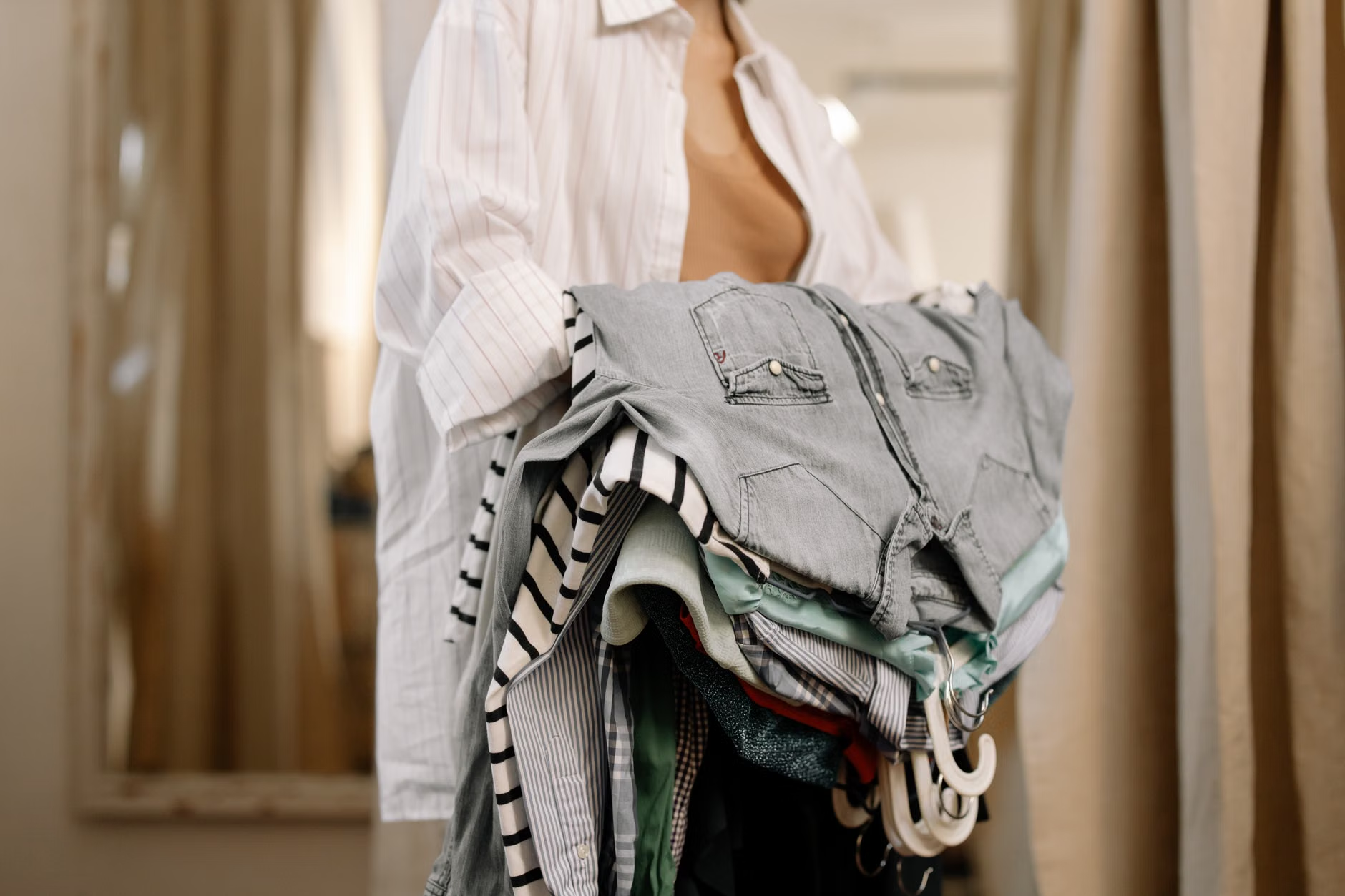
The Four Pillars of the Circular Wardrobe
To make this work, you need to understand the four mechanisms that keep the circle moving. You don’t have to master all of them at once. Start with the one that solves your biggest current frustration.
1. High-Quality Curation (The Foundation)
This is about the “One-In, One-Out” rule, but with a focus on durability. Look for natural fibers like wool, silk, and organic cotton. These materials don’t just feel better; they have a higher resale value. Check the seams. Are they reinforced? Is there a spare button? These are signs of a garment designed to last long enough to be sold to someone else later.
2. The Rental Revolution (The Variable Layer)
Rental is for the “peaked” moments of life. Think: weddings, big presentations, or the third trimester of pregnancy. Why buy a $400 maternity winter coat you’ll wear for three months? Services like Rent the Runway (US), By Rotation (UK), or GlamCorner (Australia) allow you to access premium brands for a fraction of the cost. You get the “new clothes” dopamine hit without the “closet clutter” hangover.
3. Resale Platforms (The Exit Strategy)
Resale is the engine of the circular wardrobe. Platforms like The RealReal, Vestiaire Collective, and Poshmark have made it incredibly easy to offload items. For kids’ clothes, platforms like Kidizen or Vinted are lifesavers. The key is to sell before the item is worn out. If you sell while the style is still current and the condition is “Excellent,” you maximize your return.
4. Repair and Maintenance (The Life Extender)
A circular wardrobe requires a relationship with a local tailor and a cobbler. Resole your boots before the leather wears through. Get your blazers taken in or let out as your body changes. A $30 tailoring job can make a $100 resale find look like a $1,000 custom piece. This is the secret weapon of the well-dressed professional.
The Financial Breakdown: Rental vs. Buying
Let’s look at a realistic scenario for a professional parent attending four major work events and two weddings in a year. Many people would buy three new outfits for these occasions. Here is how the math actually works out over a 12-month period.
| Category | Traditional Buying Model | Circular/Rental Model | The “Circular” Advantage |
|---|---|---|---|
| Event Wear | 3 Outfits @ $250 each = $750 | 6 Rentals @ $60 each = $360 | $390 saved + No storage needed |
| Work Basics | 10 Fast-fashion items = $500 | 4 High-quality resale items = $400 | Better fit, higher status, $100 saved |
| Resale Income | $0 (Items discarded/donated) | +$250 (Selling 5 items) | Cash back into your budget |
| Total Net Cost | $1,250 | $510 | $740 total savings |
The table shows that the circular model isn’t just “nicer” for the environment; it is a financially superior strategy. By opting for rental for high-cost, low-use items and resale for high-use items, you effectively cut your wardrobe spend by more than half while actually wearing “better” brands.
Building Your “Professional Uniform”
Decision fatigue is real. As a parent, you make roughly 35,000 decisions a day. By the time you get to “what shoes match these pants,” your brain is fried. The circular wardrobe encourages a “uniform” approach. This doesn’t mean wearing the same thing every day, but rather having a reproducible silhouette.
Step 1: Identify your “Power Silhouette.” Do you feel best in high-waisted trousers and a tucked-in knit? Or a midi-dress with a blazer? Once you find it, stop experimenting. Buy that silhouette in high-quality versions from the resale market.
Step 2: Color Palette Restriction. Stick to a base of three neutrals (e.g., Navy, Grey, Camel) and two accent colors. This ensures that every “circular” item you buy or rent will automatically match everything else you own. This eliminates the “I have this great skirt but no top to go with it” problem.
Step 3: The “Resale-First” Search. Before buying a new staple (like a trench coat or a leather tote), search eBay or Vestiaire Collective using specific filters: “Brand,” “Material (Leather/Wool),” and “Condition (New with tags/Excellent).” You can often find the exact current-season item for 40% off because someone else’s “impulse buy” is your “strategic gain.”
Managing the “Kids’ Clothing Churn”
This is the hardest part for parents. The sheer volume of clothes children go through is staggering. A circular wardrobe for kids requires a different tactic: Volume Management.
Don’t buy “cute” individual pieces. Buy in bundles. Many parents on resale apps sell “lots” (e.g., “10 pairs of Gap pajamas, size 3T”). Buying these used is significantly cheaper and more sustainable. When your child outgrows them, you simply re-list the same “lot.” You are essentially “renting” the clothes for the cost of the shipping and a small usage fee.
The “Special Occasion” Rule for Kids: Never buy new for flower girl dresses, holiday suits, or themed costumes. These items are worn once and are available in abundance on the secondhand market in pristine condition. Using a “buy-used-then-resell” strategy for these items often results in a net cost of zero.
Common Mistakes to Avoid
Transitioning to a circular wardrobe has its pitfalls. Here is what to watch out for so you don’t end up more stressed than when you started.
- The “Sunk Cost” Trap: Holding onto clothes that don’t fit because they were “expensive.” If you aren’t wearing it, it’s losing resale value every day. Sell it now while it’s still worth something.
- Ignoring Fabric Care: You cannot sell a cashmere sweater full of pills or a silk shirt with sweat stains. Invest in a good fabric shaver and learn which items actually need dry cleaning versus a delicate cold wash. Pro tip: Most “Dry Clean Only” items (except structured blazers) can be hand-washed with specialized wool/silk detergent.
- Buying “Cheap” Secondhand: Just because it’s used doesn’t mean it’s a good deal. Avoid buying fast-fashion brands (Zara, H&M) secondhand. They don’t hold their shape well enough for a second life. Focus your resale searches on “mid-to-high” brands (Theory, Eileen Fisher, Patagonia, Boden) that are built to last.
A Step-by-Step Action Plan for This Weekend
If you’re ready to start, don’t try to overhaul everything at once. Follow these steps to see immediate results.
- The “Reverse Hanger” Test: Turn all your hangers backward. When you wear an item and put it back, turn the hanger the right way. In one month, you will see exactly which 20% of your wardrobe is doing the heavy lifting.
- The “Resale Box”: Put a box in the bottom of your closet. The moment you put something on and think, “I don’t love how this fits,” or “This is a bit tight,” do not put it back on the hanger. Put it in the box.
- Download One App: Choose one resale app (like Vinted or Poshmark). List three items from your “Resale Box” this Sunday. Use natural light for photos and be honest about the condition. Use the money you make to fund your first “high-quality” circular purchase.
- Book a Rental: Do you have a work conference or a dinner party coming up? Instead of browsing a mall, browse a rental site. Experience the joy of wearing a $600 dress for $60 and then sending it back for someone else to deal with the cleaning.

The Long-Term Impact
Ultimately, the circular wardrobe is about intentionality. In our 30s and 40s, our time is our most precious resource. By automating your wardrobe through a circular system, you remove a layer of daily friction. You start your day feeling composed and professional, you save money that can be redirected toward your family’s future, and you teach your children that quality and care matter more than mindless consumption.
The fashion industry is responsible for 10% of global carbon emissions. By keeping your clothes in circulation for just nine extra months, you can reduce their carbon, water, and waste footprints by around 20-30%. That’s a massive impact for a change that actually makes your life easier.
Start small. Sell one thing. Rent one thing. Buy one “forever” piece. Your closet—and your calendar—will thank you.
Official Resources for Further Reading
- Ellen MacArthur Foundation: Circular Fashion Overview
- ThredUp 2023 Resale Report: Market Trends and Data
- Fashion Revolution: Guide to Care, Repair, and Re-wear
Frequently Asked Questions
Q: Is selling clothes online too time-consuming for a busy parent?
A: It can be if you do it wrong. To save time, use “Consignment” services like The RealReal or ThredUp. You simply fill a bag and mail it to them; they handle the photography, listing, and shipping to the buyer. You get a lower percentage of the sale, but it takes zero effort.
Q: How do I know if a brand has good resale value?
A: A good rule of thumb is to check the “Sold” listings on eBay or Poshmark. Brands with high-quality materials (100% cashmere, heavy-weight denim, Goodyear-welted shoes) almost always retain value better than “trendy” brands made of polyester blends.
Q: What if I rent something and my kid spills juice on it?
A: Most major rental services include basic insurance in their subscription or rental fee that covers minor stains and “wear and tear.” For major damage, you might be liable, but for the average “parenting mishap,” you are usually covered. Always check the “Insurance” section of the Terms of Service before renting.
Embracing a circular wardrobe isn’t about being perfect; it’s about being smart. Start with one shelf, one app, or one rental, and watch how much lighter your mornings feel. You’ve got enough on your plate—let your clothes be the one thing that’s actually handled.
Stay cool, stay circular.