Key Takeaways for HSP Parents:
- Sensory modulation is a productivity tool, not a luxury. By controlling light, sound, and tactile input, you reduce the “background processing” your brain does, which is the primary cause of HSP burnout.
- The 90-minute “Sensory Reset” cycle. Highly sensitive systems function best when you alternate 90 minutes of focused work with a 5-10 minute sensory-neutral break away from all screens and noise.
- Prioritize “Soft” Technology. Use hardware that minimizes sensory friction—such as mechanical keyboards with dampened switches and high-fidelity noise-canceling headphones—to prevent cumulative nervous system fatigue.
If you are a parent who identifies as a Highly Sensitive Person (HSP), you already know that the modern home office is often a sensory minefield. Between the hum of the refrigerator, the notification pings from your work chat, and the sudden, unpredictable sounds of household life, your nervous system is likely processing double the information of your non-HSP colleagues. The “Sensory-Zone” approach isn’t about creating a silent, isolated bunker; it is about intentionally curating your environment to minimize the “noise” that drains your cognitive reserves before you even start your first meeting.
Why Your Brain Needs a Sensory-Zone
For the uninitiated, the term “Highly Sensitive Person” (HSP) refers to a personality trait characterized by high sensory processing sensitivity. Research in environmental psychology suggests that HSPs have a lower threshold for external stimuli. In a standard office, this might manifest as being unable to focus if the air conditioning is too loud or if a colleague is typing aggressively. As a parent working from home, you don’t have the luxury of a private, soundproofed corporate suite. You are managing professional output while your brain is simultaneously tracking the “safety” of your environment—the sound of a child playing in the next room, the smell of lunch cooking, or the visual clutter of laundry waiting to be folded.
This is why you feel “spent” by 2:00 PM. Your brain is not just working; it is constantly filtering. Every flicker of a screen, every distant siren, and every textural irritation (like a scratchy chair or a tight sweater) consumes a fraction of your executive function. By creating a Sensory-Zone, you are outsourcing that filtering process to your environment. You are creating a space that “tells” your nervous system it is safe to down-regulate, which is the secret to sustaining high-level focus for longer periods.
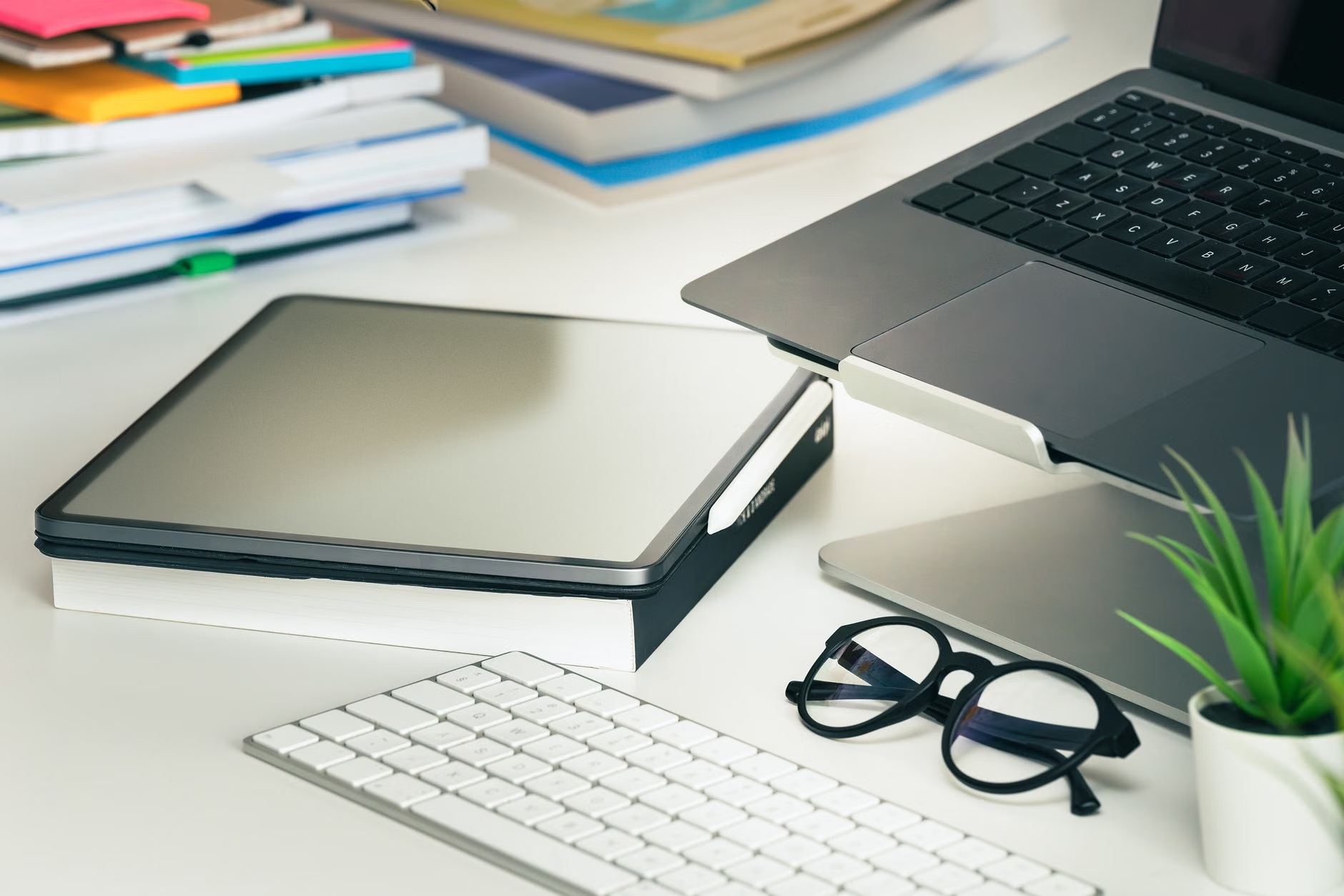
The Three Pillars of Sensory Regulation
To build a functioning Sensory-Zone, you must address the three primary inputs that overwhelm the sensitive nervous system: auditory, visual, and tactile. Most people try to tackle one—usually sound—and ignore the others. However, sensory regulation is cumulative. If your ears are protected but your lighting is harsh and your chair is uncomfortable, you will still experience sensory fatigue.
1. Auditory Control: Beyond Just Noise-Canceling
Noise-canceling headphones are the standard, but they are not a silver bullet. For many HSPs, the “pressure” sensation of active noise cancellation (ANC) can actually be a sensory irritant in itself. If you find ANC uncomfortable, consider high-fidelity passive noise-isolating earplugs or open-back headphones that allow for a more natural soundstage. Furthermore, consider “Sound Masking” rather than “Noise Blocking.” Playing brown noise (which is deeper and less harsh than white noise) at a low volume can act as a blanket, smoothing out the sharp, unpredictable spikes of household sound that trigger the HSP startle response.
2. Visual Minimalism: Reducing Cognitive Load
Your peripheral vision is a major source of sensory intake. If your desk faces a doorway or a high-traffic area of your home, your brain is constantly “monitoring” for movement. The best Sensory-Zone layout positions your desk so that your back is to a wall. If your space is too small for this, use a low-profile room divider or a sheer curtain to soften the visual “noise” of the room. Additionally, consider the color temperature of your lighting. Harsh, cool-white LED bulbs (5000K+) can increase cortisol levels. Switch to warm-white or “daylight” bulbs (around 3000K-4000K) to keep your eyes from straining and your nervous system from entering a state of high alert.
3. Tactile Feedback: The Underestimated Variable
HSPs are often hypersensitive to texture. The “scratchiness” of a synthetic office chair, the coldness of a glass desk, or the vibration of a cheap keyboard can be a constant, low-level drain. Invest in tactile “softeners.” Use a high-quality desk mat (felt or vegan leather), choose a keyboard with dampened switches (like Cherry MX Silent Reds), and ensure your chair has breathable, soft fabric. These small investments reduce the cumulative physical friction of your work day, leaving you with more energy for your children once the “work” portion of your day concludes.
Designing Your Layout: A Practical Comparison
Not every home office can be a dedicated room. If you are working from a corner of the living room or a shared space, you have to be more strategic. Below is a comparison of how to approach the “Sensory-Zone” based on your specific spatial limitations.
| Constraint | Sensory Strategy | Key Action |
|---|---|---|
| Shared Living Space | Micro-Zoning | Use a visual screen or acoustic curtains to “close” your workspace when not in use. |
| High-Traffic Area | Auditory Shielding | Prioritize high-quality noise-isolating headphones and a “do not disturb” signal for family. |
| Small/Dark Corner | Light Temperature | Install a dedicated task lamp with adjustable warmth to create a “bubble” of focus. |
The key takeaway from the table above is that your strategy must match your environment. If you are in a high-traffic area, don’t spend your budget on expensive wall art; spend it on the best noise-canceling technology you can afford. If you are in a small, dark corner, prioritize lighting. Trying to fix every sensory element at once often leads to “analysis paralysis” and prevents you from actually setting up the space.
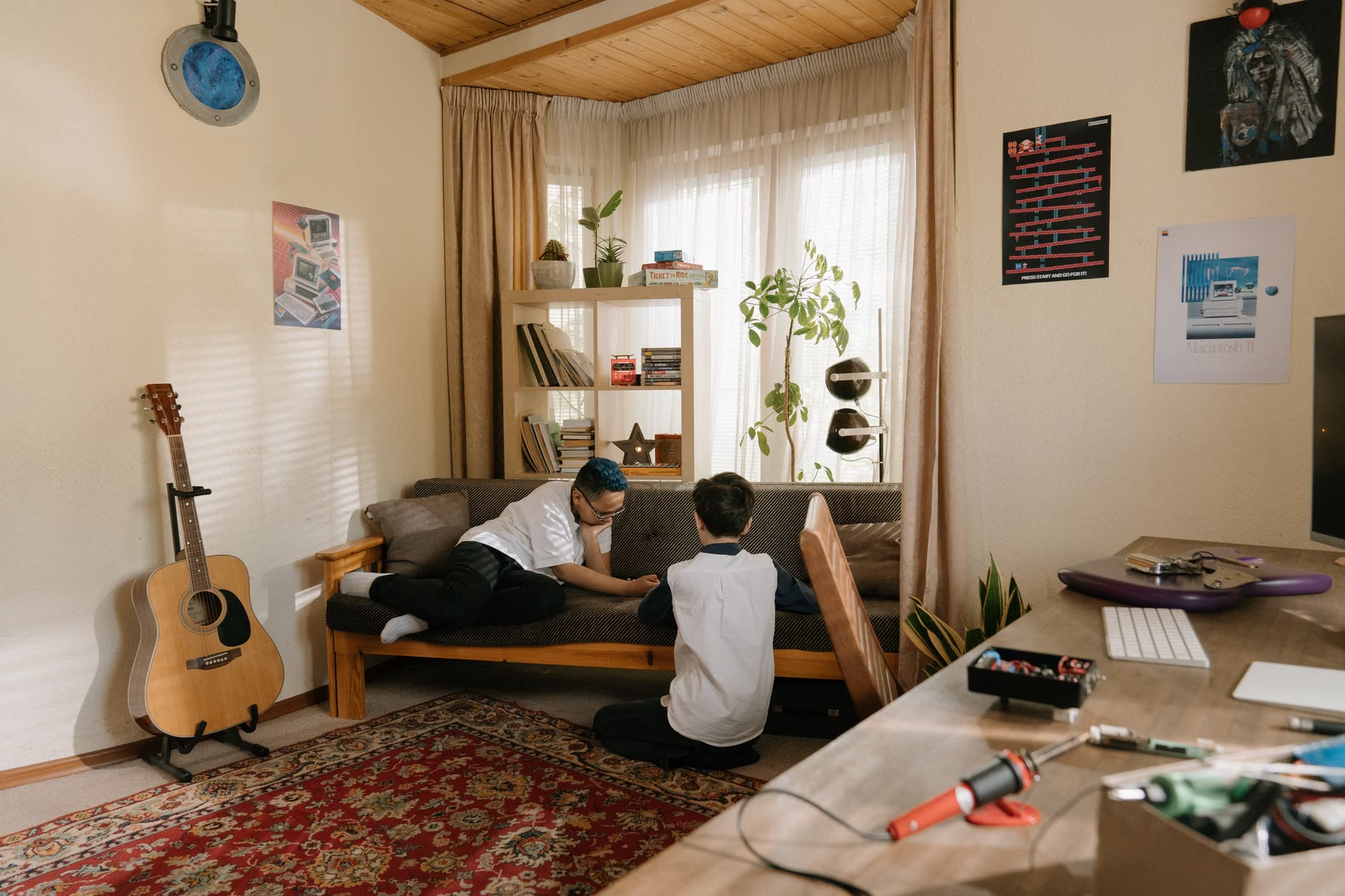
Managing the Transition: The “Decompression” Protocol
A common mistake HSP parents make is moving directly from a high-focus work task to a high-demand parenting task. This “context switching” is a recipe for sensory overload. When you are in “work mode,” your brain is in a hyper-focused, analytical state. When you step out of your office to handle a tantrum, a homework crisis, or meal prep, your brain is forced to shift into an emotionally reactive and multi-sensory state instantly. This is where the “Parenting Burnout” often originates.
You need a 10-minute “decompression buffer.” During this time, you do not check your phone, you do not listen to a podcast, and you do not tidy the house. You sit in a neutral space, drink water, and let your nervous system transition. If you have the space, keep a “sensory reset” kit nearby. This might include a weighted lap pad, a soft fidget tool, or a scent that grounds you (like lavender or cedarwood). By manually slowing your heart rate before you enter the “parenting zone,” you prevent the residual stress of your workday from coloring your interactions with your family.
Common Misconceptions About HSP Productivity
One major misconception is that HSPs need “silence” to be productive. In reality, total silence can sometimes be more overwhelming than controlled sound, as it makes every tiny creak of the house sound like a gunshot. What you actually need is predictability. If you can’t control the environment, you must control your perception of it. This is why many HSPs find that listening to the same ambient soundscape or lo-fi playlist every single day is more effective than noise-canceling. It provides a consistent “auditory floor” that your brain can rely on, allowing it to stop scanning for sudden, threatening changes.
Another misconception is that you need an expensive, ergonomic setup to be effective. While high-end chairs are great, the most important ergonomic factor for an HSP is movement. Sitting in the same position for four hours creates physical tension that, for a sensitive person, translates into mental tension. Set a timer for every 45 minutes to stand, stretch, and change your sensory input. This isn’t just “good for your back”; it’s essential for your nervous system’s ability to reset.
Step-by-Step: Setting Up Your Sensory-Zone This Weekend
You don’t need to renovate your home to build a Sensory-Zone. Follow these steps over a single weekend to see an immediate change in your daily stress levels:
- The Audit: Spend one morning working as you normally do. Every time you feel a spike of frustration—whether it’s a glare on your screen, a noise, or an itch—write it down. By the end of the day, you will have a list of your specific “sensory triggers.”
- The Removal: Start by removing the items on your desk that aren’t essential. Visual clutter is a hidden source of cognitive load. If you don’t use it daily, put it in a drawer.
- The Softening: Add one “soft” element. This could be a rug under your chair to dampen sound, a warm desk lamp, or a soft-touch keyboard cover.
- The Ritual: Establish your “start” and “end” ritual. Perhaps it’s lighting a specific candle when you start work and blowing it out when you finish. This creates a psychological boundary that helps your brain know when it’s time to be “on” and when it’s safe to be “off.”
Remember that the goal is not perfection; it’s adaptation. As a parent, your home environment will inevitably change. A toy will end up on your desk; a door will be left open. The Sensory-Zone is not a static state, but a flexible toolkit that you can adjust as your needs and your children’s needs evolve.
The Hidden Cost of Ignoring Sensory Needs
Why should you care about this? Beyond just being “less stressed,” there is a tangible cost to ignoring your sensory needs. Research into the “HSP trait” suggests that HSPs are more prone to burnout when they don’t have adequate recovery time. If you spend your work day in a state of low-level sensory fight-or-flight, you are essentially depleting your emotional battery before your “second shift” as a parent even begins. This leads to shorter tempers, less patience, and a feeling of being “touched out” by the end of the day.
By investing in your Sensory-Zone, you are not just building a better office; you are investing in your capacity to be the parent you want to be. When your brain isn’t busy processing the hum of the dishwasher or the glare of the window, you have more bandwidth to engage with your children. It is a fundamental shift from “surviving the day” to “managing your energy.”
Frequently Asked Questions
1. Is it possible to maintain a Sensory-Zone in a home with young, energetic children?
Yes, but it requires a change in expectations. Instead of total silence, focus on “predictability.” Use visual cues (like a closed door or a specific sign) to let children know when you are in “deep work” mode. If they are too young for that, focus your sensory efforts on your personal workspace—noise-canceling headphones and a desk-facing-the-wall setup—so that even if they are playing nearby, your immediate sensory input remains controlled.
2. Does a Sensory-Zone need to be expensive?
Not at all. The most effective changes are often free or very low-cost. Rearranging your furniture to face a wall, using a blanket to dampen sound, or adjusting your monitor brightness are all free. The only “essential” investment is a pair of comfortable, high-quality noise-canceling headphones, which can be found at various price points. Focus on utility over aesthetics.
3. How do I handle the transition from work to parenting without feeling “drained”?
The key is the “decompression buffer.” Do not go straight from your desk to your kids. Take 10 minutes to sit in a quiet, dimly lit space, drink water, and perform a simple physical reset—like deep breathing or a quick stretch. This signals to your brain that the “high-focus” phase is over and the “relational” phase has begun, preventing the spillover of work-related stress into your family life.
For further reading on the trait of high sensitivity and its impact on adult life, you can explore the resources provided by the Highly Sensitive Person organization. They offer extensive research and community insights that can help you understand your unique needs as a parent and professional. Ultimately, your home office should be a place that supports your nervous system, not one that drains it. Start small, observe your triggers, and build a zone that gives you the peace you need to thrive.