Biophilic design isn’t just about filling your room with expensive ferns; it is the strategic integration of nature into your workspace to lower cortisol levels and sharpen your cognitive focus during those long, back-to-back Zoom calls.
- Focus on Patterns, Not Just Plants: Biophilia includes natural textures, fractal patterns, and light dynamics, not just greenery.
- Circadian Alignment: Prioritizing natural light exposure during working hours is the single most effective way to regulate your sleep-wake cycle while working from home.
- The “Green Barrier” Technique: Use tall plants as acoustic and visual buffers to signal to other family members that you are in “deep work” mode.
If you are in your 30s or 40s, your home office is likely a multi-purpose zone. It’s where you crush a project report at 10:00 AM and where your toddler might be building a LEGO fortress by 3:00 PM. The mental fatigue that hits around mid-afternoon isn’t just about your workload; it’s about the lack of sensory variety in your environment. We spent thousands of years evolving in natural landscapes, yet we spend our professional lives staring at grey walls and blue-light-emitting screens. This mismatch is exactly what biophilic design aims to solve.
Beyond Aesthetics: Why Your Brain Craves Nature
The term “biophilia” was popularized by E.O. Wilson, who suggested that humans possess an innate tendency to seek connections with nature. In a practical, professional sense, this translates to Attention Restoration Theory (ART). When we perform tasks that require directed attention—like writing an email or analyzing a spreadsheet—we deplete our cognitive resources. Research, such as studies published in the Journal of Environmental Psychology, indicates that viewing natural scenes or interacting with natural elements allows our brain’s directed attention mechanism to rest and recover.
For the remote worker, this is a game-changer. If you feel like your productivity dips sharply after lunch, it might not be the caffeine wearing off; it might be “attention fatigue.” By introducing natural elements, you aren’t just decorating; you are creating a recovery zone. You don’t need a garden office or a glass-walled atrium to achieve this. You need to understand how to manipulate light, texture, and air quality in small, manageable ways.

The Three Pillars of Biophilic Integration
To make this work in a busy household, we categorize biophilic design into three actionable pillars:
- Direct Experience: Presence of plants, water features, or direct access to sunlight.
- Indirect Experience: Images of nature, natural materials (wood, stone, bamboo), and organic shapes.
- Space and Place: Creating “prospect and refuge”—a space where you feel secure but have a view of the wider room.
1. Controlling Light for Circadian Rhythm
Most home offices are relegated to the darkest corner of the house. This is a common mistake. If you want to maintain focus, you must synchronize your biology with your environment. Our bodies rely on light cues to regulate melatonin and cortisol. If you work in a basement or a room with heavy curtains, your body never quite gets the signal that it is “go time.”
Actionable Step: If you cannot move your desk to a window, invest in “full-spectrum” LED lighting. These bulbs mimic the color temperature of natural daylight (around 5000K to 6500K). However, the real trick is dynamic lighting. You should have a task lamp with adjustable color temperatures. Use cool, bright light in the morning to suppress melatonin and warmer, softer light in the late afternoon to prevent over-stimulation before you transition back to family life.
2. The “Green Barrier” Strategy for Family Boundaries
In a home where you are also a parent, the biggest distraction is often the visual intrusion of household chaos. When you are sitting at your desk and you can see the pile of laundry or the messy kitchen, your brain is constantly processing that information, even if you are trying to ignore it. This is “background cognitive load.”
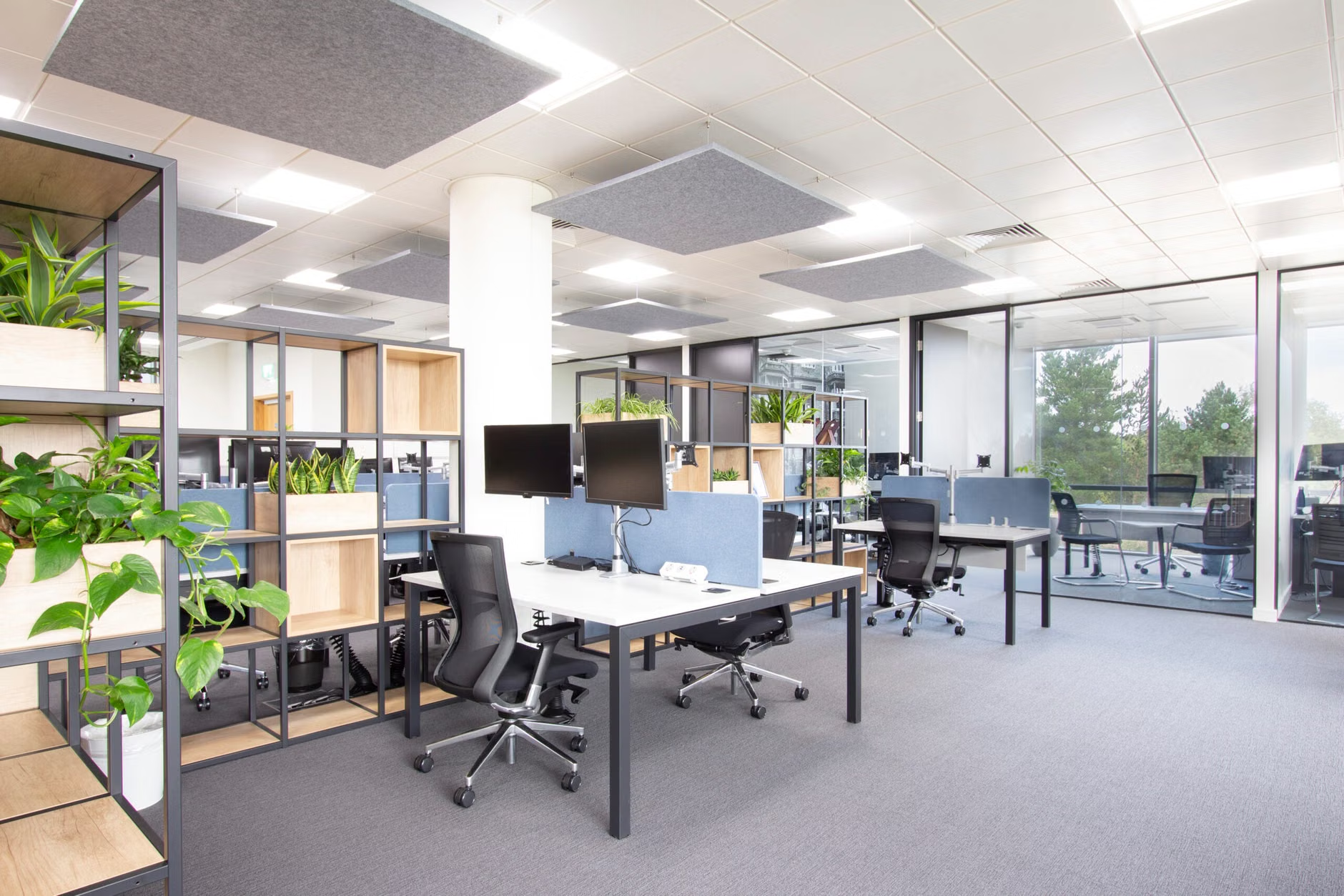
The Strategy: Use plants as physical and psychological barriers. A tall Ficus lyrata (Fiddle Leaf Fig) or a Sansevieria (Snake Plant) on a pedestal can create a soft, permeable wall. It doesn’t block the room entirely, but it creates a “soft boundary.” When you look up from your screen, you see green instead of the sink full of dishes. This provides a micro-rest for your eyes and a psychological signal that you are in your “work zone.”
Decision Rule: Choose plants based on your light levels, not just looks. If your office is dim, go for a Snake Plant or ZZ Plant. These are nearly indestructible and provide the same cognitive benefits as the finicky plants you see on social media. Avoid high-maintenance plants that require constant pruning; you don’t need another chore on your to-do list.
3. Introducing Natural Textures and Fractal Patterns
Why do we feel calm in a forest but restless in an office with white plastic furniture? It’s about fractals—complex, repeating patterns found in nature. Our brains are hardwired to process these patterns effortlessly. Man-made environments are often too “perfect” (smooth, flat, uniform), which forces our brains to work harder to interpret them.
How to implement this:
| Element | Why it helps | Easy implementation |
|---|---|---|
| Natural Wood | Lowers blood pressure | Swap a plastic desk mat for a bamboo or cork one. |
| Stone/Mineral | Provides tactile grounding | Use a stone coaster or a natural rock paperweight. |
| Organic Shapes | Reduces visual stress | Choose a desk lamp or chair with rounded, soft edges. |
The goal isn’t to turn your office into a cabin in the woods. It is to introduce enough natural texture to provide “visual friction” that is pleasant to the eye. A wooden monitor stand or a rough-hewn stone coaster provides a sensory anchor that plastic simply cannot replicate.
4. Managing the “Prospect and Refuge” Dynamic
The concept of “prospect and refuge” is a core tenet of environmental psychology. “Prospect” refers to having a clear view of your surroundings, while “refuge” refers to feeling protected from behind. In an open-plan home, many people place their desks facing a wall with their back to the room. This triggers a mild, subconscious “fight or flight” response because you cannot see who is coming up behind you.
If possible, orient your desk so you can see the door or the main entrance to the room. If you cannot do this because of power outlet constraints, place a mirror on the wall in front of you so you can see behind you. This small change reduces the “vigilance” part of your brain, allowing you to settle into deeper, more sustained work.
5. Air Quality and the Acoustic Environment
Biophilic design also addresses the invisible environment. A stuffy room with stagnant air is a productivity killer. While the “plants clean the air” claim is often exaggerated in marketing, plants do help regulate humidity. A room with 40-60% humidity is more comfortable for your skin and respiratory system during long hours of sitting.
Furthermore, consider the acoustics. Hard surfaces create echoes, which increase stress. Adding a rug (natural jute or wool) or fabric wall hangings acts as a sound absorber. When the room sounds “soft,” your brain doesn’t have to work as hard to filter out the noise of the house. This is a subtle, yet massive, improvement for your daily endurance.
Common Pitfalls to Avoid
Don’t fall for the “more is better” trap. If your office is cluttered with plants, you will spend more time caring for them than working. Aim for 2-3 high-impact plants. Also, avoid artificial plants. While they look like nature, they do not provide the same psychological benefit of “living” things. The subtle movement of leaves in a draft or the need to water them provides a gentle, low-stakes engagement that artificial decor lacks.
Additionally, be cautious with “scent” products. While natural essential oils like cedarwood or eucalyptus can be refreshing, they can also be distracting. If you share your home with others, be mindful that scent is a personal experience. If you must use them, keep them subtle and use a diffuser that shuts off automatically.
Practical Next Steps for Your Workspace
You don’t need a renovation budget. Start this weekend with these three steps:
- Audit your light: Can you move your desk to get more natural light, or do you need to upgrade your desk lamp to a full-spectrum bulb?
- Create a “Green Buffer”: Buy one large, hardy plant and place it between your desk and the rest of the room.
- Introduce Texture: Replace one plastic accessory on your desk with something made of wood, cork, or stone.
These changes might seem small, but they address the fundamental way your brain processes your environment. By lowering the cognitive load of your workspace, you are creating a buffer that protects your energy for the things that really matter—your work and your family.
Frequently Asked Questions
Q: Will having plants in my office increase the humidity too much and cause mold?
A: In a typical home office, a few indoor plants will not significantly increase humidity to the point of causing mold. Ensure your pots have drainage and don’t overwater them. If you are concerned, a small desktop dehumidifier or simply opening a window for ten minutes a day is more than enough to maintain healthy air quality.
Q: I have very little space; can I still use biophilic design?
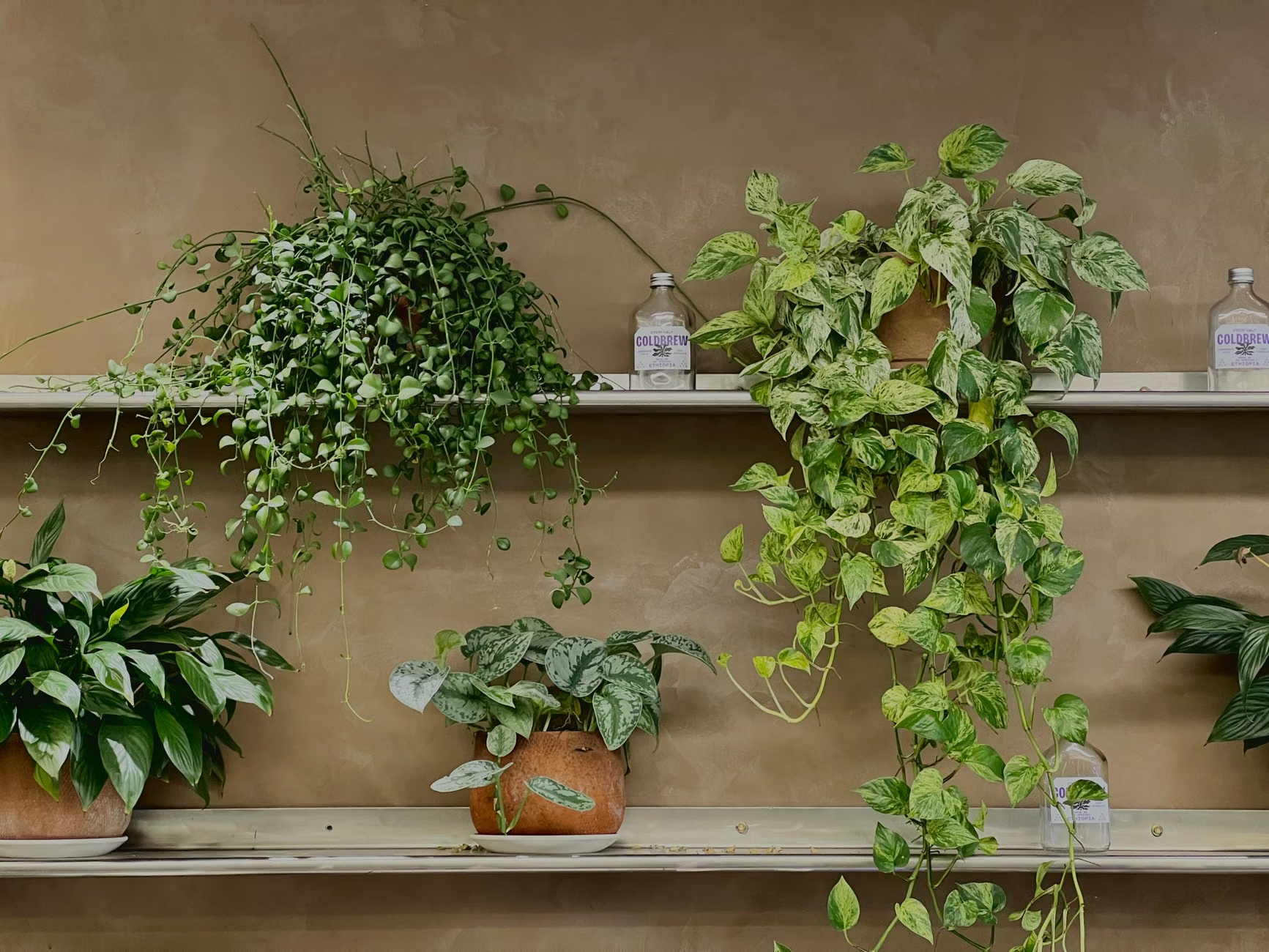
A: Absolutely. Biophilic design is more about the quality of the elements than the quantity. A single, well-placed trailing plant on a wall shelf or a small piece of natural drift wood on your desk can provide the same psychological “nature” cues as a room full of plants. Focus on vertical space if your desk surface is limited.
Q: Do I need to buy expensive, high-end furniture to achieve a natural look?
A: Not at all. In fact, many high-end “designer” office chairs are made of synthetic materials. Look for bamboo accessories, cork desk mats, or even thrifted wooden items. The goal is the organic texture, not the price tag or the brand name. The most effective biophilic office is one that feels authentic to your personal space.
For further reading on the psychological benefits of nature in interior design, you can refer to the research provided by the Terrapin Bright Green report on the 14 Patterns of Biophilic Design, which outlines the scientific basis for how these elements influence human health and productivity.
Remember, the goal is to make your office a place where you feel restored, not just a place where you finish your to-do list. Start small, be consistent with your care for your plants, and watch how your daily focus shifts.