The most effective way to end the nightly bedtime battle with a school-age child is not through stricter rules, but by utilizing “co-regulation”—a process where your calm nervous system helps stabilize theirs to signal that it is safe to sleep.
Three Key Takeaways
- Co-regulation is biological, not behavioral: You cannot “force” a child to be calm; you must model it through your own tone, heart rate, and presence.
- The 20-minute buffer: Transitioning from high-stimulation school or screen activities to sleep requires at least 20 minutes of “low-arousal” activity to reset the nervous system.
- Consistency beats intensity: A simple, predictable 15-minute ritual performed with a calm, present parent is more effective than a complex, hour-long routine performed with frustration.
If you are in your 30s or 40s, you know the scenario: it’s 8:30 PM, you’ve finally cleared the kitchen, and you just want an hour to yourself. But your seven-year-old is suddenly animated, demanding another glass of water, or insisting that a specific toy is missing. You find yourself feeling the familiar spike of cortisol—that “fight or flight” irritation—as you try to hurry them into bed. The more you rush, the more they resist. This isn’t just “being difficult”; it is a physiological mismatch.
What Co-Regulation Actually Means for Your Nervous System
Co-regulation is a developmental concept rooted in polyvagal theory. In simple terms, humans are wired to detect safety or threat in the people around them. When a child’s nervous system is “dysregulated”—meaning they are overstimulated, anxious, or overtired—they cannot simply “calm down” because you told them to. They need an external anchor. That anchor is you.
Think of it like a thermostat. If your child is running “hot” (high energy, meltdowns, racing thoughts), they need a “cooler” environment to adjust their internal state. If you approach them with high-stress energy—checking your watch, sighing loudly, or speaking in clipped, sharp tones—you are essentially turning up the heat. Your child’s brain detects your stress as a sign that the environment is not safe, which keeps them in a state of high alert.
To co-regulate, you must first regulate yourself. Before you even walk into the bedroom, take three deep, slow breaths. Drop your shoulders. Lower your voice an octave. When you enter the room, your goal is to be the calmest person in the space. By doing this, you are sending a non-verbal signal to your child’s brain that the “threat” of the day has passed and their nervous system can safely power down.

The Anatomy of a Low-Arousal Bedtime Routine
Most parents make the mistake of assuming that “winding down” is just about stopping activity. However, even quiet activities can be high-stimulation if they involve complex cognitive processing. For instance, playing a competitive board game or watching a fast-paced show can keep a child’s brain in a state of engagement that makes falling asleep impossible.
A successful co-regulation ritual focuses on “low-arousal” inputs. This means activities that require minimal executive function and focus on sensory comfort. Here is a breakdown of how to structure the 30 minutes before lights out:
| Activity Type | Examples | Why it Works |
|---|---|---|
| Sensory Grounding | Warm bath, soft blanket, dim lights | Reduces input to the senses, signaling rest. |
| Co-regulation | Slow reading, gentle massage, rhythmic tapping | Synchronizes heart rates through physical presence. |
| Cognitive Offloading | “Brain dump” journaling, simple gratitude | Clears the “mental tabs” open in their brain. |
The key here is that you are participating. If you are sitting on the bed scrolling through your phone while they are trying to “wind down,” you are providing mixed signals. Your phone is a high-arousal device. Your child’s brain is likely monitoring your attention. If you aren’t present, they will act out to get that connection back.
Why “The Ask” Turns Into a Power Struggle
A common misconception is that children ask for “one more thing” because they are testing boundaries. While that happens, it is often a sign of “separation anxiety” or a lack of felt safety. When a child feels they haven’t had enough “connective tissue” with you during the day, they will use bedtime as a stalling tactic to gain more of your time.
Instead of viewing these requests as a nuisance, look at them as a need for reassurance. If your child asks for a fourth glass of water, the “regulation” response is: “I can see you are having a hard time letting go of the day. I’m going to stay right here while you take a sip, and then we will finish our book.” You are validating their feeling (the difficulty of separating) while maintaining the boundary (the bedtime routine).
This approach prevents the “escalation cycle.” When you fight, the child gets a surge of adrenaline, which is the exact opposite of what they need to fall asleep. By staying calm and predictable, you teach the child that the bedtime transition is a safe, reliable process, not a battlefield.
Step-by-Step: Implementing a Co-Regulation Framework
If you want to shift your household routine, do not try to change everything in one night. Start by auditing your current routine. Where is the friction? Is it the bath? The teeth brushing? The actual lights-out moment?
Step 1: The Pre-Bedtime Check-in. About 45 minutes before sleep, sit with your child for 5 minutes of “unstructured connection.” No screens, no chores. Just talk. Ask them about the “best part” and the “hardest part” of their day. This clears the emotional backlog so they don’t bring those worries into bed with them.
Step 2: The Physical Reset. Use a sensory anchor. A warm bath is a classic for a reason: the change in body temperature is a biological signal for sleepiness. If a bath isn’t feasible every night, try a “quiet time” in a dim room with soft music or a repetitive, low-stakes activity like folding laundry together or coloring.
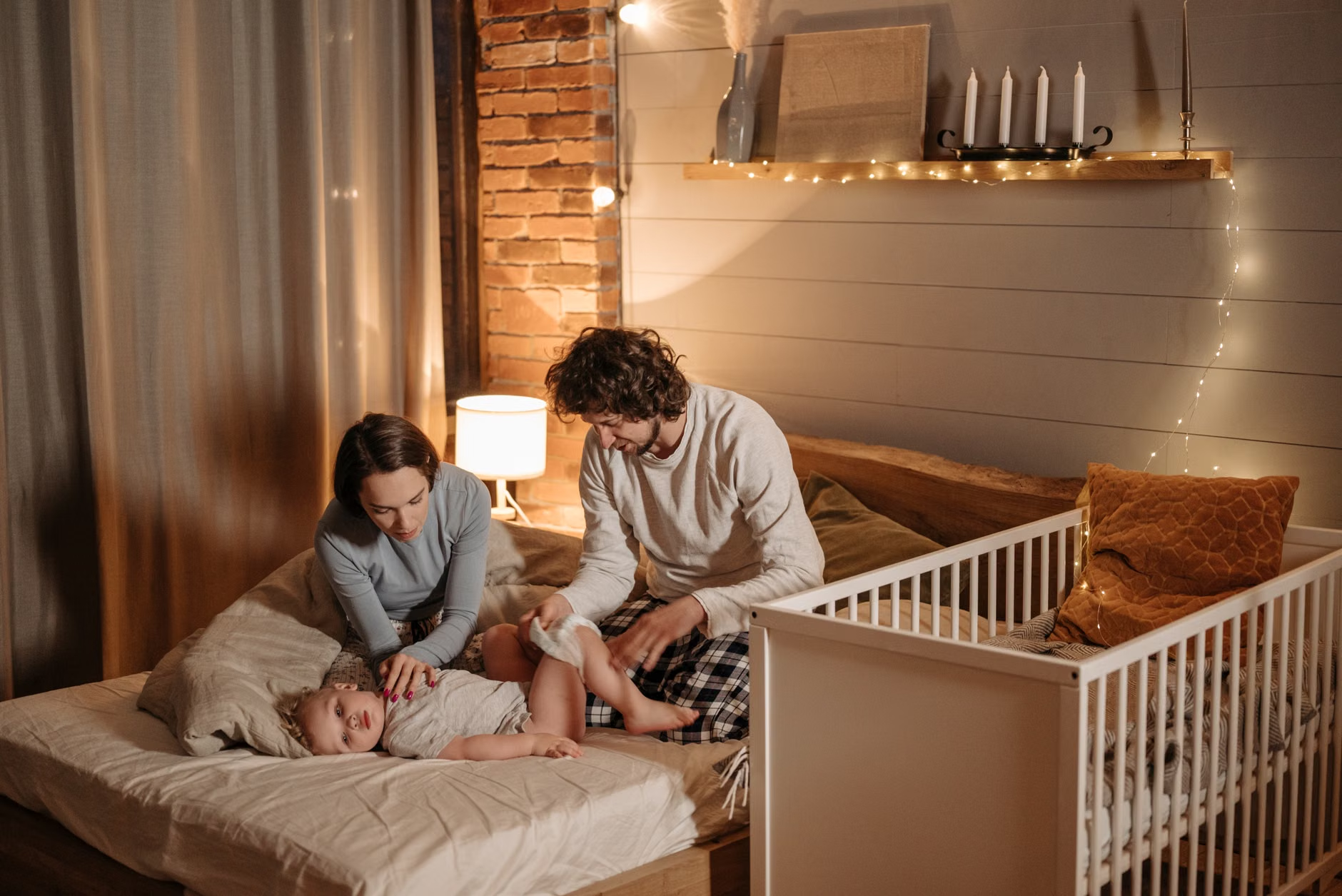
Step 3: The Consistent Anchor. Choose one thing you do every night that is non-negotiable. It could be a specific song, a specific type of story, or a back-rub pattern. The brain loves patterns. Over time, the mere act of starting this ritual will trigger the release of melatonin in your child’s brain because they have learned that this specific sequence leads to sleep.
Step 4: The Exit Strategy. Many parents struggle with how to leave the room. If your child requires you to be there until they fall asleep, you are “externalizing” their regulation completely. If you want to move toward independence, use a “check-back” method. “I am going to leave the room to finish the dishes, but I will come back in exactly 3 minutes to check on you.” Start with short intervals. This builds their confidence that you are present even when you aren’t visible.
Common Mistakes and How to Avoid Them
The most common mistake is “inconsistent intensity.” One night you are patient and present; the next night you are rushed and frustrated. Children are hyper-vigilant to these shifts. If you are inconsistent, they will spend the entire bedtime ritual scanning your behavior to see if you are “safe” or “stressed,” which keeps their cortisol levels high.
Another mistake is the “Screen Time Trap.” Many parents allow tablets or TV until the very last second. Blue light and fast-paced visual stimuli are the enemies of a regulated nervous system. If you must use a screen, ensure it is turned off at least 60 minutes before the actual “lights out” time. Replace it with audio-based stimulation, like a calm audiobook or a podcast for kids. This allows the visual cortex to rest while the brain stays engaged in a way that doesn’t trigger a dopamine spike.

The Role of Environmental Factors
We often talk about the *process* of bedtime, but the *environment* is equally critical for co-regulation. If a room is cluttered, too bright, or too hot, it is physically harder for a child to settle. Think of the bedroom as a “sanctuary.”
Temperature is a vastly underrated variable. Research in sleep science consistently shows that a cooler room (around 18-20°C or 65-68°F) is optimal for sleep onset. If your child is struggling to fall asleep, check the room temperature. A warm room can keep the body in an “alert” state, making it impossible to drift off, regardless of how good the routine is.
Lighting is another factor. Avoid overhead lights. Use warm-toned lamps or “salt lamps” if you have them. Harsh white or blue-tinted LED lights inhibit melatonin production. By changing the lighting in the house an hour before bed, you are signaling to the entire family’s circadian rhythm that the day is ending.
Why This Matters for Your Own Well-being
You might be thinking, “This sounds like a lot of work when I’m already exhausted.” But consider the alternative: 45 minutes of fighting, yelling, and frustration. Co-regulation is not about “doing more” for your child; it is about “doing differently.” By slowing down your own pace, you are effectively lowering your own stress levels. You are turning a time of conflict into a time of recovery for both of you.
If you find that you are constantly losing your temper, it is a sign that *you* are not regulated. In those moments, it is better to take a 5-minute break in another room to breathe and reset than to stay in the room and snap at your child. Tell them, “Mommy/Daddy is feeling a bit frustrated and needs to take a deep breath to get calm. I will be back in a few minutes.” This is a powerful lesson for them: it shows that it is okay to have big feelings, and it is okay to take the time to regulate them.
Long-term Benefits of the Co-Regulation Approach
When you use co-regulation, you are doing more than just fixing the bedtime routine. You are teaching your child “emotional literacy.” You are showing them that feelings are manageable, that their body can be brought back to a state of calm, and that they have the tools to manage their own internal states.
As they grow into their pre-teen and teenage years, these skills will become critical. A child who has learned how to co-regulate with a parent is much more likely to develop “self-regulation” skills later. They will be better equipped to handle the stresses of school, social dynamics, and the inevitable pressures of growing up because they have an internal “map” of what calm feels like.
Don’t expect overnight results. This is a practice. Some nights will be better than others. The goal is to move the needle toward a more peaceful, connected transition. If you fall back into old habits, don’t sweat it. Just start again the next night. The consistency of your intention matters more than the perfection of your execution.
Frequently Asked Questions
1. My child is 9 years old and still wants me to stay until they fall asleep. Is this a problem?
It is not necessarily a “problem,” but it can become a dependency. If it works for your family and you don’t mind the time, there is no clinical reason to force independence. However, if it is causing you stress or limiting your own ability to rest, you can use the “fading” technique. Gradually move your presence further away—first by sitting on the bed, then on a chair next to the bed, then in the doorway, and finally in the hallway. This allows the child to feel your presence without needing you to be their “external regulator” at every moment.
2. What if my child has neurodivergent traits like ADHD or sensory processing issues?
For neurodivergent children, co-regulation is even more vital. Their nervous systems often operate at a higher baseline of arousal. For these children, “sensory diets” are helpful. This might include deep-pressure input (like a weighted blanket or a tight hug) or heavy-work activities (like pushing against a wall) before the bedtime routine to help ground their sensory system. Always consult with a pediatrician or occupational therapist to tailor these strategies to your child’s specific needs.
3. How do I handle a bedtime routine when I have multiple children with different needs?
This is a common challenge. The key is “staggered starts.” If possible, have one parent handle the younger child while the other handles the older one. If you are a solo parent, create a “quiet bin” of activities for the older child (like audiobooks or puzzles) that they can use while you are tucking in the younger one. The goal is to maintain a low-arousal environment for everyone, even if you can’t be in two places at once. If the older child is very independent, you can even trade off who gets the “co-regulation time” each night to ensure everyone gets that 1-on-1 connection eventually.
For further reading on the science of nervous system regulation and child development, see the resources provided by the Zero to Three organization and the Center on the Developing Child at Harvard University.