- Beyond Eco-Labels: Look for specific certifications like WaterSense or WELS, which provide verified data on a product’s actual water consumption per cycle, rather than vague “eco” marketing terms.
- The Hidden Cost of Flow: Modern appliances are shifting from high-volume water use to high-pressure/low-volume mechanics, which requires careful maintenance to prevent clogging and performance degradation.
- Smart Integration: Investing in appliances with built-in leak detection and real-time consumption tracking can reduce your household water bill by 15-20% by identifying silent leaks before they balloon.
Global water scarcity is no longer just a headline for environmentalists; it is fundamentally altering the engineering behind the machines that run our daily lives. If you are in your 30s or 40s, you are likely balancing the demands of a busy household with a growing awareness of your environmental footprint. You’ve probably noticed that the latest washing machines, dishwashers, and even showerheads feel different—they are quieter, sometimes slower, and seemingly use less water than the models you grew up with. This isn’t just a design trend; it is a direct response to a tightening global water budget.
Why Your Appliances Are Changing: The Engineering Shift
For decades, household appliances were designed to use as much water as possible to ensure cleanliness. We were taught that “more water equals cleaner clothes” and “more pressure equals a better shower.” However, as water scarcity impacts municipalities globally—from the droughts in the American West to water rationing in parts of Europe and Asia—engineers have had to pivot. The new design philosophy is about efficiency through precision rather than volume.
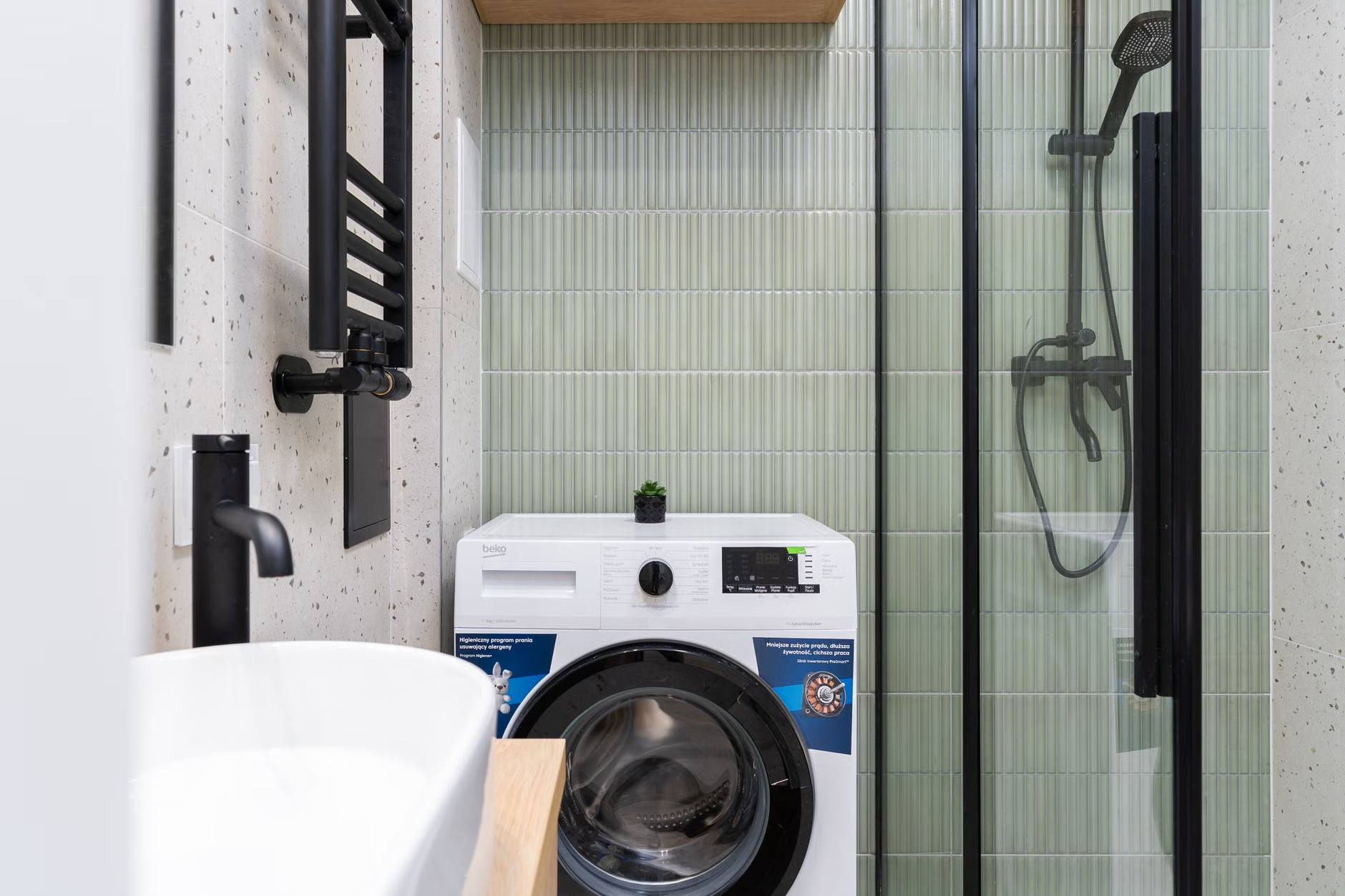
In the past, a standard top-load washing machine might use 40 gallons of water per load. Today, high-efficiency (HE) front-loaders can accomplish the same task with less than 15 gallons. This reduction isn’t achieved by simply “using less water”; it is achieved by re-engineering the mechanical action. Modern machines use sensors to weigh the laundry, calculate the exact amount of water needed, and use agitators or high-speed drum rotations to force detergent through fabrics rather than relying on a full submersion bath.
For a parent, this means you need to rethink your habits. If you overload an HE machine or use the wrong type of detergent, the system fails to clean because it lacks the “buffer” of extra water. This is a common mistake: assuming that “more is better.” In reality, these machines are calibrated for specific loads. Understanding this shift is the first step in adapting your home to a water-scarce future.
How to Read Water Efficiency Ratings Like a Pro
When you walk into an appliance store or browse online, you are hit with a barrage of labels: “Eco-mode,” “Water-saver,” “Green-tech.” Most of these are marketing fluff. To make a decision that actually impacts your water consumption, you need to look for specific, standardized ratings.
Depending on where you live, the labels vary. In the United States, the EPA WaterSense label is the gold standard for plumbing fixtures. In Australia, the WELS (Water Efficiency Labelling and Standards) scheme is world-renowned for its star-based rating system. If you are in Europe, look for the EU Ecolabel.
| Appliance Type | Primary Efficiency Metric | What to Look For |
|---|---|---|
| Dishwashers | Gallons per Cycle (GPC) | Under 3.5 GPC is excellent. |
| Washing Machines | Water Factor (WF) | A lower WF score is better. |
| Showerheads | Gallons per Minute (GPM) | 2.0 GPM or less is the gold standard. |
The Insight: Don’t just look for the “Eco” button. Check the manual’s technical specifications for the “Gallons per Cycle” or “Water Factor.” If the manufacturer doesn’t provide these numbers, they aren’t prioritizing efficiency. This is a red flag for any consumer concerned about long-term water costs and environmental impact.
The Trade-off: Performance vs. Conservation
It is honest to admit that water-saving appliances come with trade-offs. The most common complaint from families is that “cycles take too long.” Modern dishwashers often run for 2.5 to 3 hours. Why? Because they are heating the water more efficiently and using lower-pressure rinses to get the same result with significantly less water. When you choose a “quick wash” cycle, you are often sacrificing water efficiency for speed.
Another trade-off is the sensitivity to maintenance. Because these machines use less water, they are more prone to buildup—either from hard water minerals or detergent residue. If you live in a hard-water area, you must use a water softener or add a descaling agent to your maintenance routine. If you don’t, your “eco-friendly” appliance will end up in a landfill in five years because the internal sensors became coated in mineral deposits.
For the busy parent, this means your maintenance schedule needs to include a monthly “clean-out” cycle. Most modern machines have a “Tub Clean” feature. Don’t skip it. It’s not just a suggestion; it’s the only way to ensure the machine continues to operate at peak efficiency.
Smart Home Integration: Data is the New Water
We are entering the era of the “Connected Home.” This is particularly useful for water management. Smart water monitors, which attach to your main water line, can tell you exactly how much water your household uses in real-time. This is a game-changer for families. You can see, for example, that your dishwasher uses 4 gallons per load, while your teenager’s shower uses 25 gallons.
When you can see the data, you can manage the behavior. Many smart homes now integrate this data into mobile apps. You can set alerts for “high consumption” events or even detect silent leaks—like a toilet flapper that doesn’t seal properly—which can waste thousands of gallons a year without anyone noticing.
Step-by-step to a water-smart home:
- Audit: Start by checking your water bill. If you don’t know your average monthly usage in cubic meters or gallons, find out.
- Identify: Use dye tablets in your toilet tanks to check for silent leaks. This is the single most common source of water waste in a home.
- Upgrade: When an appliance breaks, replace it with a high-efficiency model that has a verified low Water Factor or GPC.
- Monitor: If you are renovating, consider a whole-home water monitor. The cost (usually $200–$500) pays for itself in leak prevention within two years.
The Psychological Shift: Moving Beyond “Set and Forget”
Perhaps the biggest change isn’t in the hardware, but in our relationship with it. We have lived for generations in a “set and forget” culture regarding utilities. We turn a tap, and water flows. We push a button, and a machine runs. Global water scarcity forces us to be more conscious of our appliances as resource managers rather than just household tools.
This means teaching our children—and ourselves—that water is a finite resource. When you explain to a child that their favorite jeans were washed in a machine that used only 10 gallons of water compared to the 40 gallons it would have used a decade ago, you are teaching them about the intersection of technology and sustainability. It transforms a mundane chore into a lesson about stewardship.
Furthermore, consider the “hidden” water usage. It’s not just the water coming out of your tap; it’s the water used to produce the food you eat and the clothes you wear. By choosing energy and water-efficient appliances, you are reducing the load on your local municipal water treatment plants, which are often the first to fail under the pressure of drought and population growth.

Common Mistakes to Avoid
Even with the best equipment, it is easy to undo your efforts. Here are three common traps:
- Over-detergent usage: Many people assume more soap means cleaner clothes. In low-water machines, excess soap leaves residue that requires extra rinse cycles, negating the water savings of the machine. Always follow the manufacturer’s dosage guidelines.
- Pre-rinsing dishes: If you are using a modern, high-efficiency dishwasher, pre-rinsing is a waste of water. Modern enzymes in detergents are designed to latch onto food particles. If you wash them off before the cycle starts, the soap has nothing to work on. Scrape, don’t rinse.
- Ignoring the “Eco” label confusion: Not all “Eco” modes are created equal. Some actually use more water but less energy, or vice versa. Always check the cycle manual to see exactly what “Eco” means for that specific machine.
The Future of Appliance Design
Looking ahead, we are likely to see “circular” appliances. Imagine a washing machine that captures, filters, and reuses the rinse water for the next wash cycle. These technologies already exist in industrial settings and are being adapted for residential use. As water prices rise—which is an inevitable economic consequence of scarcity—these high-end features will likely become standard.
For now, your best strategy is to be an informed consumer. Don’t be swayed by “smart” features that offer no real utility (like a dishwasher that connects to social media). Instead, look for smart features that provide utility: sensors that detect load size, leak detection, and detailed energy/water reporting.
Final Thoughts: Your Role in the Water Economy
Water scarcity is a complex global challenge, but your contribution to the solution is tangible. By choosing appliances that respect the value of water, maintaining them to ensure they stay efficient, and using them with a conscious understanding of how they work, you are doing more than just saving money on your monthly utility bill. You are participating in a fundamental shift toward a more sustainable way of living.
Start small. Next time you need to replace a fixture, spend the extra twenty minutes researching the WaterSense or WELS rating. Teach your family how to use the “Eco” settings on your appliances. These small, deliberate choices accumulate into a significant impact. We aren’t just buying appliances; we are investing in a future where water remains a resource we can rely on for generations to come.
Frequently Asked Questions
Q: Does using a “Quick Wash” or “Short Cycle” save water?
A: Not necessarily. In many modern machines, “Quick” cycles use a higher volume of water in a shorter time to compensate for the lack of mechanical agitation time. If your goal is water conservation, the standard “Eco” or “Normal” cycle is almost always more efficient, even if it takes longer.
Q: Is it worth upgrading my appliances if my current ones still work?
A: If your appliance is over 10 years old, it is likely using significantly more water than modern standards. However, the environmental cost of manufacturing a new appliance is high. The best practice is to keep your current machine well-maintained and only upgrade when it reaches the end of its life, or if you are doing a major kitchen/laundry renovation.
Q: How do I know if my home has a “silent leak” wasting water?
A: The easiest way is to monitor your water meter when no water is being used in the house (e.g., at night). If the meter is still moving, you have a leak. Modern smart water monitors provide this data automatically and will send a notification to your phone if they detect a continuous flow, which is the most effective way to catch leaks early.
For further reading on water conservation standards and global trends, you can explore the EPA WaterSense Program or the Australian WELS Scheme, both of which provide excellent resources for understanding how to measure and reduce household water consumption.