The most effective way to prevent after-school irritability in pre-teens is to implement a mandatory 30-minute “buffer zone” that prioritizes sensory regulation over immediate academic or household demands.
- The Buffer Zone Strategy: Delay all questions about homework, chores, or grades for the first 30 minutes after your child walks through the door to allow their nervous system to reset.
- Sensory Input Matters: Pre-teens often come home from school with “sensory overload”; provide low-stimulation environments rather than jumping into high-energy activities.
- Individualized Rituals: Use a “menu” of low-stakes activities—snacking, quiet reading, or rhythmic movement—to help them transition without feeling controlled.
If you are a parent of a 10-to-13-year-old, you likely know the “after-school wall.” It is that specific window of time—usually between 3:30 PM and 4:30 PM—where a child who was perfectly capable of navigating social dynamics, complex math problems, and locker combinations all day suddenly becomes a puddle of grumpiness, defiance, or complete emotional exhaustion the moment they step into the house.
In our 30s and 40s, we are often trying to balance our own transition from work or household management into the “second shift” of parenting. When our children hit this wall, our instinct is often to push: “Did you finish your math?” “How was your day?” “Put your bag away.” But for the pre-teen brain, which is undergoing massive structural remodeling, these questions are not helpful check-ins; they are additional cognitive demands on an already depleted battery.
Understanding the “School-to-Home” Cognitive Crash
To fix the transition, we have to understand why it happens. Throughout the school day, pre-teens are in a state of constant “executive function” performance. They are navigating a gauntlet of social hierarchies, teacher expectations, and classroom rules. This is known as cognitive load. By the time they reach home, their prefrontal cortex—the part of the brain responsible for impulse control and emotional regulation—is essentially running on fumes.
When a child walks through the door, they aren’t necessarily “acting out” against you. They are experiencing a physiological drop in energy. Think of it like a professional athlete finishing a marathon. If you immediately asked them to solve a complex puzzle the second they crossed the finish line, they would likely be unable to do it—or they would be quite frustrated. The home environment, for many pre-teens, is the only place where they feel safe enough to let their guard down. Unfortunately, that “letting down” often looks like snapping at a parent or collapsing onto the couch in a heap.
The solution is not to demand better behavior immediately, but to create a decompression ritual. This is a predictable, low-demand transition period that allows the nervous system to shift from “public performance mode” to “private recovery mode.”
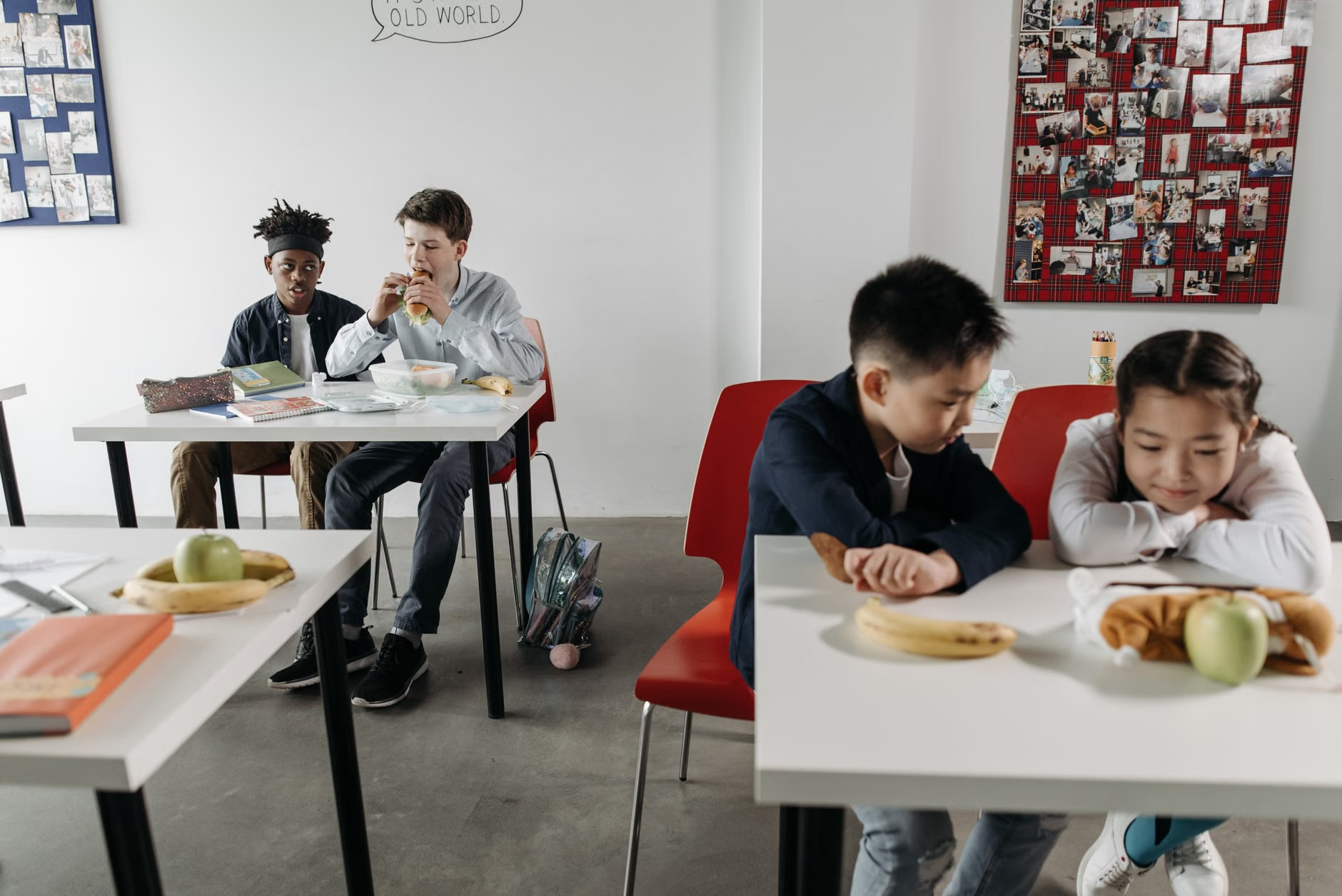
Designing Your 30-Minute Decompression Menu
The goal of a decompression ritual is to provide a neutral space. It should be consistent enough that the child knows what to expect, but flexible enough to account for their specific moods. Here is how you can structure this effectively.
1. The Initial “No-Question” Period
The most important rule is the “No-Question” window. For the first 15 minutes, do not ask about school, homework, or chores. Instead, offer a neutral greeting. Something as simple as “Hey, I’m glad you’re home,” or “The kitchen is ready if you’re hungry,” works wonders. By removing the pressure to report on their day, you are essentially telling their nervous system that they are safe and that no further output is required of them for the moment.
2. The Sensory Reset
Most schools are high-stimulation environments—bright lights, constant noise, and rigid seating. When they get home, their sensory systems are often over-stimulated. A helpful ritual involves lowering the sensory input in your home:
- Lighting: Dim the overhead lights if possible.
- Sound: If the house is noisy with television or music, consider turning it off or switching to a low-volume, calming alternative.
- Movement: Some children need to get physical energy out, while others need to be still. Observe which one your child leans toward.
3. The “Menu” Approach
Instead of forcing a specific activity, give your child a choice of two low-stakes options. This gives them a sense of autonomy, which is crucial for the pre-teen developmental stage. You might say, “I’m going to be doing some quiet work in the other room. You’re welcome to grab a snack and head to your room, or stay here and draw for a bit while we have some quiet time.”
| Activity Type | Best For… | Example |
|---|---|---|
| Restorative | Highly introverted or exhausted children. | Reading, listening to a podcast, or lying on the floor with a pet. |
| Kinetic | Children who need to “shake off” the school day. | Shooting hoops, a quick walk around the block, or throwing a ball. |
| Creative | Children who process stress through their hands. | Sketching, building LEGO, or simple cooking tasks. |
Why “Micro-Transitions” Are the Secret Weapon
Often, the transition from school to home is too abrupt. One minute they are in a classroom, and the next they are in their living room. If your child takes the bus or walks home, they have a natural buffer. If you pick them up, the car ride is a prime opportunity to build in that buffer.
Many parents make the mistake of using the car ride as an interview session. “How did you do on that test? Did you remember your permission slip?” This turns the car into an extension of the school environment. Instead, try using the car ride for “parallel play.” Let them listen to their own music or a podcast. If they initiate conversation, follow their lead. If they stay silent, respect that silence. By the time you pull into the driveway, they should feel like they’ve had a mental break, not a second round of interrogation.

Common Pitfalls and How to Avoid Them
Even with the best intentions, you will encounter resistance. Here are common mistakes parents make when trying to establish these rituals and how to correct them.
Mistake 1: The “Productive” Trap
We feel that time is wasted if it isn’t spent doing homework or chores. However, research into adolescent development suggests that “down-time” is actually a form of cognitive processing. If you force homework immediately, you might get it done faster, but the quality will likely be lower, and the emotional toll on your relationship will be higher. The trade-off is almost never worth the stress.
Mistake 2: Ignoring the “Snack-Gap”
Never underestimate the power of blood sugar. By 3:30 PM, most pre-teens have not eaten a significant meal for hours. A “hangry” child will never be able to regulate their emotions. Make the snack part of the ritual. Ensure it is accessible, healthy, and requires little effort on their part. If they come home to a kitchen with pre-cut fruit or a simple sandwich, they are much less likely to snap at you.
Mistake 3: Inconsistency
If you implement a ritual on Monday but then launch into a list of demands on Tuesday, your child will never learn to trust the buffer zone. They will remain in a state of high alert, waiting for the “other shoe to drop.” Consistency is what builds the sense of safety that allows for true decompression.
The Role of Technology in Decompression
There is a fierce debate among parents about screen time immediately after school. Some view it as a “brain-rot” activity, while others see it as a necessary escape. The reality is more nuanced. For a pre-teen who has been dealing with complex social dynamics all day, scrolling through social media or playing a simple game can actually be a way to “zone out.”
However, the danger lies in the dopamine loop. If the screen time is high-intensity (competitive gaming or fast-paced video content), it can actually increase their stress levels rather than lowering them. If you allow screen time, set a boundary: “You can use your device for 20 minutes to relax, but let’s make it something low-key.” Avoid games that require intense focus or competitive social interaction during this 30-minute window.

When to Seek Further Help
If you implement a consistent 30-minute decompression ritual and find that your child’s behavior remains consistently explosive, withdrawn, or severely anxious, it may be a sign of something deeper. While the after-school wall is normal for many, it should not be a daily state of crisis. If the distress persists for weeks, consider checking in with a school counselor or a pediatrician.
Often, the school environment itself may be the source of chronic stress (e.g., bullying, academic learning struggles, or social exclusion). Your child’s reaction at home is their way of telling you that something is wrong. Use the calm, post-decompression time to have those deeper conversations. You will find that they are much more willing to open up when they aren’t in the middle of a fight-or-flight response.
Creating a Long-Term Strategy for Independence
As your child moves through their pre-teen years, the goal is for them to eventually manage their own decompression. You can start by modeling it yourself. When you finish your workday, narrate your own transition: “I’ve had a long day, I’m going to take 15 minutes to sit on the porch with a tea before I start dinner.”
By showing them that you also require a transition period, you validate their need for it. Over time, encourage them to identify what *they* need to feel better. Ask questions like, “When you get home, what helps you feel like you can finally relax?” This shifts the responsibility from you managing their emotions to them becoming aware of their own needs.
This is a fundamental skill for adulthood. The ability to recognize when you are over-stimulated and to take proactive steps to regulate yourself is a hallmark of emotional intelligence. By starting this ritual now, you aren’t just solving a daily headache; you are giving them a toolkit for managing stress for the rest of their lives.
Final Thoughts on the Transition
The transition from school to home is a high-stakes moment for the family dynamic. By treating it as a physiological necessity rather than a behavioral issue, you can transform the most difficult part of the day into a predictable, manageable, and even pleasant ritual. Remember, your child is not trying to give you a hard time; they are having a hard time.
Start small. Pick one day to try the “No-Question” policy and see how the mood in the house shifts. You will likely find that by giving them the space to decompress, you actually end up with more, not less, meaningful interaction in the evening. Patience during these 30 minutes is the best investment you can make in your relationship with your growing pre-teen.
Frequently Asked Questions
Q: What should I do if my child prefers to talk about their day immediately?
A: Follow their lead. The goal is to reduce stress, not to be rigid. If they want to talk, listen actively. However, avoid asking “interrogation” questions about grades or chores. If they start to get overwhelmed or irritable, gently suggest a break: “I’m really enjoying hearing about this, but let’s grab a snack and take a breather for a few minutes before we finish the story.”
Q: Is 30 minutes a hard rule?
A: It is a guideline. Some children might only need 15 minutes, while others might need an hour. Use the 30-minute mark as a starting point and adjust based on your child’s energy levels and the intensity of their school day. If they have had a particularly rough day, extend the grace period.
Q: How do I handle household chores if I can’t ask them to do anything for 30 minutes?
A: Treat the chores as a separate “work” block that happens after the decompression ritual. When you set the expectation that “We have 30 minutes of downtime, and then we have 20 minutes of chores before dinner,” it becomes a predictable part of the routine rather than a surprise demand. This creates a clear boundary between “rest time” and “contributing to the family” time.
Useful Resources:
For more on adolescent brain development and stress management, see the official resources from the American Psychological Association (APA) – Parenting and the American Academy of Child & Adolescent Psychiatry (AACAP).