- Quality Over Quantity: Quiet luxury in organization isn’t about buying expensive bins; it’s about reducing total inventory to only what is high-quality and frequently used.
- The “Hidden-In-Plain-Sight” Rule: The most effective way to achieve a high-end look is to reduce visual noise by using closed storage, monochromatic palettes, and consistent textures.
- Maintenance vs. Aesthetics: True quiet luxury is low-maintenance. If an organizational system requires daily “staging” to look good, it is not sustainable for a busy family.
The “quiet-luxury” aesthetic—often associated with expensive, logo-free cashmere and understated interiors—is finally making its way into the world of home organization. For those of us in our 30s and 40s, juggling professional deadlines, school runs, and the general entropy of family life, this trend offers more than just a clean house. It offers a mental reset. It isn’t about spending thousands on designer baskets; it is about curate-down, simplifying, and creating a home environment where the visual noise is dialed down to a whisper.
When your home is constantly filled with the clutter of modern life—the stack of mail, the rogue building blocks, the half-empty water bottles—the “quiet” part of quiet luxury feels like a distant dream. But by adopting a few core principles of this design philosophy, you can create a space that feels calm, intentional, and remarkably easy to maintain.
Defining the Quiet-Luxury Aesthetic in a Real-World Family Home
Quiet luxury is often misunderstood as “minimalism,” but they aren’t the same. Minimalism often implies a stark, empty aesthetic. Quiet luxury, on the other hand, is about intentionality and texture. It is the rejection of mass-produced plastic organizers in favor of materials that age well—wood, stone, heavy-weight cotton, and glass.
In a family home, this doesn’t mean you need to hide your children’s existence. Instead, it means you stop treating their belongings as an aesthetic intrusion. If you look at high-end interior design magazines, you’ll notice a common thread: consistency. When you use uniform storage solutions, the eye doesn’t get caught on individual items. It glides over the room.
Think of it as the “Monochromatic Principle.” If your shelves are filled with mismatched plastic bins, your eyes are constantly processing conflicting colors and shapes, which creates subconscious stress. By switching to a restricted color palette—think warm creams, soft greys, or natural woods—you immediately lower the visual temperature of a room. This is the foundation of quiet luxury: making the room feel larger, calmer, and more expensive simply by reducing the number of competing visual signals.
Why “Quiet” Organization Matters for Mental Health
There is a growing body of research, including studies published in journals like Current Psychology, suggesting that high levels of clutter are linked to higher cortisol levels, particularly in mothers. It isn’t just about “messy rooms”; it’s about the fact that every item in your line of sight is a potential task. That pile of mail? It’s a task. The toys on the floor? A task. The stack of books on the nightstand? Another task.
Quiet luxury is the antidote to this “visual to-do list.” By using closed storage, you aren’t just hiding the clutter; you are removing the cognitive load of seeing it. When you walk into a room and the surfaces are clear, your brain can finally switch from “maintenance mode” to “relaxation mode.” This is not a luxury; it is a necessity for anyone trying to sustain a busy lifestyle without burning out.
The Four Pillars of Low-Maintenance Organization
To implement this style, you don’t need a professional organizer or a massive renovation. You need a shift in your decision-making process. Here are the four pillars that define the quiet-luxury organizational framework.
| Pillar | Traditional Approach | Quiet-Luxury Approach |
|---|---|---|
| Storage | Clear plastic bins (visible content) | Opaque woven baskets or wood boxes (hidden content) |
| Inventory | Buying “just in case” items | Buying for current, immediate use only |
| Labels | Bright, bold, or colorful labels | Minimalist, tonal, or no labels at all |
| Display | Maximum shelf capacity | “White space” or breathing room on shelves |
Let’s break these down. The most common mistake people make is buying storage containers before they have purged. If you buy expensive baskets to house items you don’t actually need, you aren’t creating luxury; you’re just creating a very expensive way to store junk. The quiet-luxury process must start with a ruthless audit of what you own.
The “One-In, One-Out” Rule for Families
In a home with kids, the “One-In, One-Out” rule is often laughed at because it seems impossible. However, it is the only way to maintain a curated home. The trick is to broaden the definition. Don’t just trade a toy for a toy. Trade a category for a category. If a new set of art supplies enters the house, the old, dried-out markers and the coloring books with two pages left go into the donation or recycling bin.
This creates a cycle of maintenance that prevents the accumulation of “stuff.” When you have fewer items to manage, you spend less time organizing and more time living. That is the ultimate luxury: time.
The Art of Hidden Storage: Where to Start
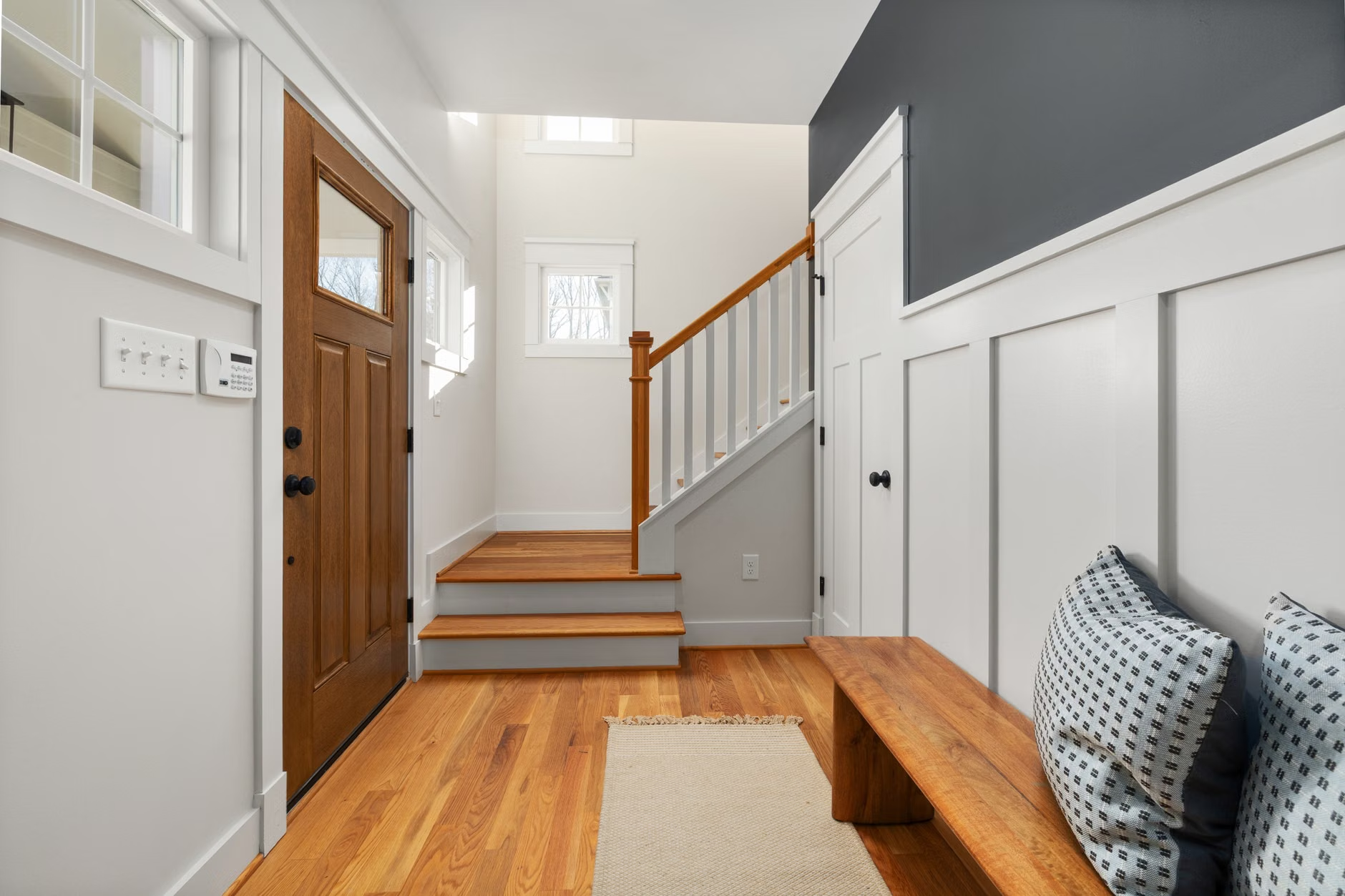
The entryway is the most critical zone in a busy home. It is the transition point between the outside world and your sanctuary. If you walk into a house and are immediately met with a pile of shoes, a mountain of bags, and a chaotic coat rack, you have already lost the battle for calm.
To apply the quiet-luxury aesthetic here, focus on enclosure. If your entryway is small, use a single, high-quality wooden bench with integrated storage underneath. Instead of a coat rack that looks like a forest of winter gear, invest in a simple wall-mounted rail that hides coats behind a curtain or inside a closet. The goal is to make the entryway look as though nobody lives there, even when the whole family just walked in.
Practical Steps for Implementing Hidden Storage
- Audit the “Drop Zone”: Identify exactly where you drop your bags, keys, and mail. This is your primary pain point.
- Select a Single Material: If your home uses oak, stick to oak storage units. If it uses matte black metal, stick to that. Consistency in materials is the hallmark of high-end design.
- Utilize Vertical Space: If you don’t have floor space for a bench, use wall-mounted cabinets that reach the ceiling. This draws the eye upward and keeps the floor clear, which makes the space feel larger.
- The “Daily Reset” Rule: Spend exactly three minutes before bed clearing the entryway. If you do this every single day, it never becomes a “project.”
Managing the “Toy-Creep” Without Losing the Aesthetic
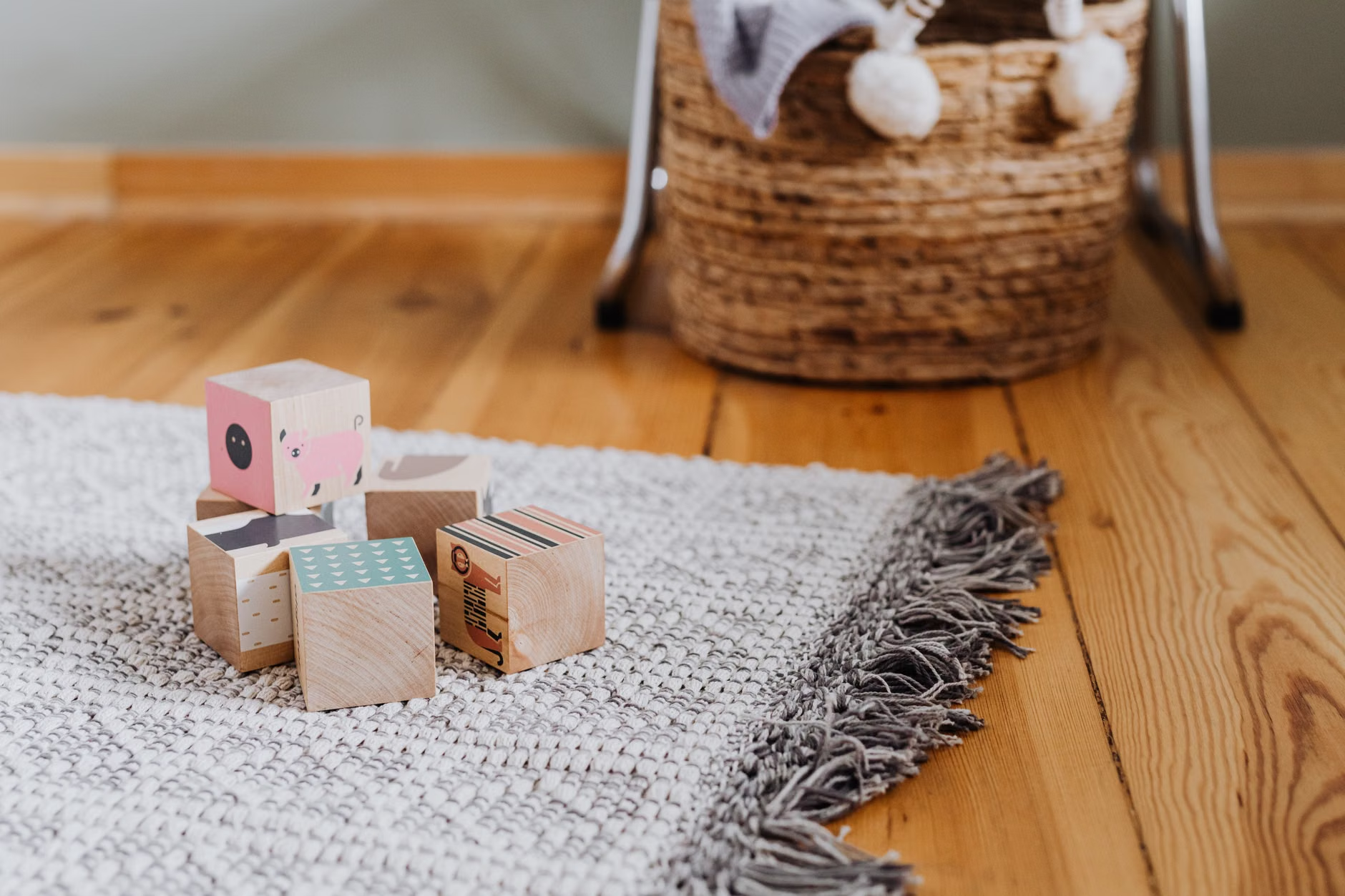
Toy-creep is the nemesis of the quiet-luxury home. The bright, primary-colored plastic of most modern toys is the literal opposite of the aesthetic. But you don’t have to ban plastic toys. You just have to manage how they are stored.
The secret is the “Rotation Method.” Instead of having every toy available at once, keep only 20% of the toys out. Store the remaining 80% in opaque, neutral-colored bins in a closet or basement. Every two to four weeks, rotate the toys. This does two things: it keeps the living area looking curated and quiet, and it makes the “new” toys feel exciting for your children, which actually improves their play quality.
When choosing storage for toys, opt for materials that blend into your furniture. Woven seagrass, felt, or heavy-duty canvas bins in neutral tones—beige, charcoal, or cream—work perfectly. These materials add texture, which is a key element of quiet luxury, without adding visual clutter.
Common Pitfalls in Toy Organization
- Over-Labeling: Do not label toy bins with bright, printed labels. If you need to label them, use simple, small, tonal tags or just rely on the fact that the kids know which basket is which.
- Open Shelving: If you use open shelves for toys, ensure you have “buffer” items—books, a plant, or a piece of art—between the toy bins to keep the look balanced.
- The “Everything Must Go” Fallacy: You don’t have to get rid of all the toys. You just have to be the gatekeeper of what is currently in the living room.
The Kitchen: High-Performance, Low-Noise
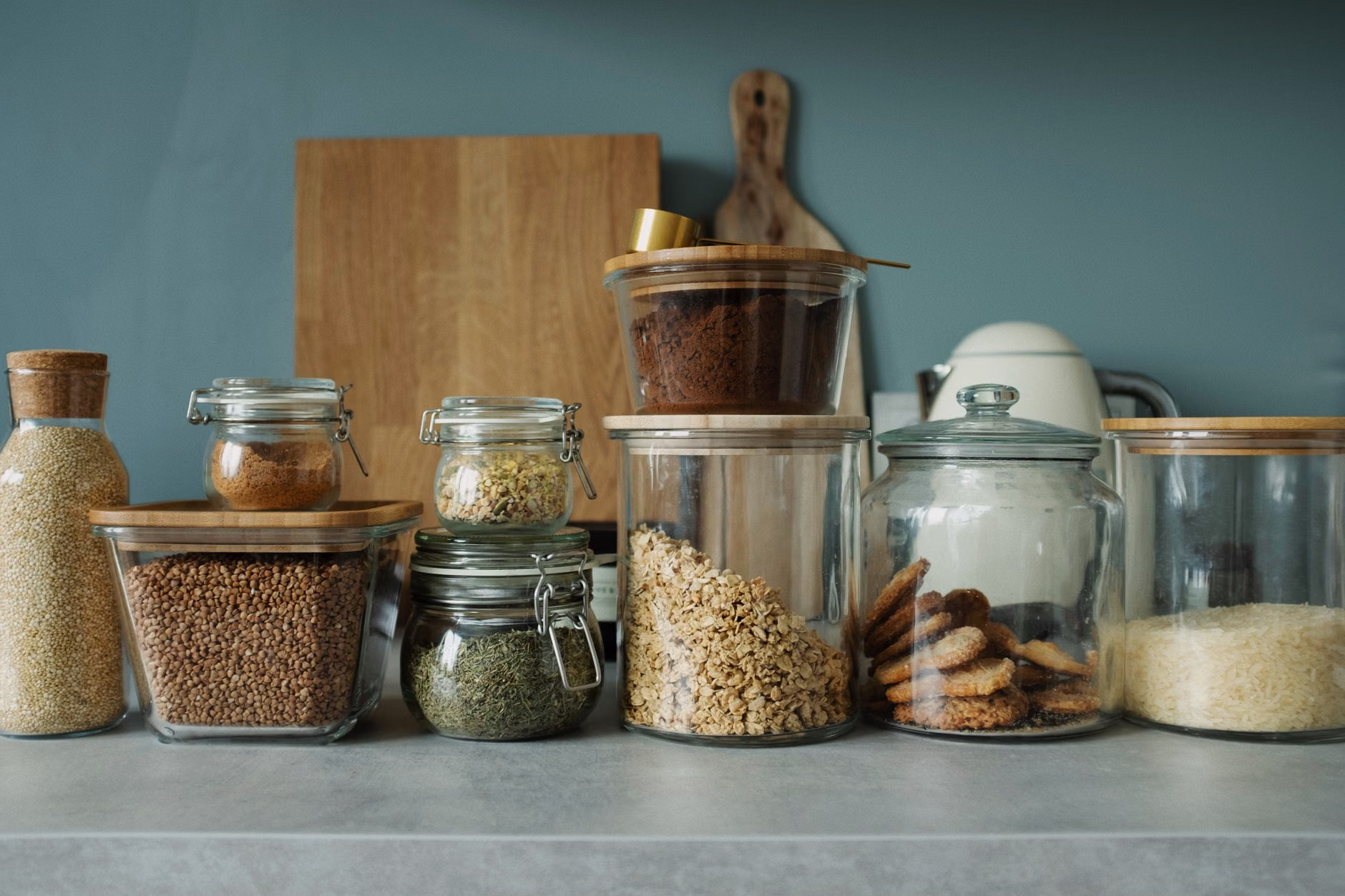
The kitchen is the heart of the home, but it is also the biggest source of visual noise. Between the appliances, the spices, and the food packaging, it is almost impossible to keep it looking “quiet” unless you have a plan. The quiet-luxury approach to the kitchen is all about decanting.
Decanting—taking dry goods out of their original packaging and putting them into uniform glass or ceramic jars—is a hallmark of high-end organization. It serves two purposes: it removes the chaotic branding of cereal boxes and pasta bags, and it allows you to see exactly how much you have left at a glance, preventing over-buying.
The Hierarchy of Kitchen Storage
Not everything needs to be decanted. Focus on the “High-Use” items first. Flour, sugar, rice, pasta, and coffee. These are the items that are used daily and often come in bulky, unattractive packaging. Leave your rarely used items in their original boxes in the back of the pantry. You don’t need to spend time decanting a box of specialized baking powder you use once a year.
A note on hidden costs: Glass jars are heavy and can be expensive. If you have young children, consider high-quality, shatterproof BPA-free plastic canisters that mimic the look of glass. This is a practical trade-off that maintains the aesthetic while ensuring safety.
Maintaining the Quiet Luxury Over the Long Term
The biggest misconception about the quiet-luxury organizational style is that it is “high-maintenance.” In reality, it is the opposite. Because you have fewer items and everything has a dedicated, hidden home, the time it takes to “reset” the house is minimal. The danger, however, is lifestyle creep.
As your children grow, their needs change. The toys of a three-year-old are very different from those of a ten-year-old. You must be willing to let go of the organizational systems that no longer serve you. If a system is causing you frustration, it is not a “luxury” system; it is a broken one.
The Quarterly Audit: Every three months, do a quick pass through your home. What is no longer being used? What is broken? What is just taking up space? Be ruthless. A quiet-luxury home is a living entity, not a museum. It needs to breathe, and that means things must constantly flow in and out.
When to Spend, When to Save
Don’t fall for the trap of buying “aesthetic” organizers that are poorly made. A beautiful wicker basket that falls apart after six months is not luxury; it’s waste. Spend your money on high-quality, durable items that will last a decade. If you can’t afford to buy all your storage at once, do it room by room. It is better to have one perfectly organized, high-quality kitchen pantry than an entire house full of cheap, plastic bins that will end up in a landfill in a year.
Beyond the Aesthetics: The Philosophy of “Enough”
Ultimately, the quiet-luxury organizational aesthetic is about the philosophy of “enough.” We live in a culture that tells us we need more—more storage, more gadgets, more organization solutions. But true luxury is the feeling of having exactly what you need, and nothing more. When you clear away the excess, you aren’t just making room for better design; you are making room for your life to happen.
Whether it’s a quiet morning coffee in a kitchen without clutter or an evening where you can actually find the board game the kids want to play, these small moments of ease are what the quiet-luxury lifestyle is truly about. Start small, focus on quality, and remember that the most beautiful home is one that serves your family, not one that you have to serve.
Frequently Asked Questions
1. Does quiet-luxury organization require a lot of money to start?
Not necessarily. While high-quality materials like wood and glass cost more than plastic, the core of the aesthetic is reduction. By decluttering first, you need fewer storage solutions. Start by using what you have—remove labels, group items by color, and hide items in opaque boxes you may already own. You can upgrade to “luxury” materials gradually as your budget allows.
2. How do I keep my children from undoing my organization?
The secret is to make the system intuitive for their age. If the system is too complicated (e.g., tiny bins for tiny parts), they will get frustrated and dump everything out. Use larger, “catch-all” baskets for toys. If they can easily toss items in, they are more likely to help with the cleanup. Also, involve them in the process—when they help choose where things go, they are more invested in maintaining that order.
3. How often should I perform a “reset” to keep the quiet-luxury look?
A “reset” should be a daily, low-effort habit rather than a weekly chore. Spend 10-15 minutes every night doing a quick sweep—clearing surfaces, returning items to their designated “homes,” and fluffing pillows. If you do this consistently, you avoid the build-up of visual clutter that destroys the “quiet” feeling of the home. Think of it as a nightly closing ritual for your house.
For further reading on minimalist living and the psychology of space, check out the resources from the Psychology Today archives on environment and stress, which provide a solid foundation for understanding why visual noise impacts our daily performance.
Final takeaway: Focus on the “Hidden-In-Plain-Sight” rule. If you can’t see it, it can’t stress you out. Start by clearing your most-used surface today, and build your quiet-luxury home one drawer at a time.