The most effective way to support a Third-Culture Kid (TCK) is not to force them to choose a single “home” culture, but to provide a consistent emotional anchor that allows them to integrate multiple cultural influences into a unique, fluid identity.
- Identity is a process, not a destination: TCKs often feel like they belong everywhere and nowhere; normalizing this “chameleon” effect reduces anxiety.
- The “Anchor” Strategy: Establish consistent family rituals that move with you, providing a sense of stability regardless of the geographic location.
- Intentional Language and Heritage: Actively bridging the gap between host-country social skills and home-country heritage prevents the “identity void” that can occur during transitions.
If you are reading this, you are likely part of the “mobile generation.” You’ve moved for work, for love, or for the sheer adventure of it, and now you’re watching your children navigate a world that doesn’t fit into a single passport. The term “Third-Culture Kid” was coined by sociologist Ruth Hill Useem in the 1950s, but it feels more relevant today than ever. A TCK is a child who spends a significant part of their developmental years outside their parents’ culture of origin. They are the global citizens of tomorrow, but today, they are often just kids trying to figure out which version of themselves to show at school.
The challenge for parents in their 30s and 40s is that we often feel the pressure to provide a “stable” upbringing, which we mistake for “staying in one place.” But stability isn’t a geography; it’s a system of support. Let’s break down how to actually build that system.
1. Redefining “Home” Through Rituals Instead of Places
When you move every three to five years, the physical concept of “home” becomes elusive. Children often struggle when they realize that “home” is a moving target. If you rely on a specific house or a specific neighborhood to define security, you are setting your child up for a crisis every time a contract ends or a visa expires.
Instead, shift the definition of home to portable rituals. These are the things that happen regardless of the view outside the window. This could be a specific Friday night movie tradition, a Sunday morning pancake recipe that uses the same ingredients even if they are bought in a different currency, or a dedicated “family meeting” time where everyone gets to voice their frustrations about the current location.
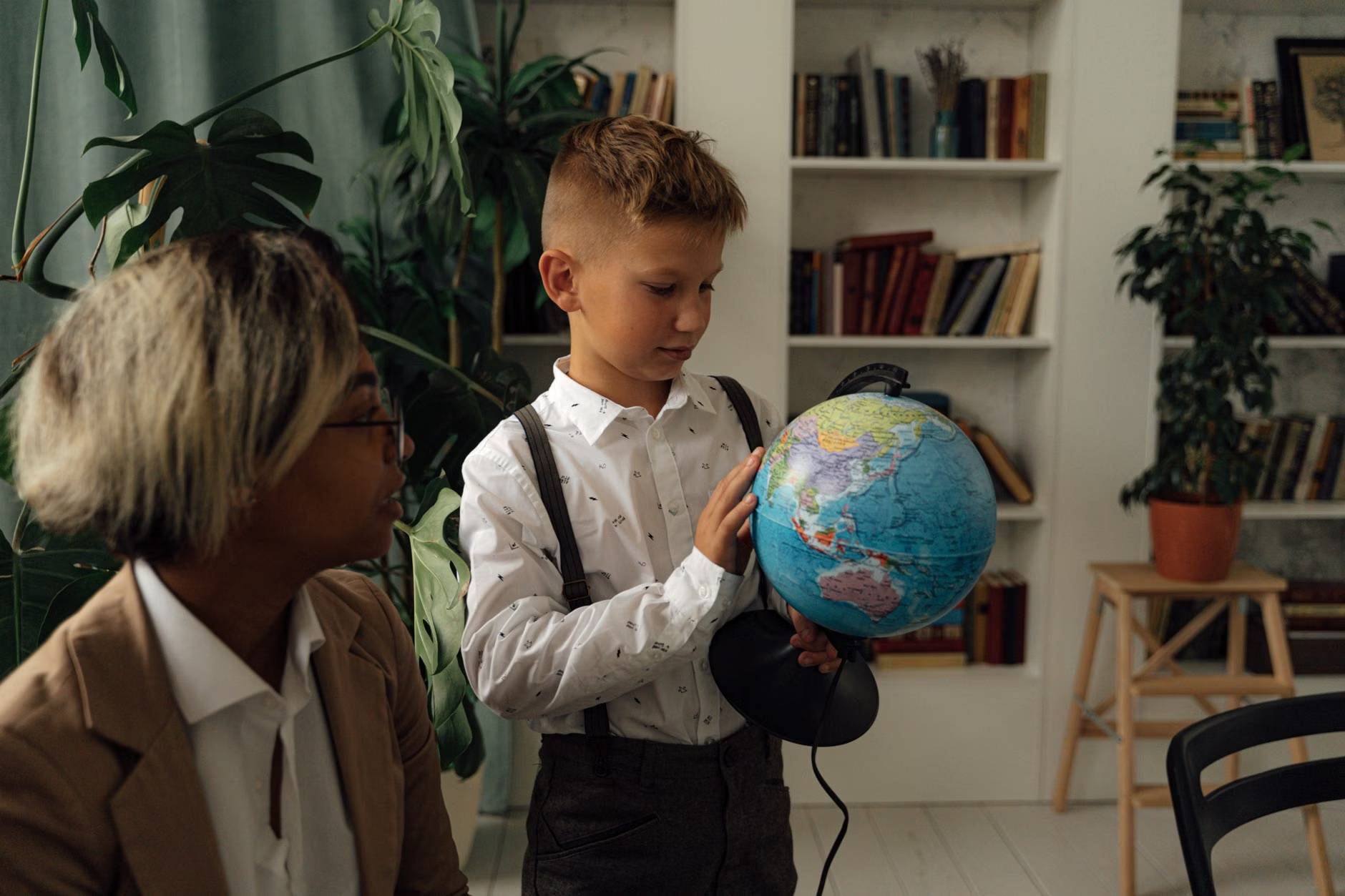
Why this matters: Children, especially those under 12, need a predictable feedback loop. When the external world (language, food, social norms) is constantly shifting, the internal world (family life) must remain rigid enough to provide comfort. If you move from London to Singapore, the street signs change, the humidity hits you like a wall, and the school system is entirely different. If your family dinner time also changes, the child loses their primary orientation point. Keep the time, the tone, and the traditions identical. It’s the “emotional wallpaper” of their life.
2. Managing the “Chameleon Effect” and Social Exhaustion
One of the most overlooked aspects of being a TCK is the “Chameleon Effect.” These children become highly skilled at reading a room. They subconsciously adopt the mannerisms, slang, and social expectations of their peers to fit in quickly. While this is a superpower in a professional sense later in life, it is exhausting for a child.
In your 30s or 40s, you might look at your child and think they are “adjusting great” because they’ve made friends in a new country within two weeks. In reality, they might be performing. They are burning significant mental energy to suppress their previous cultural identity to mirror their new environment.
How to support this: Create “safe zones” where no performance is required. This is a non-negotiable space where they don’t have to be the “new kid” or the “international student.” It’s where they can speak in their native tongue if they want, or complain about the new culture without being labeled “ungrateful.”
- The 15-Minute Daily Decompression: Allow your child 15 minutes of uninterrupted, screen-free time to vent or simply exist without expectations immediately after school.
- The Cultural Neutral Zone: Engage in activities that are universally understood—like sports, art, or coding—where the language barrier is minimized, and they can rely on skill rather than social navigation.
3. The Practicality of Maintaining Heritage Language
Language is the primary carrier of culture. Many parents, in an effort to help their children “integrate” into a new host country, prioritize the local language to the detriment of their heritage language. This is a common mistake that creates a long-term identity gap. When a child loses their heritage language, they lose the ability to connect with extended family members—grandparents, cousins, and friends back home—who are the primary keepers of their cultural history.
Decision Criteria: How do you balance the two? Use the “One-Person, One-Language” (OPOL) model if possible, or the “Minority Language at Home” (ML@H) model. If you are a couple where both parents speak different native languages, the home becomes a linguistic lab. The goal isn’t perfect fluency in both; the goal is emotional accessibility. Can your child express their deepest frustrations or joys in their heritage language? If not, they are essentially being forced to experience their most complex emotions in a “second-hand” language.
Common Misconception: “They will learn the local language anyway, so why bother teaching it?” They will learn the local language at school. They will not learn your heritage language at school. If you don’t provide it, the link is severed. This doesn’t mean you need to be a formal teacher; it means you need to be a consistent speaker.
Adults often view moving as a logistical checklist: shipping containers, visa applications, school enrollments, and tax filings. We focus on the “what” and the “how.” Children, however, experience a move as a profound loss. They are losing their friends, their teachers, their favorite park, and their sense of place. This is a legitimate grief cycle.
When your child acts out, becomes withdrawn, or refuses to participate in new activities, don’t immediately label it as “bad behavior” or “lack of resilience.” It is likely an expression of grief. Acknowledge it explicitly. Use language that validates their experience: “It is really hard to leave your friends. I’m sad too, and I miss our old neighborhood.”
| Stage of Move | Child’s Likely Experience | Parental Action |
|---|---|---|
| Pre-Move | Anxiety about the unknown | Provide concrete details: show photos of the new house, school, and local park. |
| Transition | Disorientation and sensory overload | Maintain strict routines; allow for extra downtime; minimize new demands. |
| Integration | “Chameleon” exhaustion | Create “safe zones” to be their authentic self. |
| Reflective | Nostalgia for the “past” location | Create a digital photo album or scrapbook of the previous life. |
The table above highlights that support must change based on the timeline. A common mistake is to treat the “Integration” phase as the “Finished” phase. Integration is never finished; it’s an ongoing process of negotiation.
5. Building a “Global Tribe” vs. “Local Friends”
TCKs often report that they find it easier to connect with other TCKs than with “monocultural” peers. This is because they share a common language of transition. Don’t discourage this. While it is important to encourage your children to make friends with local children, having a “global tribe” provides a unique form of validation.
Find groups, whether they are international school communities, expat networks, or online forums for global families. These groups act as a mirror. When your child sees other children who have lived in three countries by the age of ten, their own experience becomes normalized. They stop seeing themselves as “the weird kid who keeps moving” and start seeing themselves as “part of a global community.”

The Hidden Cost: The intensity of these TCK friendships can be overwhelming. They often form “fast and deep” bonds. When you move again, the loss feels catastrophic. Be prepared for this. Help your children maintain digital connections with their “global tribe.” In the digital age, geography is less of a barrier to friendship than it was twenty years ago. Facilitate video calls, online gaming sessions, or shared digital projects. These are not “distractions”; they are the maintenance of their support system.
The Long-Term Perspective: Why This Matters
In your 30s and 40s, you are playing the long game. You aren’t just raising a child to survive their current school year; you are raising an adult who will eventually need to navigate a hyper-connected, volatile, and complex global economy. The very skills your child is developing now—adaptability, cultural empathy, the ability to read social cues, and the resilience to start over—are the most sought-after soft skills in the modern workforce.
However, these skills come at a price. The price is the risk of “identity fragmentation.” If you don’t help them weave these experiences together, they may grow up feeling like a collection of fragments rather than a whole person. Your role as a parent is the “weaver.” You are the one who helps them see that living in Tokyo, Berlin, and New York isn’t just a list of places they’ve been—it’s the narrative of who they are becoming.
Practical Next Step: This weekend, sit down with your child and create a “Life Map.” Use a physical map or a digital tool to plot every place you have lived. Let them add their own memories to each location—a favorite snack, a specific friend, a funny mistake they made. This simple exercise validates their history. It tells them: “Your past is not lost; it is part of your map.”
Mobile living is not a deficit. It is a unique way of being in the world. By acknowledging the challenges, normalizing the grief, and actively building bridges between their various cultural worlds, you aren’t just managing a lifestyle—you are building a foundation that will serve them for the rest of their lives.
Frequently Asked Questions
1. How do I know if my child is struggling with their TCK identity?
Look for signs of “social withdrawal” or a sudden drop in academic performance that coincides with a move or a significant change in social circles. Also, pay attention to “identity confusion”—if they seem to have no opinion on their own preferences (food, music, hobbies) and instead mirror their peers entirely, they may be over-indexing on the chameleon effect. This is a sign to lean into their interests at home to help them find a stable sense of self.
2. Is it bad to keep moving? Will it damage my child’s ability to form deep connections?
It is not inherently bad, but it requires a change in strategy. TCKs often form deep connections faster than their peers, but they also experience more frequent “grief cycles.” The damage occurs when parents ignore the grief or treat the move as a purely logistical event. If you provide a stable emotional container—consistent rituals and open communication about the loss—these children often develop a high level of resilience and social intelligence that serves them well into adulthood.
3. How can I encourage my child to embrace their heritage language when they just want to be “like everyone else” at school?
This is a classic phase. The best approach is to make the heritage language a “special” or “private” connection rather than a school-like requirement. Use it for specific, enjoyable activities—watching movies together, reading stories, or playing games. Connect the language to the people they love (grandparents, family friends) rather than to textbooks or grammar drills. When they realize the language is a tool for connection rather than a school subject, their resistance usually drops.
Official Resources and Further Reading:
- TCKid.com: A resource for Third Culture Kids and their families.
- Families in Global Transition (FIGT): Research and support for globally mobile families.
- American Psychological Association: Resources on child development and transition management.
Note: The strategies discussed here are based on common developmental patterns observed in TCK research. Every child is unique, and if you observe persistent distress, consulting with a child psychologist who specializes in international mobility is always the best path forward.