Educational tourism is not about forcing your children to study during their holidays; it is about replacing the passive consumption of tourist sights with active, inquiry-based engagement that turns a city into a living curriculum.
- Prioritize Depth Over Breadth: Instead of checking off five landmarks in a day, spend an entire morning in one location—a museum, a market, or a local workshop—to allow for deep observation and meaningful questions.
- Curriculum-Aligned Engagement: Use the destination as a real-world lab for what they are currently learning in school, such as practicing currency math at a local market or exploring historical architecture for geometry lessons.
- The “Active Observer” Rule: Assign your child a specific “mission” for each day, such as being the lead navigator, the official photographer, or the budget tracker, to shift them from a passenger to an active participant.
If you have ever spent a small fortune on a family trip only to have your kids spend the entire time looking at their tablets or complaining about the “boring” statues, you are not alone. It is the classic parental dilemma: we want to expose our children to the world, but the pace of traditional sightseeing often leaves them exhausted and disconnected. The shift toward “educational tourism” isn’t about adding schoolwork to your vacation; it is about changing the lens through which your family experiences a new city.
When we treat a city as a classroom, we stop asking, “What can we see?” and start asking, “What can we understand?” This transition transforms a standard trip to London, Tokyo, or New York into a series of discoveries that stick with a child long after the flight home.
Designing a Curriculum-Free Itinerary That Actually Teaches
The biggest mistake parents make is attempting to replicate a school field trip. Field trips are often rushed, rigid, and focused on memorization. Educational tourism, by contrast, should be driven by curiosity. To do this effectively, you need to abandon the “must-see” list provided by travel blogs and instead build an itinerary around your child’s current interests.
If your child is obsessed with building blocks, a trip to Tokyo shouldn’t just be about visiting the Tokyo Tower; it should include a visit to the Miraikan (National Museum of Emerging Science and Innovation) to see the humanoid robots, followed by a trip to the Ghibli Museum to understand the mechanics of animation. If they love animals, a city trip should incorporate an investigation into local urban ecology—how do birds or insects survive in a concrete jungle?
The “One-Major-Activity” Rule: Limit your structured educational activities to one per day. This prevents the “museum fatigue” that sets in by 2:00 PM. By keeping the rest of the day flexible, you create space for the spontaneous learning that happens when a child spots something unexpected, like a street performer, a local festival, or a unique architectural detail.

How to Turn Mundane Tasks into Practical Learning
Everyday travel tasks are actually the most effective educational tools you have. You don’t need a textbook to teach your child about economics, geography, or social studies. Here is how to turn the chores of travel into lessons:
| Activity | Educational Concept | Implementation Strategy |
|---|---|---|
| Navigating Public Transit | Spatial Reasoning & Logistics | Give the child the map and have them identify the route, the stops, and the transfer points. |
| Grocery Shopping | Cultural Studies & Math | Give them a budget in local currency and ask them to buy three items for a picnic. |
| Ordering Food | Language & Etiquette | Encourage them to learn at least three phrases in the local language, including “please” and “thank you.” |
By delegating these tasks, you are not just teaching them skills; you are building their confidence. When a seven-year-old successfully navigates the Paris Metro or completes a transaction at a bakery in Berlin using the local language, they gain a sense of agency that they rarely experience in a traditional classroom.
Choosing the Right Global Cities for Early Explorers
Not all cities are created equal when it comes to educational potential. For families, the best cities are those that balance safety, accessibility, and high concentrations of “low-barrier-to-entry” learning environments. A city like Singapore, for instance, is an incredible case study in urban planning and sustainability. A city like Rome, on the other hand, is essentially a massive, open-air history textbook.
When selecting a destination, look for cities that have integrated “interactive civic spaces.” These are not just museums, but public parks, libraries, and community centers that are designed for public use. In Scandinavian cities like Copenhagen, for example, the urban design itself is the lesson—the focus on bicycle infrastructure, green energy, and public accessibility provides a tangible example of how a society prioritizes its citizens.
The “Urban Audit” Exercise
To deepen the experience, try an “Urban Audit.” This is a simple activity where you and your child walk through a specific neighborhood and record observations. You can create a simple checklist before you leave:
- How many different types of trees or plants do we see?
- What are the primary modes of transportation being used?
- How do people interact in public spaces?
- What materials are the buildings made of?
This forces the child to stop “looking” and start “seeing.” It moves them from the role of a consumer of tourist attractions to an observer of human systems. This simple shift in perspective is the foundation of critical thinking.
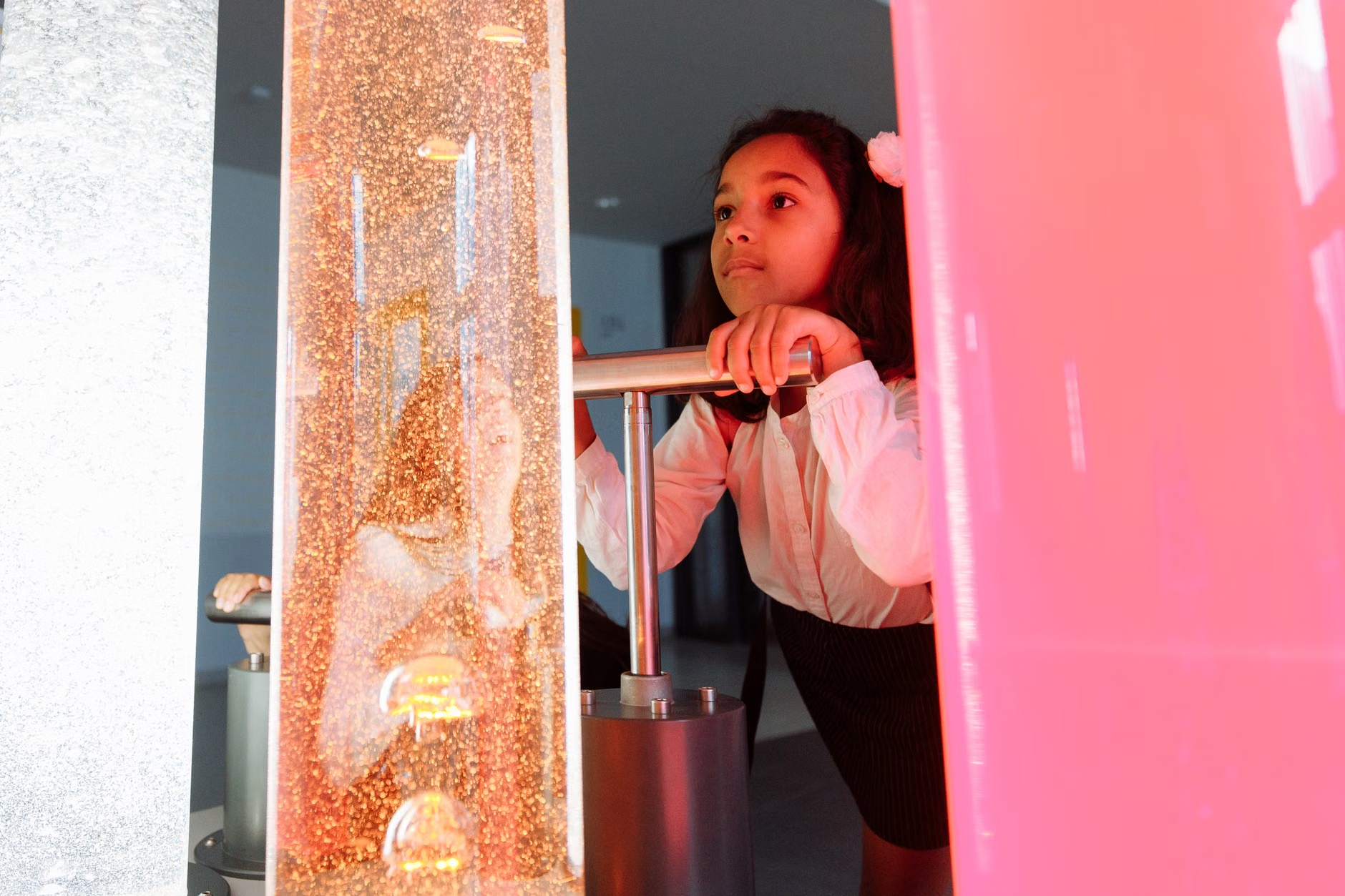
Avoiding the “Tourist Trap” Fatigue
The most common mistake parents make is over-scheduling. When you try to see everything, you end up seeing nothing. The result is a stressed parent and a child who is just waiting for the next snack break. Educational tourism requires a slower pace. It is better to spend three hours in one museum exploring three exhibits in depth than to spend three hours rushing through twenty exhibits you don’t have time to understand.
The “Question-First” Approach: Before you enter any historical site or museum, ask your child, “What is one thing you hope to find out today?” It could be as simple as “How did they build this wall?” or “What did people eat for breakfast here 200 years ago?” When they have a specific question, they start looking for the answer. They become hunters of information rather than passive observers.
If you are visiting a major city like New York, don’t just go to the Metropolitan Museum of Art. Instead, go to the Egyptian wing with a specific goal: find the temple that was moved from Egypt to the museum. Discuss why it was moved and how they managed to transport it. This turns a overwhelming building into a manageable, focused mission.
Integrating Technology Without the Digital Distraction
Technology often gets a bad rap in travel, but when used intentionally, it is a powerful educational tool. Instead of using tablets for games, use them for documentation. Give your child the task of being the “Field Researcher.” This involves:
- Photography with a Purpose: Instead of taking selfies, ask them to take photos of “things that are different from home.”
- Audio Journaling: Have them record their thoughts about a place. Hearing a child describe their own experience is often more insightful than reading a guidebook.
- Digital Mapping: Use a tool like Google Earth to look at the city from above before you visit a specific site, helping them understand the geography of where they are.
The key is that the technology serves the experience, not the other way around. If you find your child retreating into their device to play games, it is usually a sign that they are overstimulated or bored. A quick reset, such as a physical activity or a snack, is usually more effective than taking the device away entirely.
The Hidden Costs and Trade-offs of Educational Travel
Educational tourism is not “cheaper” than regular tourism, and it often requires more logistical planning. You may find that you need to book specific time slots for museums or research local events well in advance. There is also the “social trade-off.” Your child might not want to learn about the history of the Roman Forum; they might just want to eat gelato. It is crucial to balance the educational goals with pure, unadulterated fun.
The 70/30 Rule: Aim for 70% of your time to be spent on structured, curiosity-driven activities and 30% on “kid-choice” time. If they want to play in a local park for three hours, let them. That park is part of the city, and their observation of how local kids play is, in its own way, an educational experience.
Another overlooked variable is the importance of “downtime.” In a new city, children are processing a massive amount of sensory information. They need time to recharge. If you skip the afternoon nap or the quiet time in the hotel, you are setting yourself up for a meltdown. Respect the need for rest; a well-rested child is a much better learner than an exhausted one.

Step-by-Step: How to Plan Your First Educational Trip
Planning an educational trip doesn’t require a degree in pedagogy. It requires a bit of curiosity and a willingness to let your child lead. Follow these steps for your next city break:
- Select a “Theme”: Choose one broad topic that interests your child (e.g., transportation, food, history, or nature).
- Research the Local Context: Find 3-4 locations that align with this theme. Use local city websites rather than just travel blogs.
- Create a “Mission”: Give your child a specific goal for the trip. “We are going to find out how people get around this city without cars.”
- Prepare the Toolkit: Pack a notebook, a camera (or old phone), a map, and a currency converter.
- Debrief Each Evening: Spend 10 minutes at dinner asking, “What was the most surprising thing you saw today?” and “What do you want to learn more about tomorrow?”
This structure provides just enough guidance to keep the trip focused, but enough flexibility to allow for the magic of travel to occur. Remember, the goal is not to produce a scholar, but to foster a lifelong love of learning and an appreciation for the diversity of the world.
Final Thoughts on Cultivating World Citizens
Educational tourism is ultimately about teaching our children that the world is a place to be explored, not just a place to be seen. By slowing down, focusing on inquiry, and involving our children in the logistics of travel, we give them the tools to navigate any environment with confidence. We are not just taking them on a trip; we are showing them how to be active, engaged participants in the global community.
Start small. You don’t need to cross an ocean to practice these techniques. A trip to a different city in your own country can be just as educational if approached with the right mindset. The skills—observation, questioning, planning, and adapting—are universal. Once your child realizes that they can find interesting things anywhere they go, you will have given them the most valuable souvenir of all: a sense of wonder that lasts a lifetime.
For further inspiration on child-centered learning and travel, you can explore resources from the UNESCO Education initiative or look into local city-specific educational guides provided by municipal tourism boards, which often contain excellent, lesser-known resources for families.
Frequently Asked Questions
Q: How do I handle a child who is completely uninterested in “educational” activities?
A: The issue is often the “educational” label. Frame the activity as a mission or a game. Instead of “We are going to a museum,” try “We are going to find the oldest item in the city.” If they resist, pivot to something that aligns with their interest, even if it seems superficial. Their interest will grow once they feel they have autonomy over the experience.
Q: Is educational tourism too expensive for average families?
A: Not at all. In fact, many of the most educational experiences in major cities—public parks, historical districts, local markets, and free museum days—are often the least expensive. The cost lies in the time and planning, not in the entry fees. Focus on “low-cost, high-engagement” activities rather than expensive tourist attractions.
Q: What is the ideal age to start this type of travel?
A: You can start as soon as your child can walk and observe. The complexity of the tasks should scale with their age. A toddler can be asked to find “three blue things” in a market, while a teenager can be asked to manage a daily budget or navigate a complex subway system. The core principle of “active engagement” applies at every developmental stage.