The most effective way to support your child during remote schooling transitions is by acting as their “secure base,” providing consistent emotional availability that compensates for the lack of physical presence from teachers and peers.
- The Secure Base Effect: Remote learning often triggers attachment anxiety because the digital interface lacks the non-verbal cues (warmth, proximity, eye contact) that children rely on for emotional regulation.
- Predictability as Regulation: Children with secure attachments thrive on routines; when schooling goes remote, creating a “digital ritual” before and after screen time helps bridge the gap between home and school.
- Quality over Quantity: You do not need to be a full-time teacher; you need to be a consistent emotional anchor who helps them process the frustration of digital disconnection.
If you are a parent in your 30s or 40s, you likely remember your own school days as a series of physical spaces: the classroom, the playground, the cafeteria. When your child’s schooling shifts to a screen, it isn’t just a technical change; it’s a fundamental disruption of their social-emotional ecosystem. Attachment theory—a psychological framework developed by John Bowlby—tells us that children regulate their emotions by checking in with their caregivers. When the physical classroom is replaced by a monitor, that “check-in” mechanism becomes fragmented.
Why Remote Learning Disrupts Attachment Security
Attachment theory isn’t just about how we love our kids; it’s about how they learn to handle stress. In a physical classroom, a child who feels overwhelmed looks at their teacher or a peer. They receive a nod, a smile, or a shared glance. These are “micro-regulators.” They tell the child, “You are safe, and this task is manageable.”
When schooling moves to a remote environment, these micro-regulators vanish. A screen is a cold medium. It does not offer the same biological feedback loop. For a child, this can feel like a sudden loss of their “secure base”—the person or place they turn to when the world feels unpredictable. If your child seems more irritable, clingy, or prone to “shutdowns” during remote learning, it is often not a lack of focus; it is a lack of emotional feedback.
The “Digital Disconnect” Cycle:
| Scenario | Traditional Classroom | Remote Learning |
|---|---|---|
| Emotional Cue | Teacher observes physical distress and intervenes. | Teacher sees a black screen or a distracted child. |
| Peer Feedback | Non-verbal cues (smiling, sharing) build trust. | Chat boxes and muted mics create social anxiety. |
| Child’s Reaction | Resilience built through social interaction. | Fatigue built through sensory overload. |
Building a “Secure Base” in a Digital Workspace
You don’t need to be an expert in pedagogy to help. You need to be an expert in your child’s emotional state. The goal is to replace the lost physical security of the classroom with a consistent home ritual. This is not about managing their homework; it is about managing their transition.
Step 1: The “Entry and Exit” Ritual
In a physical school, the bus ride or the walk to the classroom serves as a mental transition. In remote schooling, the transition is usually “stumble out of bed to the laptop.” This lack of a transition creates “attachment friction.”
Implement a 10-minute ritual. Before the first call, have a shared activity—a quick game of cards, a specific song, or even just sitting together with a glass of water. Do the same when the screen turns off. This marks the boundary between “School Mode” (where they are independent) and “Home Mode” (where you are their secure base).
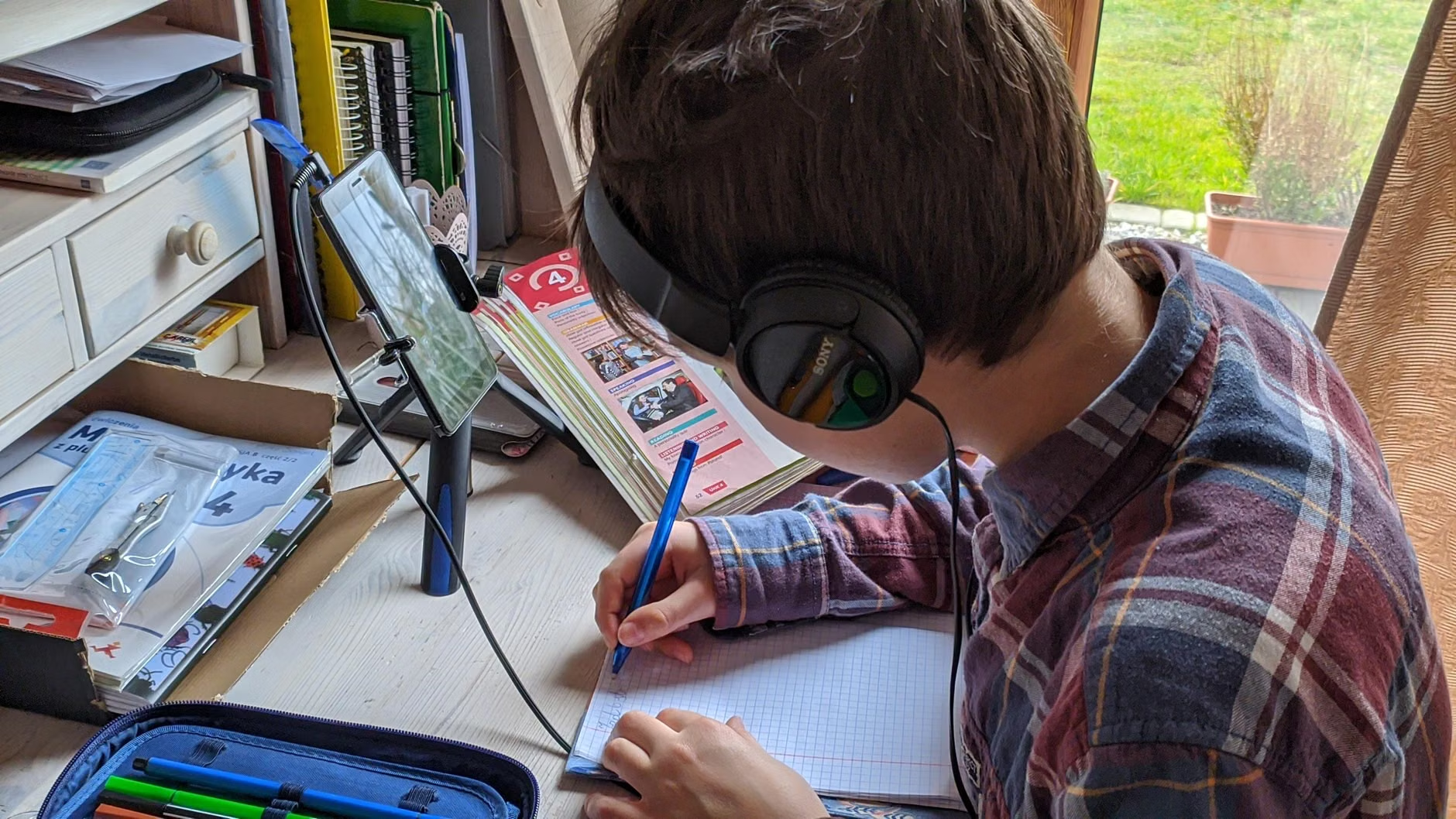
Step 2: The “Check-In” Protocol
If you are working from home while they are learning remotely, set specific times for “emotional check-ins.” Avoid the temptation to ask, “Are you done with your work?” Instead, ask, “How does your brain feel right now?” or “What was the most frustrating part of that last session?”
This subtle shift changes the dynamic from supervision to co-regulation. By asking about their feelings, you are signaling that their internal state matters more than their output. This reinforces their secure attachment to you, even when they are technically “at school.”
Common Misconceptions About Remote Schooling
A common mistake parents make is assuming that independence equals maturity. We often think, “They are 10, they should be able to sit through a 45-minute Zoom call alone.” But attachment theory tells us that under stress, even older children regress. If they are struggling to focus, it is not a discipline problem; it is a nervous system response to the lack of social safety.
Another misconception is that “screen time is bad, so I should minimize it.” While screen time has its own developmental challenges, the context matters more. If the screen is the only way they are connecting with their peers, treating it like a “forbidden fruit” can create a conflict between their social needs and your rules. Instead, frame the screen as a tool for connection, and prioritize “unplugged” time for your own bond.

Structuring the Environment for Emotional Stability
The physical environment is an extension of the emotional environment. If the workspace is cluttered, chaotic, or constantly changing, the child feels less secure. Consistency in the physical environment acts as a proxy for the consistency of a teacher’s presence.
Decision Criteria for Your Home Setup:
- The “Fixed” Station: Keep their learning area in the same spot. Even if it is just a corner of the kitchen table, keep the chair, the light, and the supplies in the same place every day.
- Visual Cues: Use a physical calendar or a whiteboard. Knowing exactly how many minutes remain in a session reduces anxiety. The unknown is the enemy of a secure attachment.
- Sensory Regulation: If they are fidgety, it is because they are trying to regulate their nervous system. Allow for movement. A standing desk or a wobble cushion can do wonders for a child who feels “trapped” by a video call.

Addressing the “Social Hunger” of Remote Schooling
Children are wired for social connection. When we remove the physical classroom, we are essentially putting them in a state of “social hunger.” If you notice your child becoming aggressive or withdrawn, ask yourself: “How much real-world social interaction have they had today?”
If the answer is “none,” prioritize physical play after school. Go to a park, meet a neighbor, or just walk outside. The goal is to engage their sensory system in the physical world. This is the most effective way to “reset” the attachment system after a long day of digital interaction.
When to Seek Further Support
It is important to recognize the difference between “remote schooling stress” and deeper anxiety. If your child shows consistent signs of distress—nightmares, significant changes in appetite, or persistent refusal to engage—it is time to look beyond the screen. Reach out to the school counselor or a child psychologist. They can provide strategies tailored to your child’s specific temperament.
Remember, the goal is not to be a perfect teacher or a perfect parent. The goal is to remain a reliable one. Children do not need you to solve the technical issues of their digital school; they need you to be the constant, calm presence that says, “I see you, I hear you, and we will get through this together.”
Frequently Asked Questions
1. Is it normal for my child to be more clingy during remote schooling?
Yes, it is entirely normal. Remote learning creates a sense of isolation. When a child feels less connected to their teacher and peers, they naturally turn to their primary caregiver to fill that “attachment gap.” This is a sign that they feel safe with you, not that they are regressing.
2. How can I manage my own frustration when my child struggles with digital school?
Your frustration is likely a reflection of your own stress. When you feel yourself losing patience, step away for two minutes. Use that time to regulate your own breathing. Your child mimics your emotional state; if you are calm, they are more likely to be calm. You cannot co-regulate a child if you are dysregulated yourself.
3. Does this mean I should be sitting with them during every Zoom call?
No. In fact, hovering can hinder their development of autonomy. Instead, be “emotionally available” nearby. Let them know you are in the next room if they need a quick check-in, but give them the space to manage their own tasks. This balances the need for security with the need for independence.
For further reading on attachment-based parenting, consider resources from the Attachment Parenting International organization, which offers research-backed insights into how consistent caregiving impacts long-term emotional health.
If you are interested in the technical side of managing remote education, the International Society for Technology in Education (ISTE) provides excellent guides on balancing digital tools with human-centric learning approaches.
Note: This article provides general information and guidance based on psychological principles and should not be considered professional clinical advice. If you have concerns about your child’s mental health, please consult a licensed professional.