- Budget Efficiency: Booking 60–90 days in advance via official national operators (like Trenitalia or Renfe) can save up to 60% compared to last-minute tickets.
- The ‘Living Room’ Advantage: Unlike air travel, rail provides physical space for children to move, eat, and play, significantly reducing the “travel fatigue” common in parents aged 30-40.
- Door-to-Door Logistics: Train stations are almost always located in city centers, eliminating the expensive and stressful hour-long taxi rides from peripheral airports to your hotel.
If you are in your 30s or 40s, your relationship with travel has likely shifted. The “see everything in 48 hours” sprint of your early 20s has been replaced by a quest for logistics that don’t result in a public meltdown—yours or your child’s. Enter the “slow-transit” rail movement. It is not just about the destination; it is about reclaiming the transit time as part of the vacation rather than a hurdle to be endured.
For families, the Mediterranean coastline—stretching from the rugged cliffs of the Costa Brava to the sun-drenched ports of Puglia—offers the perfect theater for this. Rail travel here isn’t just a transport choice; it is a strategic decision to prioritize mental bandwidth, comfort, and actual connection with your family.

Why “Slow-Transit” is the Only Way to Travel with Kids
When you fly, you are at the mercy of security lines, liquid restrictions, and the dreaded “gate check” for your stroller. You are essentially managing a high-stakes logistics operation for four to six hours. When you take the train, the dynamic shifts. You are in a moving living room.
The primary benefit of slow-transit rail is predictability. Trains in the Mediterranean region—specifically high-speed lines in Spain (AVE), France (TGV), and Italy (Frecciarossa)—are remarkably punctual. More importantly, they provide the “three pillars of parenting sanity”: personal space, mobility, and amenities.
Unlike the cramped confines of an economy airplane seat, train carriages often feature table seating, which is gold for families. You can set up a coloring station, a tablet, or a snack buffet without invading your neighbor’s personal space. Furthermore, the ability to stand up and walk to the café car or the restroom at any point—not just when the seatbelt sign is off—removes the constant anxiety of a restless child.
For parents, this means you might actually get to read a book or have a conversation with your partner. The landscape outside the window becomes a shared activity, turning a “transit day” into a sightseeing tour of rural villages, vineyards, and coastal cliffs that you would never see from 30,000 feet.
Understanding the Mediterranean Rail Ecosystem
To master rail travel in this region, you need to understand that the Mediterranean isn’t a single network. It is a collection of national rail operators that occasionally play nice with each other. The biggest mistake travelers make is using third-party booking sites that add unnecessary markups and make it difficult to manage ticket changes.
The golden rule is: Always book directly with the national operator.
| Country | Primary Operator | Best For Families |
|---|---|---|
| Spain | Renfe (AVE) | High-speed, child-friendly cabins |
| Italy | Trenitalia / Italo | City-center accessibility |
| France | SNCF (TGV) | Scenic coastal routes |
Each of these systems has its own nuances. For instance, in Italy, the Frecciarossa trains offer “Family Areas” on specific routes, which are essentially designated carriages with extra space for prams and kids. In Spain, the AVE network is exceptionally fast, meaning you can travel from Barcelona to Madrid in under three hours, effectively turning a cross-country journey into a short afternoon trip.
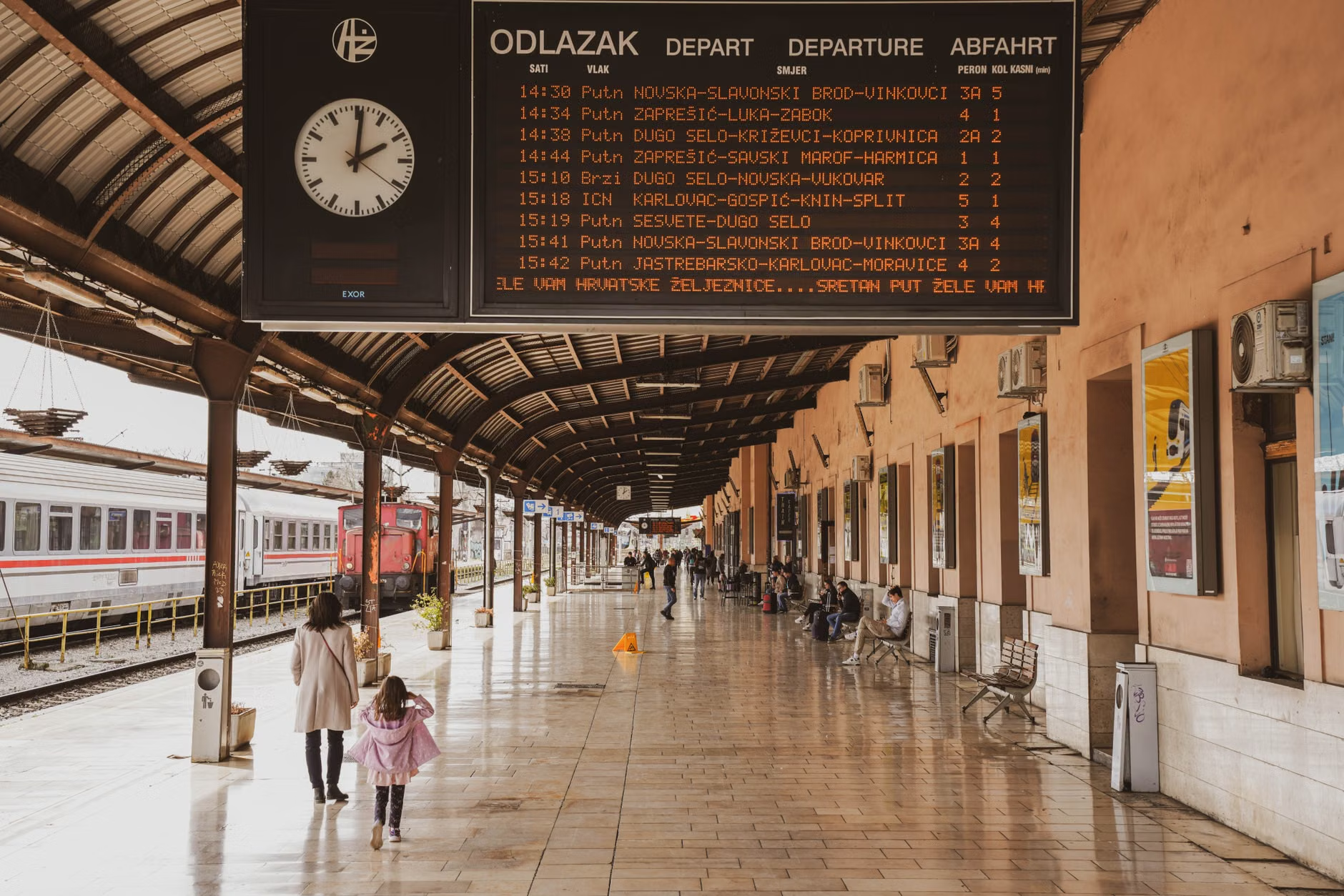
The Hidden Costs and Logistics of Rail Travel
While rail is often cheaper than air travel, it requires a different kind of planning. The “hidden cost” of rail is usually not money, but luggage management. Unlike flying, where you can check bags and forget them until baggage claim, on a train, you are the porter. If you pack like you are moving house, you will suffer.
A common mistake is the “oversized suitcase trap.” Most European trains have luggage racks at the end of the carriage or above the seats. If you have three massive suitcases for a family of four, you will be stressed about where to put them. The solution is simple: Adopt the “one bag per person” rule. If a child is old enough to walk, they are old enough to pull a small, lightweight rolling carry-on. This teaches independence and keeps your hands free for the actual logistics of navigating the platform.
Another variable is the “station-to-station” gap. In some cities, the train station might be a 15-minute walk from your hotel. While this is better than an hour-long shuttle from an airport, it still requires preparation. Use Google Maps to check the distance between the station and your accommodation before you book your hotel. If you have small children, a hotel within walking distance of the station is worth the extra cost over a cheaper, remote Airbnb.
Step-by-Step Guide to Planning Your Route
Planning a slow-transit trip requires a shift in mindset. Instead of thinking “How fast can I get there?” ask “What can I see along the way?”
- The 90-Day Rule: Most European rail operators release tickets 60 to 90 days in advance. Prices are dynamic, similar to airlines. If you book exactly when the window opens, you can secure “Promo” or “Super Economy” fares that are significantly cheaper than walk-up prices.
- Map Your Hubs: Choose two or three “home base” cities. For example, spend four days in Barcelona, then take the train to Perpignan or Montpellier. This prevents the “hotel-hopping fatigue” that kills family vacations.
- The Mid-Day Strategy: If your children are young, aim for trains that depart between 10:00 AM and 1:00 PM. This aligns with their natural energy levels and ensures you aren’t rushing to a platform at 6:00 AM.
- Download the Apps: Download the official apps (Renfe, Trenitalia, SNCF Connect). They provide real-time updates on platform changes, which is crucial when you are trying to manage kids and luggage simultaneously.
Common Misconceptions About European Trains
One of the most persistent myths is that “all European trains are old and dirty.” While some regional, local lines (the ones that stop at every tiny village) can be basic, the intercity and high-speed networks are modern, climate-controlled, and equipped with power outlets and Wi-Fi. If you are traveling between major hubs, you are likely sitting in a train that is less than ten years old.
Another misconception is that language barriers will be a major issue. While it is true that you might encounter staff who prefer the local language, the signage in stations is universally intuitive. Icons for “Departure,” “Arrival,” “Platform,” and “Ticket Office” are standard across the EU. If you are ever confused, look for the “Information” desk; staff in major European stations are accustomed to international tourists and almost always speak excellent English.
The Trade-off: Why You Might Still Consider Other Options
Is rail always the right choice? Not necessarily. If you are traveling in a remote area—such as the deep interior of Andalusia or the mountainous regions of northern Greece—public transport becomes infrequent. In these specific cases, renting a car is the more practical decision. The “slow-transit” rail philosophy works best when you are connecting major urban centers or coastal hubs. If your itinerary involves visiting three different national parks in one week, the train will likely feel restrictive.
Furthermore, if you are traveling with a large group (more than 5 people), the cost of multiple train tickets can start to approach the cost of a car rental. However, you must weigh this against the “hidden” costs of driving: fuel, expensive city parking (which can cost 25–40 EUR per day in cities like Barcelona or Nice), and the stress of navigating narrow, unfamiliar streets.
Final Verdict: Reclaiming Your Vacation Time
The true value of the “slow-transit” rail route is not just in the scenery or the cost-effectiveness; it is in the restoration of your time as a parent. When you drive or fly, you are an operator. When you take the train, you are a passenger. That shift allows you to be present with your family. You aren’t staring at the back of a rental car or the neck of a stranger in front of you; you are looking at the world together.
If you want to make your next Mediterranean trip less of a logistical nightmare and more of a genuine experience, book the train. Pick a route, look up the official operator, and give yourself the gift of a stress-free transition. It is the most “adult” way to travel with children because it acknowledges that the journey matters just as much as the destination.
Frequently Asked Questions
1. Can I bring a stroller on the train?
Yes, most high-speed trains in Europe are stroller-friendly. On high-speed trains, you can usually keep a folded stroller in the luggage rack or, if the train is not full, keep it in the space behind your seat. On local, regional trains, you may need to lift it onto the train, so try to use a lightweight, umbrella-style stroller if possible.
2. Are there dining options for picky eaters?
Most high-speed trains have a “Bar” or “Café” car. However, the offerings are often limited to sandwiches, snacks, and drinks. For families with specific dietary needs or picky eaters, the best practice is to stop by a local bakery or supermarket near the station before you board. Buying fresh fruit, local bread, and cheese is not only cheaper but also a great way to introduce your kids to local food culture.
3. How do I handle potential train strikes?
Rail strikes (or “industrial action”) do occur in Europe, particularly in France and Italy. If a strike is announced, the best course of action is to check the official operator’s website immediately. They usually provide information on guaranteed services. If your train is cancelled, your ticket is typically valid for the next available service, or you are eligible for a full refund. Always carry a secondary booking app or have a backup plan (like a FlixBus or a regional train) if you are on a tight schedule.
Official Resources for Further Planning: