By 2026, the rise of AI data centers and the global transition to electric heating and transportation will make “peak-demand alerts” a standard part of your monthly household routine, requiring you to actively shift your energy usage to avoid grid instability and higher utility costs.
- Shift, don’t just save: The goal of grid alerts is to move energy-heavy tasks (like EV charging or laundry) to off-peak hours, rather than simply using less power overall.
- Automate the response: Relying on manual intervention is unreliable; you must configure smart home devices to automatically pause during demand-response events.
- Financial incentives exist: Many utility providers now offer “demand response” credits or lower off-peak rates that can significantly offset the cost of grid-management hardware.
Understanding Why the Grid is Getting “Stressed” in 2026
If you have noticed your utility bills fluctuating more wildly or heard your local provider talking about “load shedding” or “grid flexibility,” you aren’t imagining it. The global energy grid is currently undergoing its most significant transformation since the mid-20th century. For those of us in our 30s and 40s, this means our homes are no longer just passive consumers of electricity; they are now active participants in a complex, real-time energy market.
The primary driver here is the “electrification of everything.” Between the surge in electric vehicle (EV) adoption, the shift from gas furnaces to heat pumps, and the massive energy demands of regional data centers supporting our favorite streaming and AI services, the grid is being pushed to its limits. When everyone comes home at 6:00 PM, plugs in their cars, and turns on the heat simultaneously, the local transformer faces a massive spike. This is what we call “peak demand.”
In 2026, utility companies are moving away from simple “flat-rate” billing toward dynamic pricing and grid-alert systems. These systems essentially tell your house: “Electricity is currently very expensive because the grid is stressed; please turn off your high-draw appliances for the next two hours.”

What a “Peak Demand Alert” Actually Looks Like
You might be wondering what this looks like in practice. It isn’t usually a rolling blackout—at least, not in well-managed systems. Instead, it is a digital nudge. You might receive a push notification from your utility provider’s app or a signal sent directly to your smart home ecosystem (like Apple Home, Google Home, or Amazon Alexa).
When an alert triggers, your “smart” devices are programmed to react. For instance, your EV charger might pause its charging cycle for 60 minutes, or your heat pump might adjust its set point by one or two degrees. By making these micro-adjustments across thousands of homes, the utility provider avoids having to fire up expensive, polluting “peaker plants”—which are often the most carbon-intensive generators in the fleet.
The common mistake: Many homeowners try to “fight” the system by overriding these settings every time. If you do this consistently, you lose the “demand response” financial incentives, which can range from $50 to $200 annually, depending on your region and utility provider. More importantly, you contribute to the very grid instability that leads to more frequent, mandatory power interruptions.
Equipping Your Home for the New Energy Reality
To survive and thrive in this environment, you need to audit your home’s energy “intelligence.” You don’t need a solar array or a massive battery wall to participate, though those certainly help. You need connectivity.
| Appliance | Grid-Response Strategy | Impact on Comfort |
|---|---|---|
| EV Charger | Schedule to 2:00 AM – 5:00 AM | Negligible (Car is full by morning) |
| Smart Thermostat | Auto-adjust by 2°F during alerts | Minor (Hardly noticeable) |
| Dishwasher/Dryer | Use “Delay Start” for off-peak | None |
If you are looking to upgrade your home, prioritize “Energy Star” appliances that feature OpenADR (Open Automated Demand Response) compatibility. This is the technical standard that allows your dryer or water heater to “talk” to the grid. If you are shopping for a new heat pump or water heater in 2026, ask the installer: “Is this unit capable of participating in utility demand-response programs?”
The Hidden Costs and Trade-offs of Grid Participation
While participating in these programs is generally a net positive, it isn’t without its nuances. The biggest trade-off is the loss of absolute control. When you sign up for a demand-response program, you are essentially giving your utility company limited authority to throttle your consumption during extreme events.
For a family with young children or elderly relatives, a two-degree change in temperature might be fine, but a total shutdown of the HVAC system during a heatwave is not. Always check the terms of service. Most legitimate programs allow you to “opt-out” or override the signal if you have a medical necessity or an urgent home need. However, doing this too often will disqualify you from the program’s rebates.
Another overlooked variable is the “rebound effect.” If you allow your home to cool down by 5 degrees during a peak alert, your HVAC system will have to work twice as hard to return to your preferred temperature once the alert ends. This can sometimes lead to a “secondary peak,” where everyone’s house starts heating or cooling at the exact same time, effectively shifting the problem rather than solving it. The best strategy is to stagger your appliances’ restart times.
Step-by-Step: How to Configure Your Household for 2026
- Identify your utility provider’s portal: Don’t wait for an alert. Go to your provider’s website today and search for “Demand Response” or “Energy Incentives.”
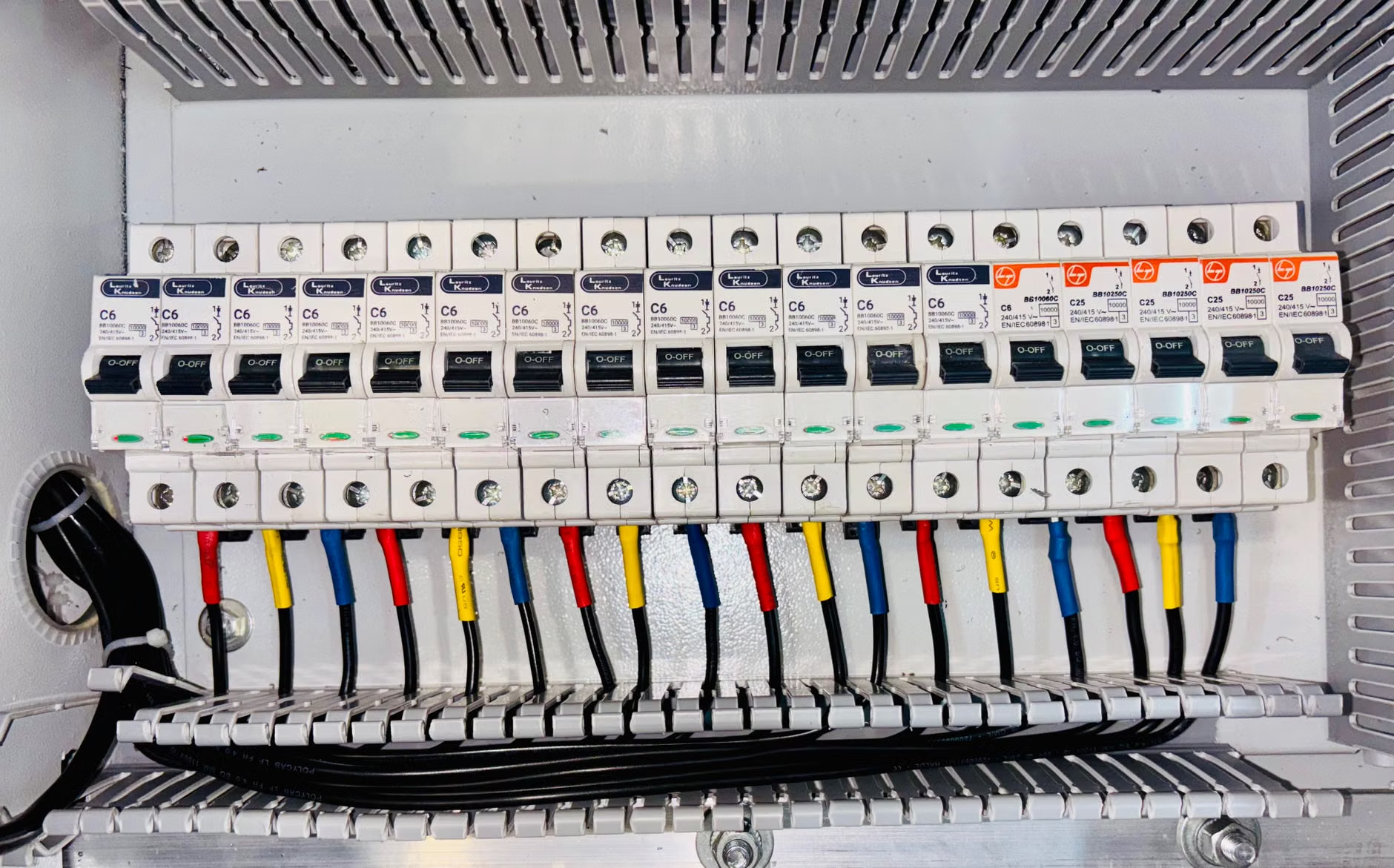
- Check your hardware: Look at your thermostat, EV charger, and main circuit breaker. Are they Wi-Fi enabled? If not, consider adding a smart energy monitor (like an Emporia or Sense monitor) to your breaker panel. This gives you granular data on what is consuming the most power.
- Set “Time-of-Use” (TOU) schedules: Even if you aren’t in a formal demand-response program, most utilities offer TOU rates. Set your appliances to run when rates are lowest—usually between midnight and 6:00 AM.
- Test the override: Learn how to manually override your smart thermostat or EV charger. In an emergency, you need to know how to take back control of your home’s climate and charging speed without digging through a manual.
Why This Matters for Your Long-Term Budget
Energy prices are rarely trending downward. By 2026, the gap between “peak” electricity rates and “off-peak” rates will likely widen. Households that ignore these alerts will pay a significant premium for the privilege of using electricity whenever they feel like it. Households that treat their energy consumption like a strategic asset will see their utility bills stabilize, or even drop, despite the overall increase in grid costs.
Think of it like a mobile phone data plan. In the early 2000s, we didn’t care about data usage; today, we are all conscious of our Wi-Fi versus cellular data. Energy is transitioning from an “unlimited, always-on” utility to a “managed, variable-cost” service. Adapting now, before the grid reaches a breaking point in your specific region, puts you ahead of the curve.
Frequently Asked Questions
What happens if I ignore a grid peak-demand alert?
In most residential programs, you won’t be penalized with a fine for ignoring an alert. However, you will miss out on the financial incentives or rebates associated with the program. If you are on a “Time-of-Use” plan, you will simply pay the higher, peak-rate price for any electricity consumed during that window.
Is my personal data safe when I connect my appliances to the grid?
Utility-managed demand response programs are heavily regulated. They generally only collect “usage data,” not “activity data.” For example, they know your water heater is drawing 3,000 watts, but they don’t know if you are currently taking a shower. Always review the privacy policy of your utility’s specific app before connecting your devices.
Can I still participate if I live in an older home without “smart” appliances?
Yes. You can install a smart energy monitor on your electrical panel or use smart plugs for smaller appliances. While you won’t have the same level of automated control as a modern heat pump, you can still monitor your consumption in real-time and manually shift your habits based on the alerts you receive via email or SMS from your provider.
Final Thought: The transition to a smarter grid is inevitable. By taking small, proactive steps today—like setting your dishwasher to run at night or checking your utility’s incentive programs—you protect your family’s budget and help keep the power on for everyone else. It’s not about doing less; it’s about doing it smarter.
For further information on grid reliability and demand response in your area, please check the official resources provided by your national energy regulator, such as the U.S. Department of Energy (Grid Reliability) or equivalent local government energy portals.